What an eventful morning. The good news was that Bill who had been hospitalised for Gall bladder issues was well enough to be released to continue his trip. We were on our way to collect him from the hospital when we discovered the roads were being closed and the bus had to take a circuitous route. When we asked why the road was closed the answer was because they can! It seemed to be just to make it difficult for Muslims to go to the Mosque because it is Friday.
The next drama was Julie thought she had left her passport at the hotel and due to the road closures had to walk back. Matthew took her and with great relief discovered it I was in her suitcase instead which was actually on the bus. We set off again only to have Mary feel sick and throw up. Anya came to the rescue quickly with a plastic bag. Then it was Julie’s turn to be sick. We pulled into the Oasis Hotel at Jericho to collect a swimsuit Anya had left behind when we stayed there, and Julie jumped off and rushed into the hotel.
We left Israel and entered the West Bank, where we went through a checkpoint before the border crossing and we were not allowed to take photos. We were going across the Allenby Bridge crossing. They were asking lots of questions about who we were. Australian was the only thing I understood. Once clear of that checkpoint we continued to the border. Then we were through and it was the immigration where we had to pay our exit tax of 182 shekels. It seemed pretty expensive to me. Our bags were checked through the scanners and we were then in Jordan. These crossings can be quick or very slow. On the way in Matthew had been questioned for about 30 minutes and some of the bags were checked twice but this time it was fairly uneventful.
We were very sorry to say farewell to our tour guide Khalil. He was exceptional. If anyone wants a guide to The Holy Land I would recommend him wholeheartedly. His knowledge and perspective was truly educational. On the other side we met Anton our previous guide in Jordan. He was also amazing. We gave our last precious shekels as tips. It had taken us days to get small change for tips and toilets and now we had it we were leaving! I changed my last 20 shekel note into 4 American dollars, the only American dollars I had had all trip!
I recommend taking American dollars for this trip but get them before you arrive because they are near impossible to get once in the countries. They are traded as alternative currency but you can’t get them from ATMs as a rule.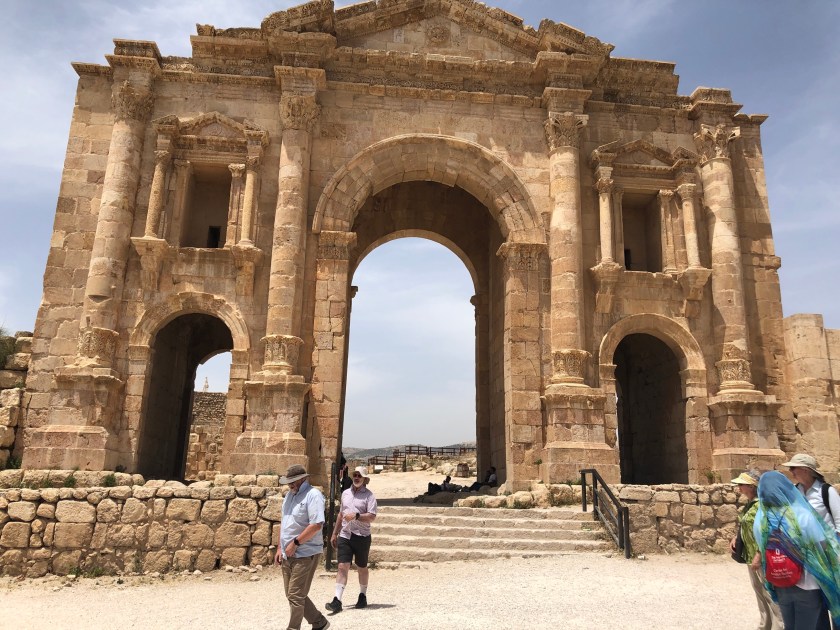
There is a heat wave and we are going to visit Jerash, which is north of Amman, where there are fantastic Roman ruins. They are supposed to be the best preserved ruins outside of Italy. Because it is so hot a few people have decided to stay on the bus or in the shops and visitor centre. We are getting a bit blasé about ruins but I never want to miss anything so I loaded up with water and sunscreen and joined the other intrepid explorers.
It was certainly worth it. The town has been around since the Bronze Age at least and the Greco-Roman era saw it flourish. The ruins contain Hadrian’s Arch, built to commemorate his visit to Jerash in the 2nd Century. We passed under the arch to enter the ruins and visited the Hippodrome where they run fake chariot races and gladiator sports in the summer. The building was remarkable because they were able to build tiered seats for audiences even though the land was flat. Under the seats were shops or stables.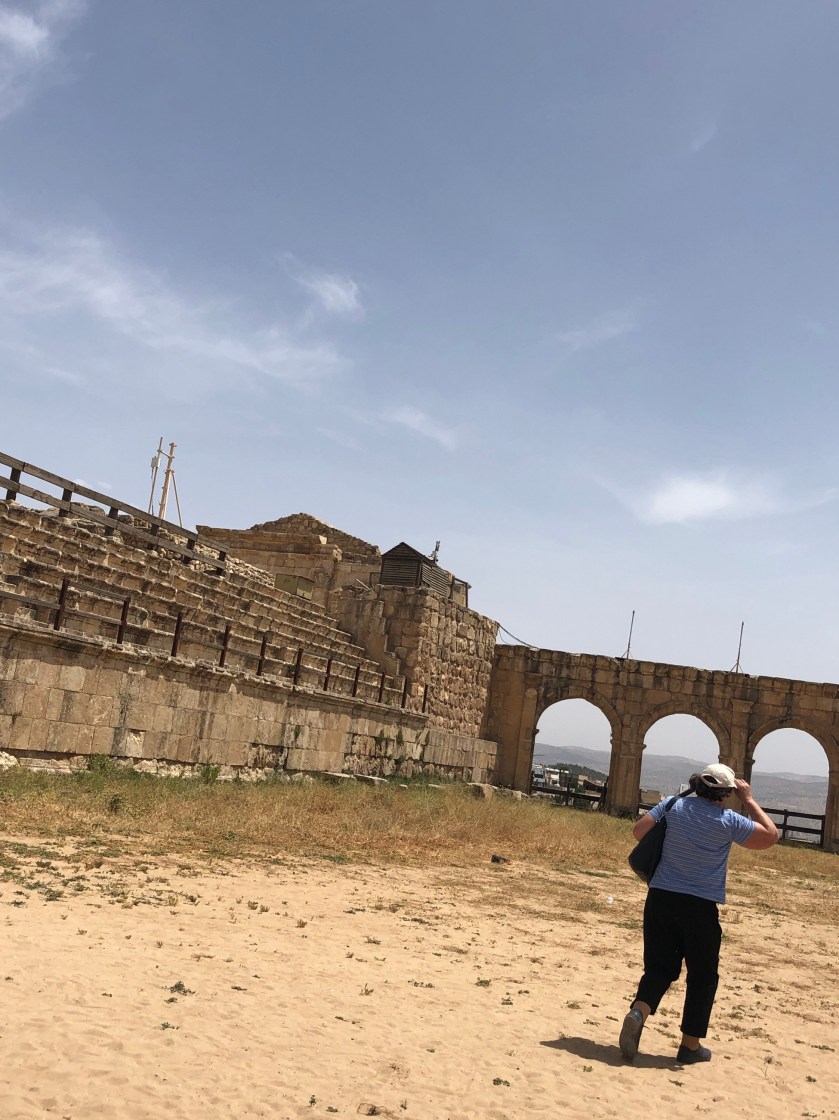
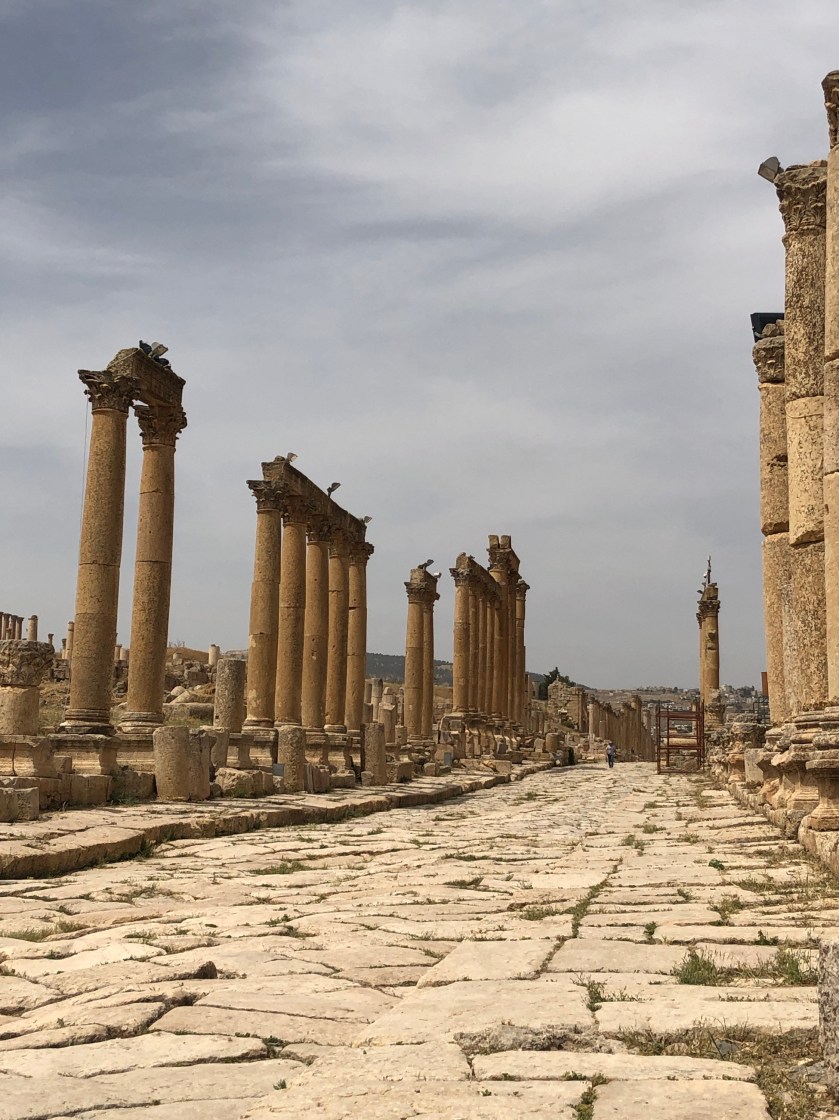
Further along we walked a road with manholes into the drains below and bordered by Corinthian columns which led to an beautiful oval Forum also surrounded by columns. Along the way we saw the remains of a marketplace where there were fish ponds and a butcher. On the hill overlooking the street stood the Temple of Zeus and an auditorium which had perfect acoustics. They hold a summer festival here using the stage and the forum for performances.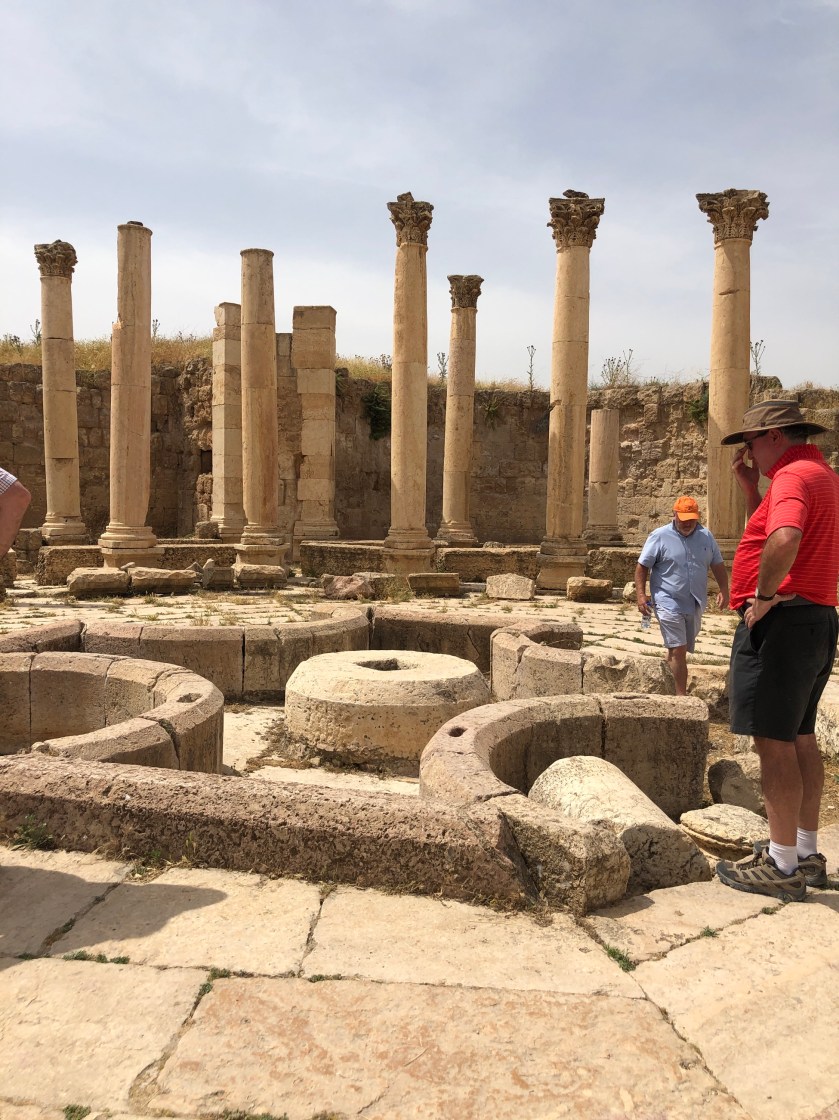

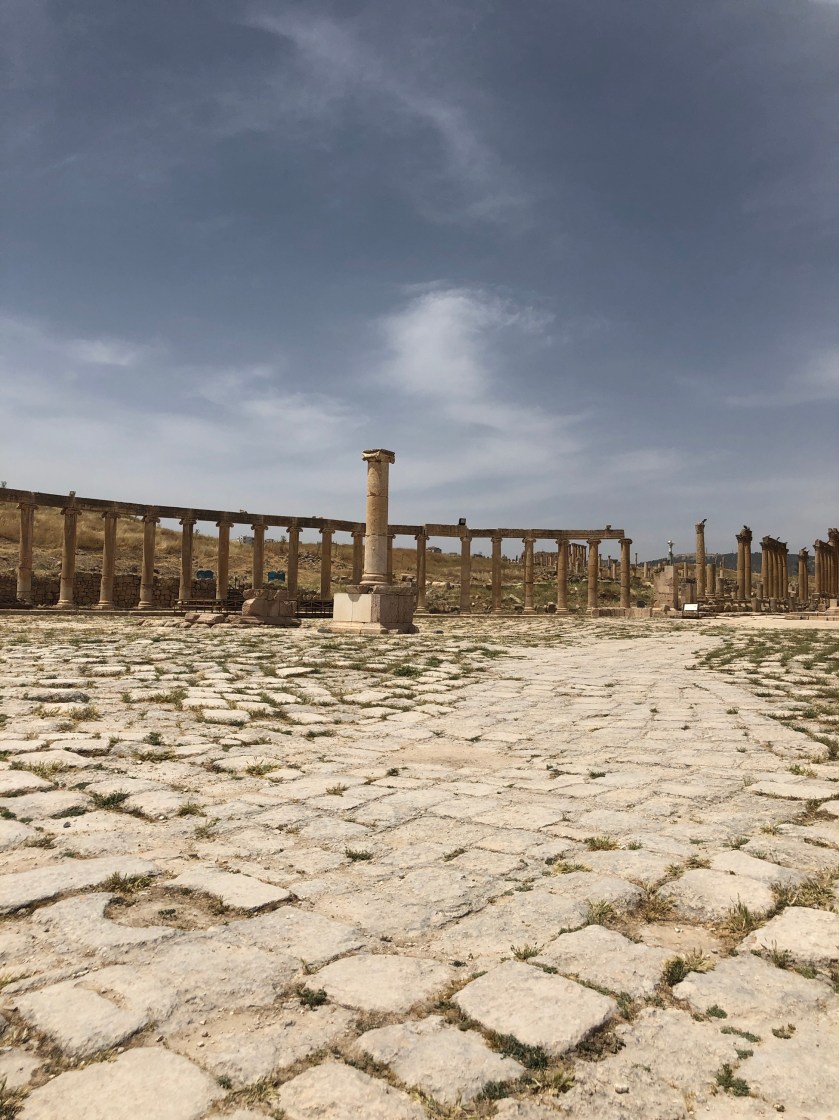
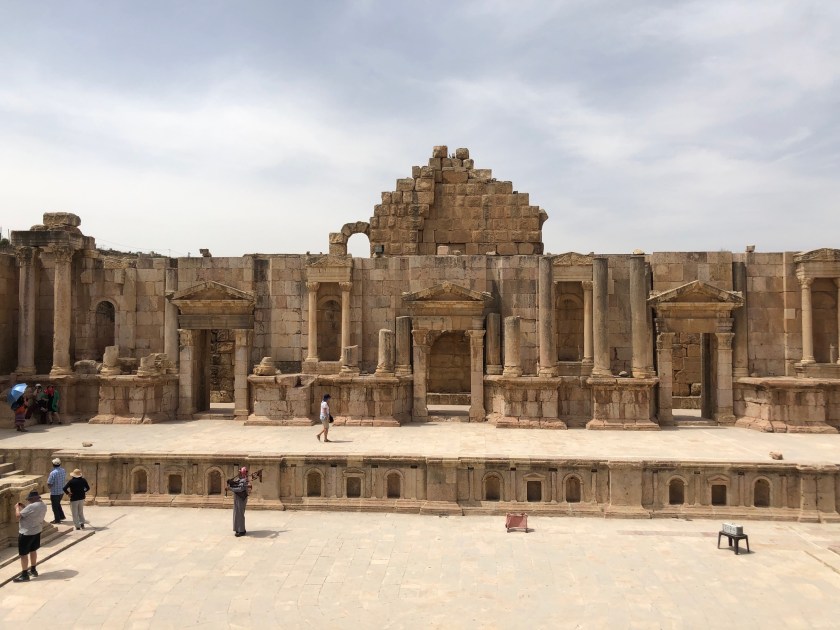
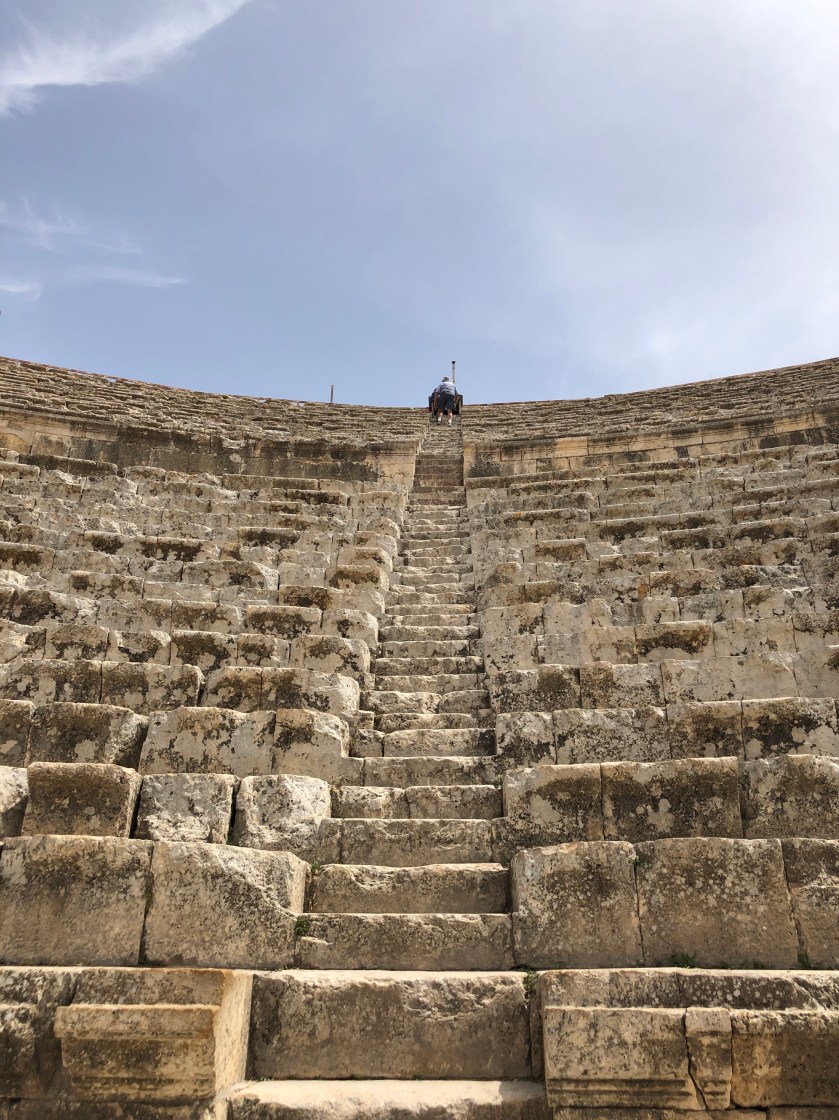

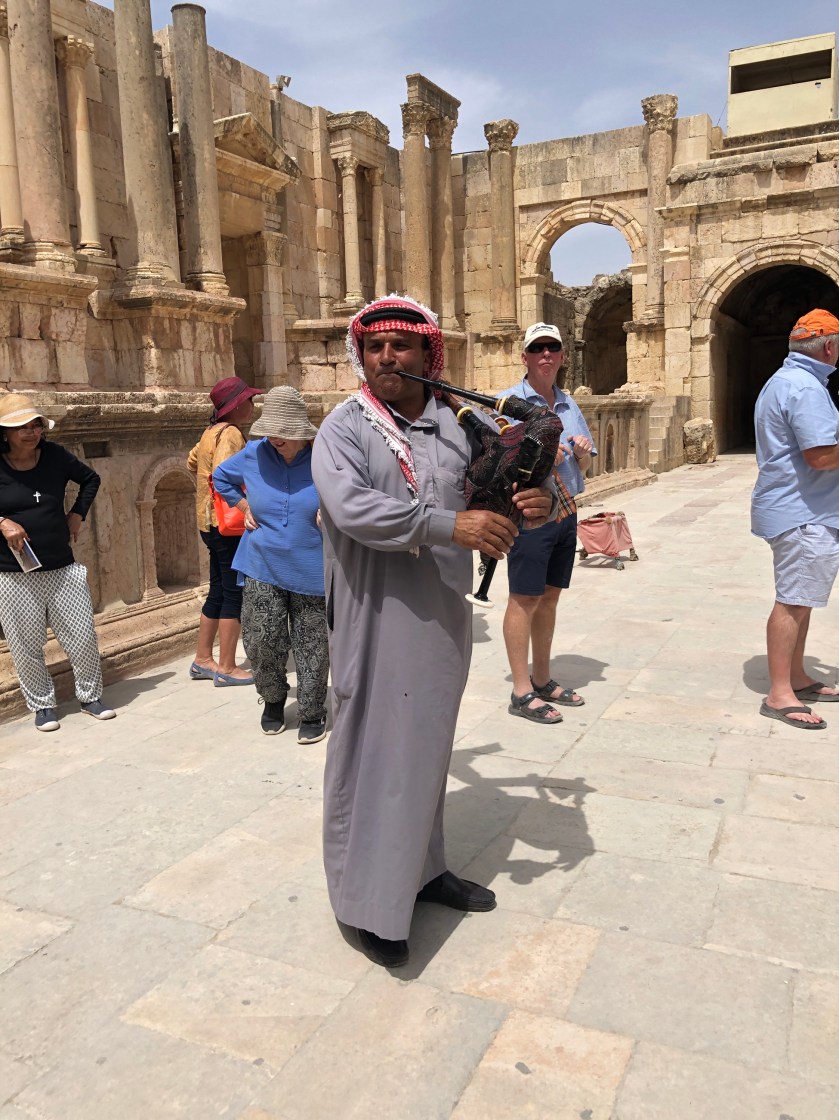 It was blazing heat and we were all guzzling our water and seeking shade but we pushed on along the Cardo a street lined with columns and where the Nymphaeum- an elaborate fountain stood. This street also led to the Temple of Artemis but by now we were all flagging in the heat. My backpack was leaching the red dye into my shirt it was so hot. Mid 40’s! Jerash was part of the Decapolis,/ a league of Roman cities in what was then called Roman Syria.
It was with great relief we all returned to the bus for our trip to our final destination of the trip, the town of Salt, and the place of the Dead Sea. We passed through the outskirts of Amman and back into the countryside past farms of olive groves and the few Bedouins grazing goats and sheep.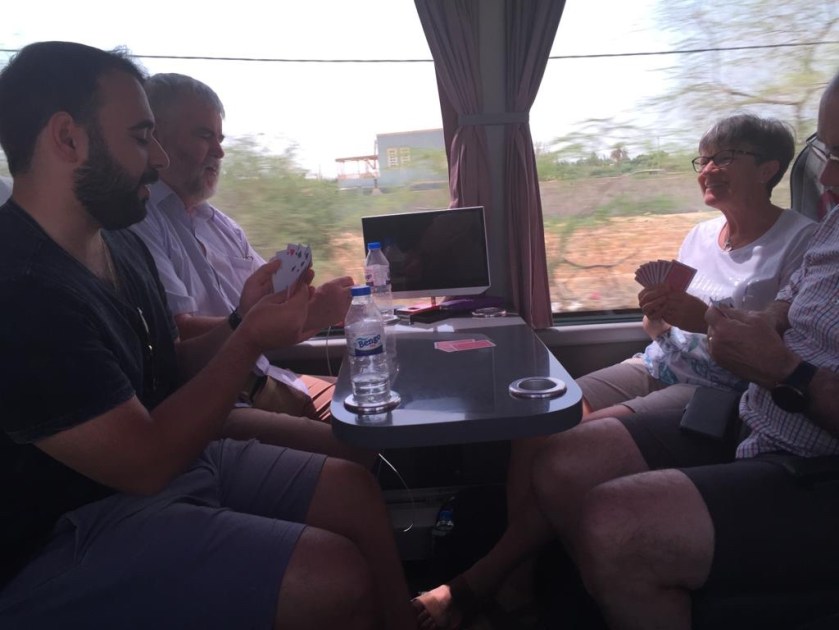
On our arrival at the Hilton Dead Sea Resort we were all gobsmacked at our spectacular the place and the view was. The receptionist said it was 48 degrees. No wonder we were hot! At home we would stay holed up at the movies or at home with the air conditioner not waltzing around looking at ruins without shade!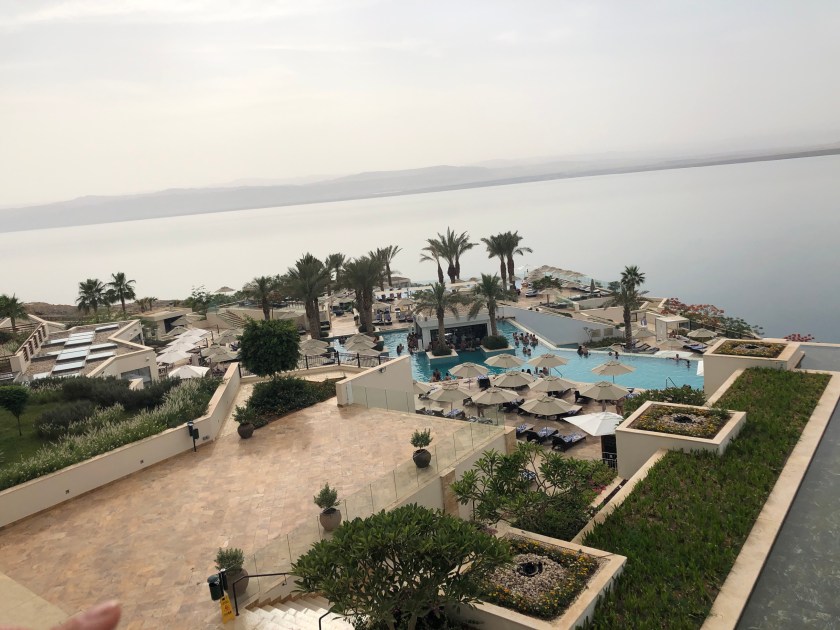
We took our bags and promptly got lost trying to find our room. The complex had about 800 rooms and different wings and we went up and down lifts until we found the correct wing in which we were supposed to be. All outside! The air conditioning is confined to the rooms and the corridors were open to the heat. There were a few exasperated sighs from the little group trying to find their room.
Once settled and revived we went for our first swim in the Dead Sea. It is an amazing feeling to be able to float without effort, like a baby in amniotic fluid in the womb. Having prepared our skin, we wandered up the beach to the mud bowl where we applied lots to our body and let it dry a bit before returning to the water. It is supposed to have healing properties but the lady who gave Anne and I a massage the next day is a bit sceptical. What it does do though is leave your skin silky smooth.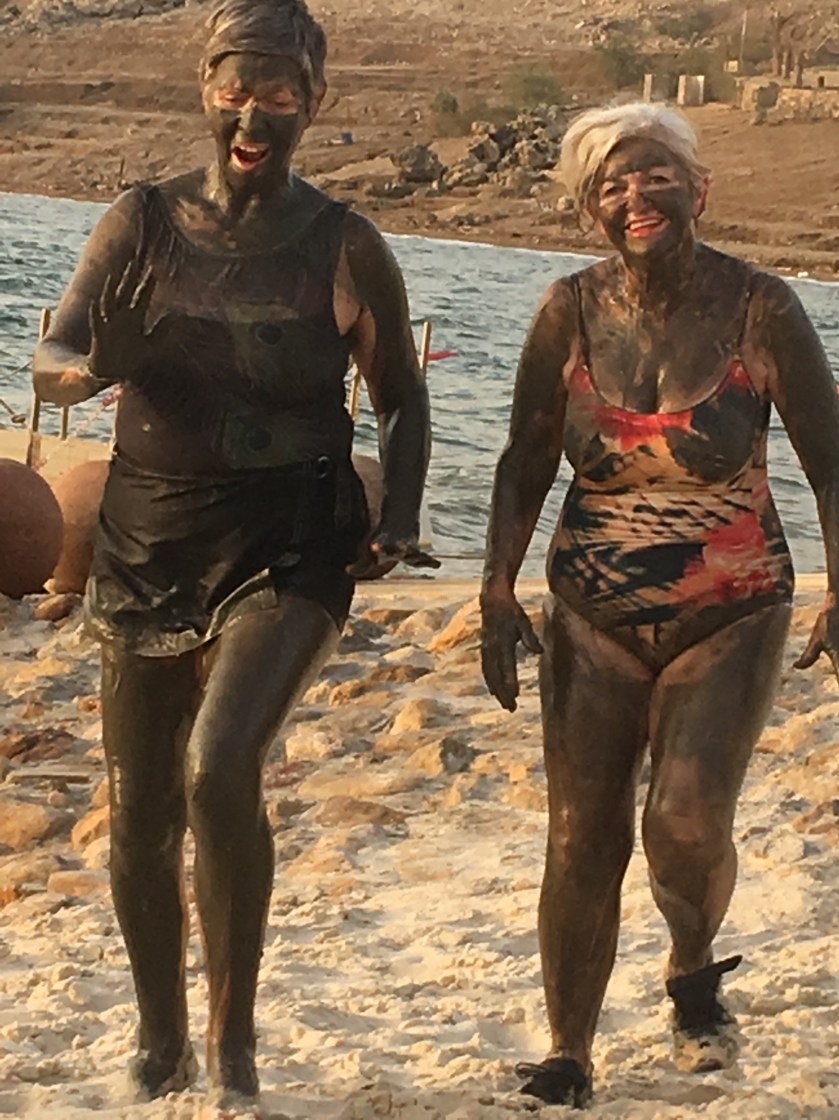
The water is about 34% salt so if you get it in you eyes, as a few of us did, it is extremely painful! The Dead Sea is the lowest place on earth, about 430 metres below sea level and has no outlets. The Jordan River is the largest contributor to it plus some small springs on the shoreline which create a type of quicksand. A part of the main roads around the lake collapsed a while ago and is now diverted due to the instability of the soil close to the edge. The Dead Sea is shrinking and there are moves to bring water from the Red Sea Gulf but that process is slow.
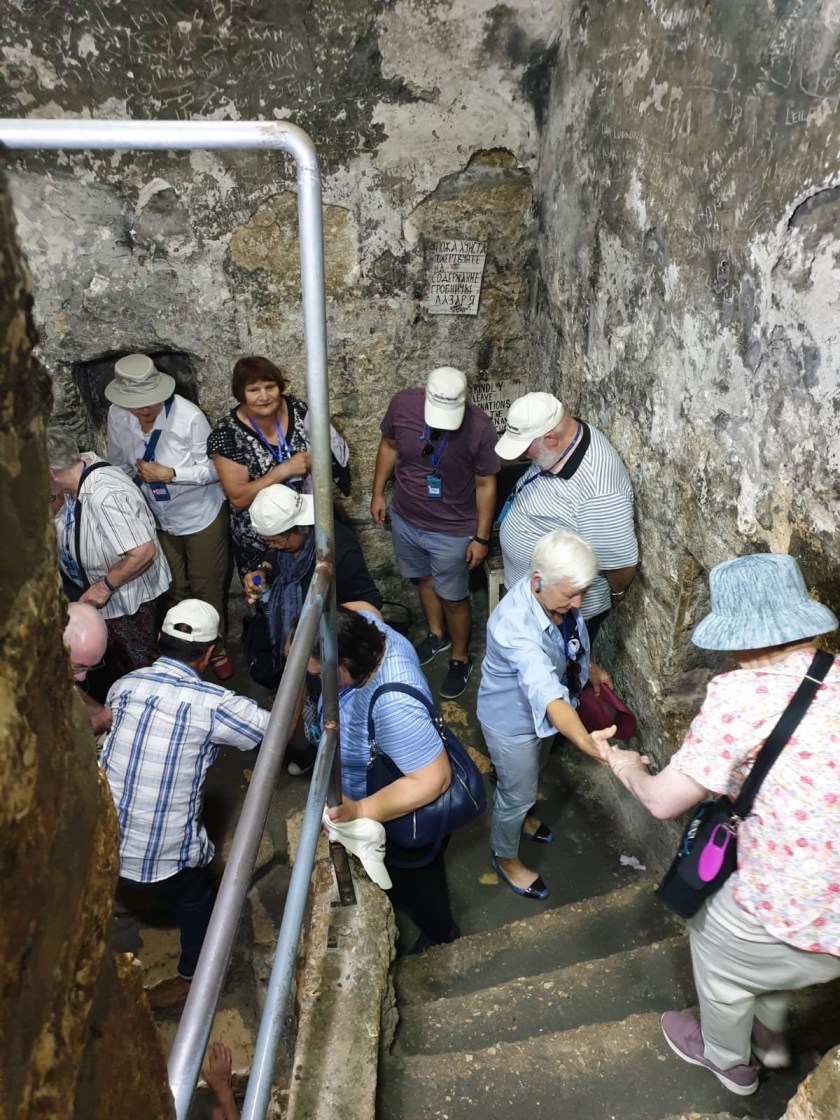
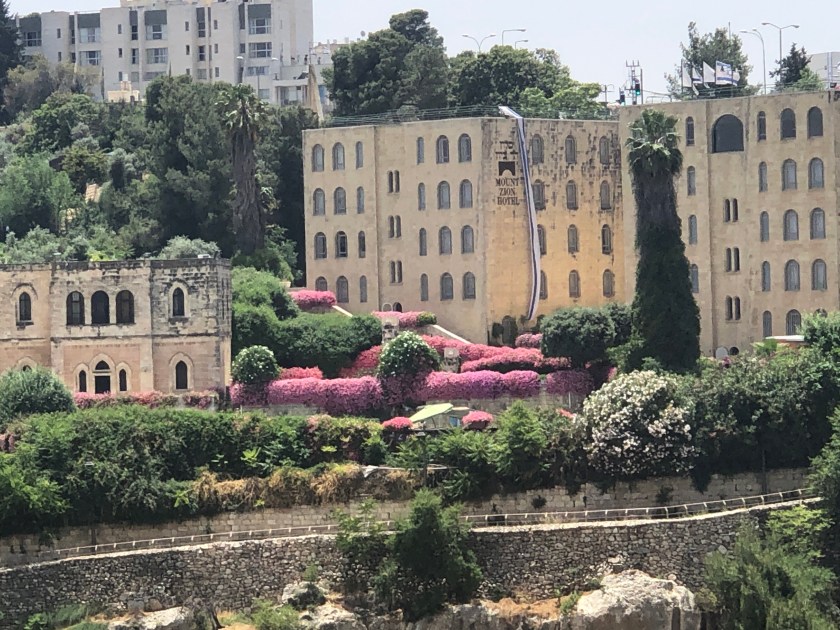
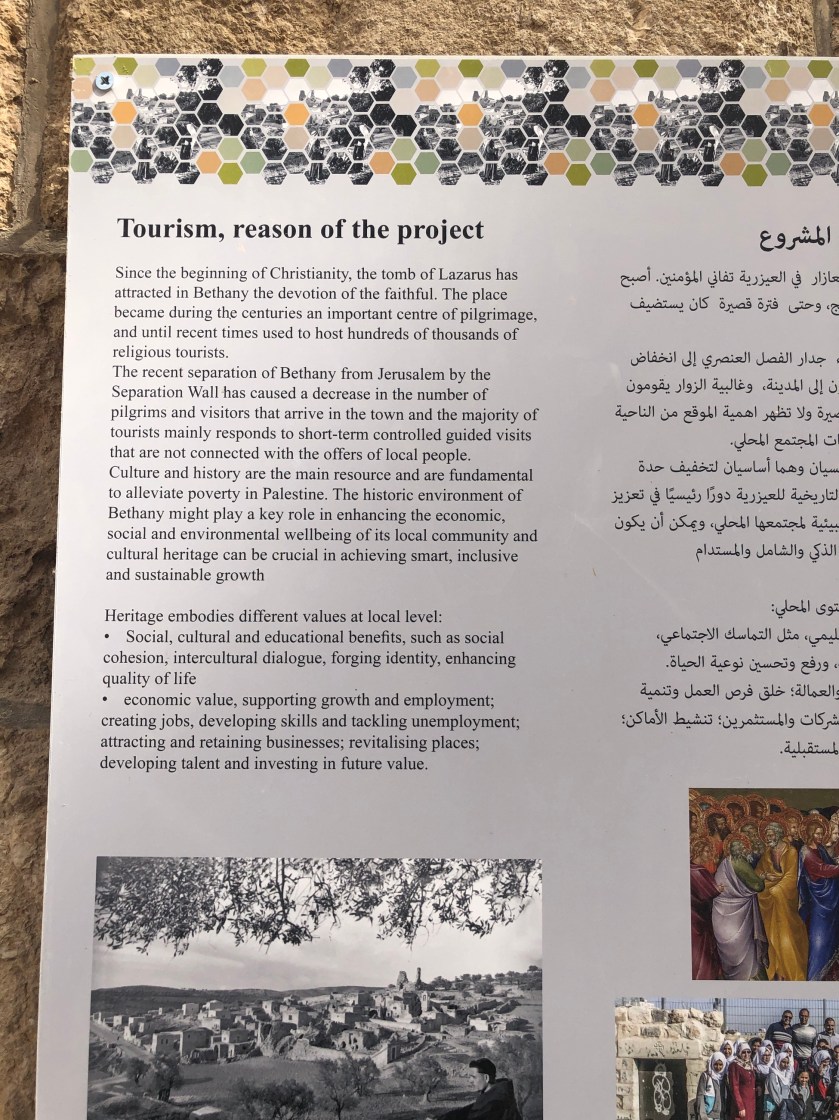 fFrom here we went to Mt Zion which has many important sites. It was once enclosed in the city walls and has the Cenacle- The Upper Room where Jesus celebrated the Last Supper with his disciples. The disciples apparently also assembled there at other times following the resurrection and it was here that Jesus appeared to doubting Thomas and also where the Holy Spirit came upon the believers who were gathered there. Of course in the Byzantine era an enormous church had stood on the site and was later rebuilt by the Crusaders. It was then taken over by the Muslims during the Ottoman period and converted to a mosque. The stained glass windows have verses from the Koran. The room stands above an active synagogue and some extreme Jews have tried to block Christians from visiting here.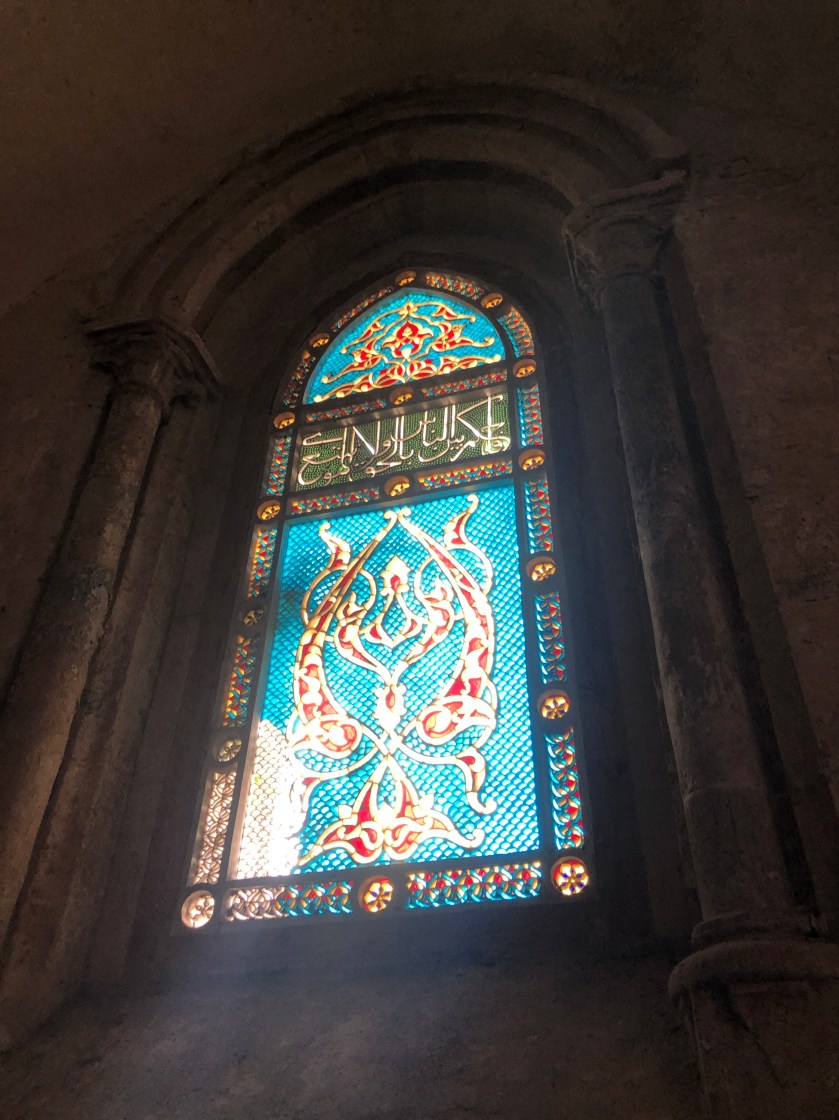
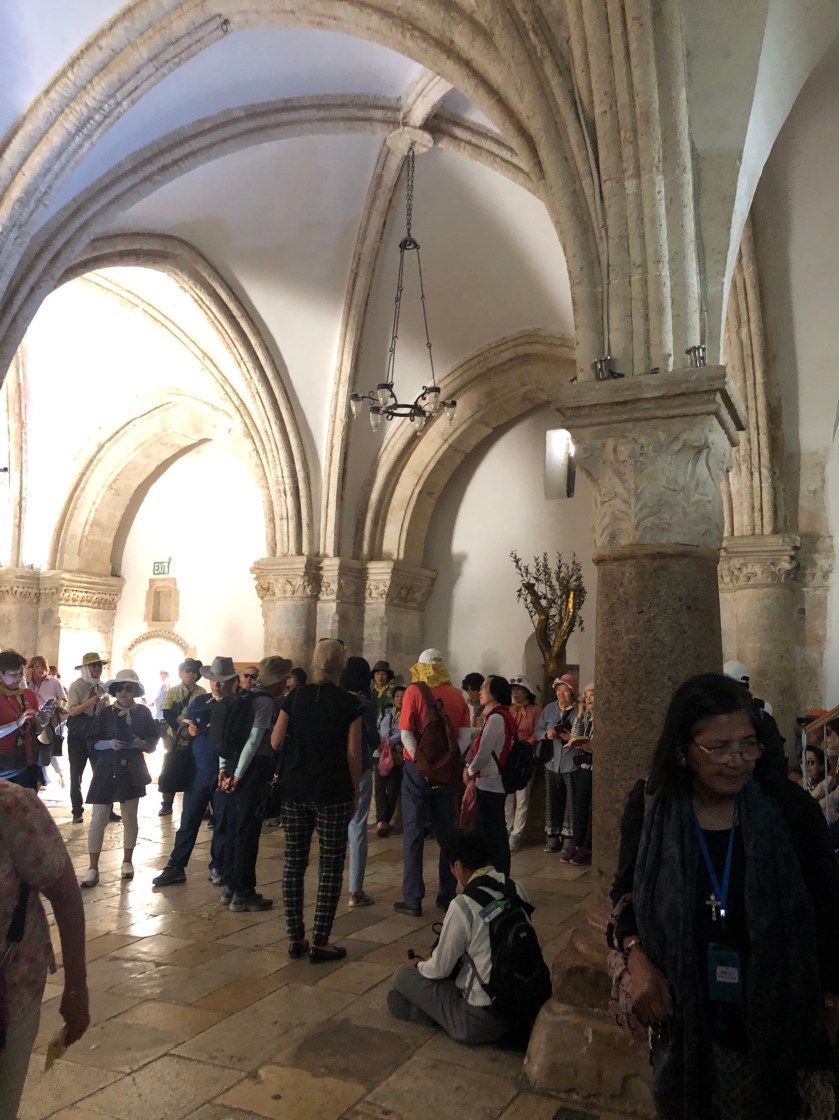
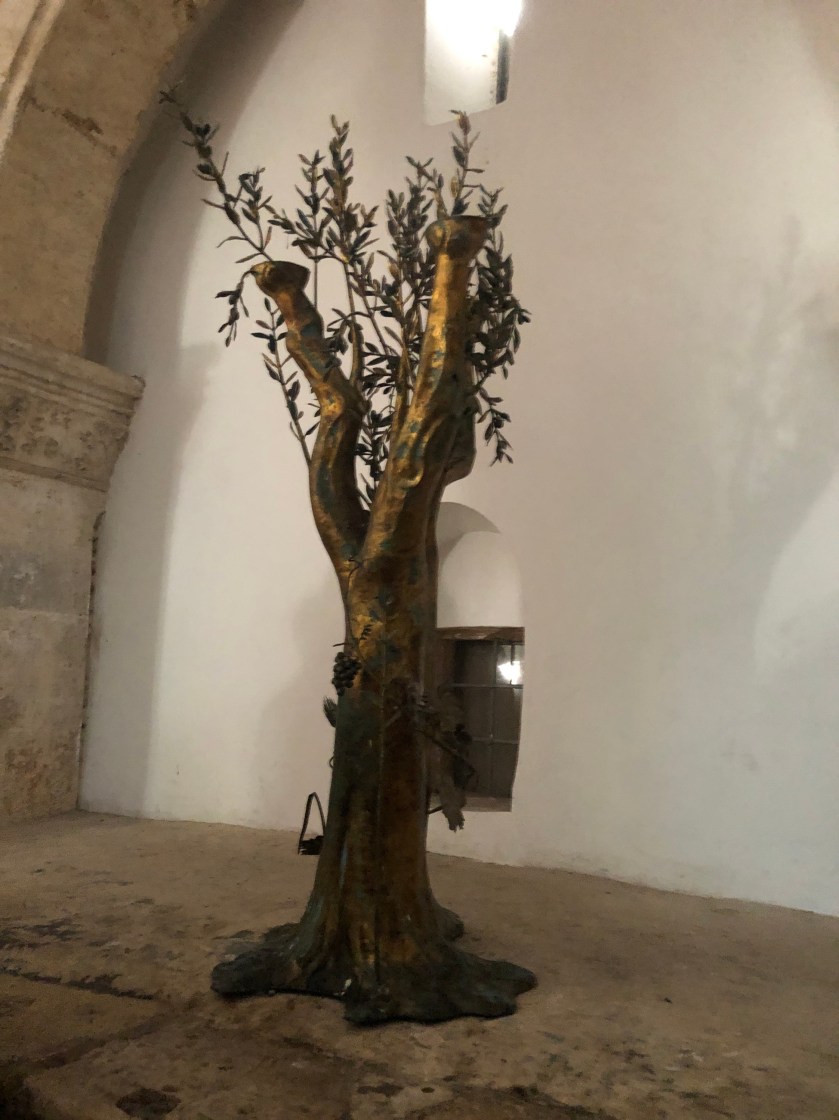 This sculpture that stands in the room was presented to the Synagogue by Pope Paul VI and represents the three religions that spring from the Old Testament. The Olive branch represents Christians, the grapes represents Jews and the wheat represents the Muslim faith. Under this room is the tomb of King David which we visited very briefly so there are competing ownership issues.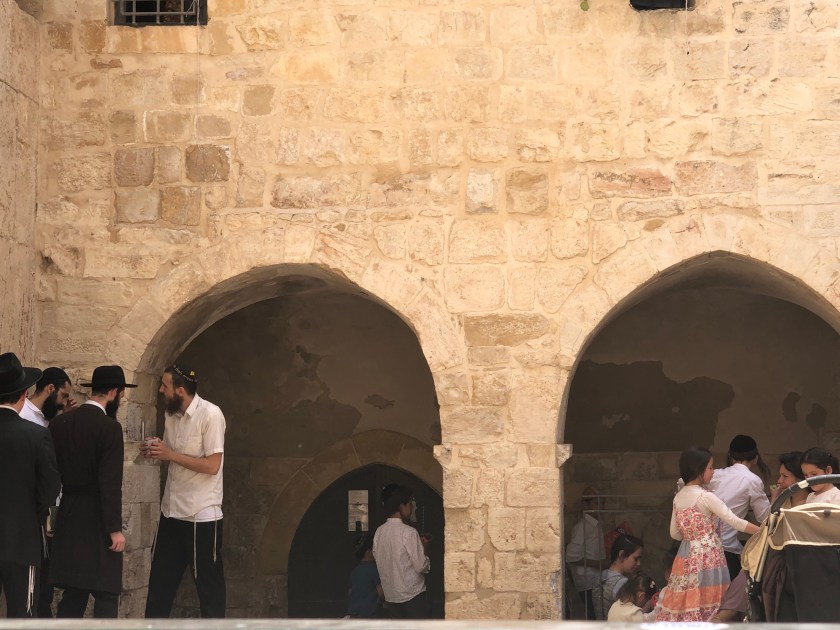
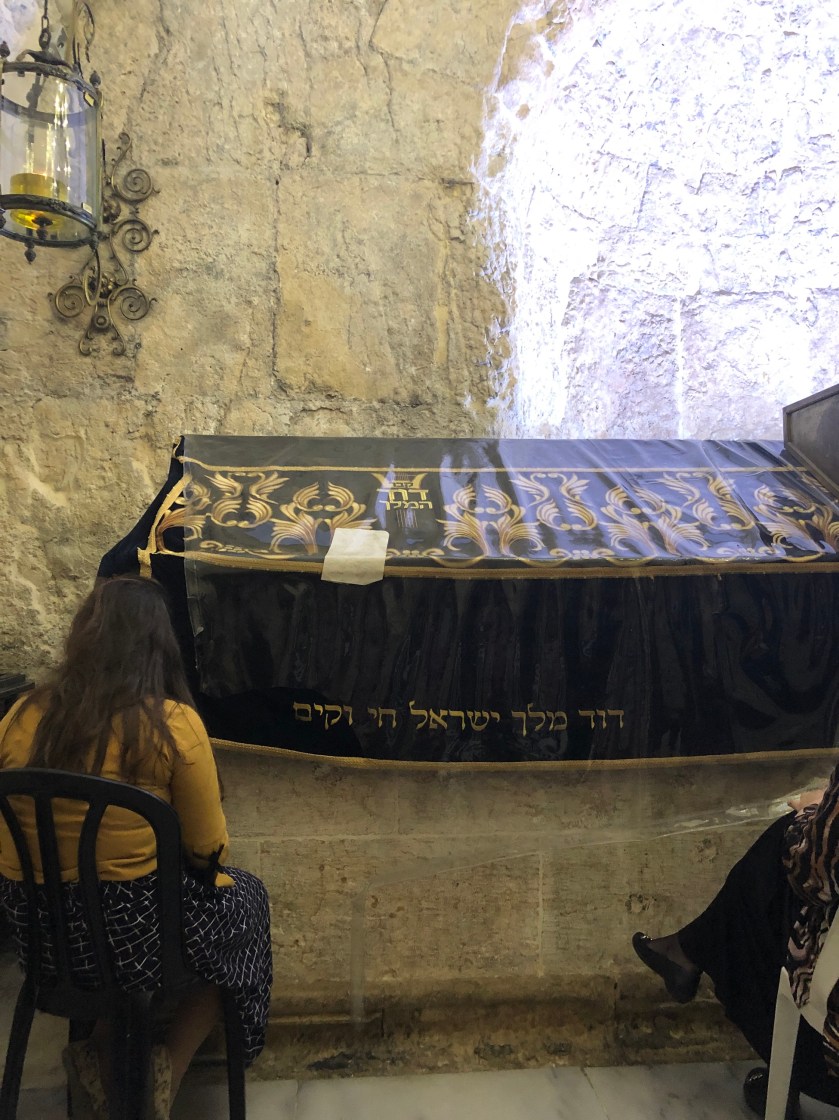
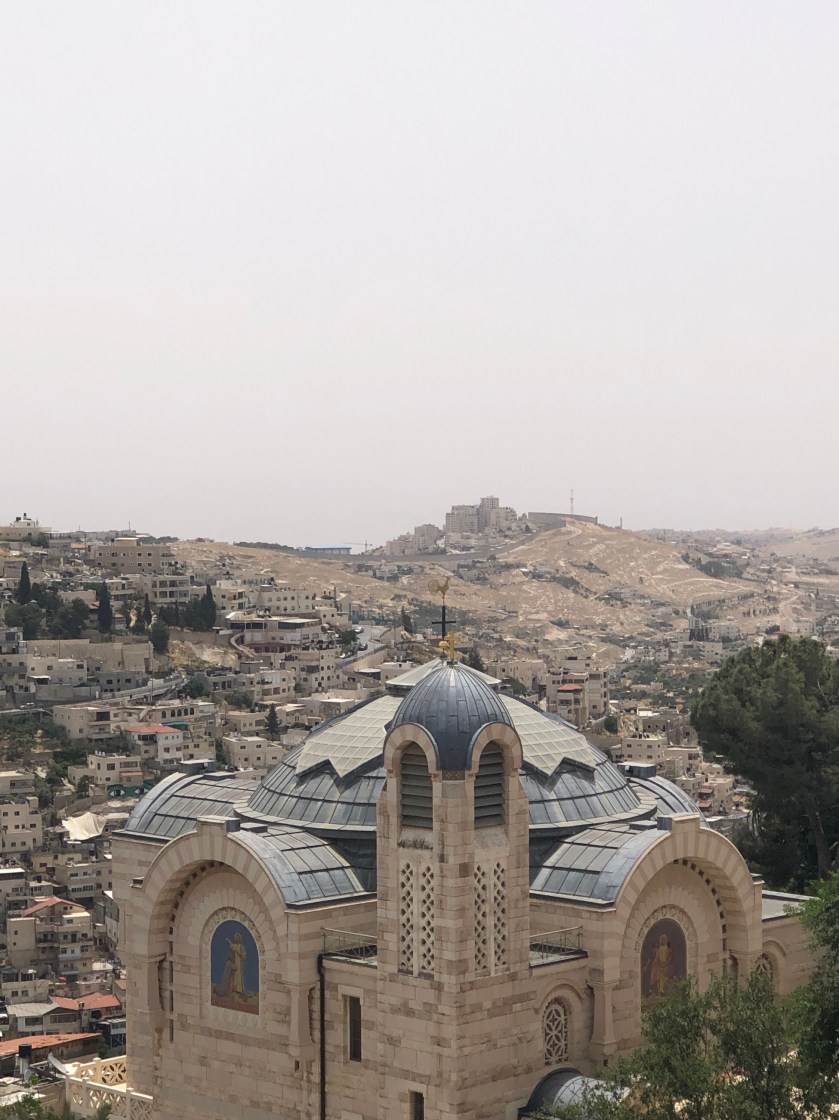
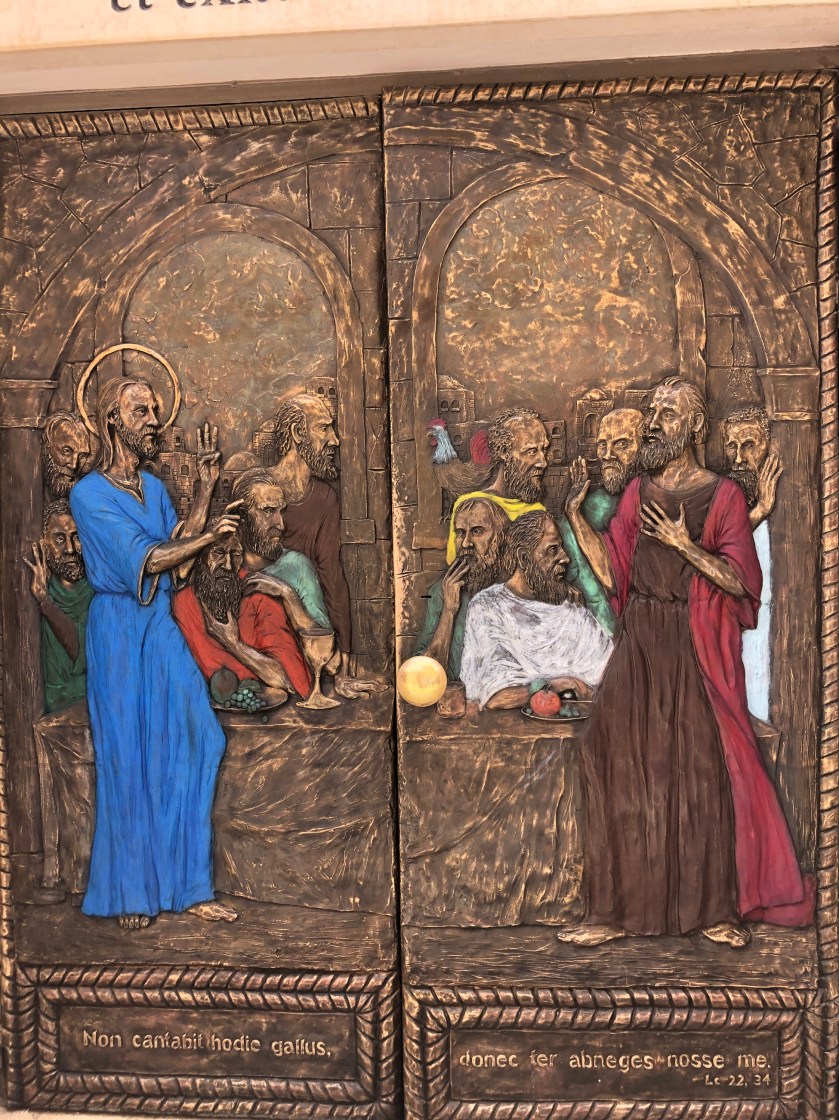
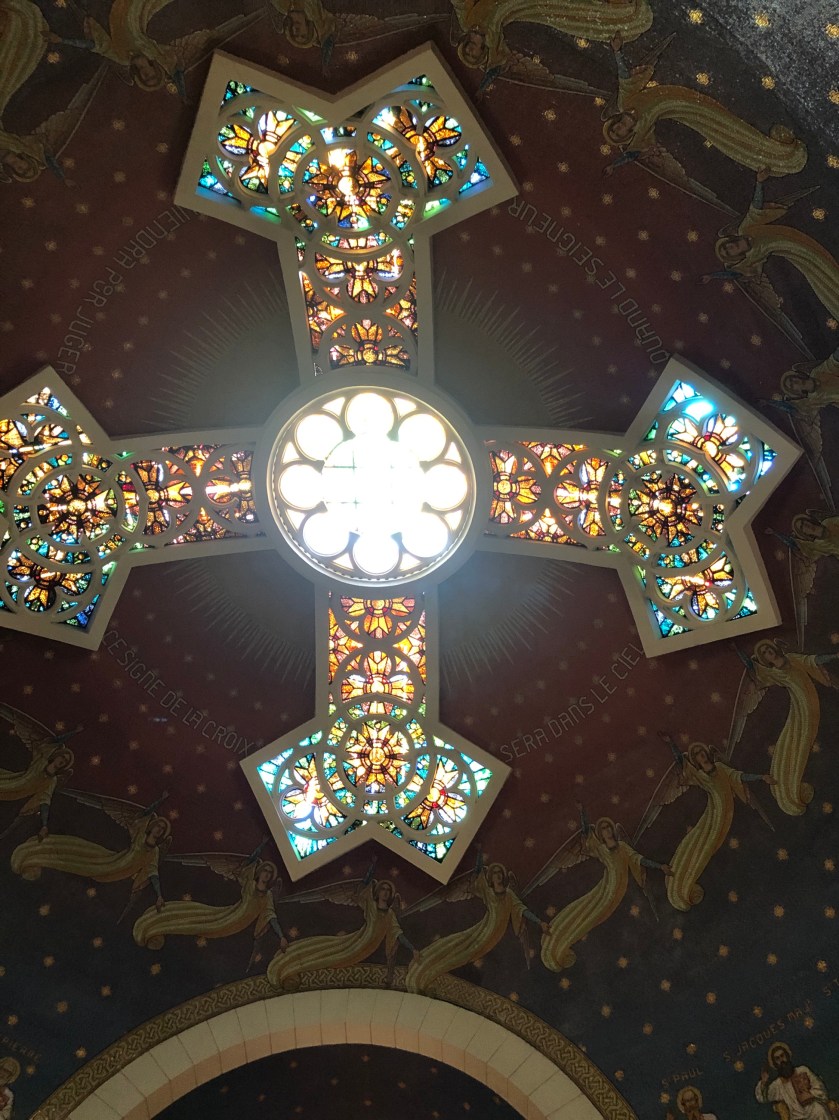
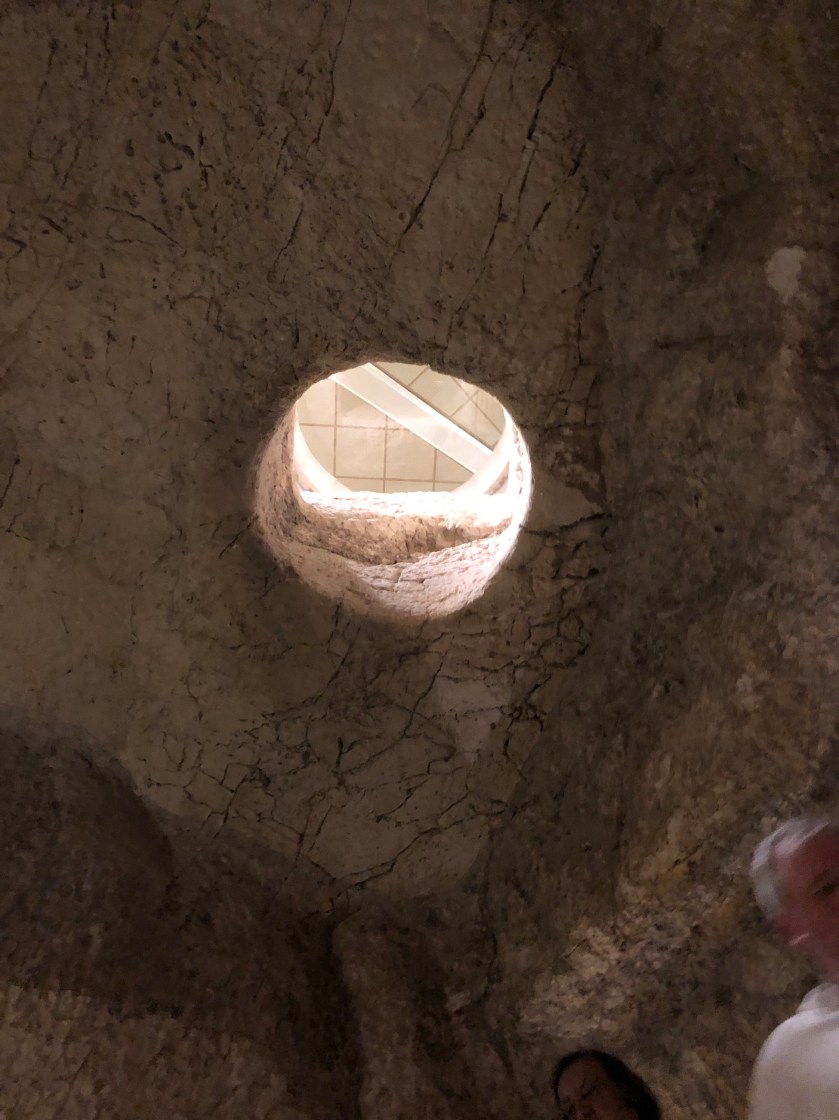
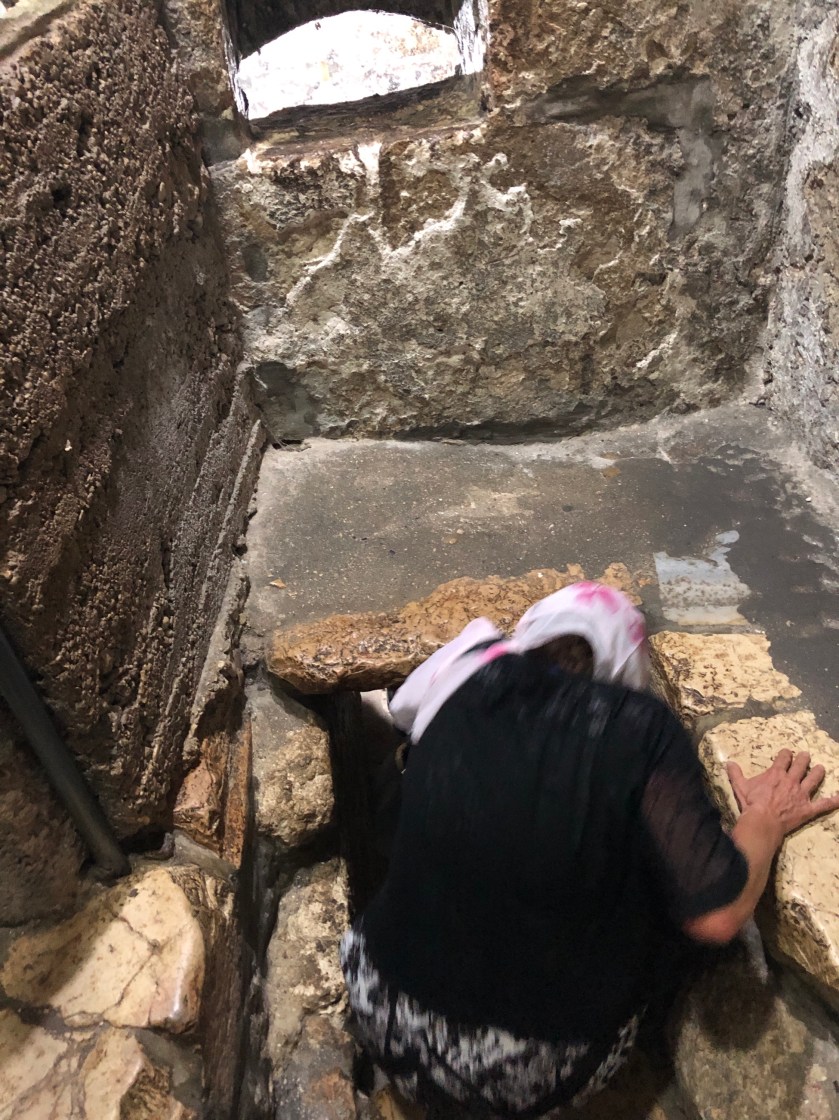
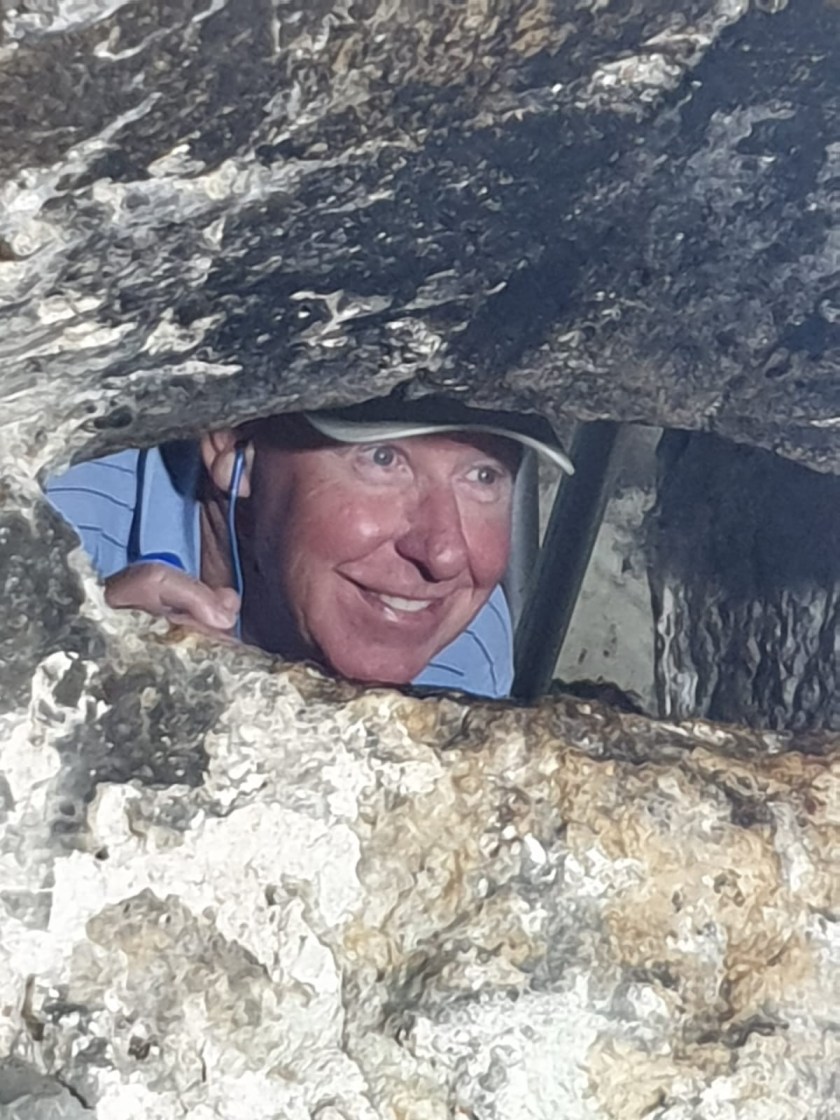
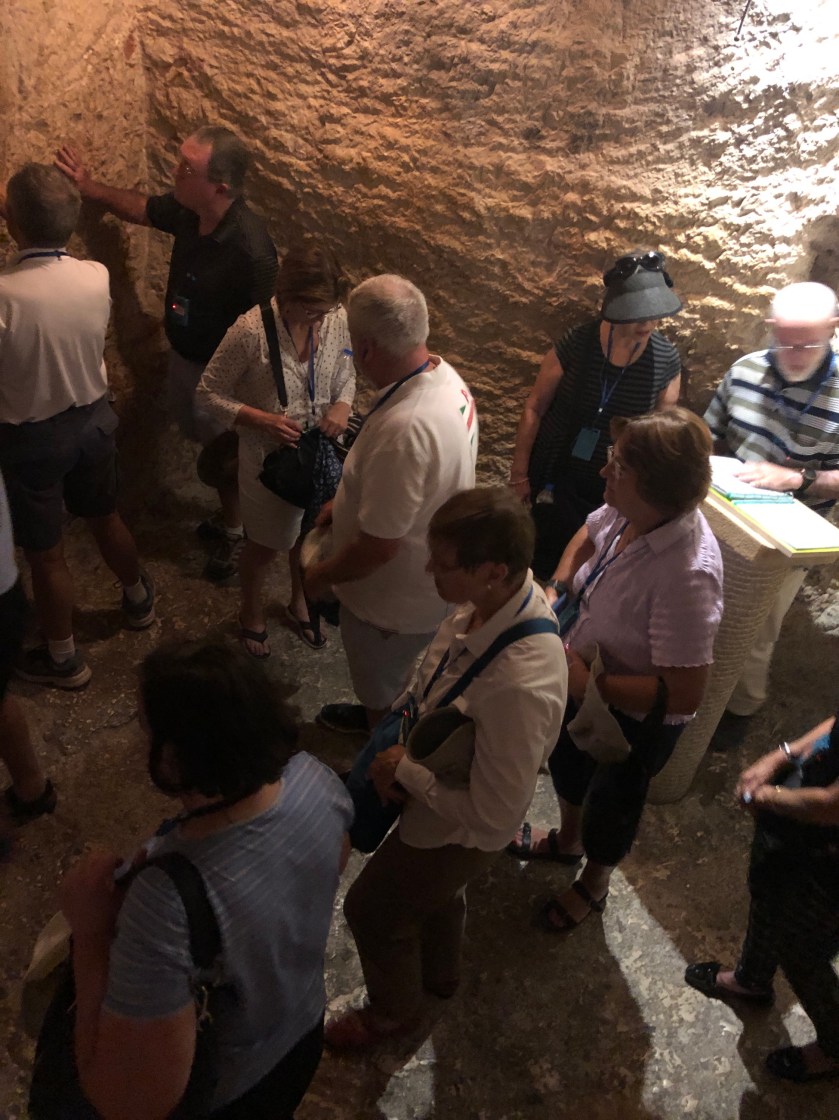 The hole in the ceiling was the way people were put into the room below. I think it would be quite terrifying to be lowered into a black pit like this.
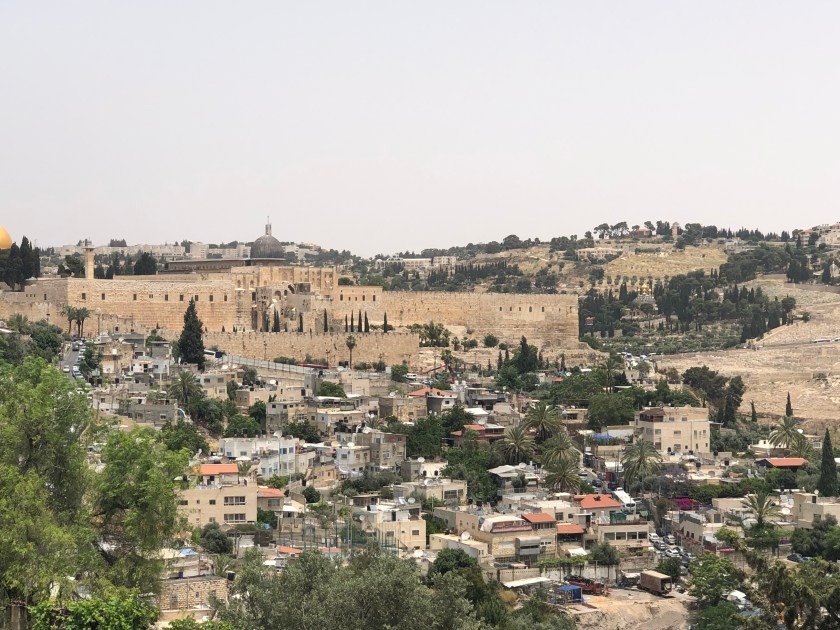
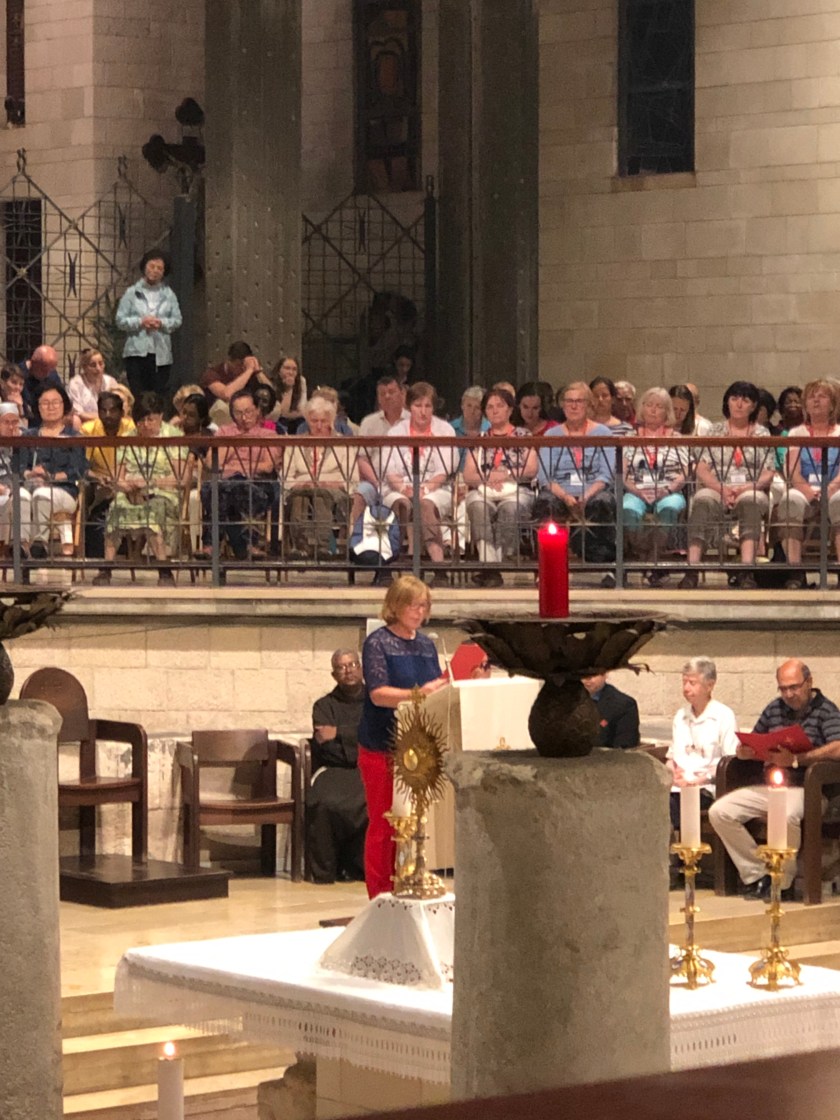
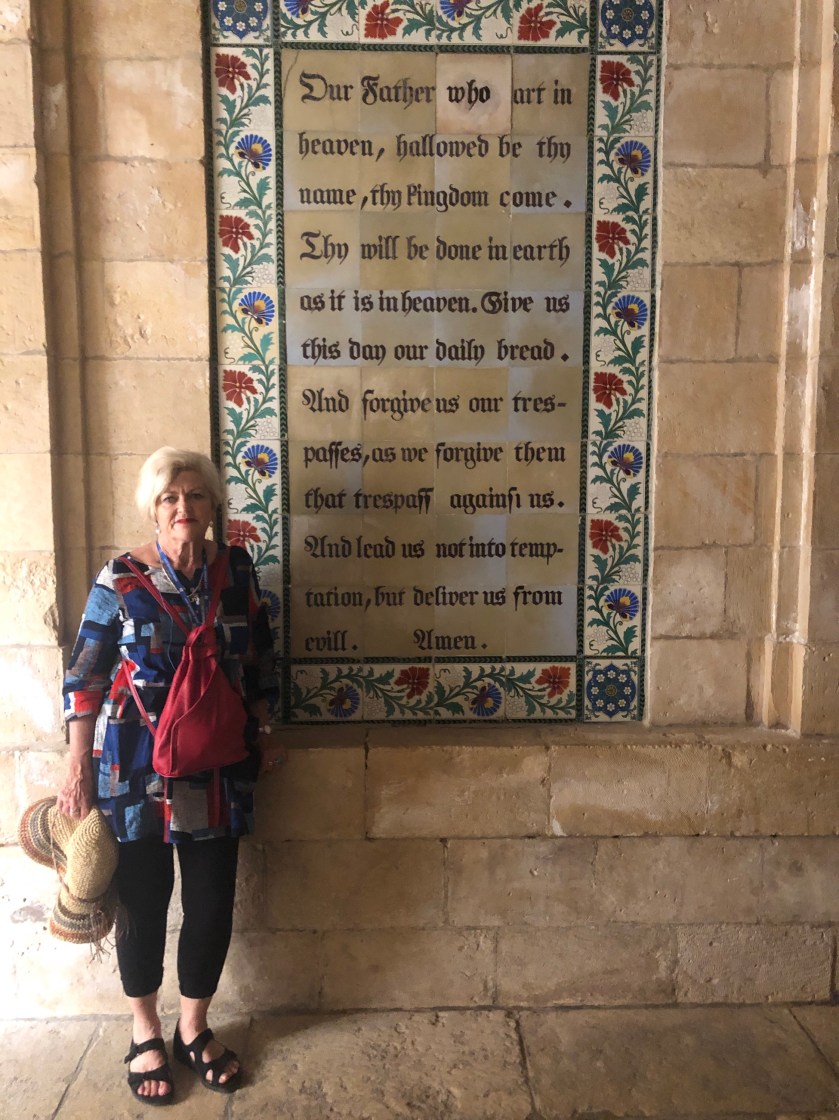
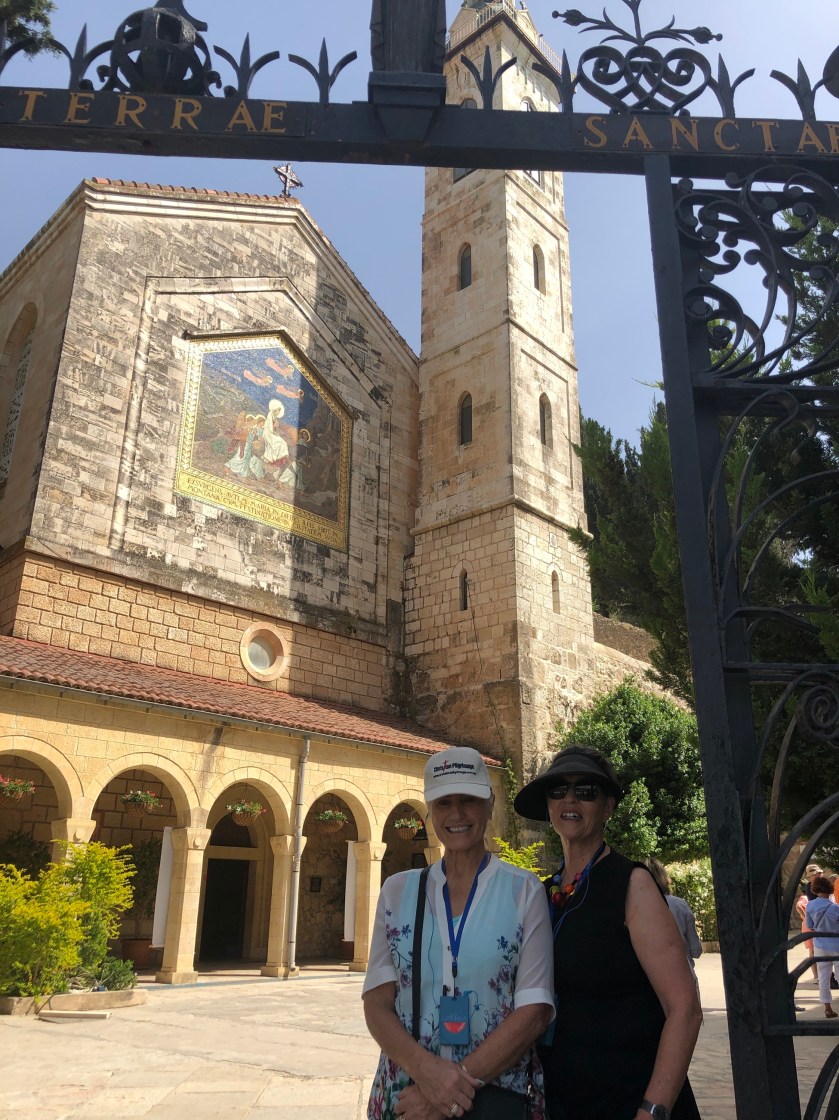
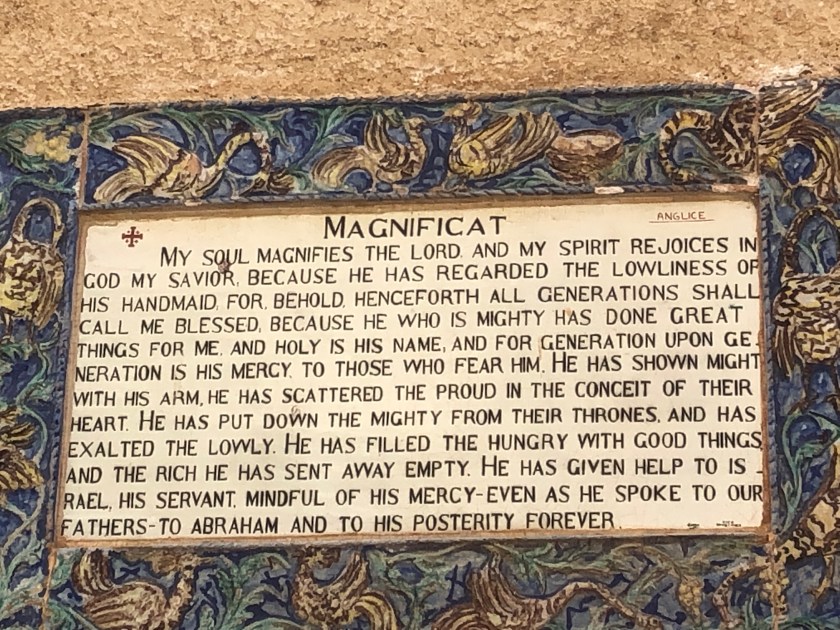
 One of the churches we visited (this was another Church crawl!) was the Church of the Pater Noster, run by Carmelite nuns. It was here in a Grotto that Jesus taught the Disciples. There has been a church here since the 4 th Century. In the church and courtyard are beautiful ceramics in many languages displaying the Lord’s Prayer.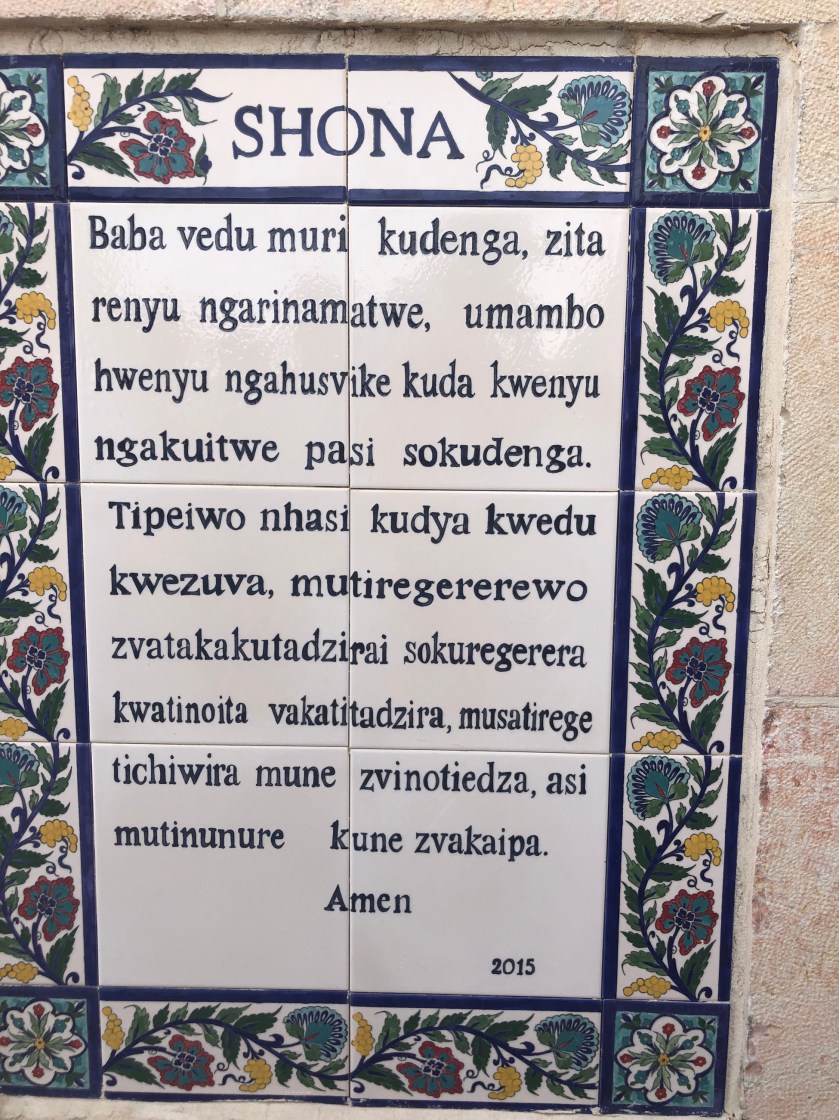
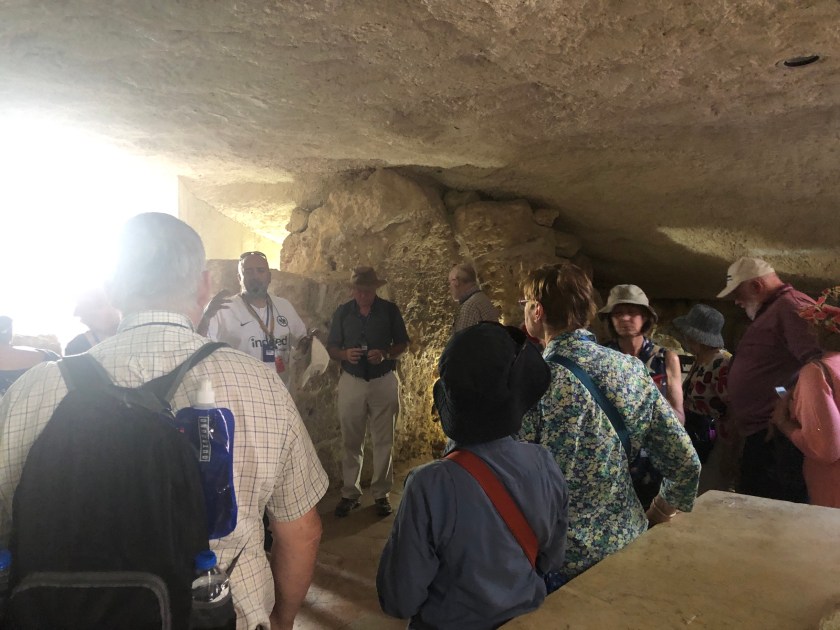

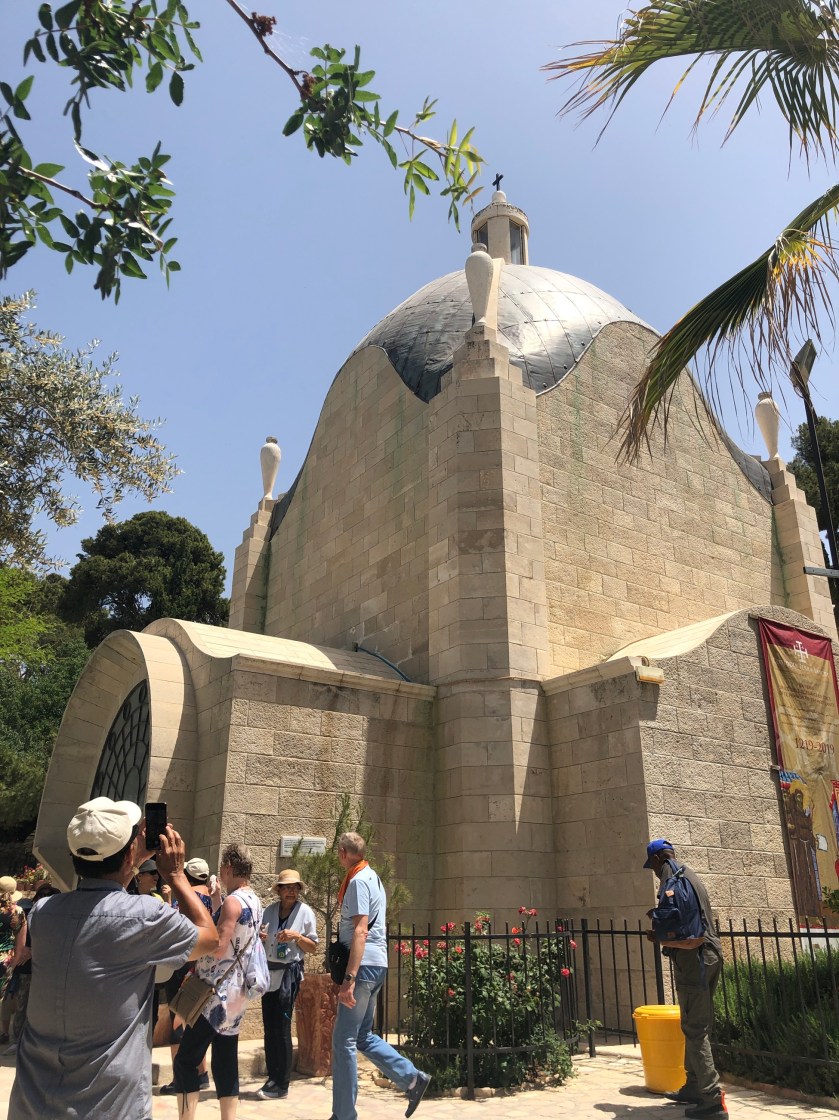
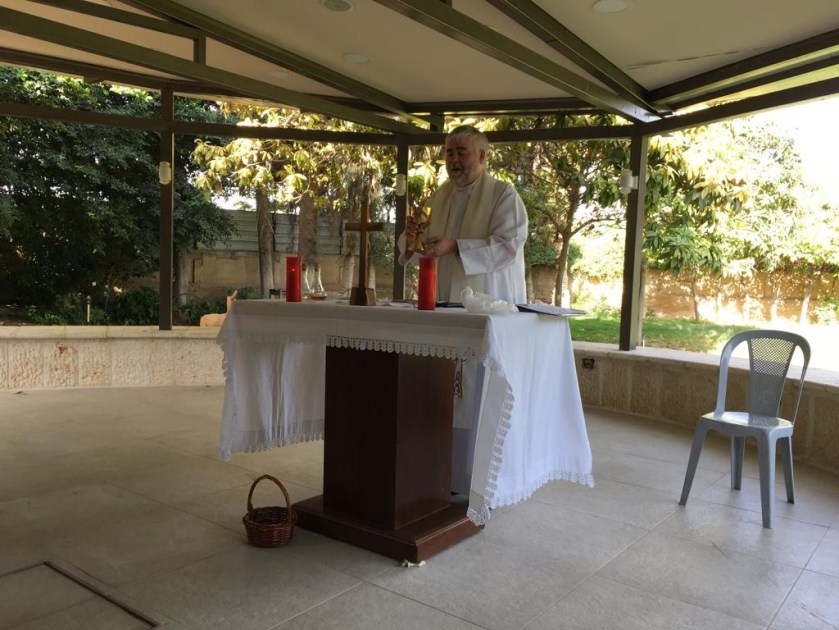
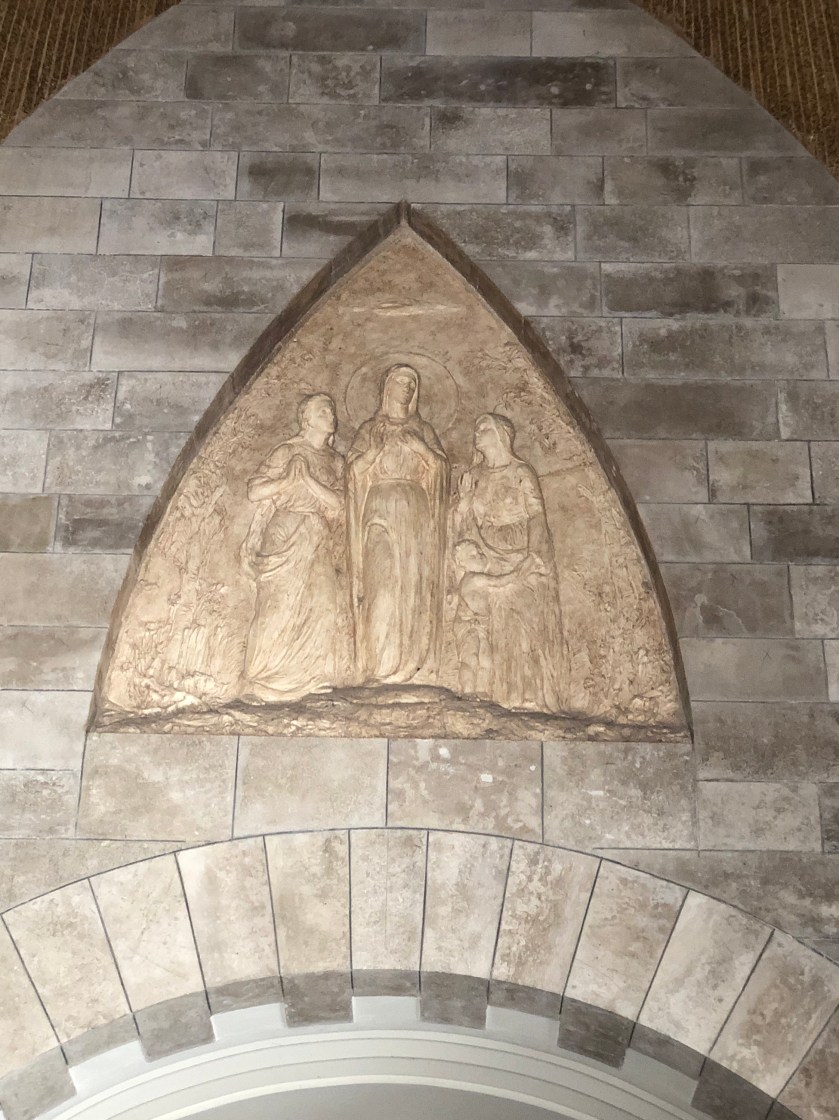 It was a very hot day and we were glad to take shelter in any shade and also to have a Mass in this church. All around were other pilgrims, some of whom were having out door services and singing beautiful hymns. This really added to the whole atmosphere of the area.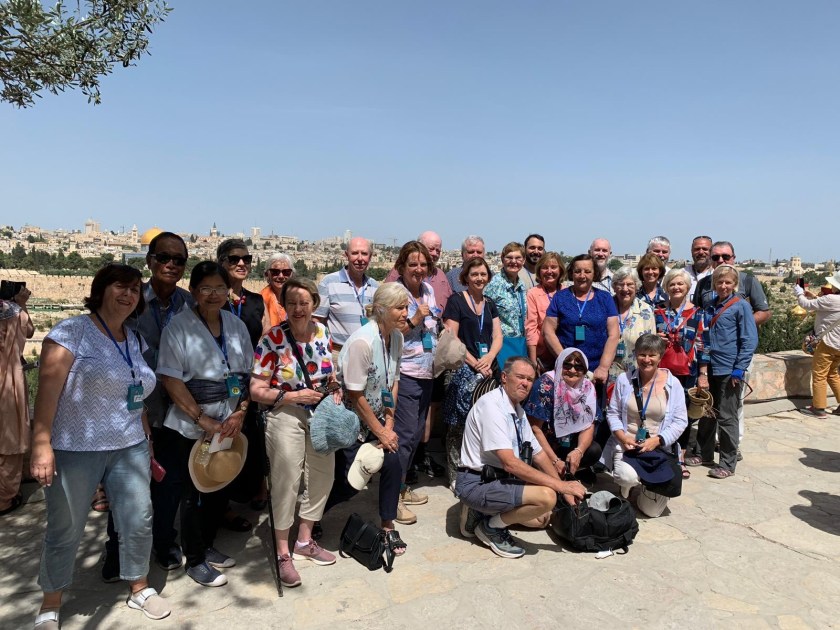
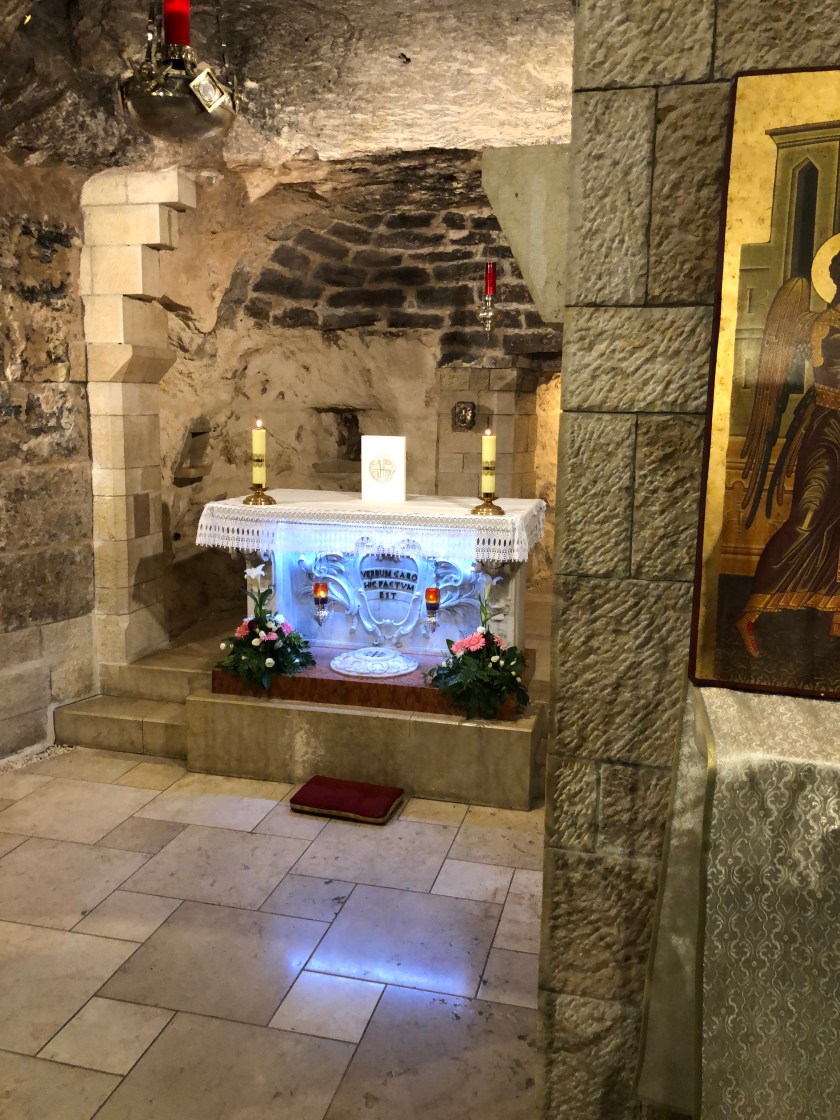
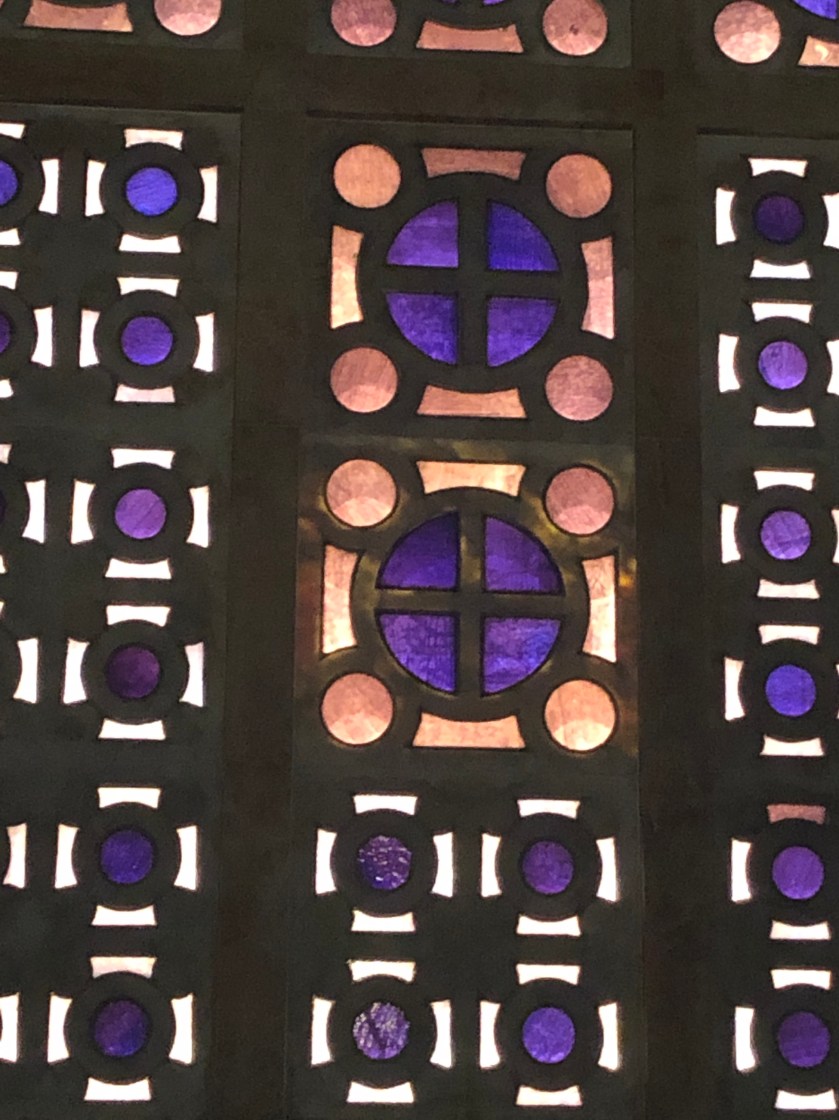
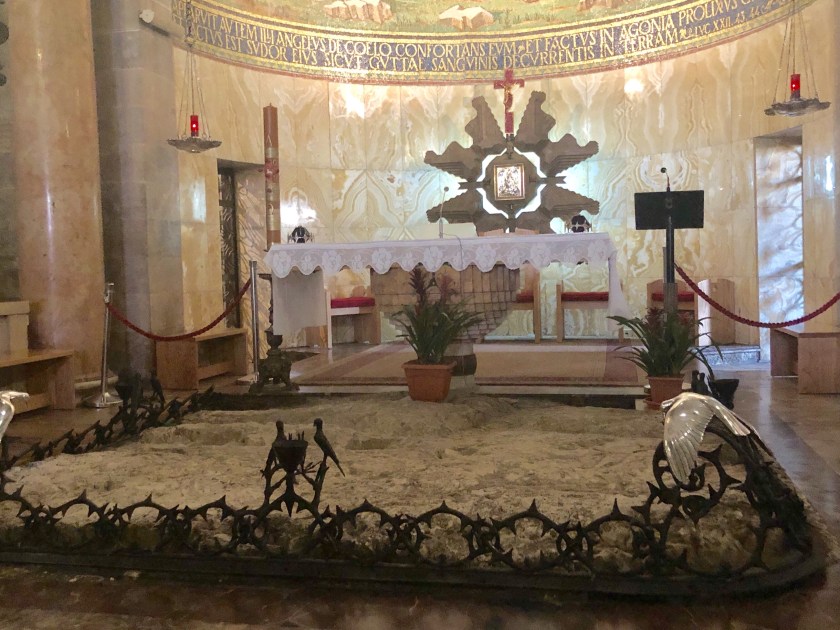
 Further down the hill we came to the gardens of Gethsename where there were ancient Olive trees with trunks several feet around. It was here that Jesus spent his last hours in solitude. Besides the gardens ( The Sanctuary of the Agony of Jesus Christ) was the Basilca of Gethsename or the Basilica of Agony. Inside the windows were purple to represent the sombre atmosphere of the agony that Jesus felt when he prayed here. On the facade is a beautiful mosaic. Within the church at the centre of the apse is the Rock of Agony where Jesus knelt. The rock is surrounded by wrought iron work that was provided by Australia. Many countries contributed to the building which is why it as the alternative name, Church of All Nations. It is another Church designed by Barluzzi and is the third Basilica on the site. The first was built in AD 380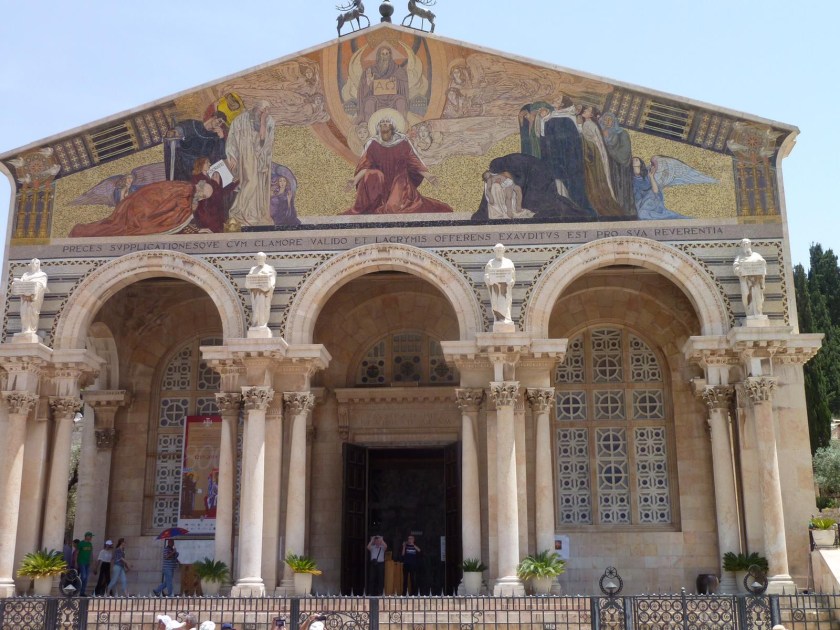
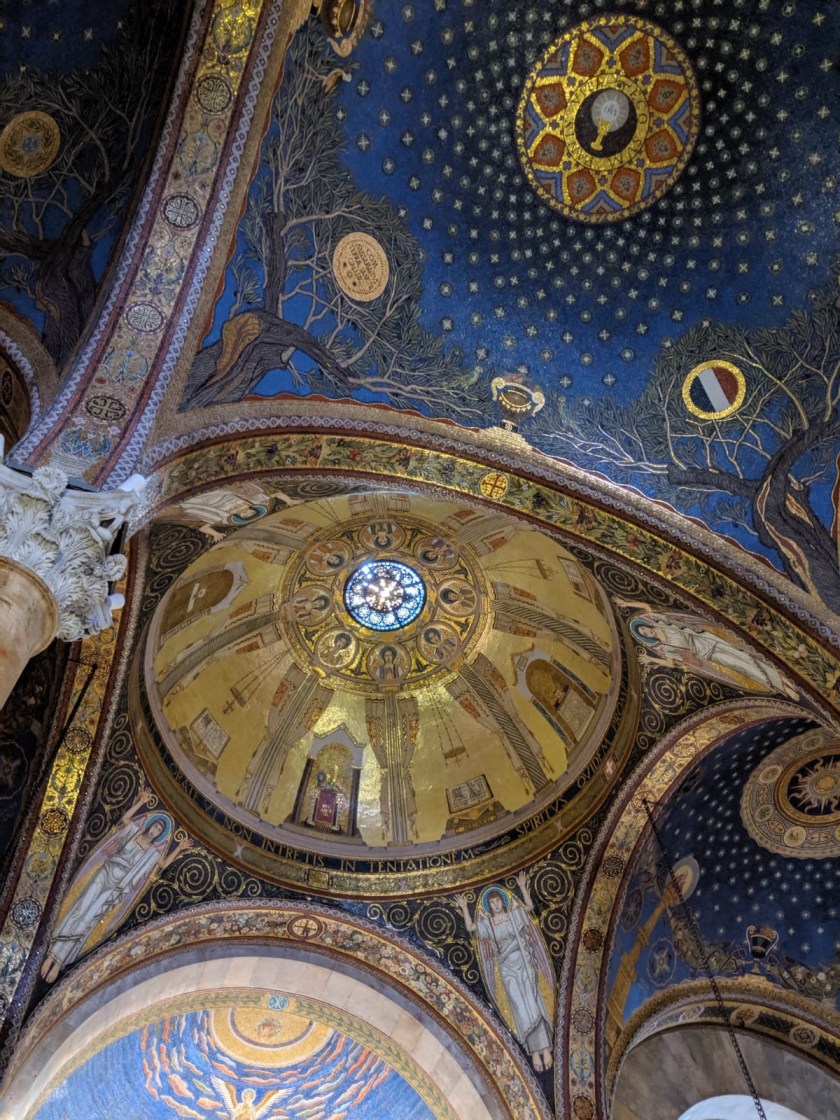


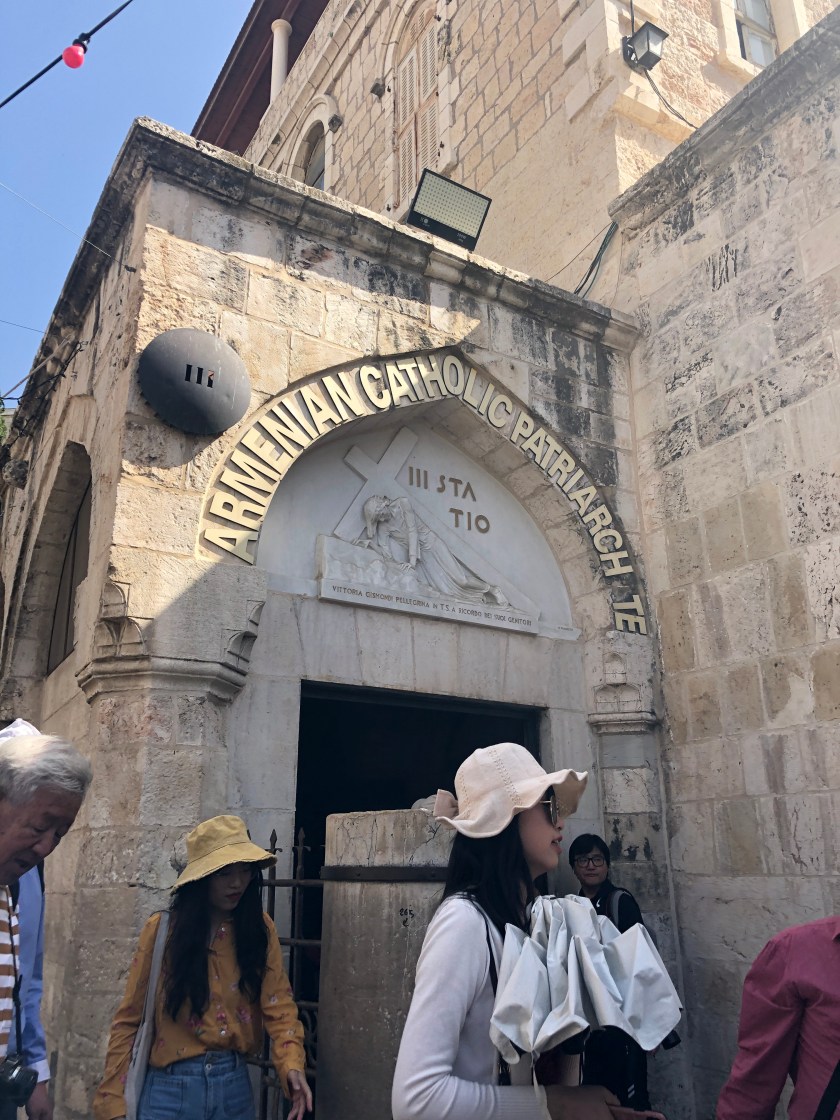
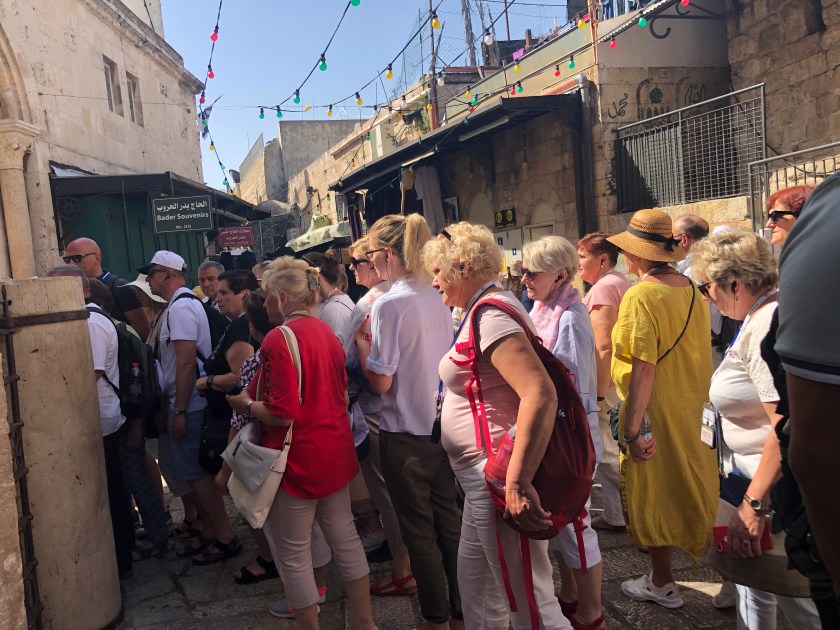
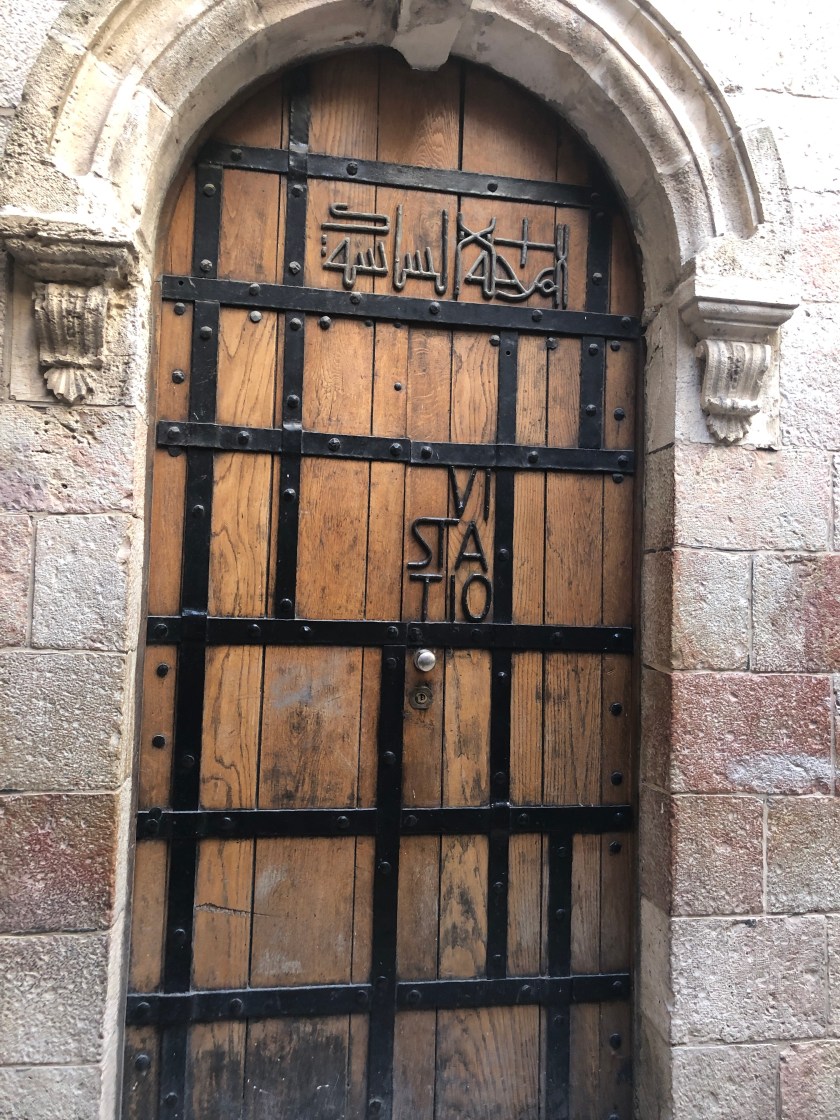
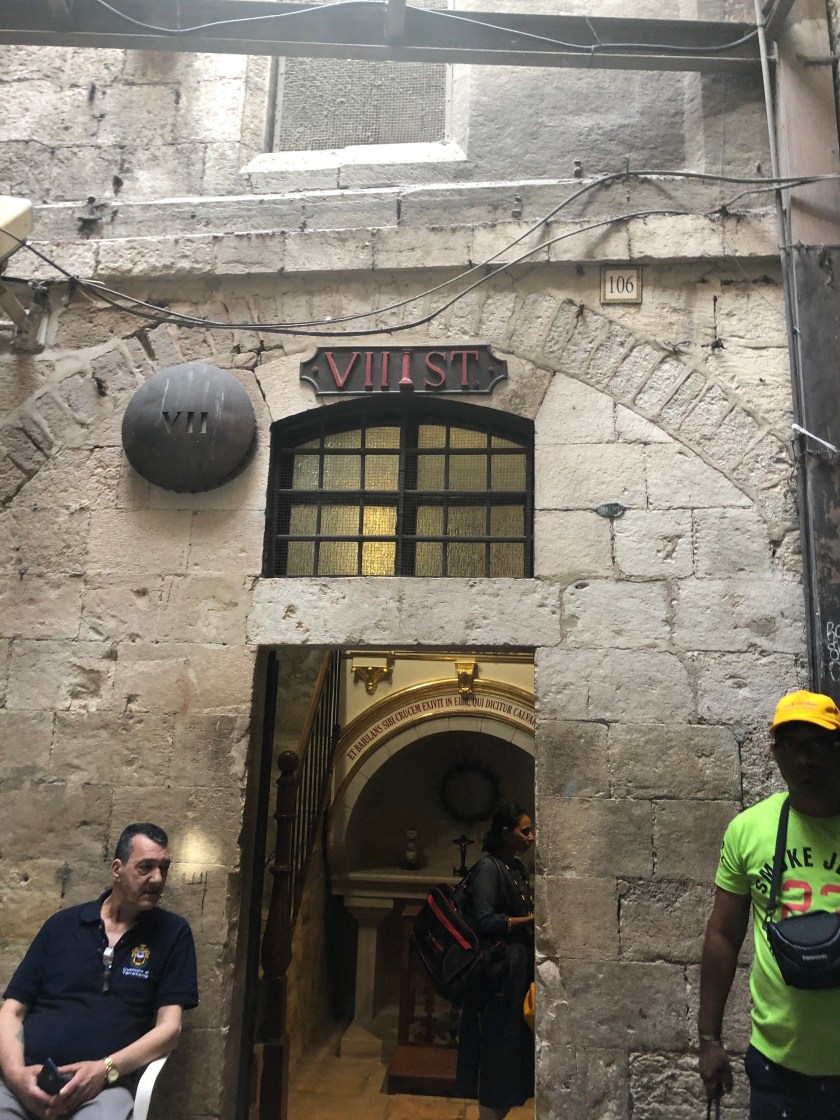
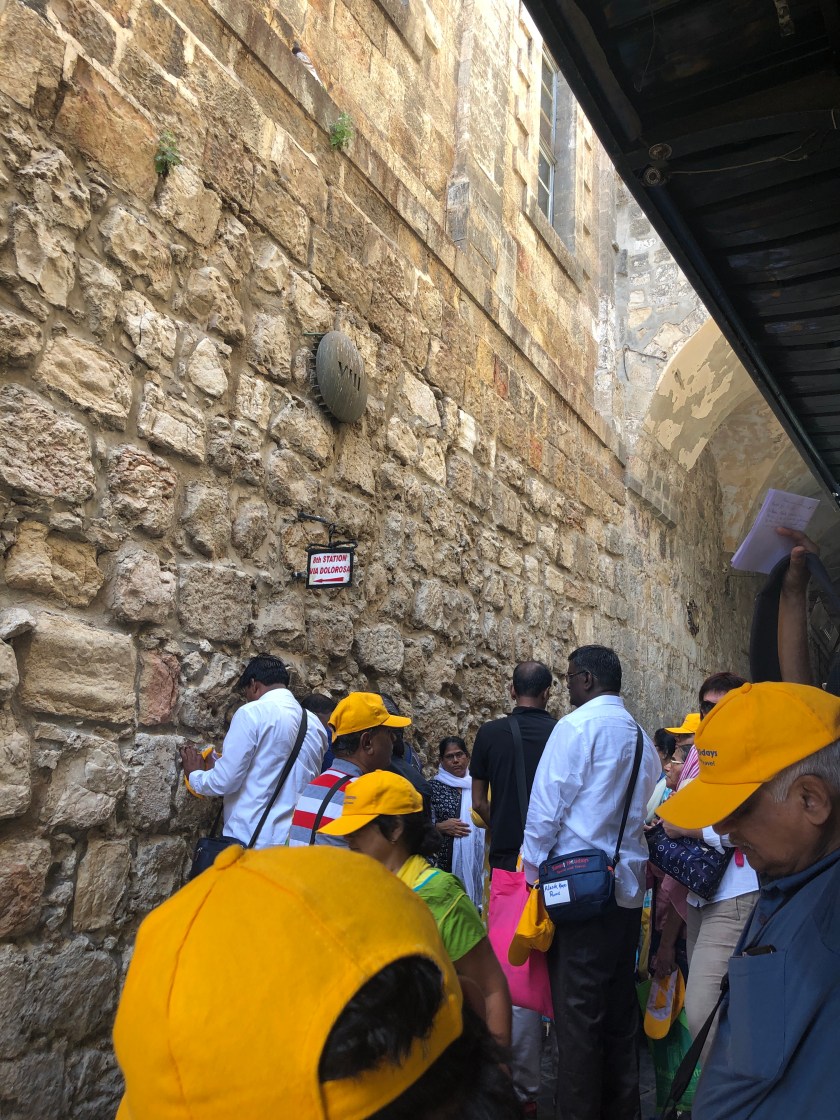

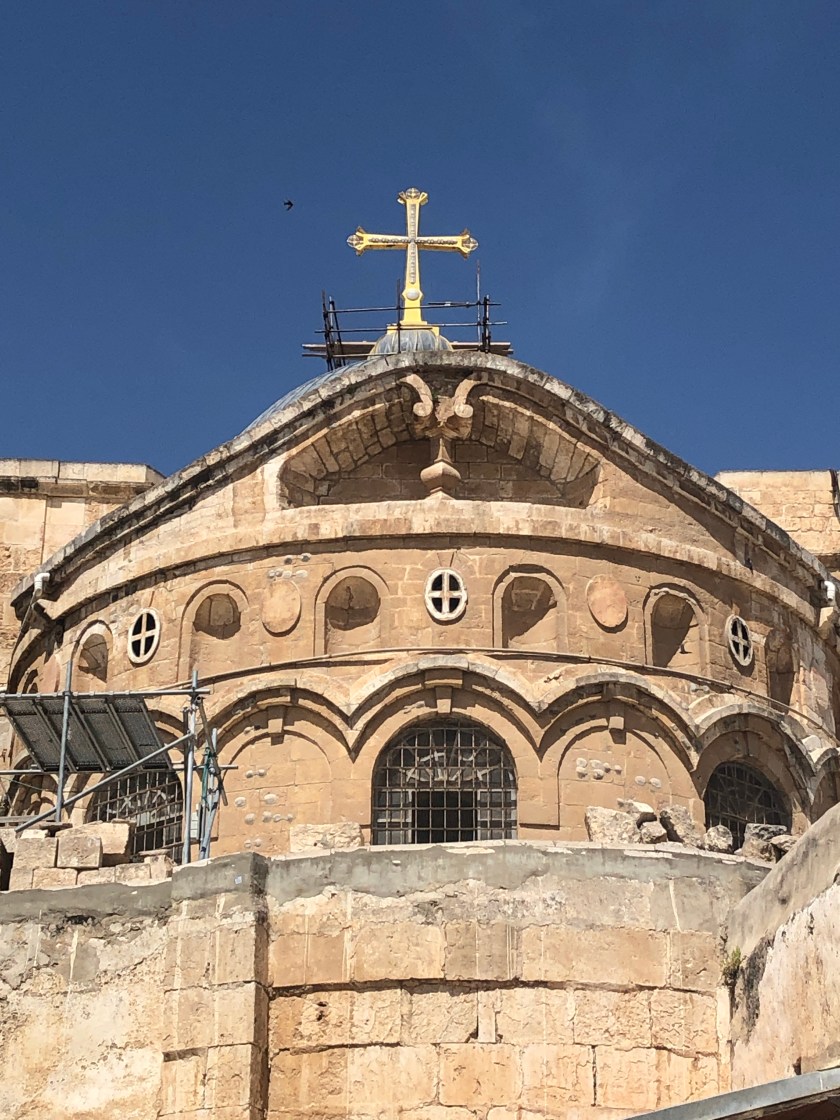
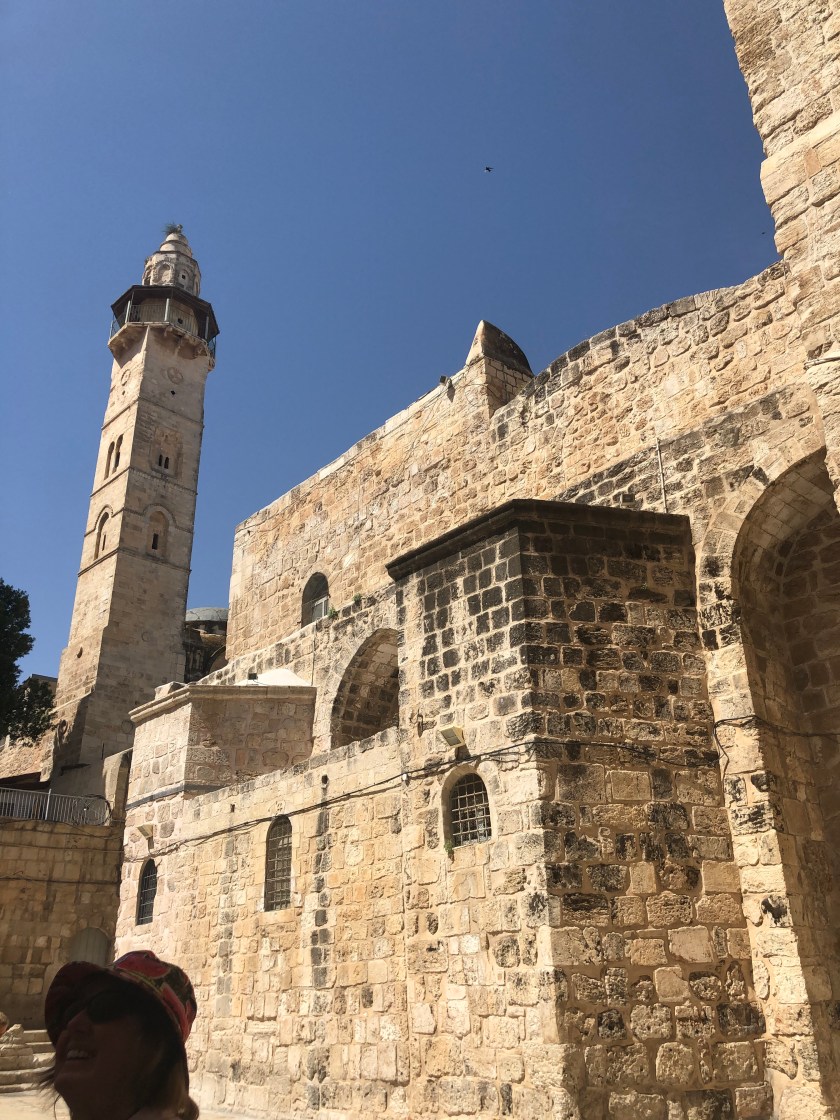
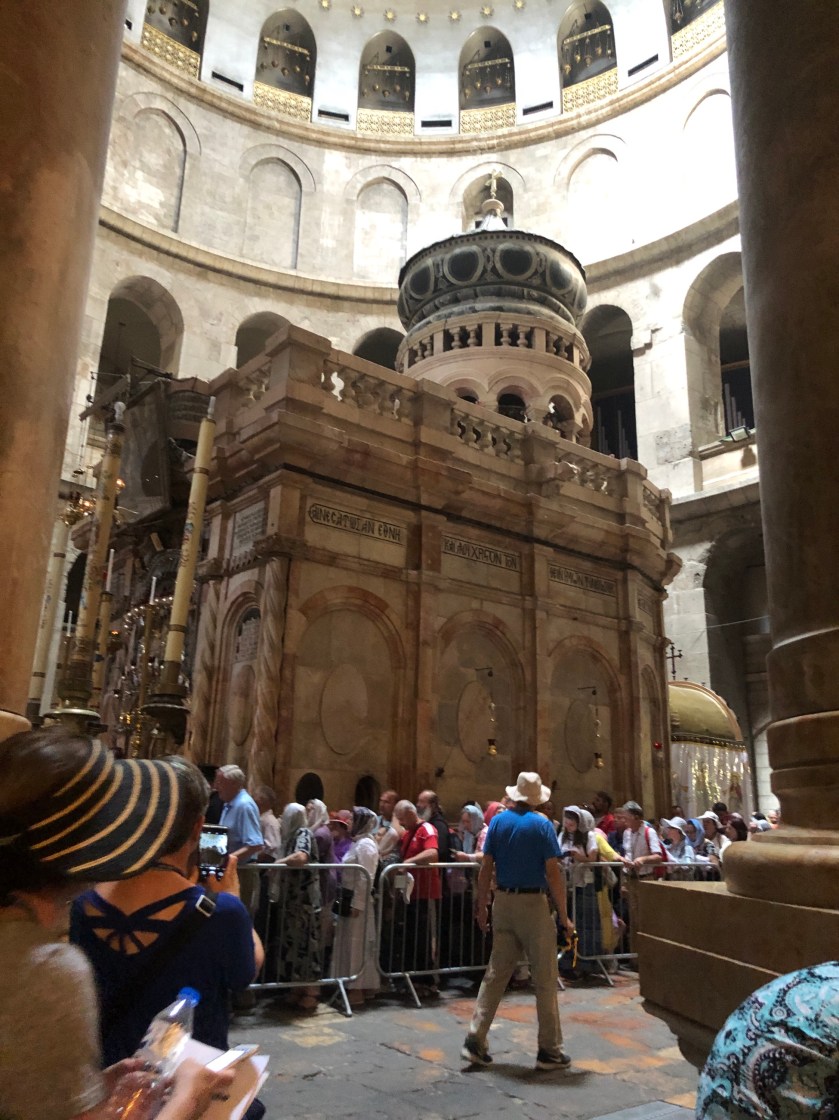
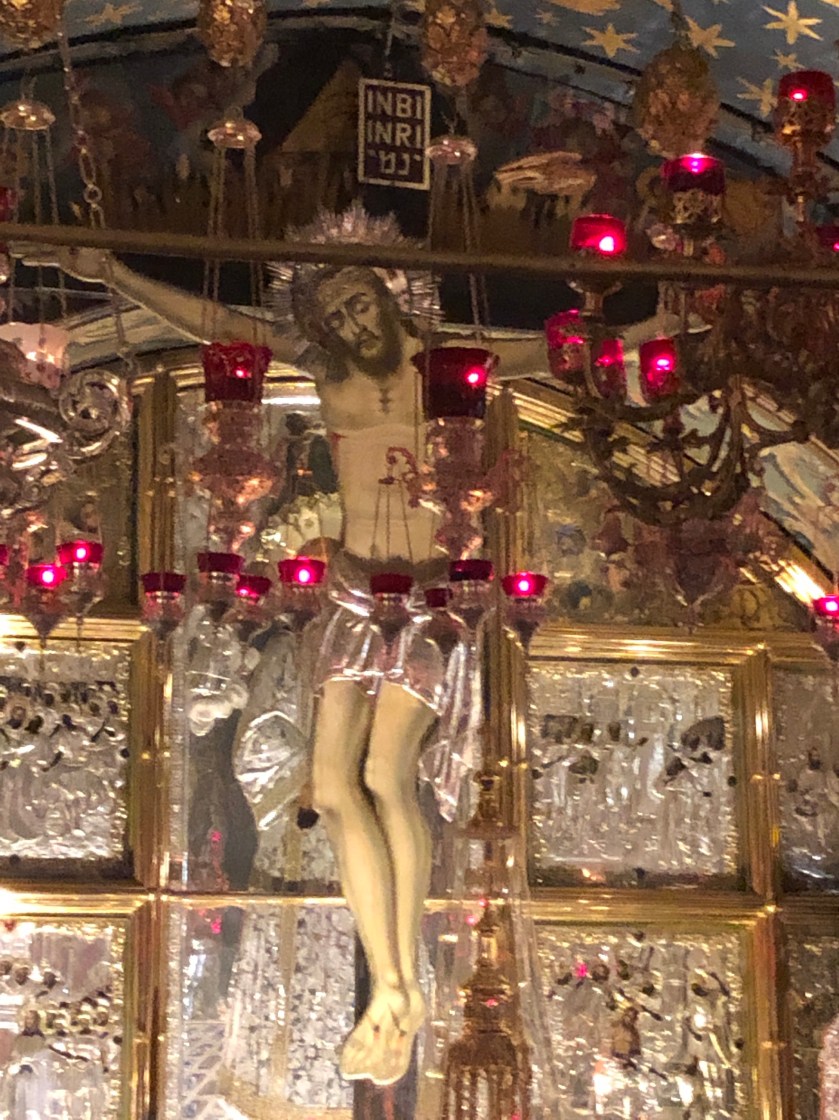
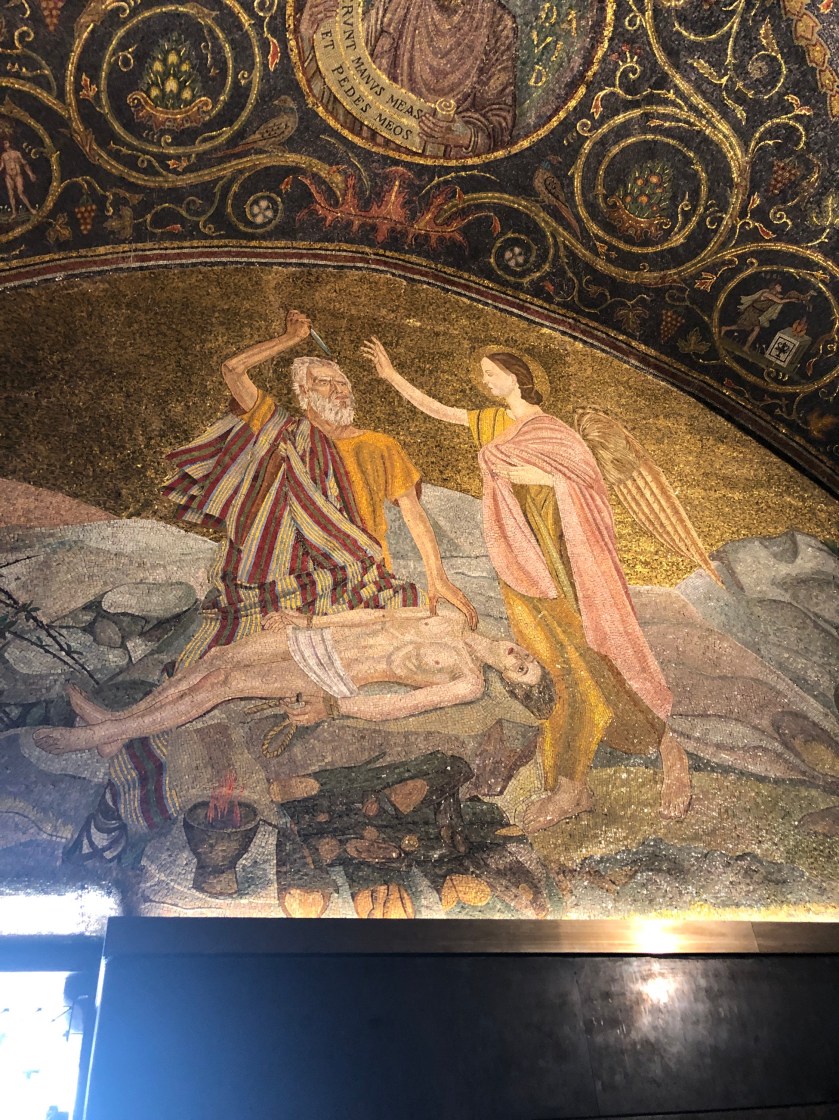


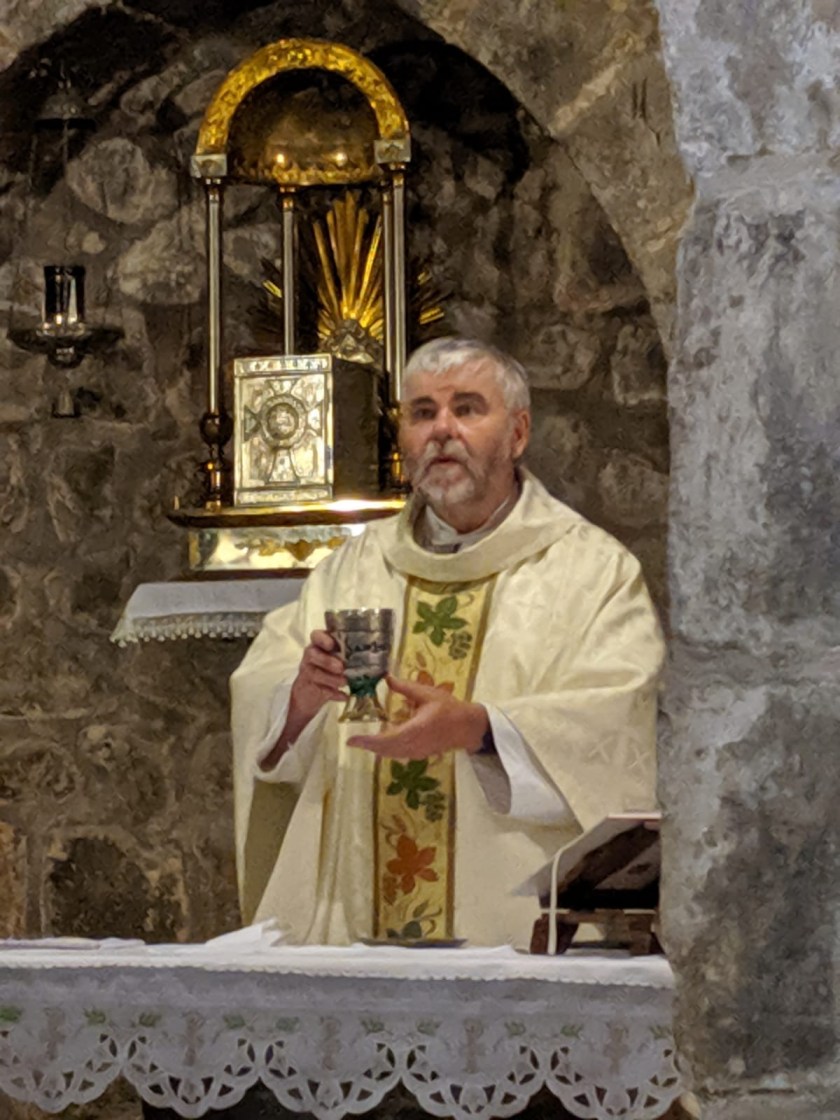 We finally escaped the throng and headed to a great place for lunch. It seems sad to say we escaped but it was so intense. Whatever your faith this is an amazing place and it makes you think deeply about culture and religion and life.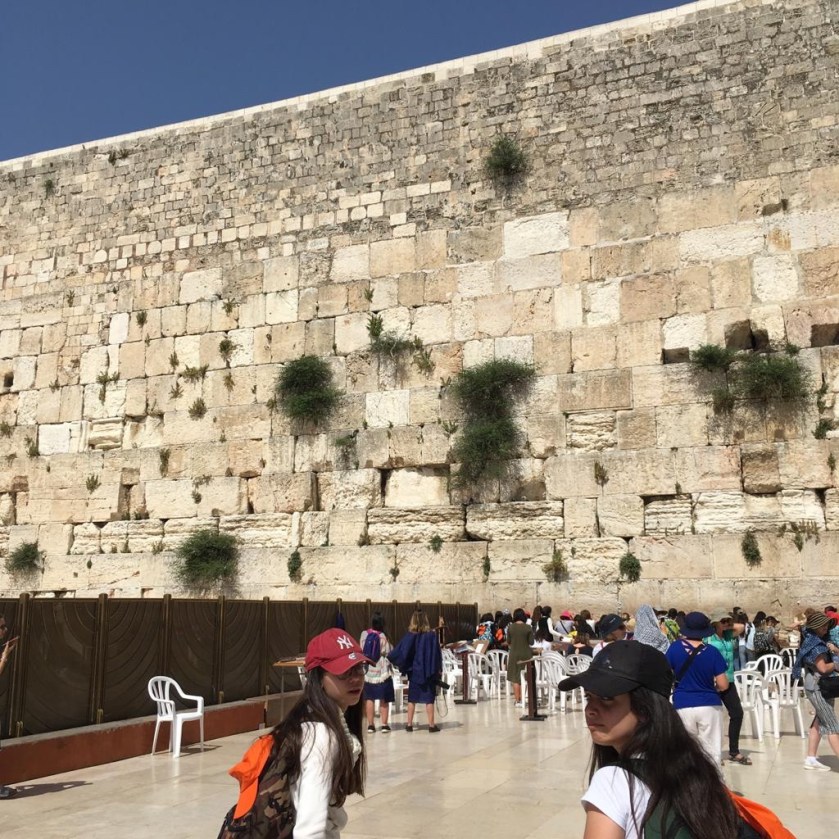



 i
i


 .
.



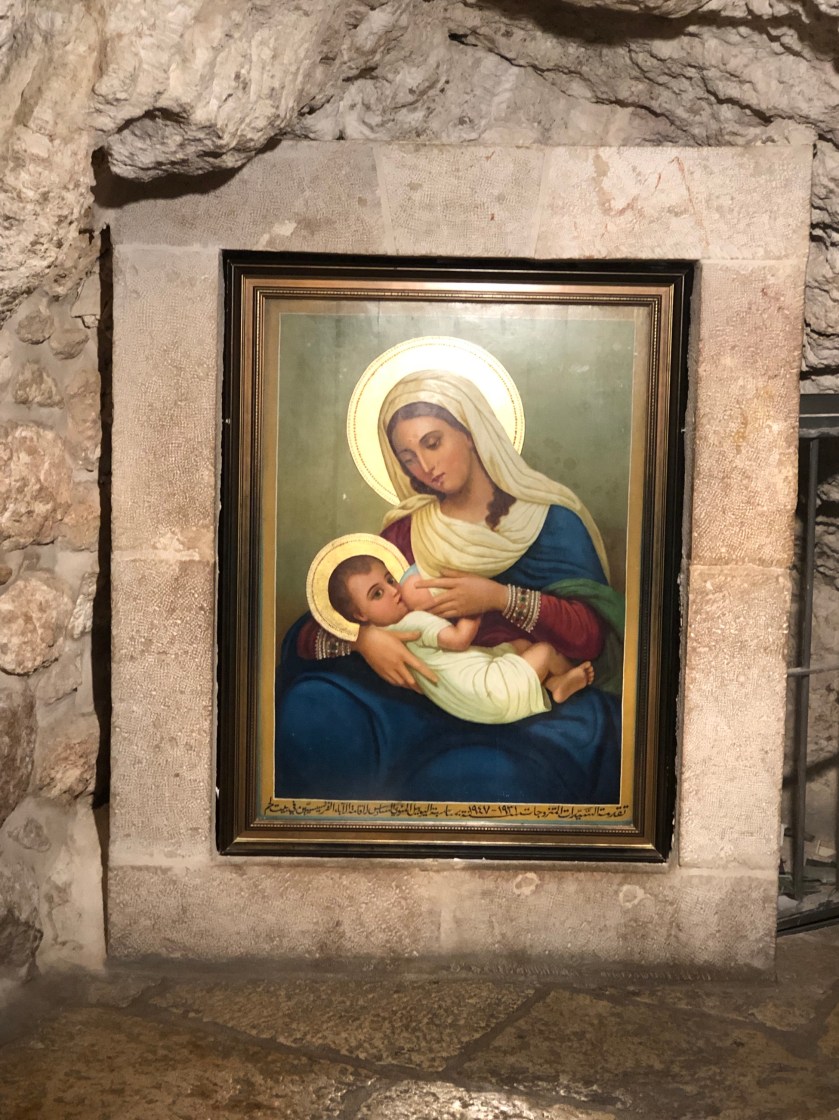
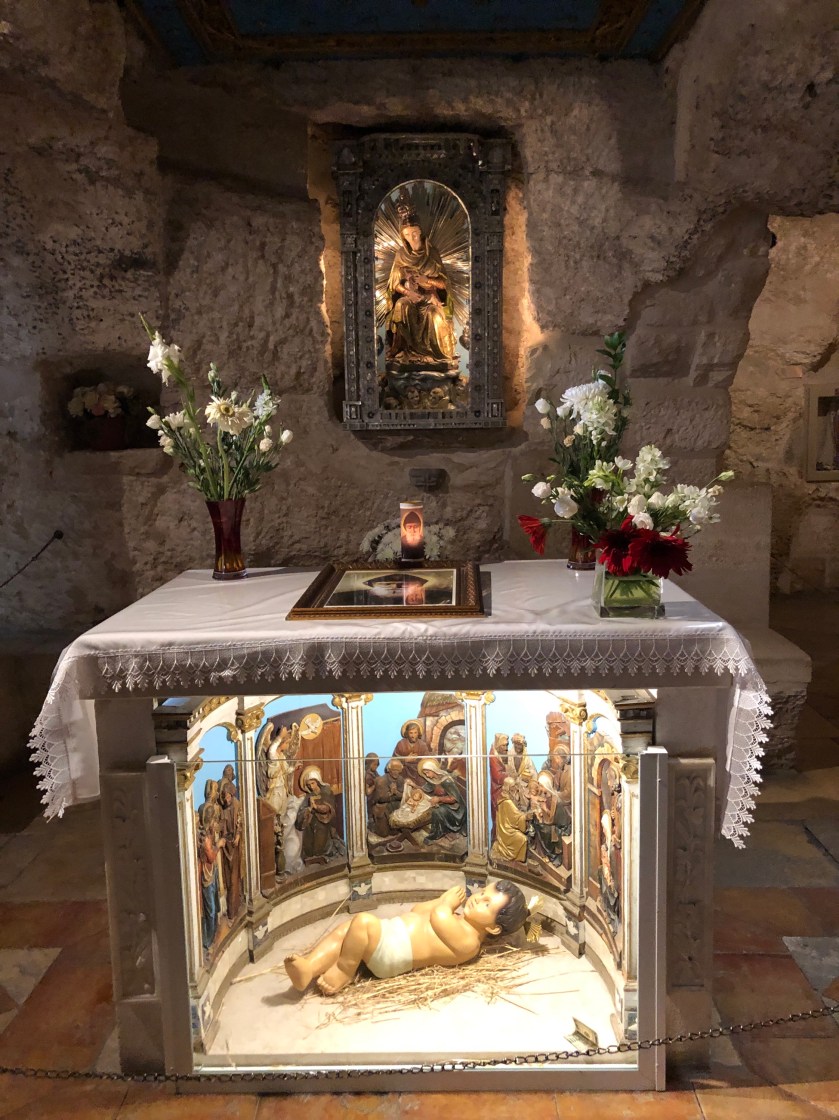
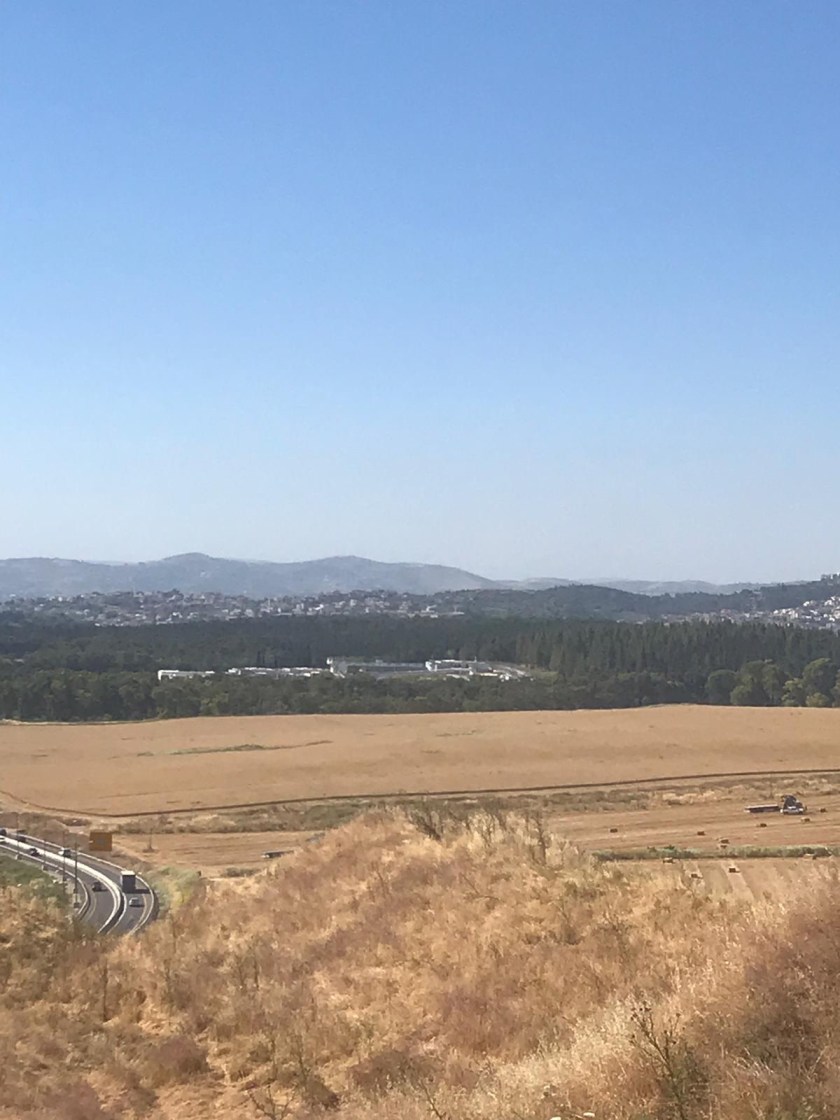
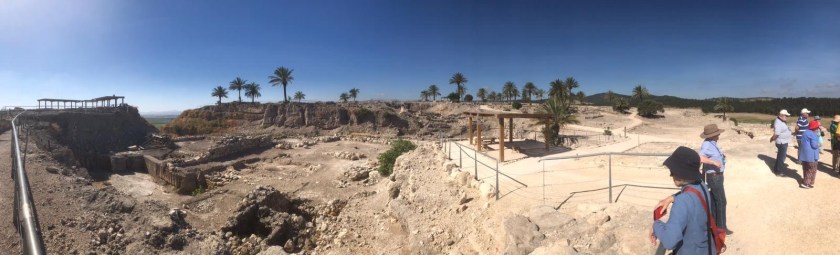
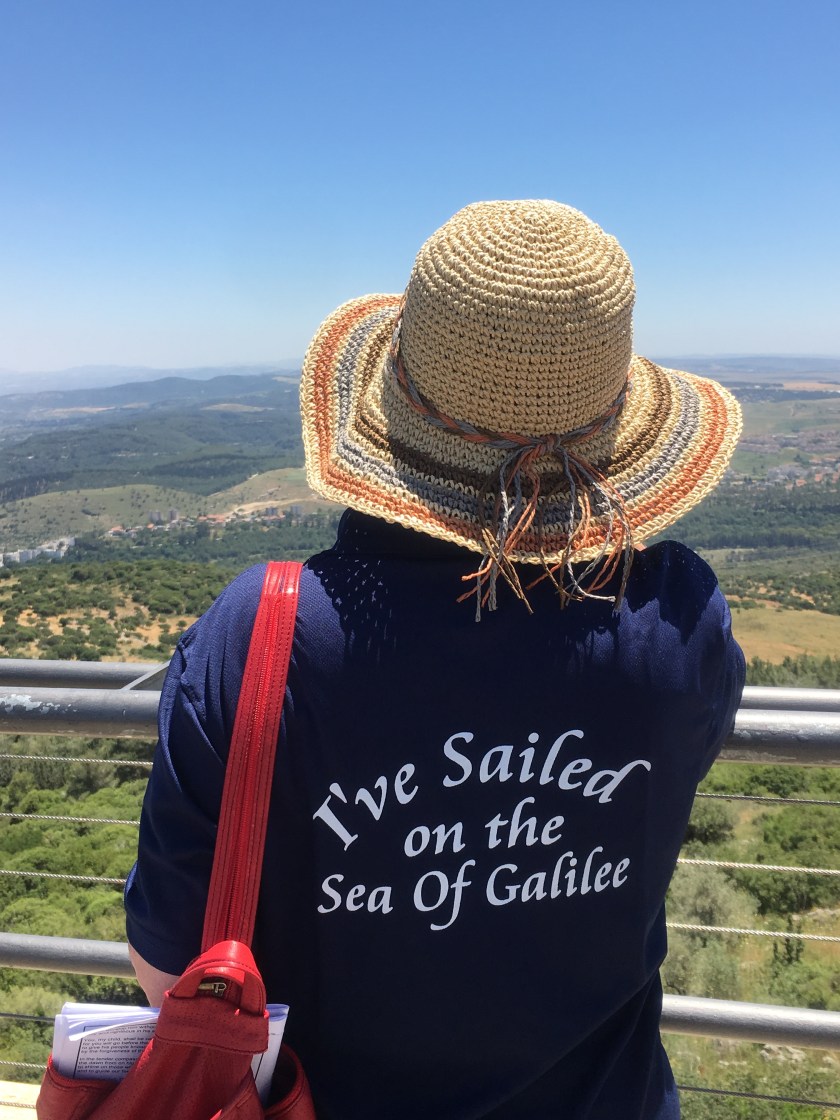 We drove to Mt Carmel next. This is situated behind Haifa on the coast. It was lovely to see the sea again and Haifa was an attractive modern city. Any place that has trendy coffee shops is a modern liveable city.! It really looked a lot like home. The difference between Jewish and Muslim settlements is so marked. Like time warps. We stopped at the Bah’hi Gardens. It has 19 terraces stretching up the Northern slope of Mt Carmel. In the centre is a shrine to Bab their prophet. It was meticulously tidy and quite beautiful. This is a breakaway group from Islam but they are very peaceful and their members are well educated and usually wealthy.

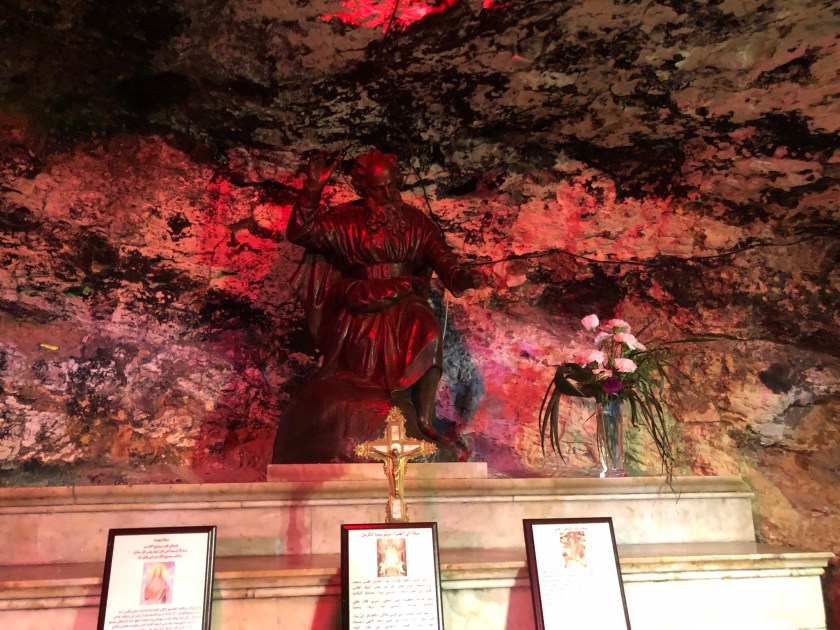
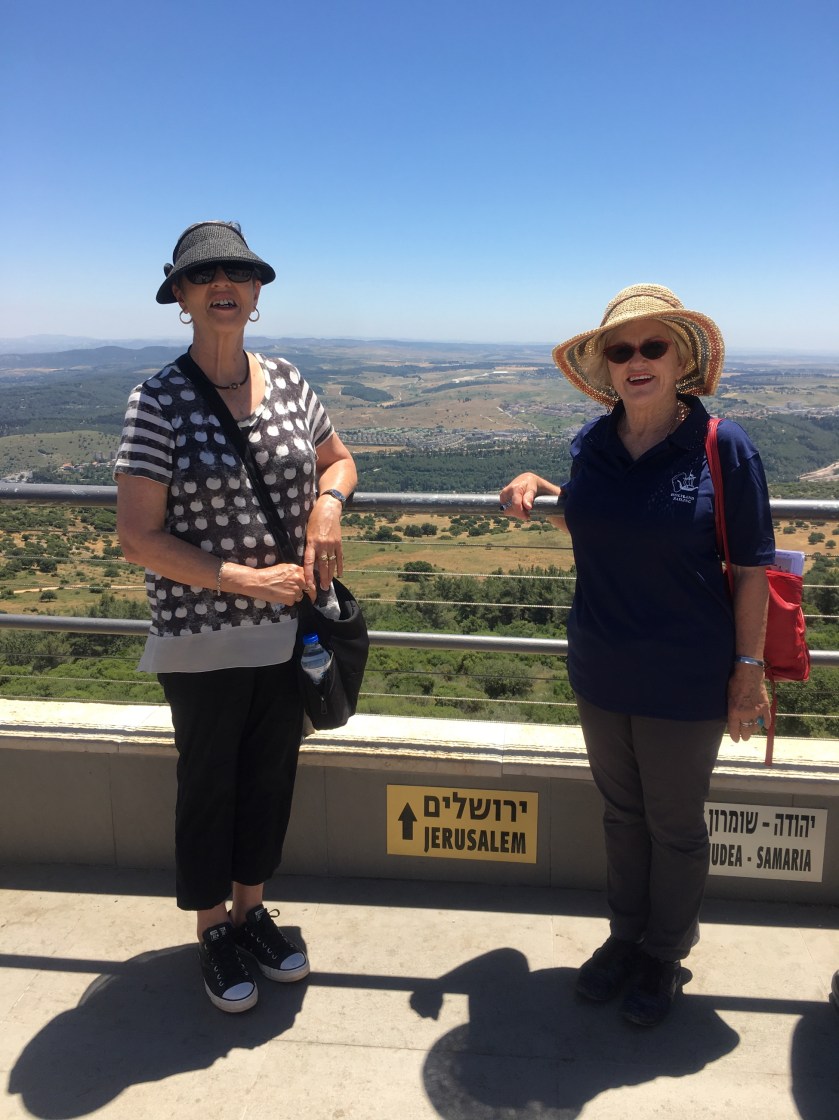

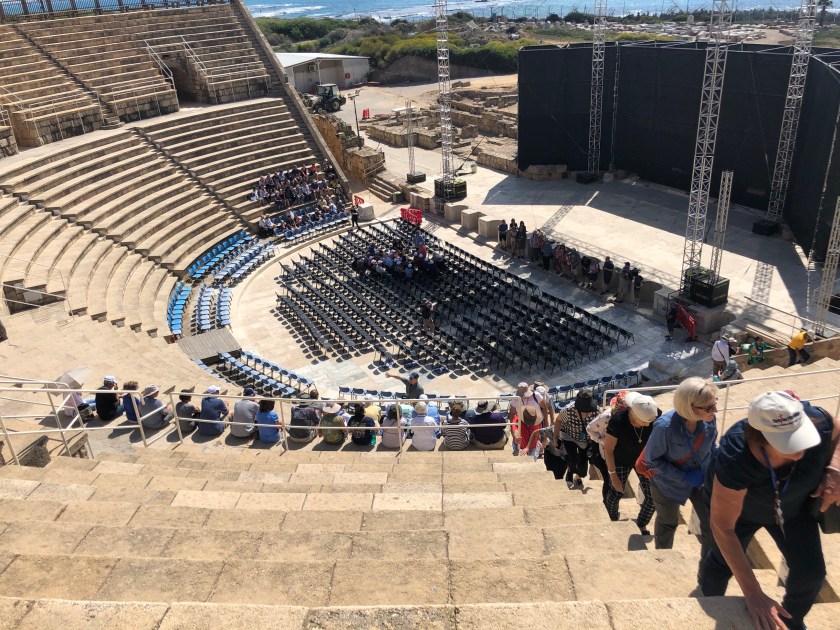
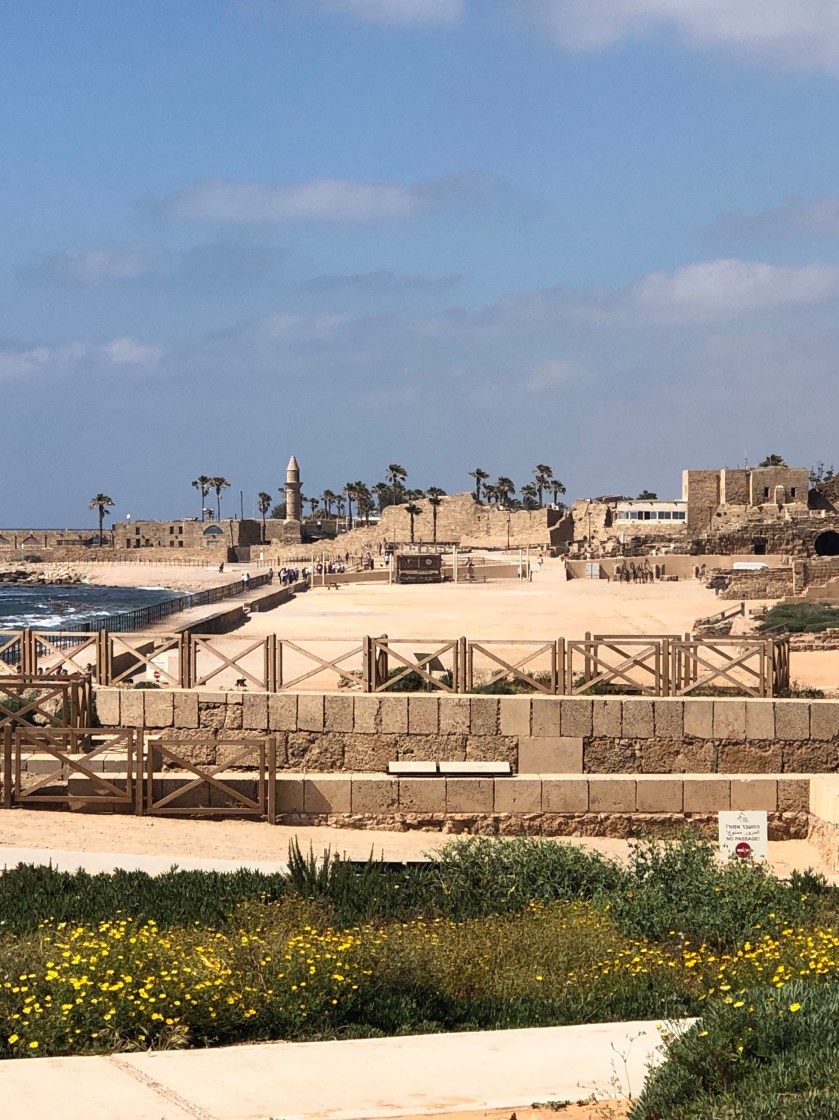
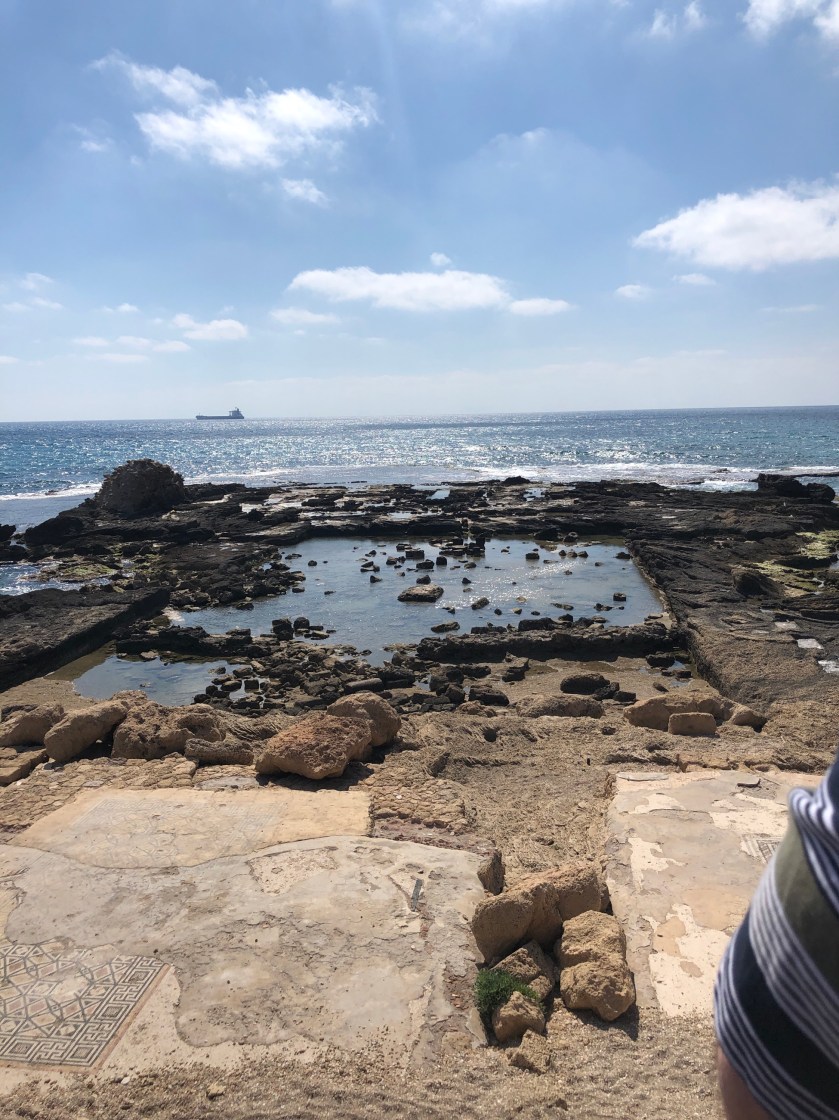
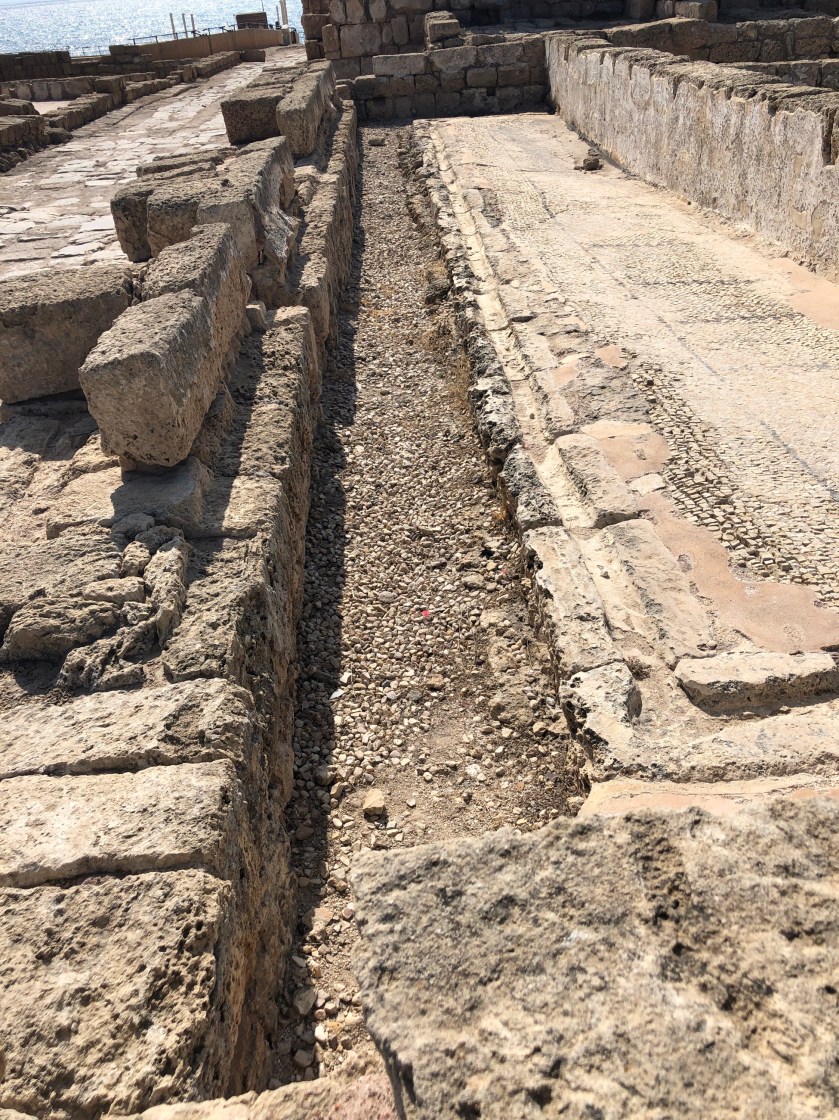
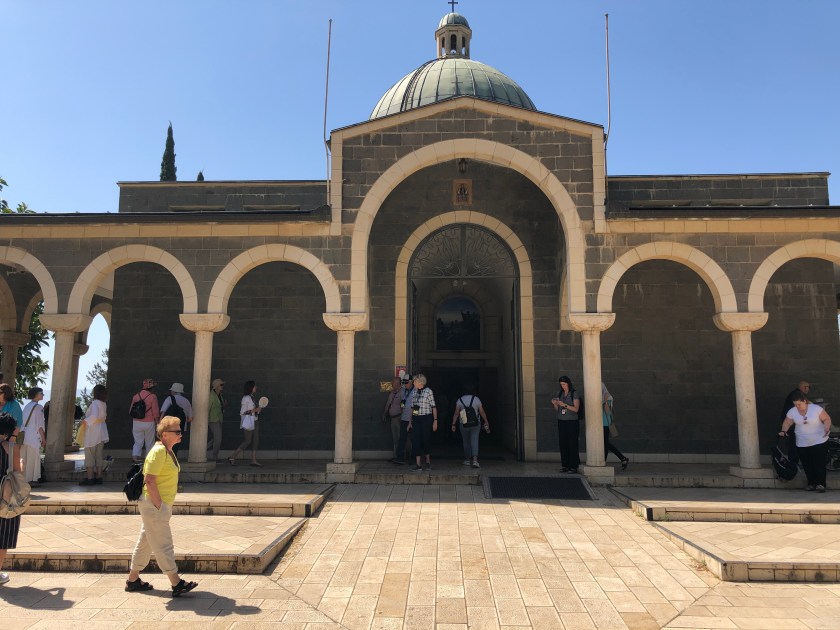
 I found this quite moving despite the hordes of tourists. I think everyone generally feels the reverence for these places and even though there are lots of people, there is a sense of goodwill. Being in the open rather than a church also helps too. Over the centuries there have been so many churches built and rebuilt by Christians. While many are truly beautiful, sometimes I feel the presence of God more in nature.
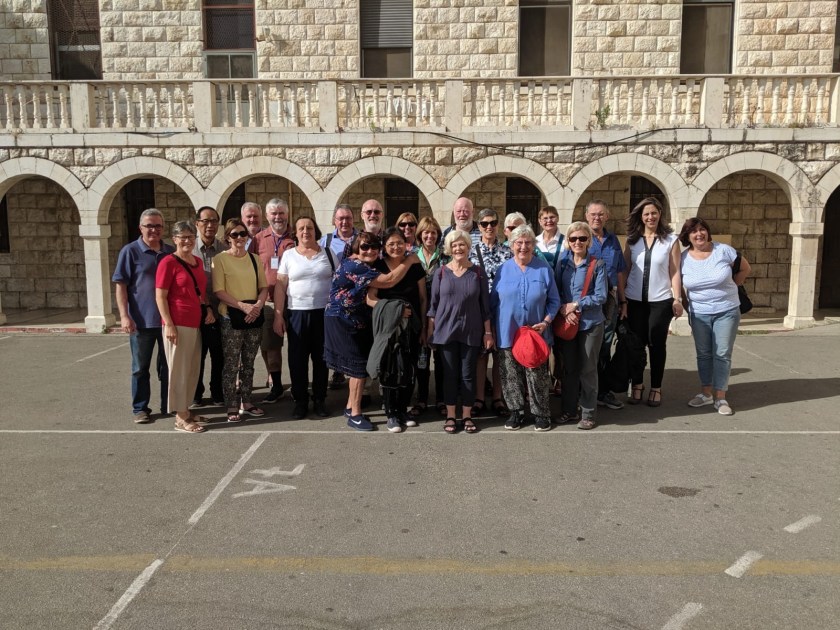
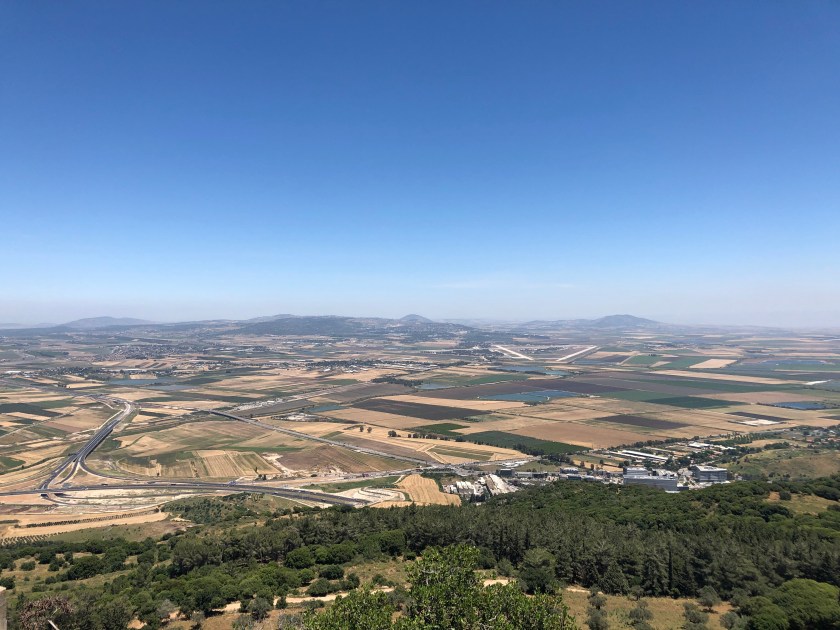
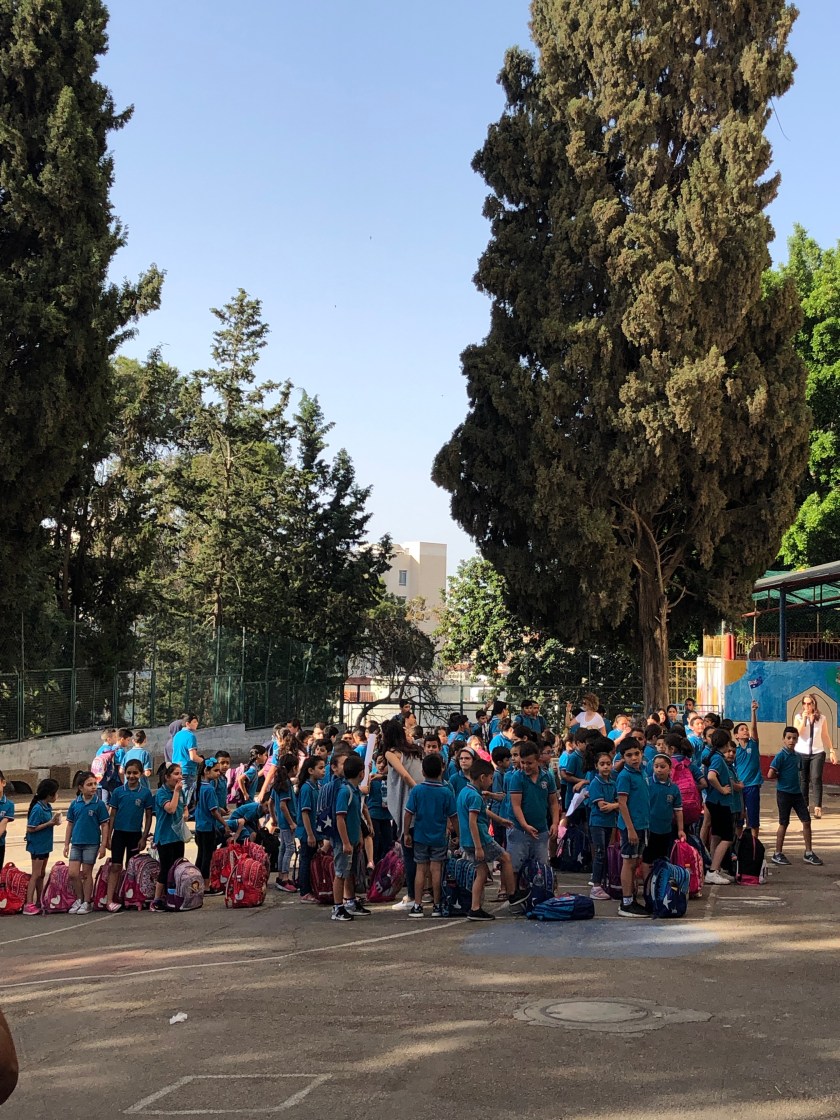 We returned to catch the bus, were counted as we are every morning and left Nazareth. We passed through the rich agricultural land of the Jezreel Valley. It looked like the Darling Downs or any other rich agricultural land, but is more marvellous after we have been in such arid land up to date. This area was the place of many battles because of its fertility and thus importance to the economies of various empires but also due to it being at the crossroads of trade routes.
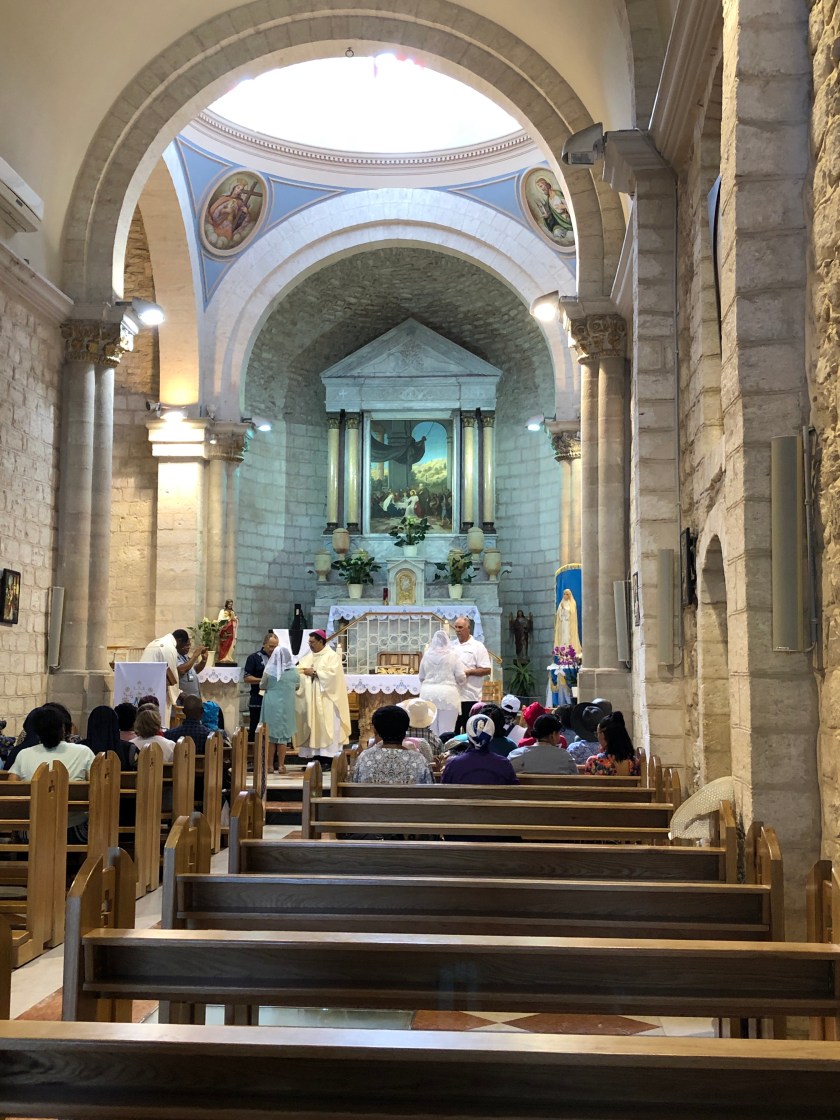
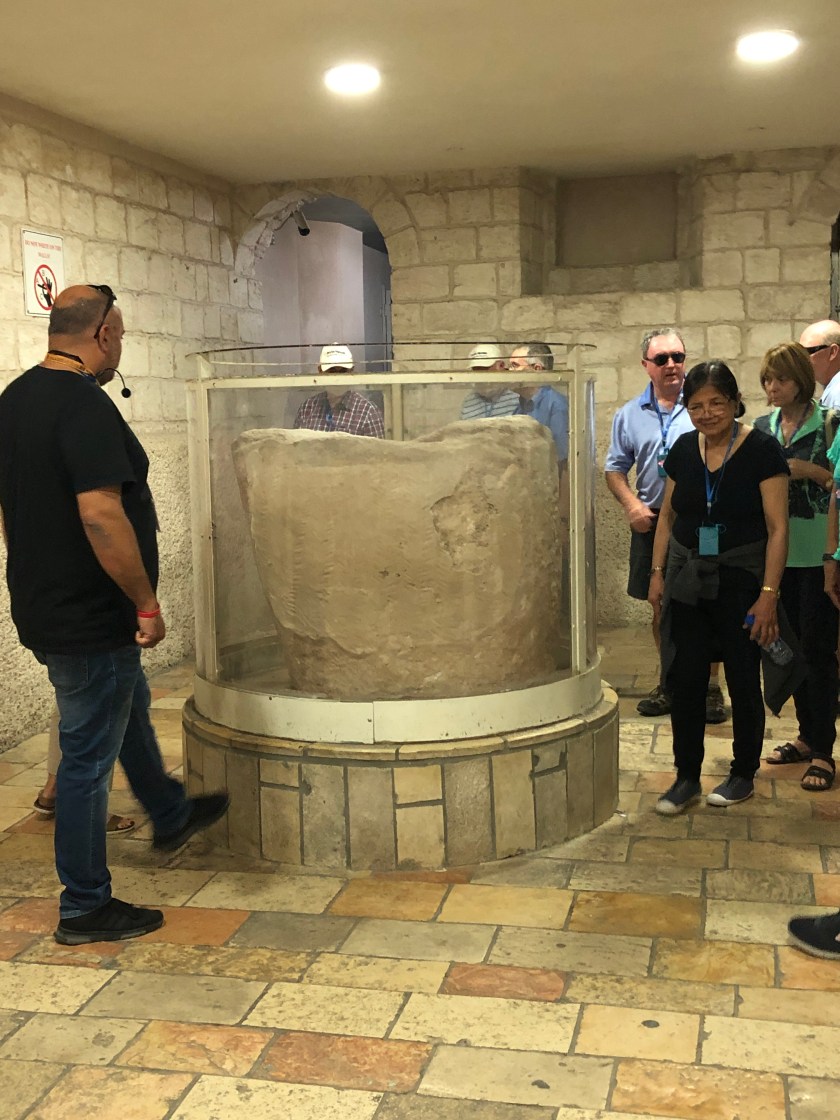
 We arrived in Canna to visit the Wedding church. This was the place where Jesus turned water into wine at a wedding. Our guide told us that it had to be holy water because it came from a stone jar. Stone keeps the water pure and is used for storing holy water.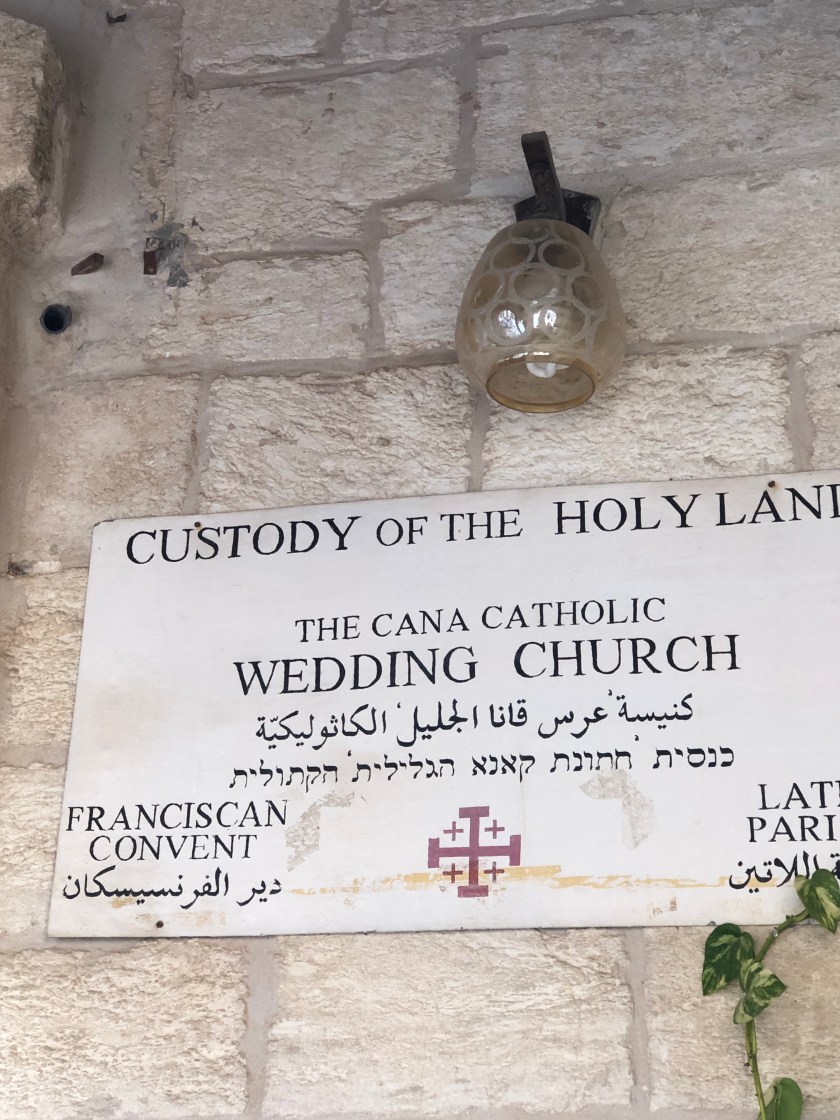
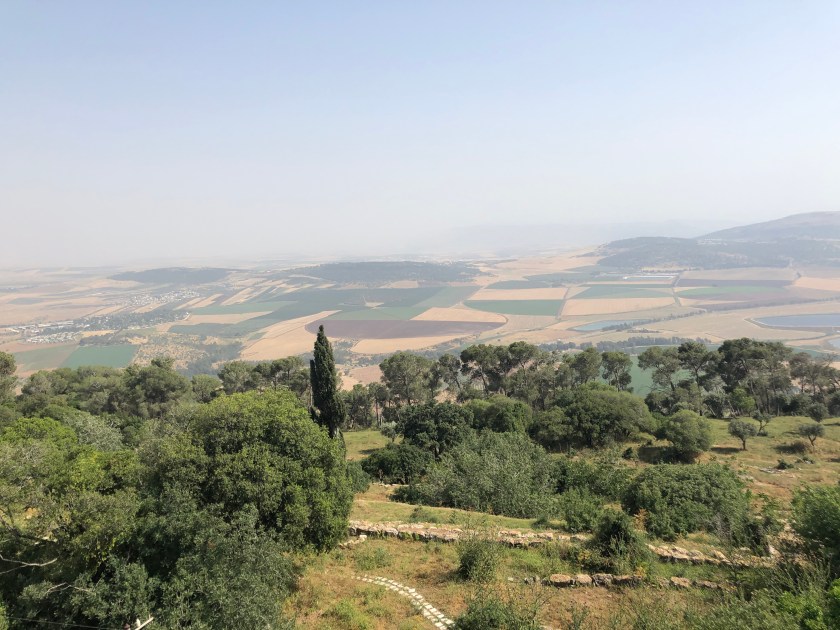
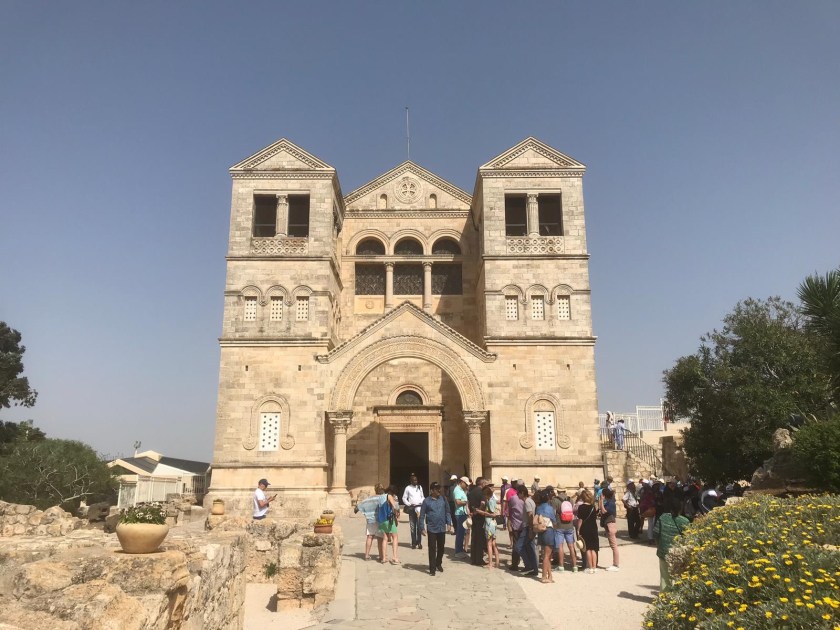
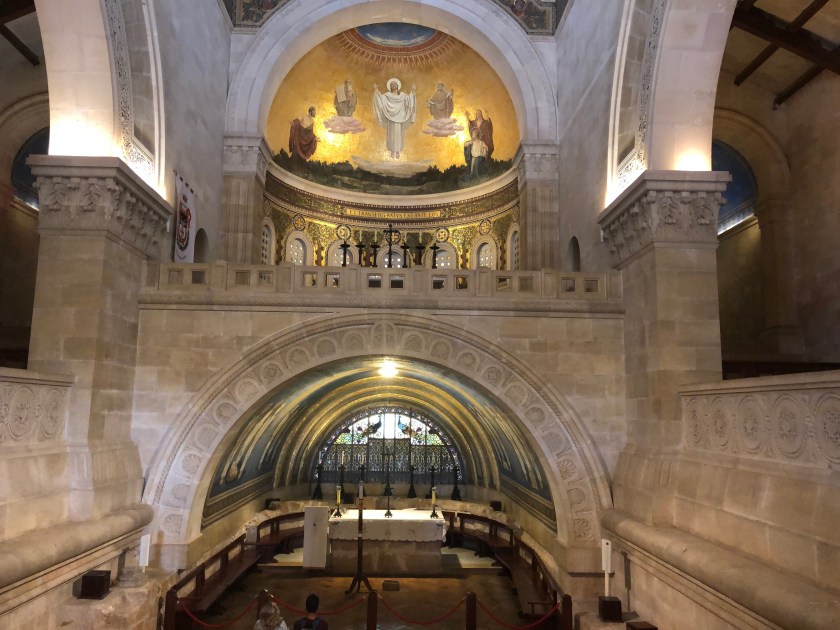
 Next stop was Mt Tabor which is very steep and we needed a shuttle to get to the top where the Franciscan Order had built a church to honour the event of the Transfiguration of Jesus. This was when the disciples saw him as the Godly person not man.