This is a visual diary day by day. It gives you a good idea of the terrain we covered. Supplied by Cape to Cape Explorer Tours to all our group.
www.dropbox.com/scl/fi/3xngn2hk5x2gs39lc9pff/Cape-to-Cape-slideshow-Mar-28-Apr-4-2026.m4v

This is a visual diary day by day. It gives you a good idea of the terrain we covered. Supplied by Cape to Cape Explorer Tours to all our group.
www.dropbox.com/scl/fi/3xngn2hk5x2gs39lc9pff/Cape-to-Cape-slideshow-Mar-28-Apr-4-2026.m4v
We were all a trifle shabby in the morning after our celebrations the night before as well as the effort of walking 130kms over the last 7 days.
We also felt sad to be separating from our wonderful group. It isn’t always the case that a group melds so well together when they are strangers. The chemistry was extraordinary. I know I will miss them a lot. We have exchanged addresses and set up a what’s app group and have resolved to walk part of the Bibbulmum track with Cape to Cape Explorer Tours next year.
Packing up was efficient and soon we were ready for the bus. Our driver was the singing Kate who had one last song for us. Nic the Manager of the resort was there to say good bye and thanks us for being part of the Cape to cape family now.
I was dropped off Just south of Perth to meet up with friends for the afternoon as my flight didn’t go till 11.30pm. The red-eye. I remember getting on the plane and putting my neck support on, after that nothing till the coffee came! I fell asleep instantly and managed to nap most of the way home. The next few days I spent catching up on sleep and resting the legs. I had to check the calendar that it had only been a week. It felt much longer in the very best way. Did it arrest my restless disappointment? Not entirely, but that walk went along way towards settling it. Till the next advdenture.
Waking this morning was quite an effort. Yesterday’s sand had taken its toll. I felt very tired and flat. I fuelled up with toast and avocado and coffee. Everyone was feeling the effects of yesterday. Lauryn was suffering with her feet but today was her birthday and this was her goal so we all wanted her to achieve it.
We returned to Cosy Corner and commenced the climb over the headland down to the beach. Murray our guide explained this last day in the terms of the hero’s journey as described by the philosopher Joseph Campbell. Pretty deep for a Kindergarten teacher. But a good way to process our week. A surprise greeted us with the highlights group forming a guard of honour to our last beach.
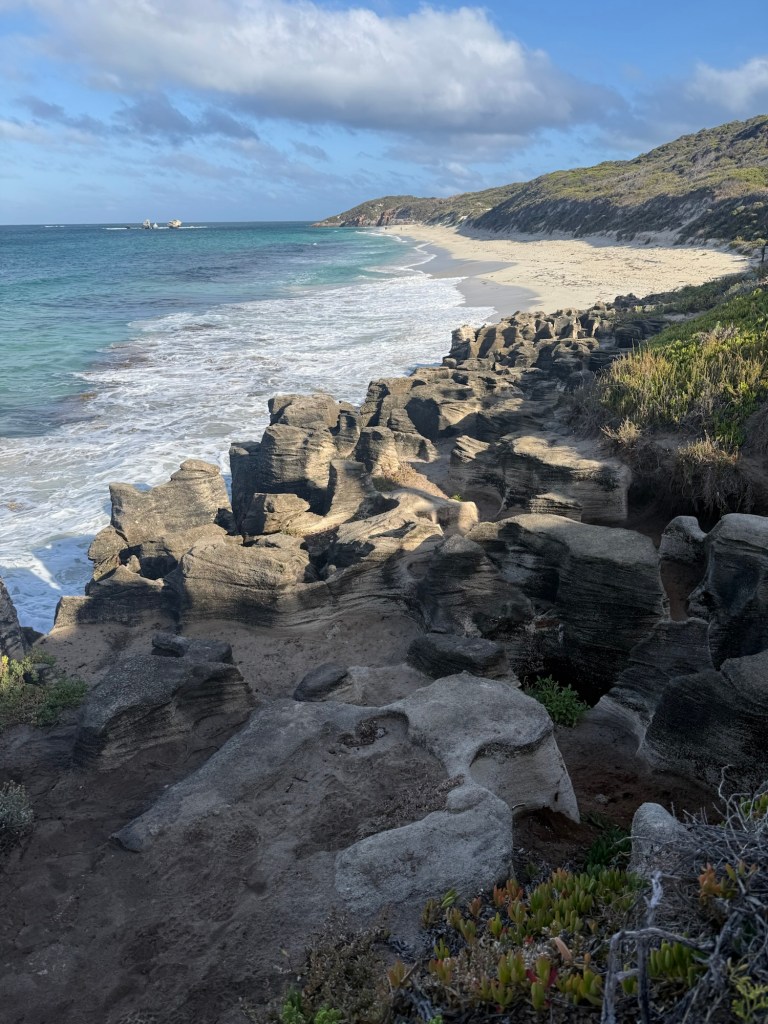
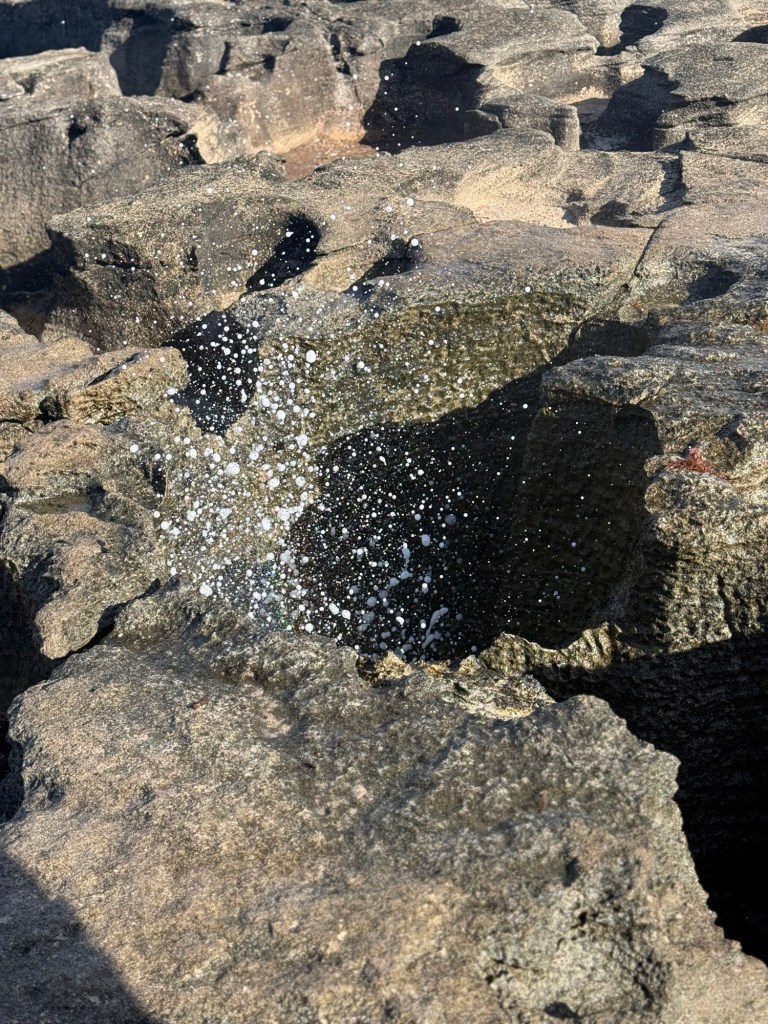
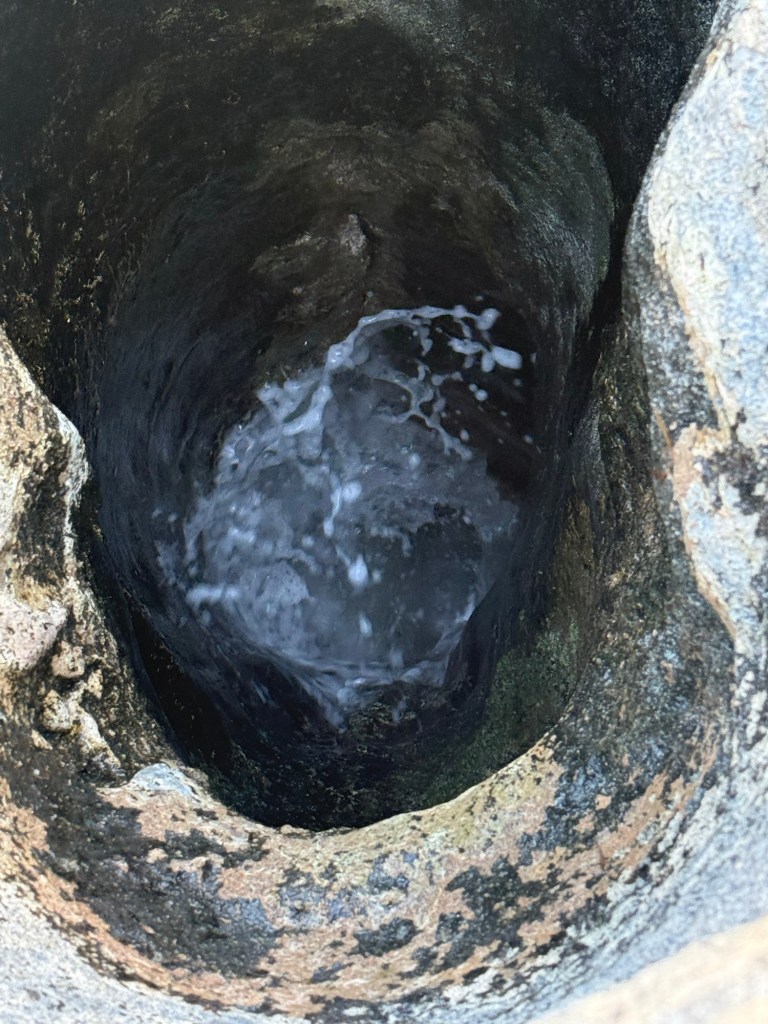
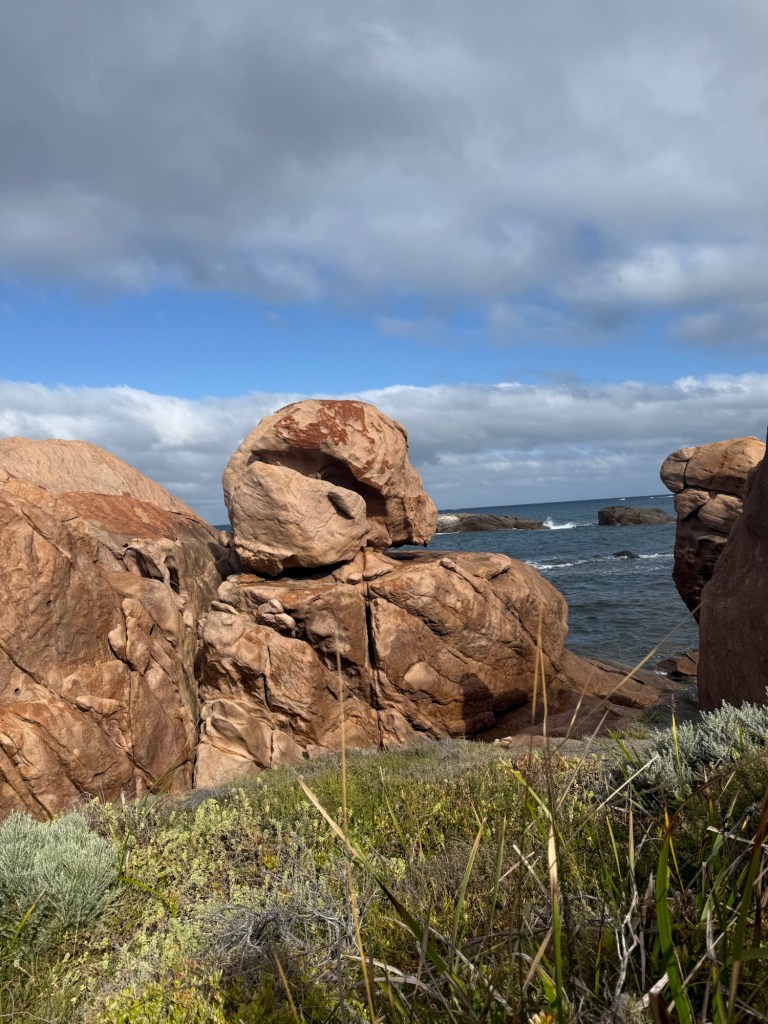
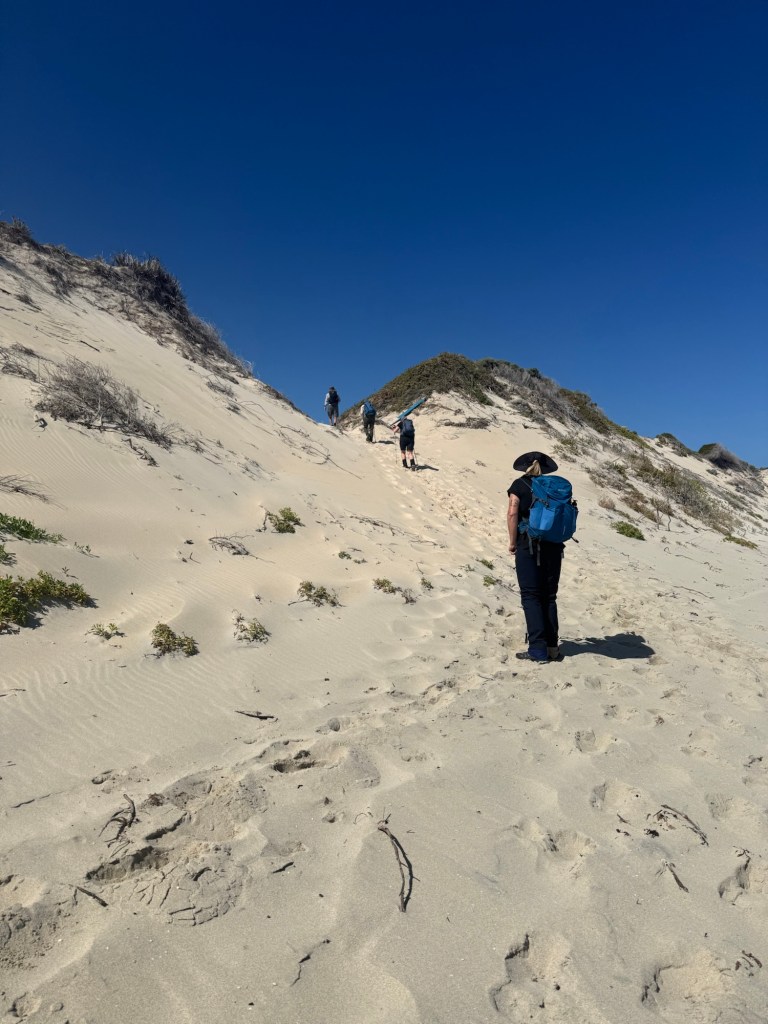
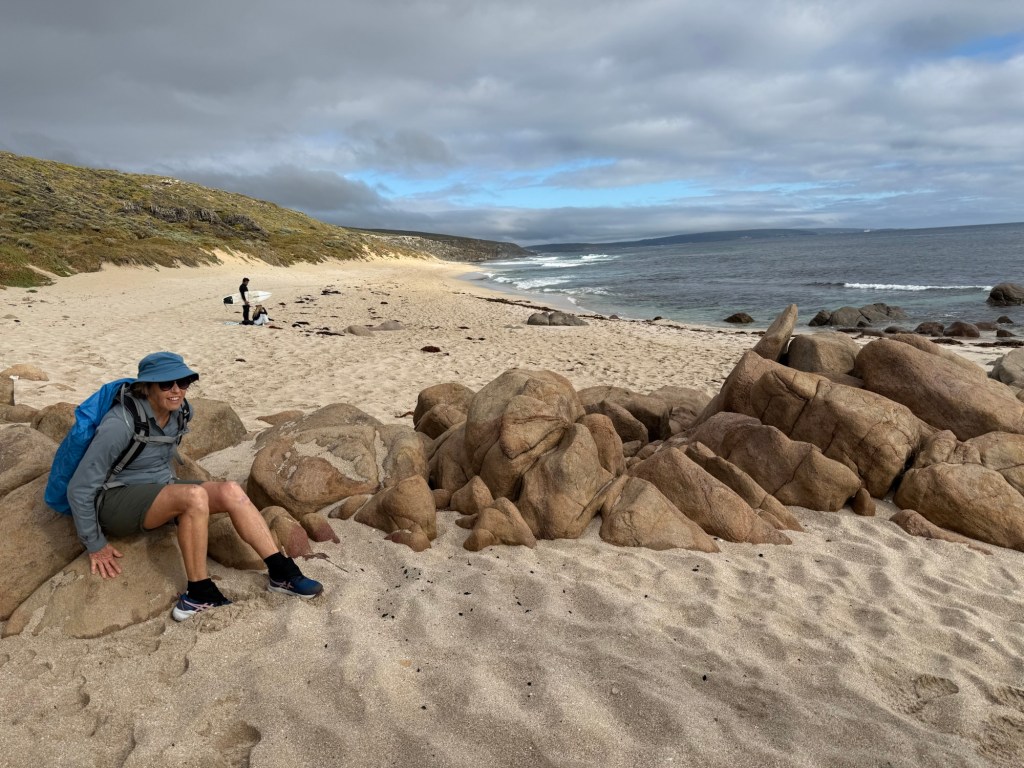
We rock hopped over a lot of mini blowholes before reaching the beach again. This is the most south facing beach and we were walking into the wind just to make the effort harder. Today we had our last 6 kms of foot sucking sand. Many an expletive passed our lips but we soldiered on.
Lauryn was suffering with her feet so I dropped back to chat and distract her until we could stop for morning tea. She was feeling pretty demoralised and we were working on options about lightening her load or taking her pack plus giving painkillers. Murray looked at her boots and suggested he relace them. What a game changer. He released the laces across the top of her feet and she was relieved of the crushing pain and could smile again and feel she could finish after all.
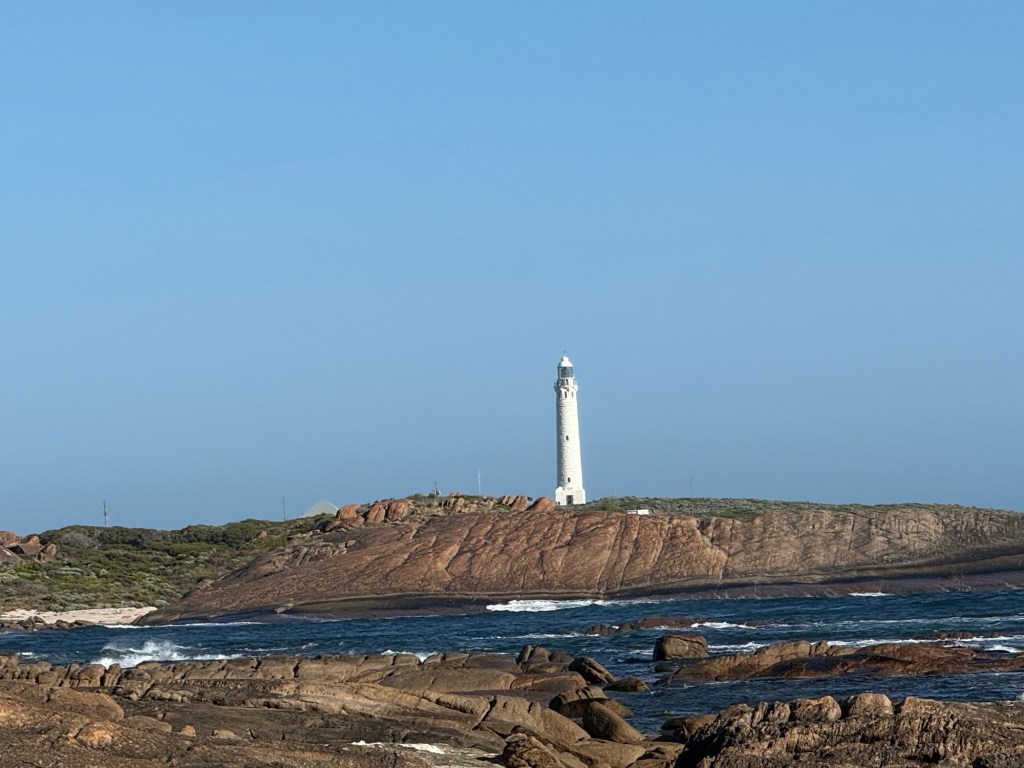
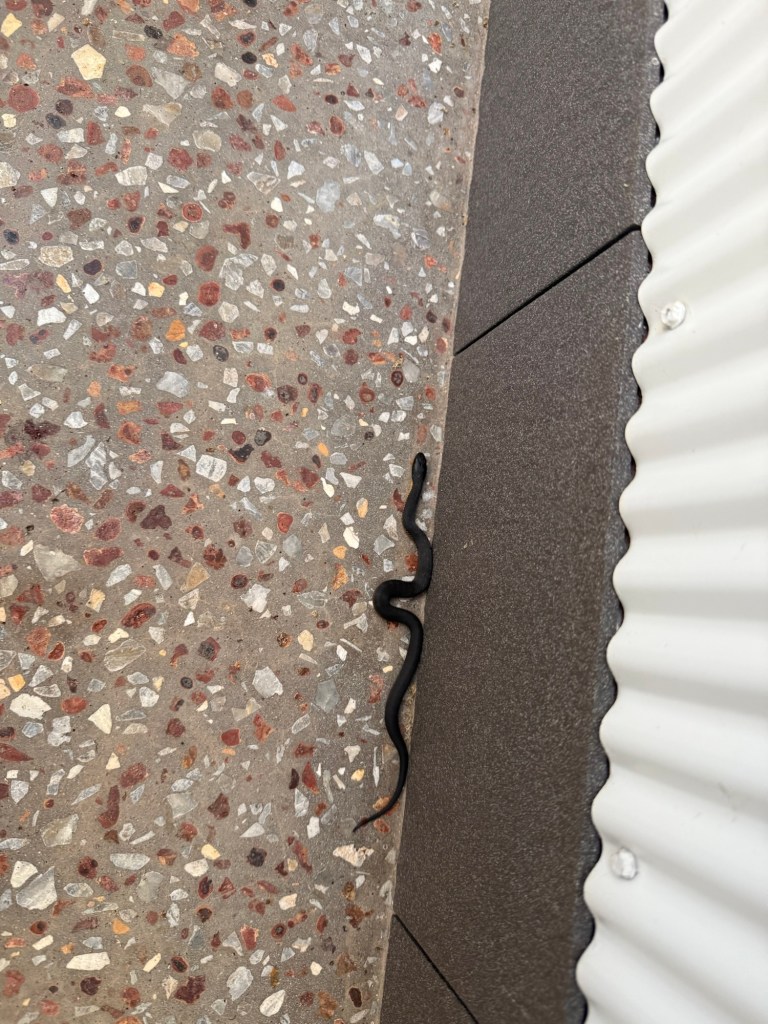
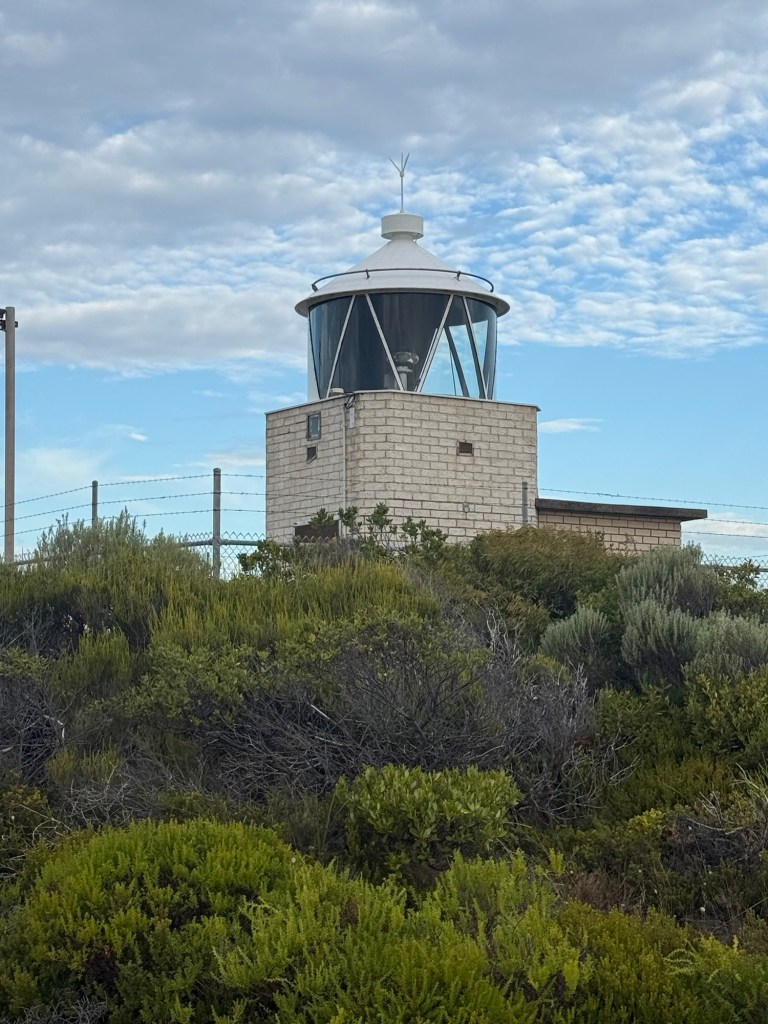
Finally we could see the Leeuwin lighthouse, small but visible. That sight really inspired us to pick up and get going with real determination. The funny thing was as we got closer that damn lighthouse seemed to move further away. None of this up the road for Cape to Capers, we walked all the actual track. Through small bays and rocky headlands, over slippy rocks and then finally onto the headland where we decided to take a pit stop before progressing. There were three toilets and I took the middle one. While there I saw a snake slide in. I wasn’t too concerned and calmly called out that the others should avoid this toilet. The snake turned out to be a young active tiger snake. When it sidled up the wall and turned toward me I quietly and calmly left it to continue its journey while I went out the opposite direction. Everyone was amazed I so calmly kept up a running commentary, but I have had many snake encounters and usually just being quiet and going in the opposite direction is the best policy.
As we walked up to the lighthouse finally the Highlights group were there to greet us again with another guard of honour. As we entered the lighthouse compound we let Lauryn go first as this had been her challenge to herself for her 40th birthday. We were all thrilled to make it.
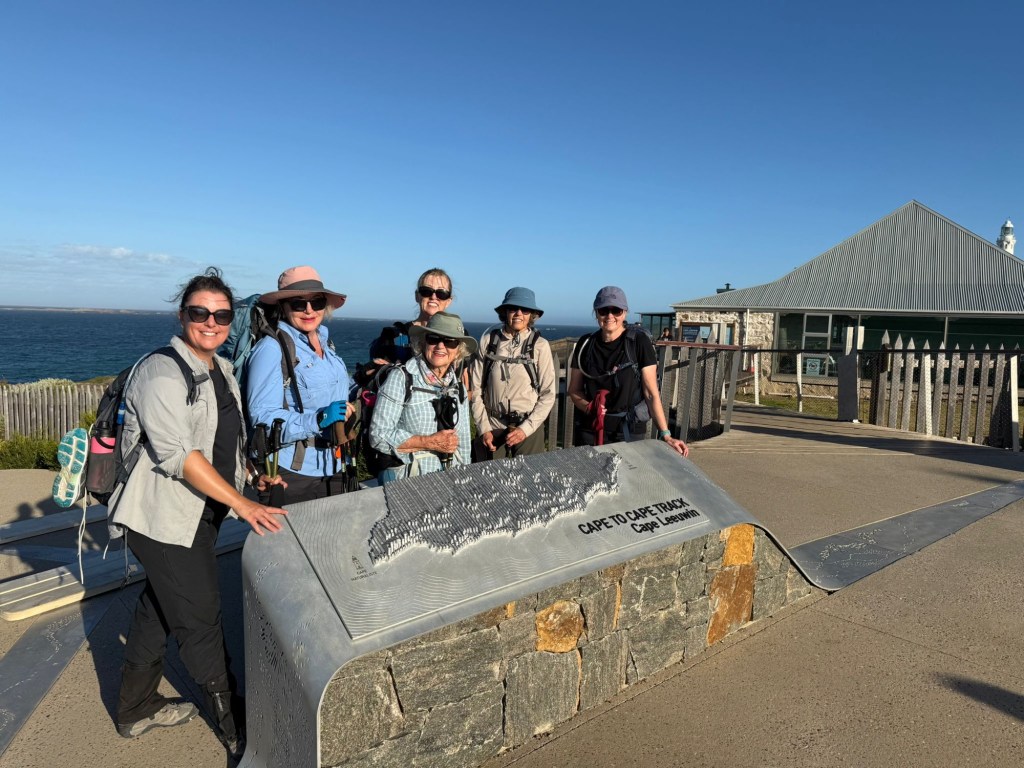
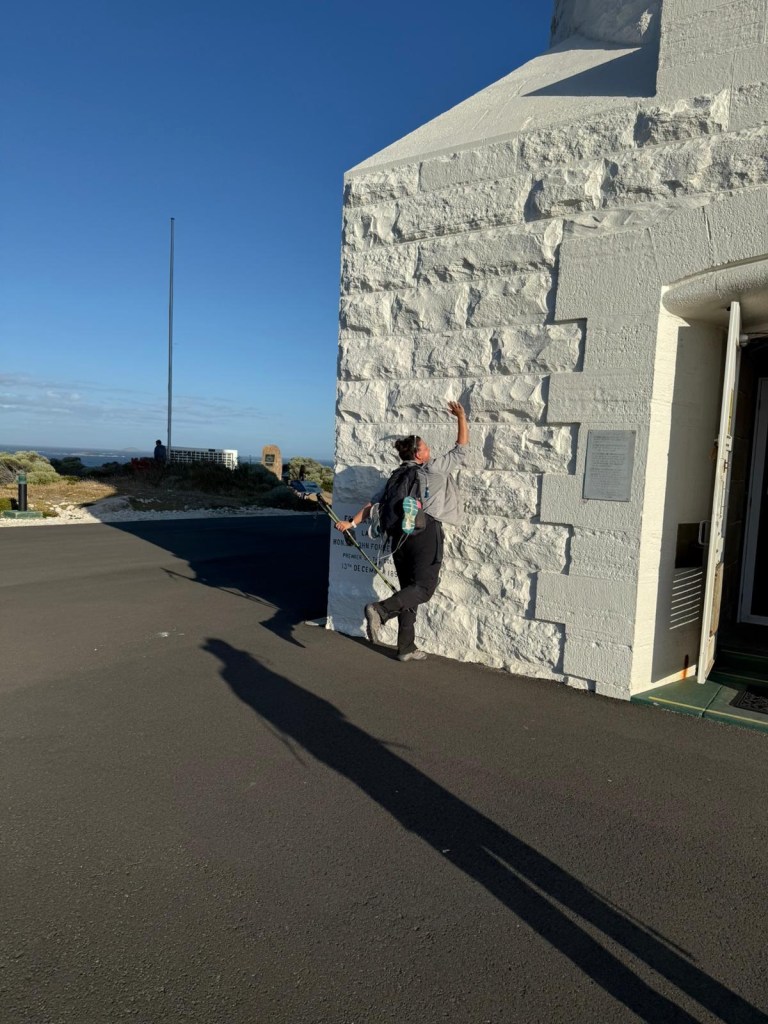
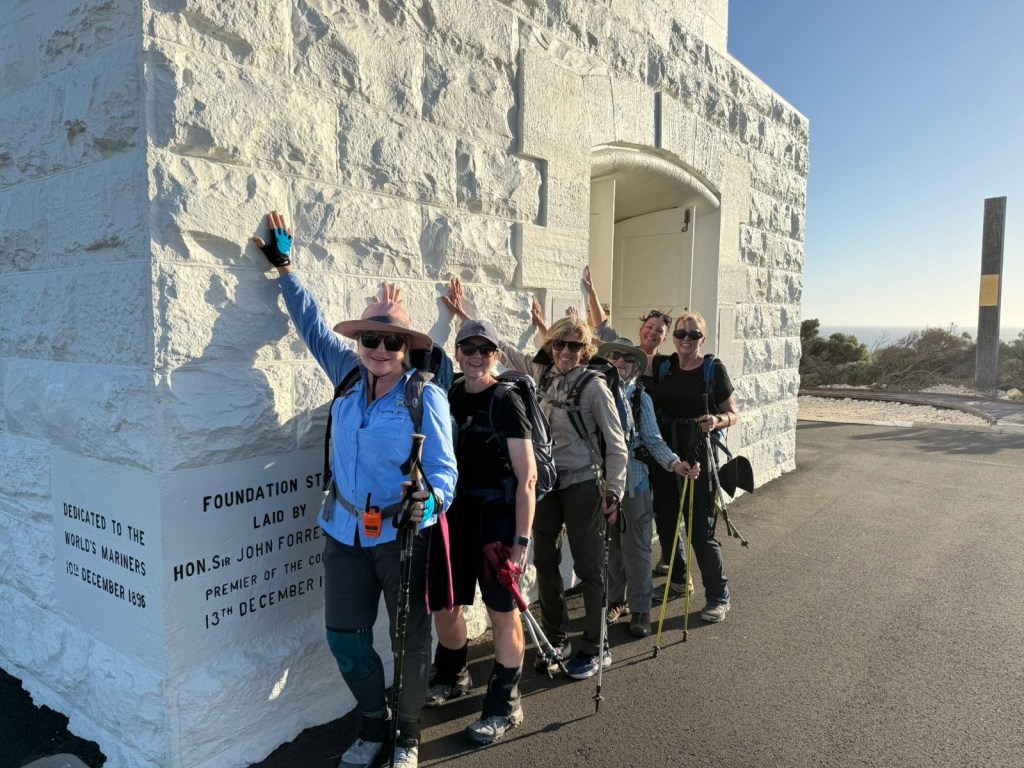
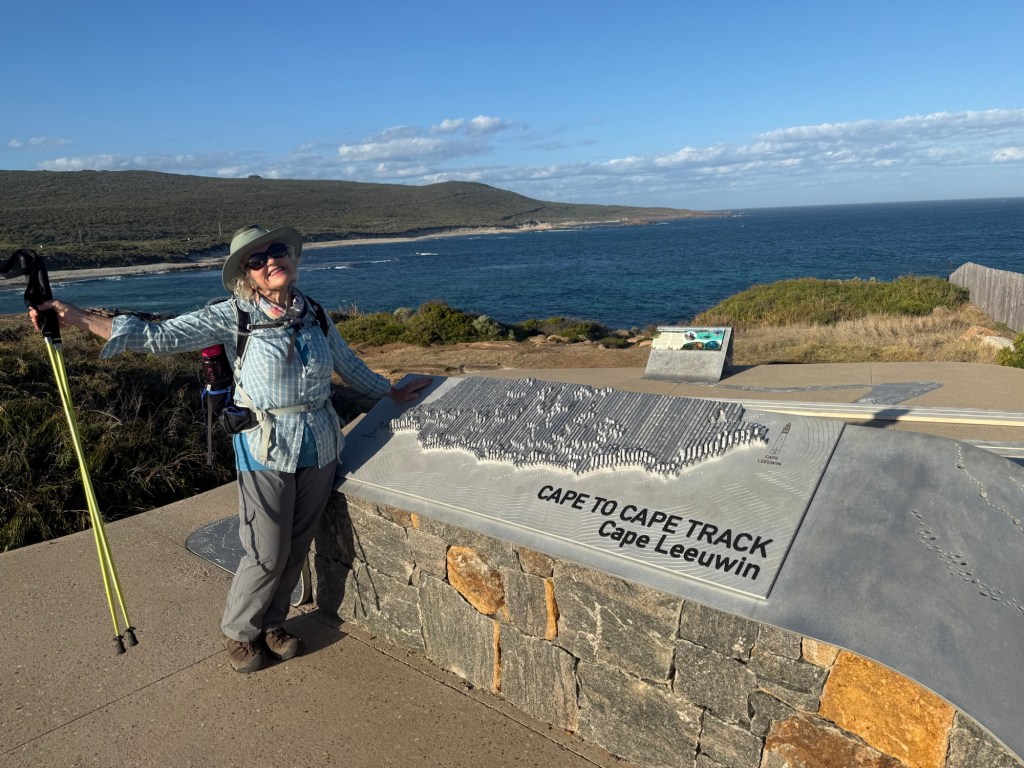
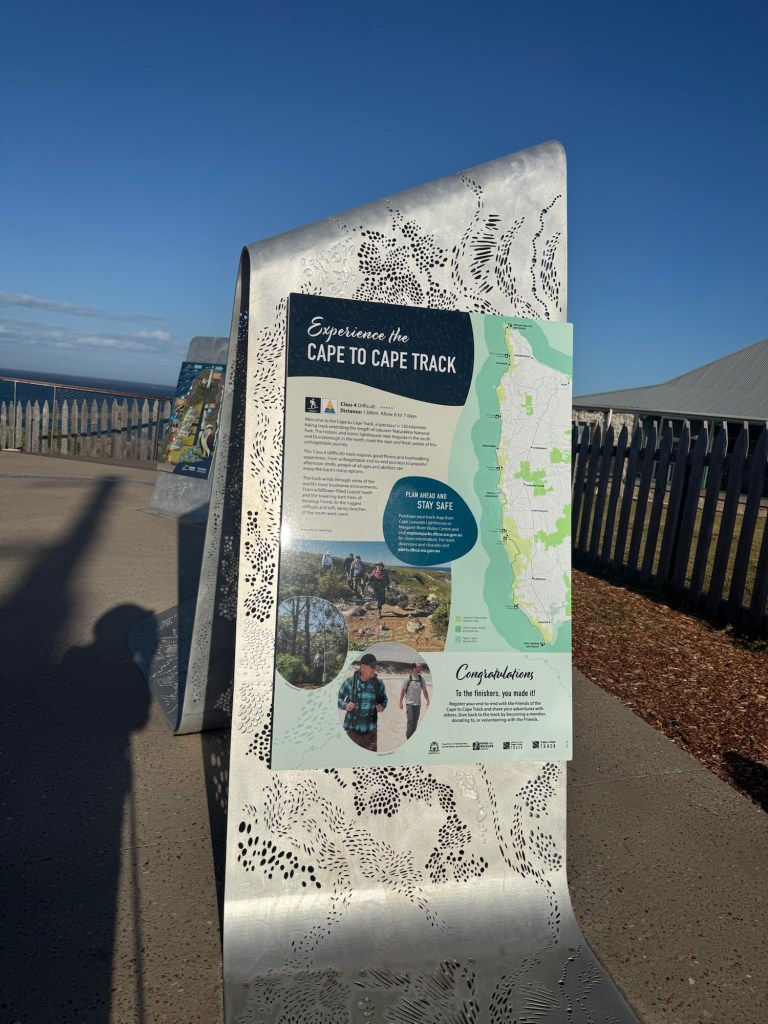
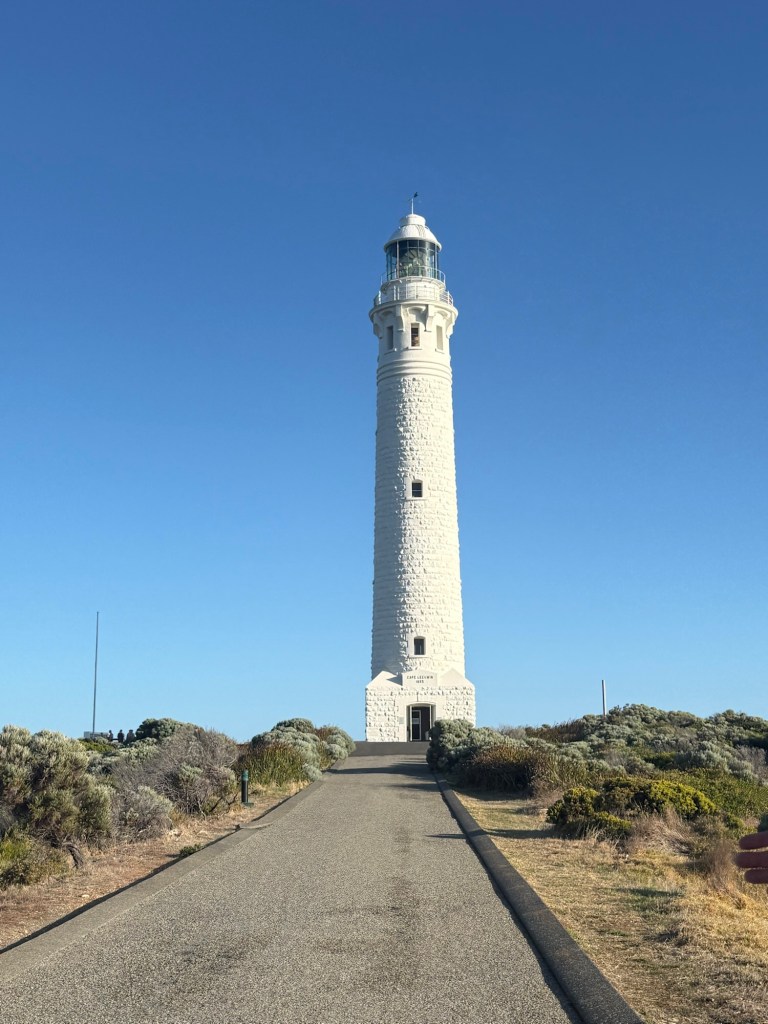
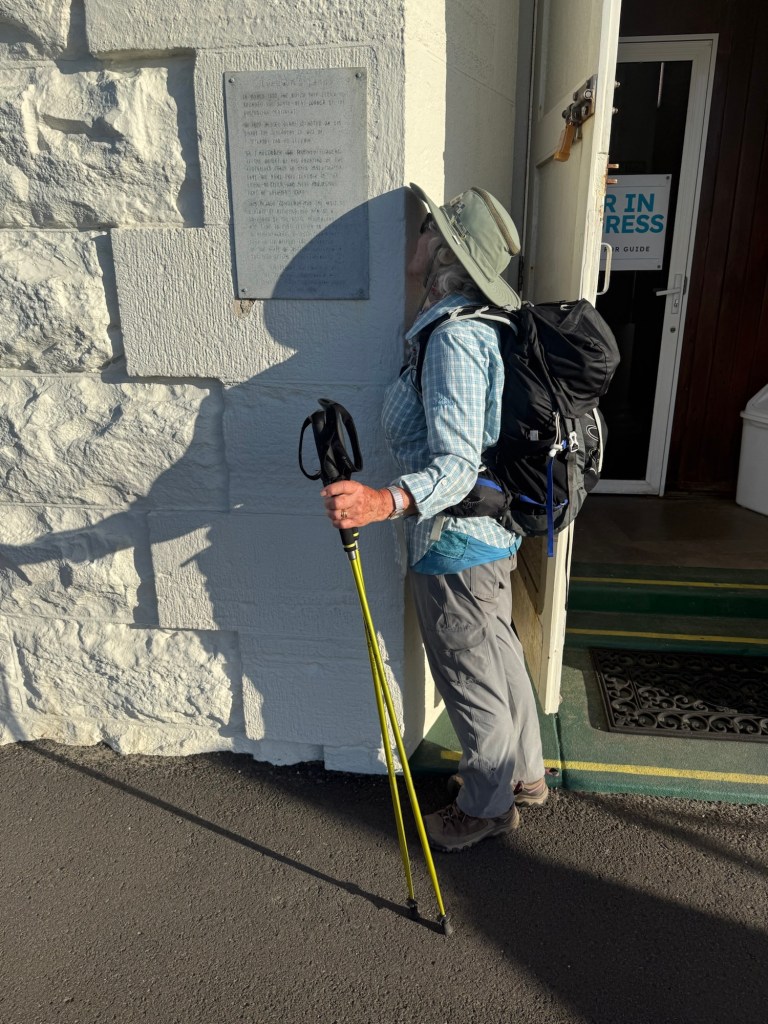
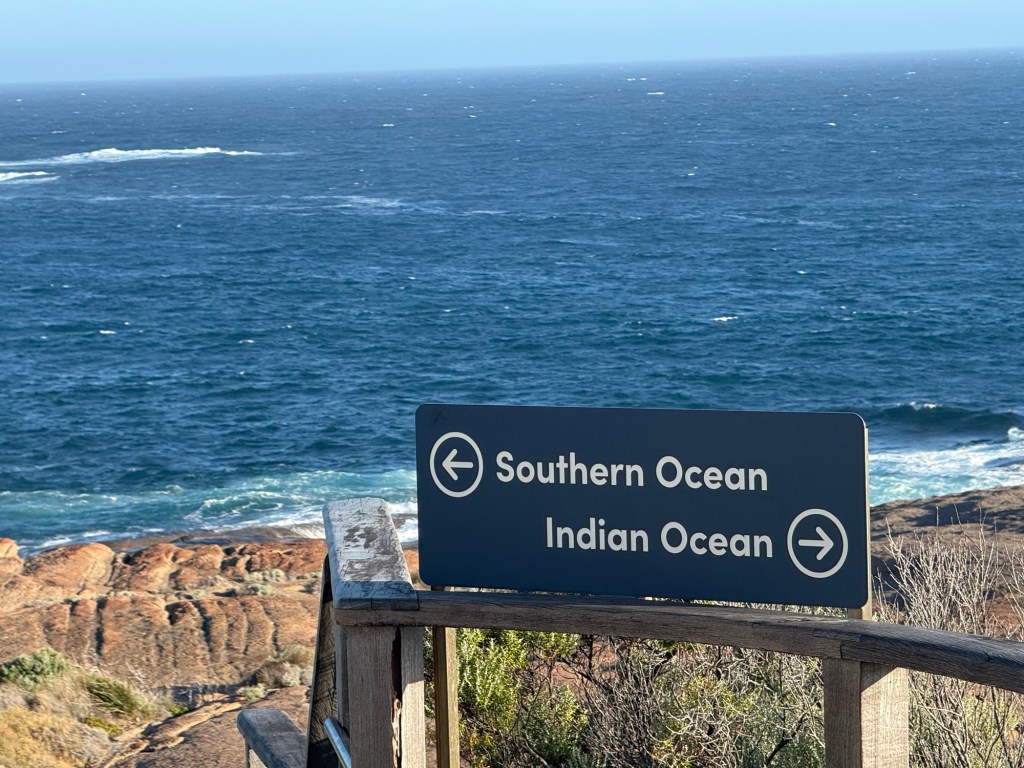
We adjourned to the souvenir shop where I bought everyone a pin of the cape to cape. A pin of valour for the determination of the newbies and survival for the oldies! I am not one for corny souvenirs as a rule but this deserved to be acknowledged so I bought a Cape to Cape t-shirt too.
Back to the bus and champagne and nibbles for celebration.
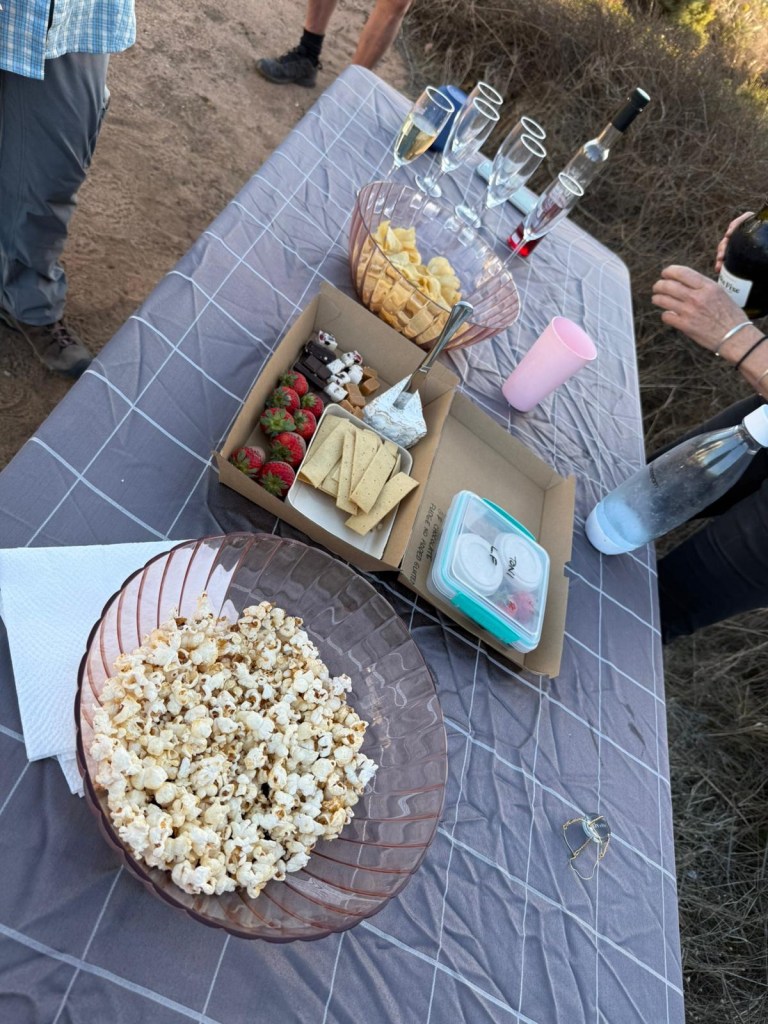
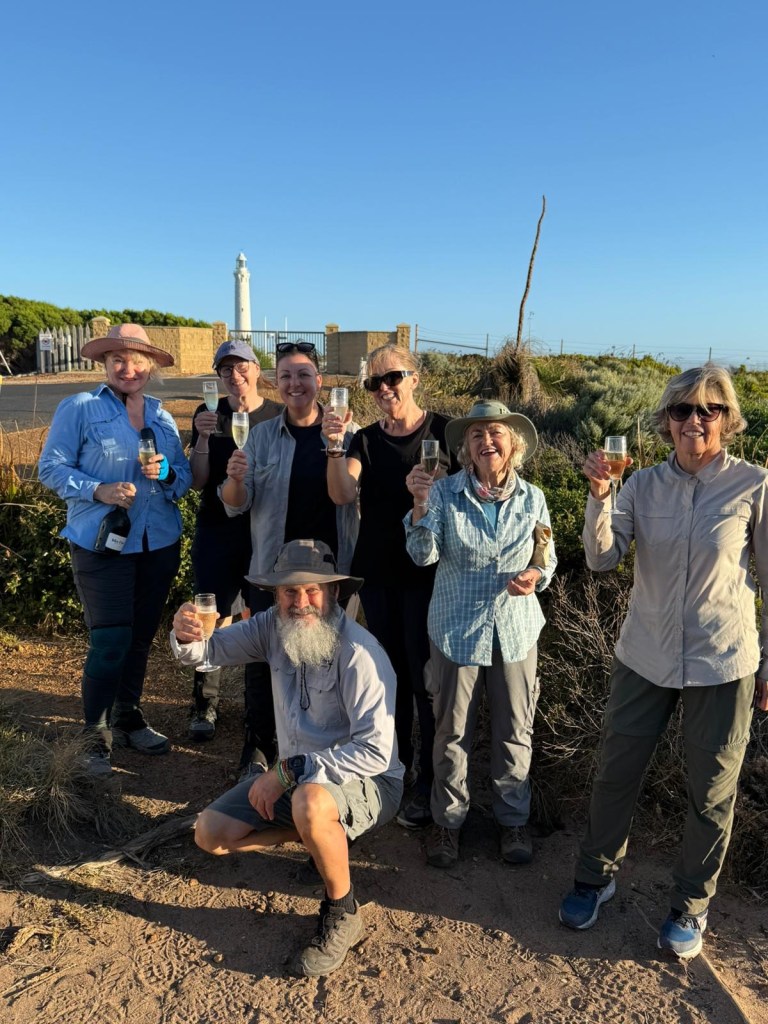
This evening we are celebrating back at Surfpoint and we have purchased extra Champagne to celebrate Lauryn’s birthday with a cake provided by the chef from Surfpoint.
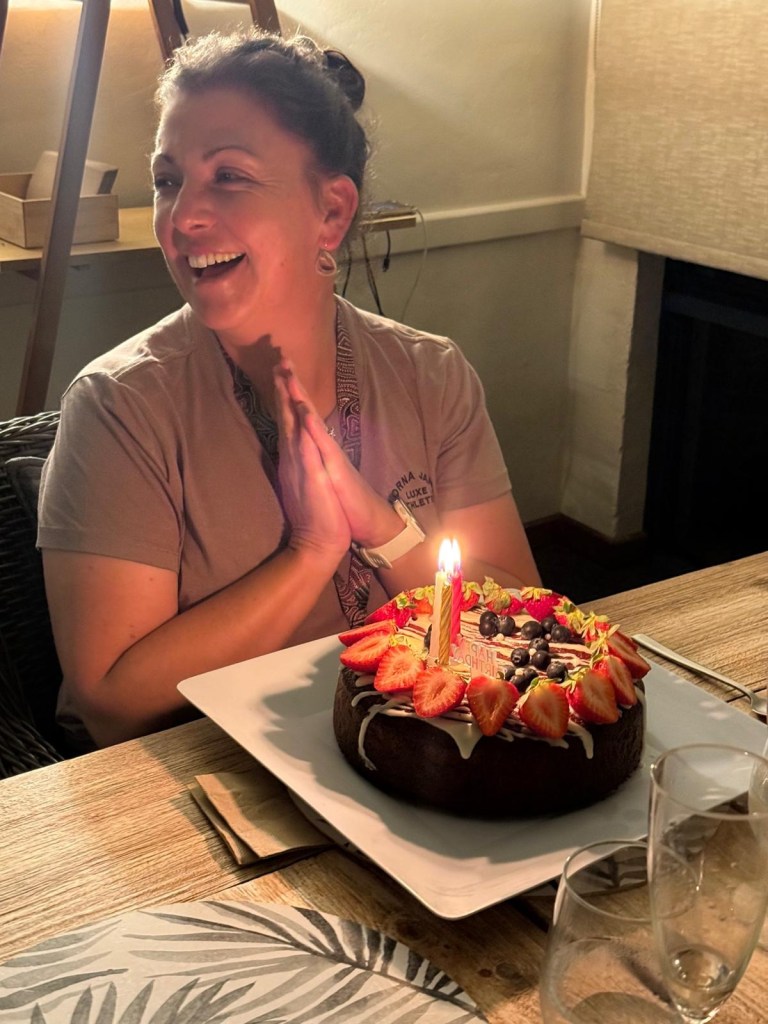
To top off the night we are presented with a video diary of our week walking and certificate of completion. It was a very merry night. Tomorrow we leave.
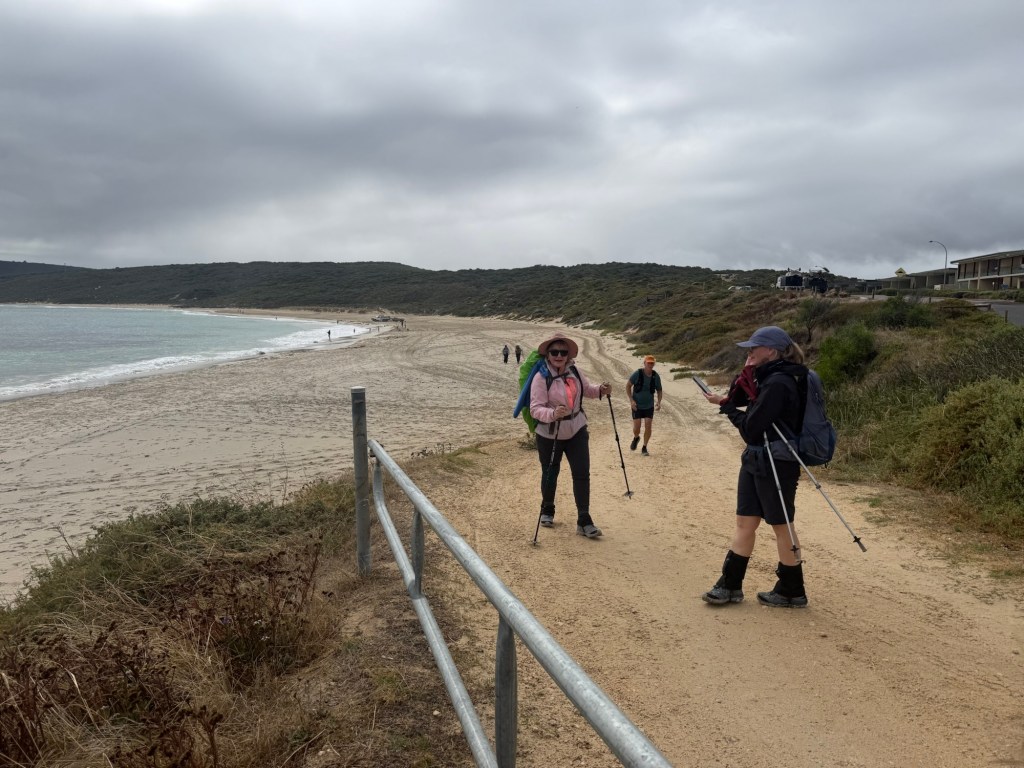
We woke today in trepidation as we were facing our longest beach walk today. 7 kms of hard slog.
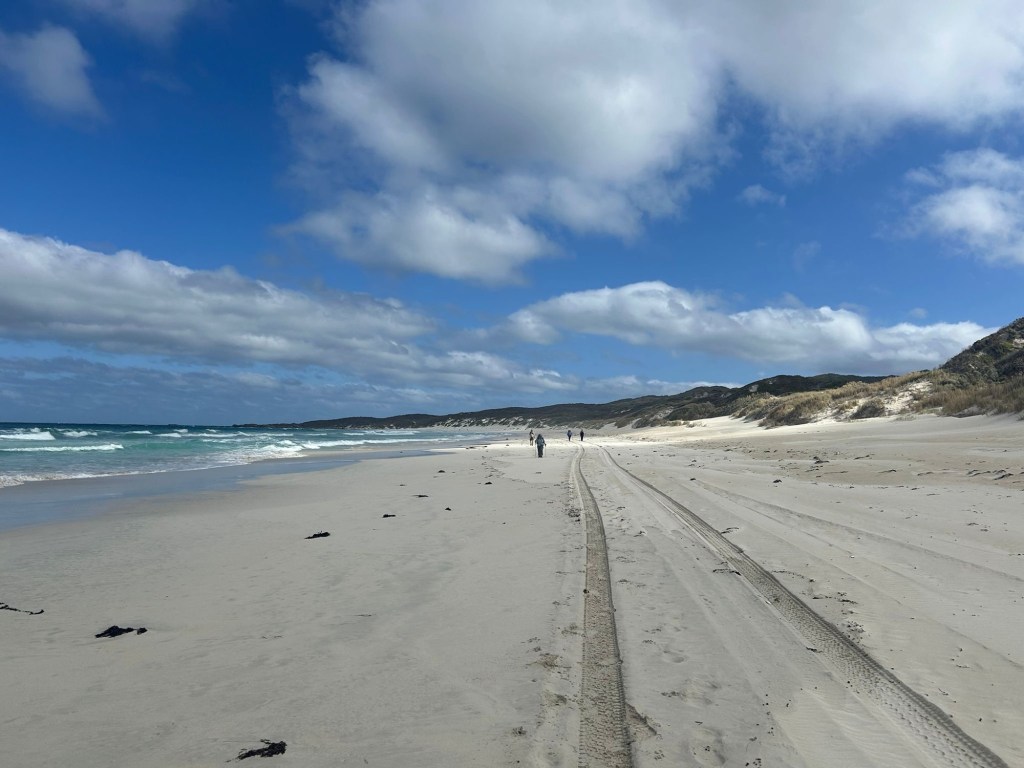
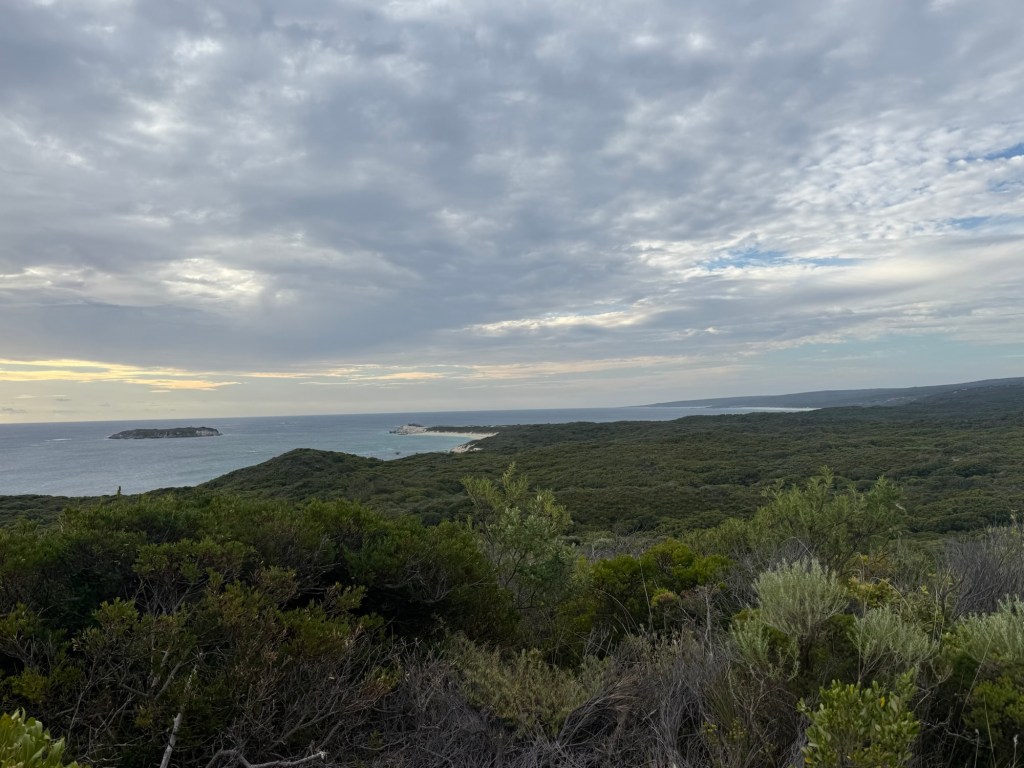
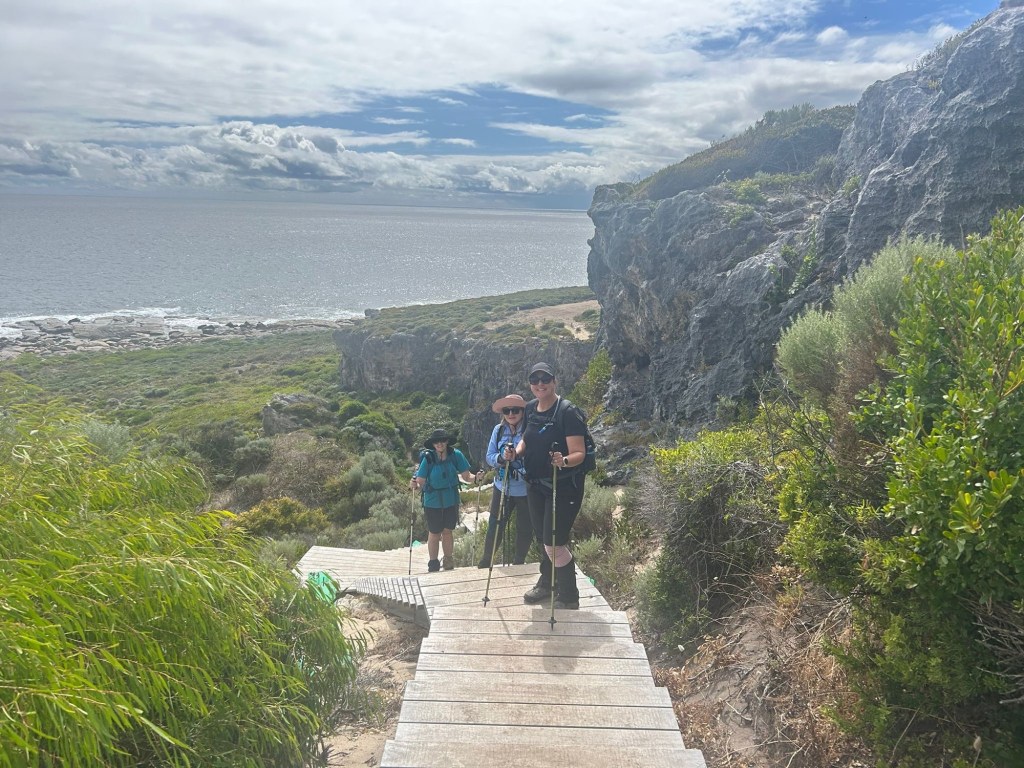
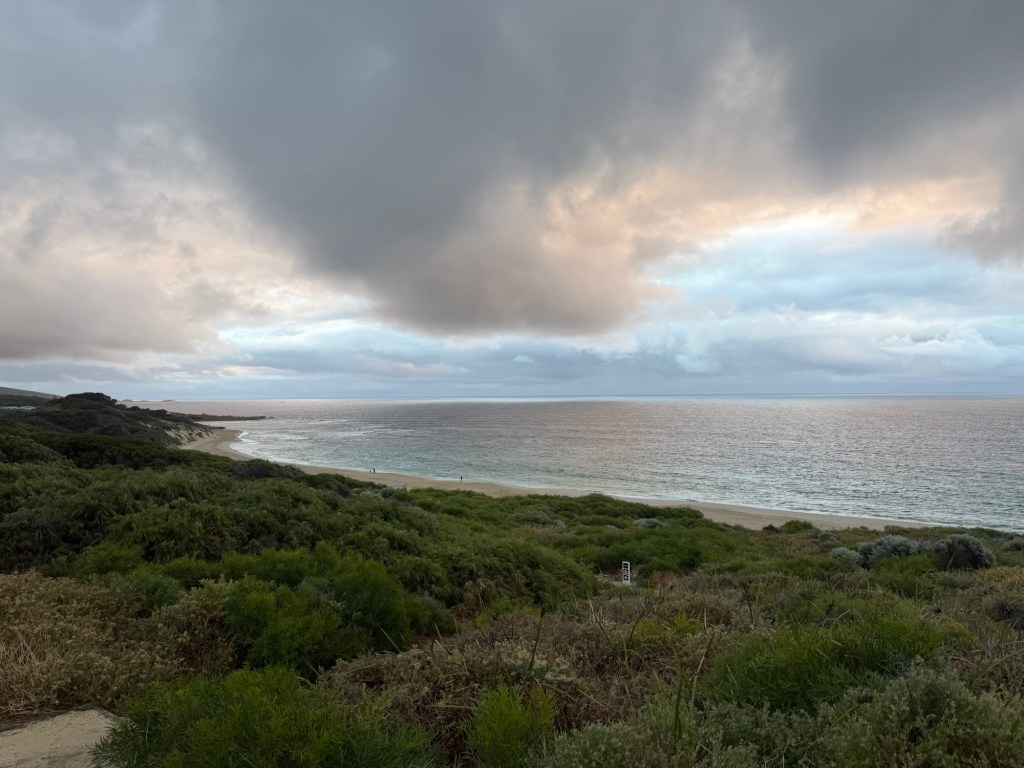
We started briefly in the forest then appeared at the cliff and saw our destination spread out before us. A spectacular vista of sand and turquoise sea all the way to Hamelin Bay. That would be halfway more or less.t
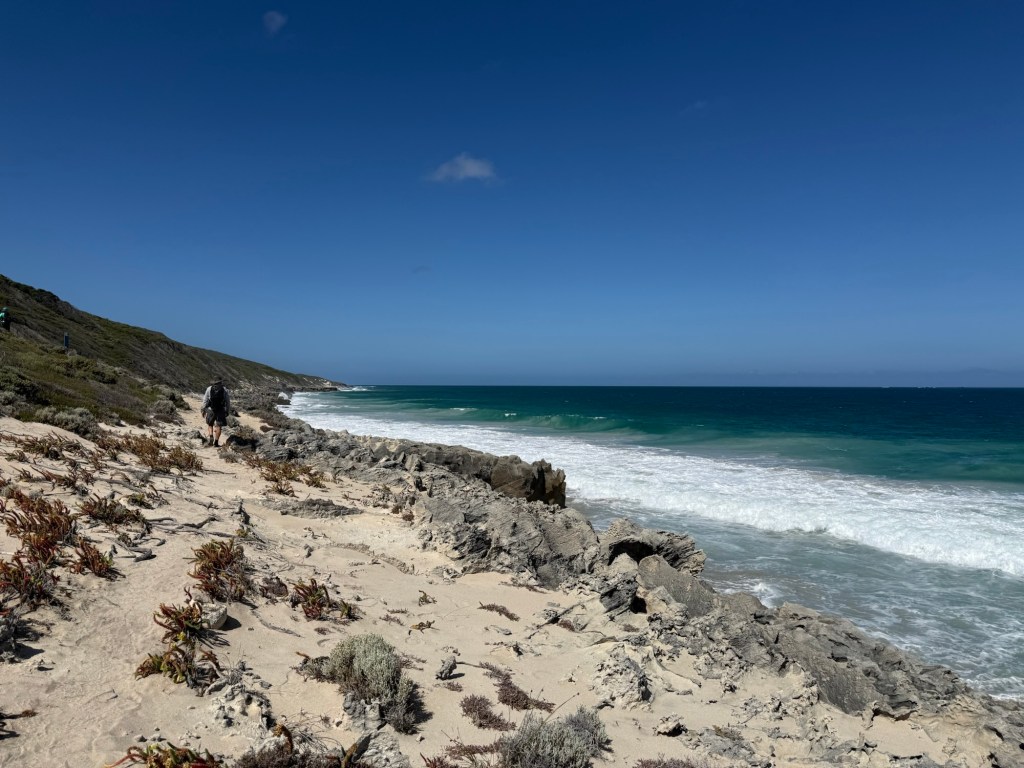
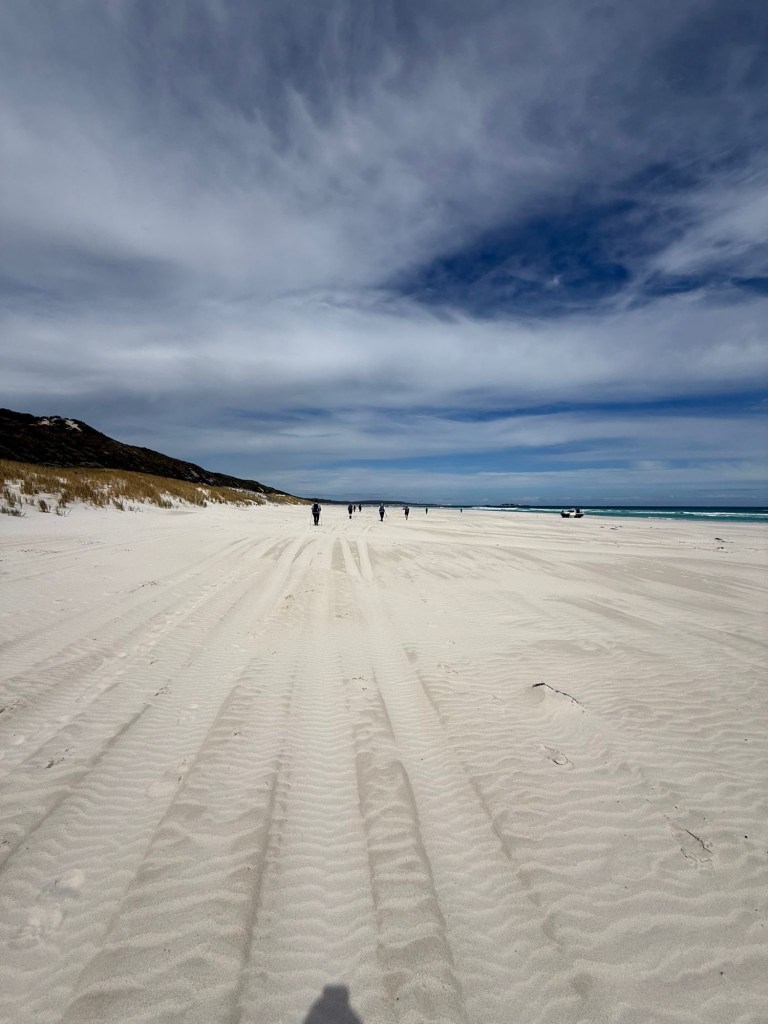
This was the leg tiring slog we imagined. The sand is soft and even by the waters edge it barely gets hard. We tried walking in the 4WD tracks or other footprints. None really made it easy.
Then we walked back up the headland to climb to the Foul Bay Lighthouse a very 1960’s brutalist building named for the rotting seaweed in the bay below which was caused by flies laying eggs that became maggots that fed fish and birds. Disgusting.
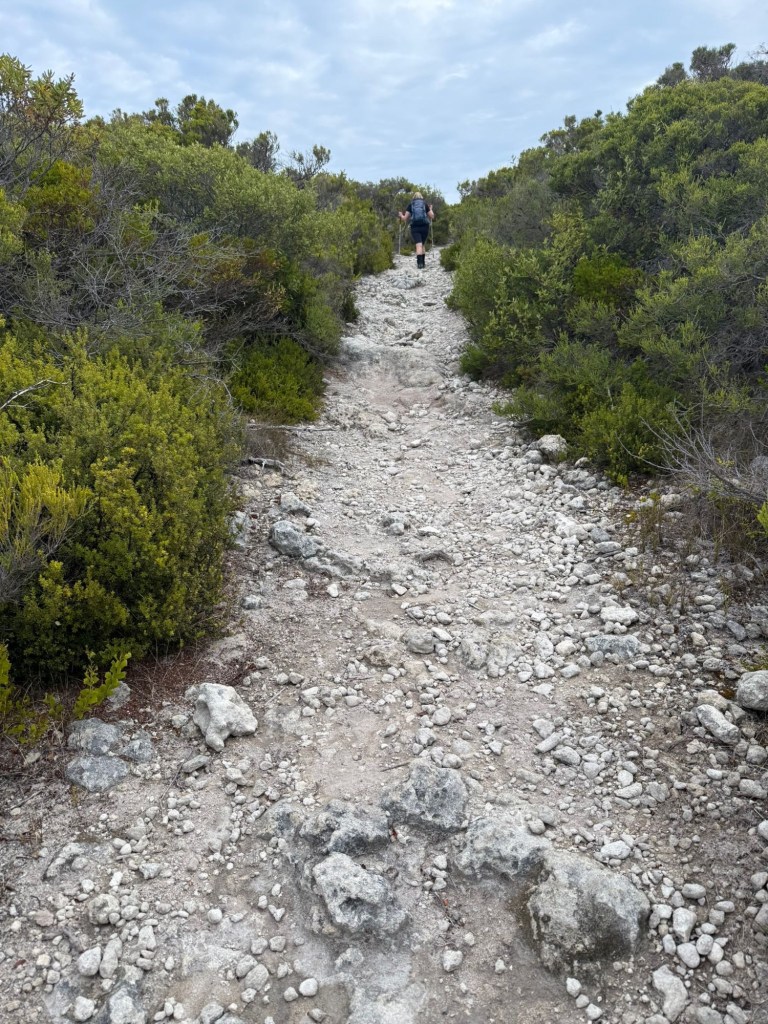
There were supposed to be a few humps to climb but I counted a rollercoaster of 15 at least. Just as you reached a crest you would think this is it, but it wasn’t of course. Up, down up, down. It seemed interminable.
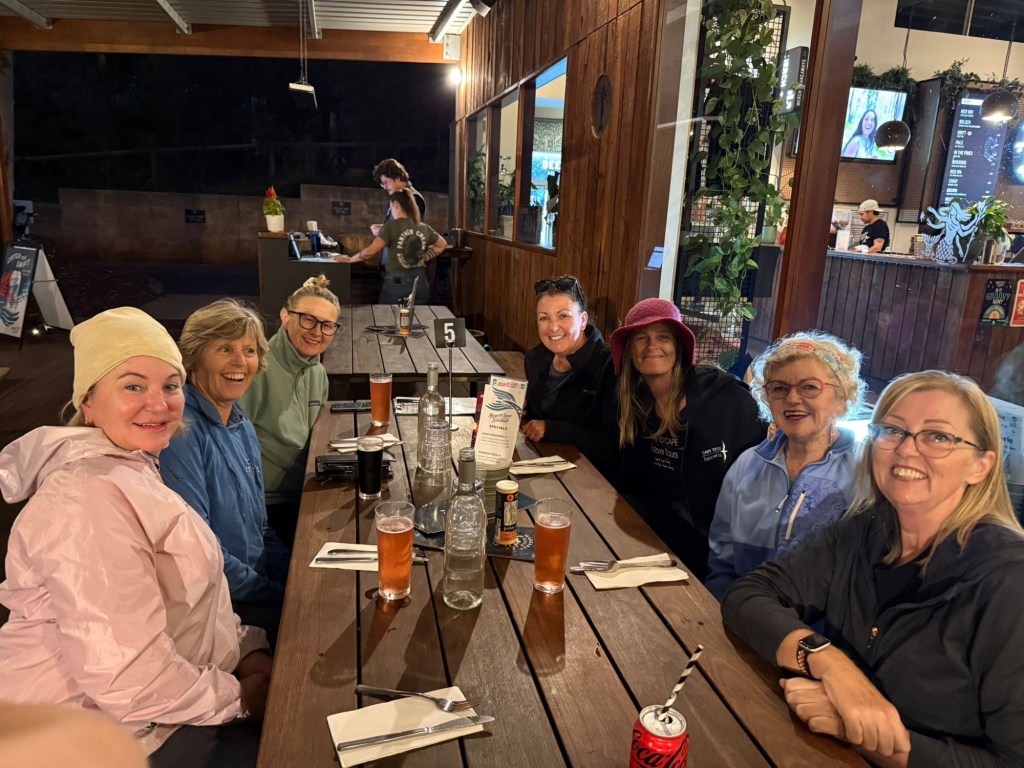
Eventually we arrived at Cosy Corner and were collected by the glorious van and taken to the Brewhouse in Margaret River for dinner. What a lively pub/bar and Lauryn discovered they had Pink pony beer on tap. This was her neighbour’s invention. We all enjoyed trying it Pink beer? a combination of berries and ale which was surprisingly refreshing-not sweet as expected.
I have to admit that keeping all the days separate is a challenge. I confused yesterday’s walk into Prevelly with day five and the walk through the forest from Prevelly!
I put this down not to sameness but to being so unconnected with time and just going with the daily rhythm of walking. It has been so meditational and calming, being a great break from the crazy world of war and media frenzy that assails us at home. All the normal pressures and stress, even when self inflicted, are removed and we are in a glorious bubble of happiness, good companionship, food and fresh air. Hard exercise helps regulate too. This is good medicine! Even if we have blisters and tired legs, the effort is so rewarding and our souls are so free.
So day five we walked the forest and past Bob’s corner and had the pleasure of our guide Kate singing about the caves and sinkhole (a Dolene)to the tune of Dolly Parton’s Joline! Such a clever wordsmith to convey the creation of these caves through song. We were so impressed.
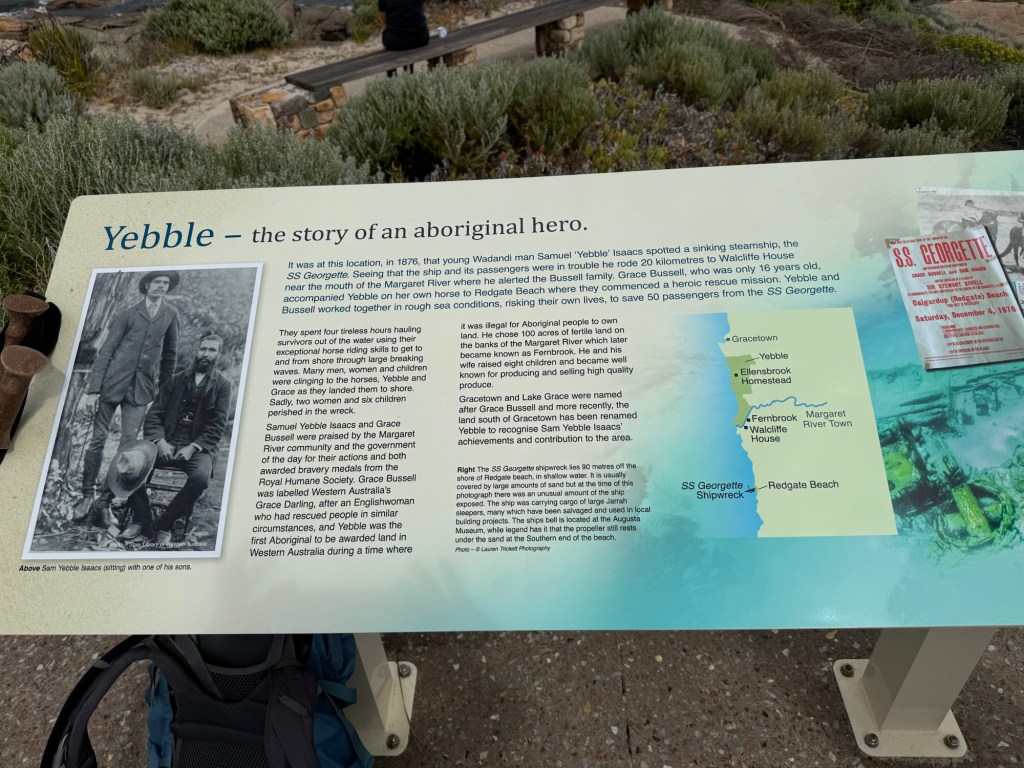
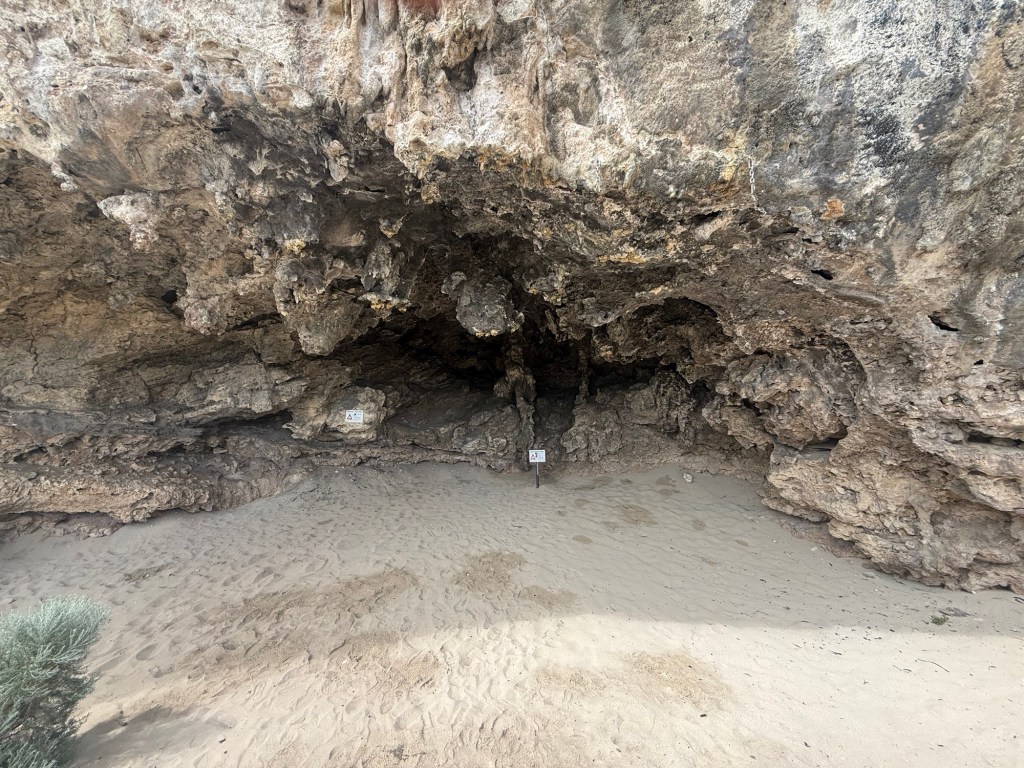
Bobs corner is a cave facing the beach with a steep but easy staircase from the beach. You can see the water dripping out of the limestone so you understand how fragile the cliffs can be.
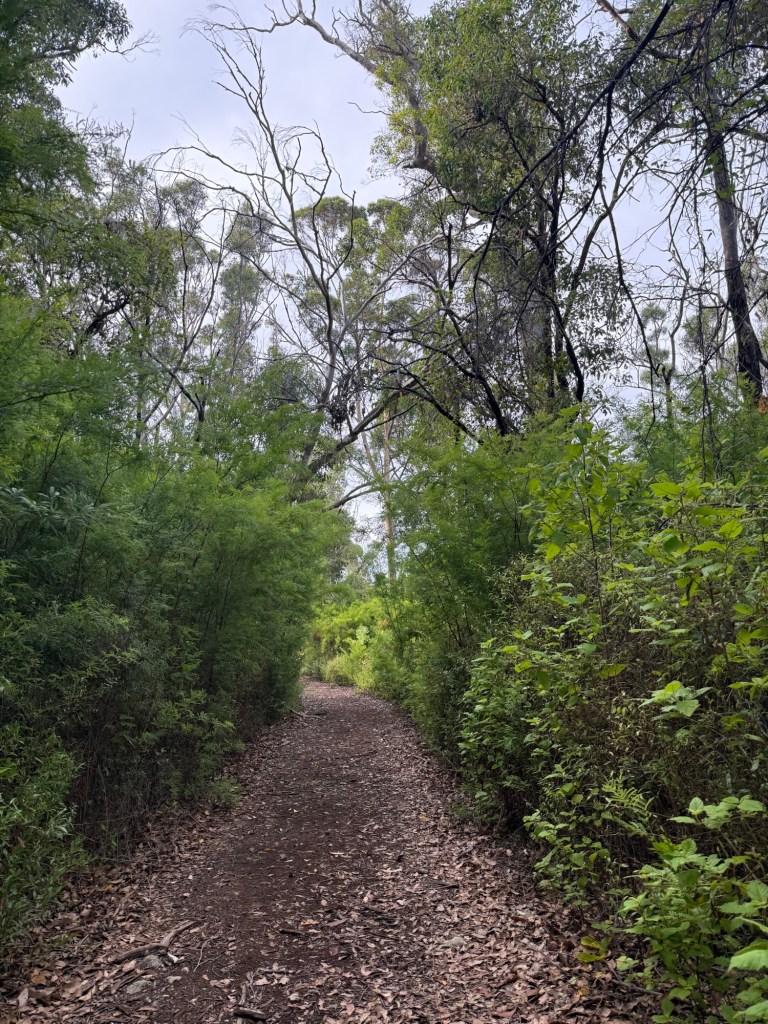
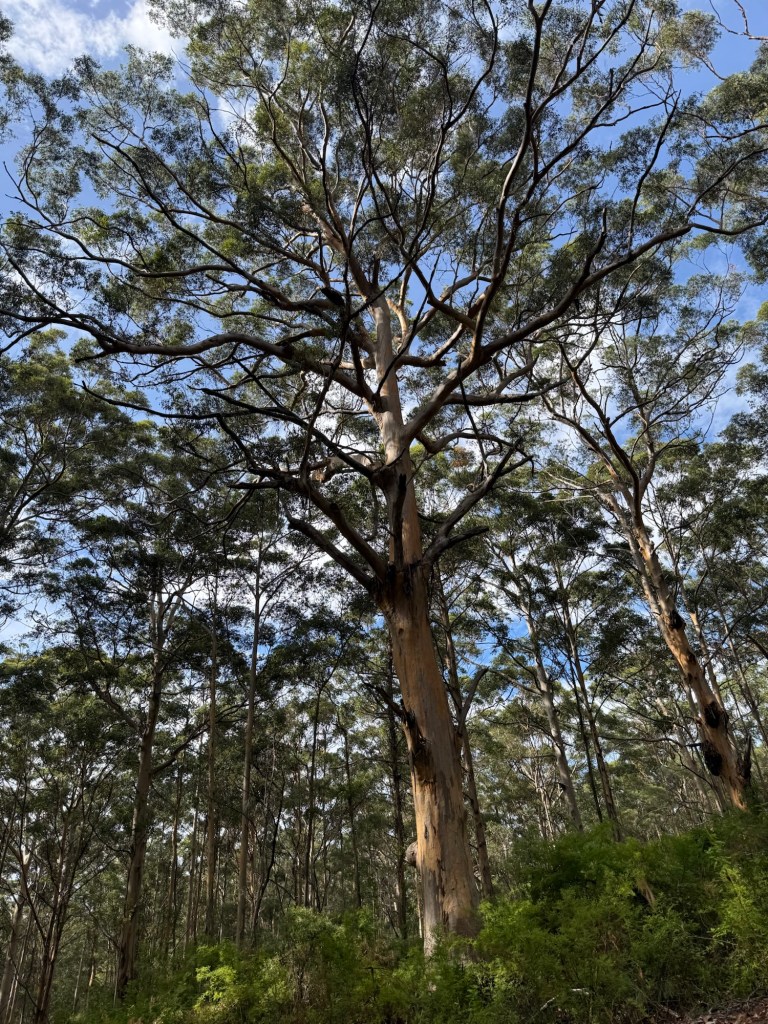
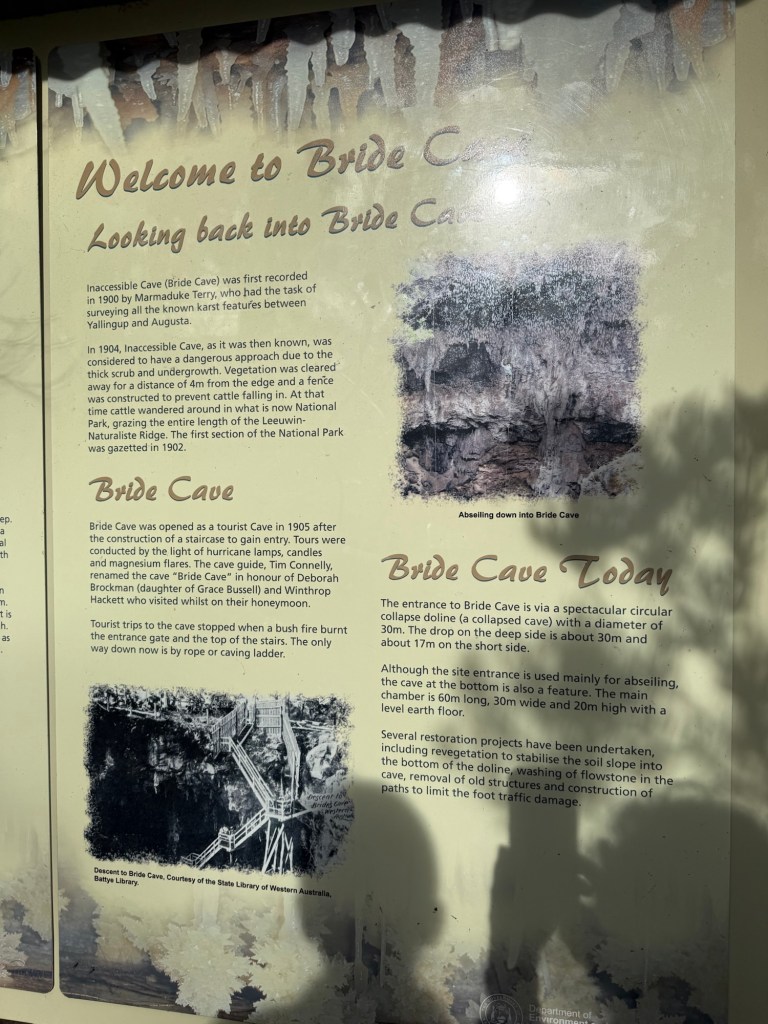
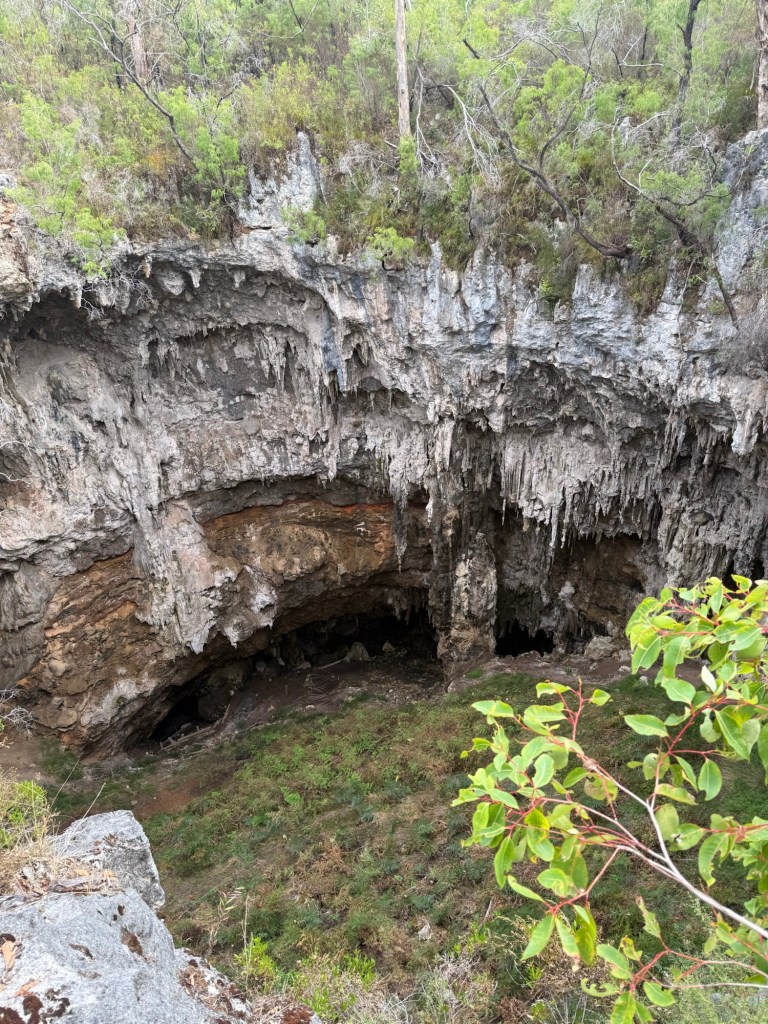
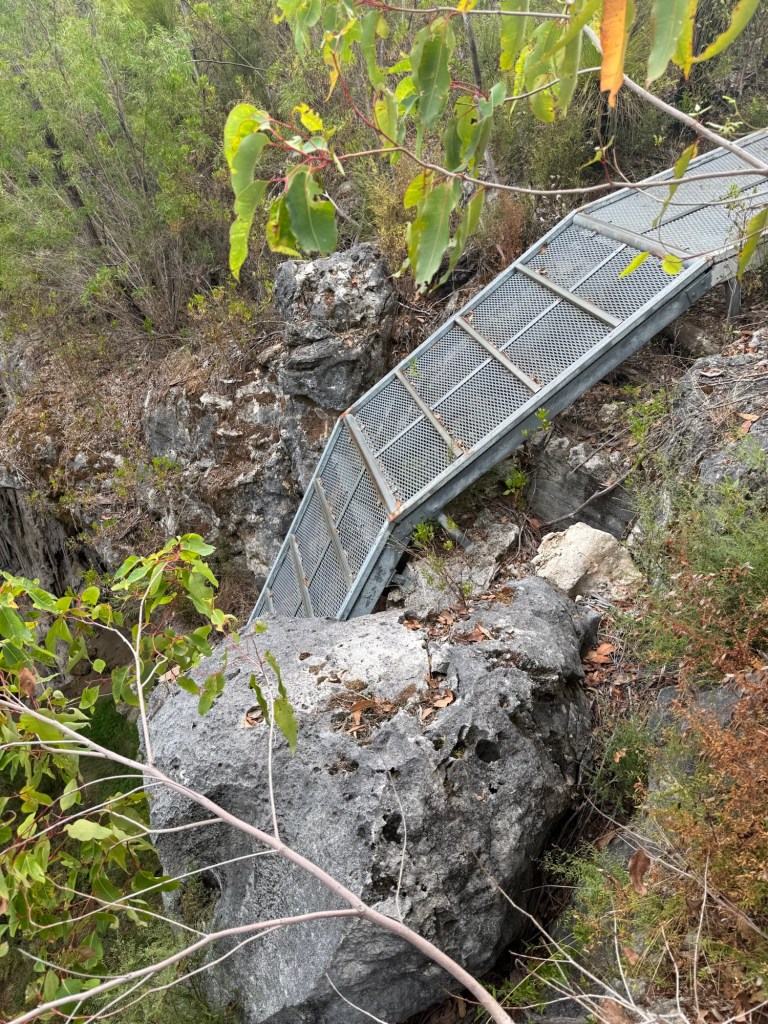
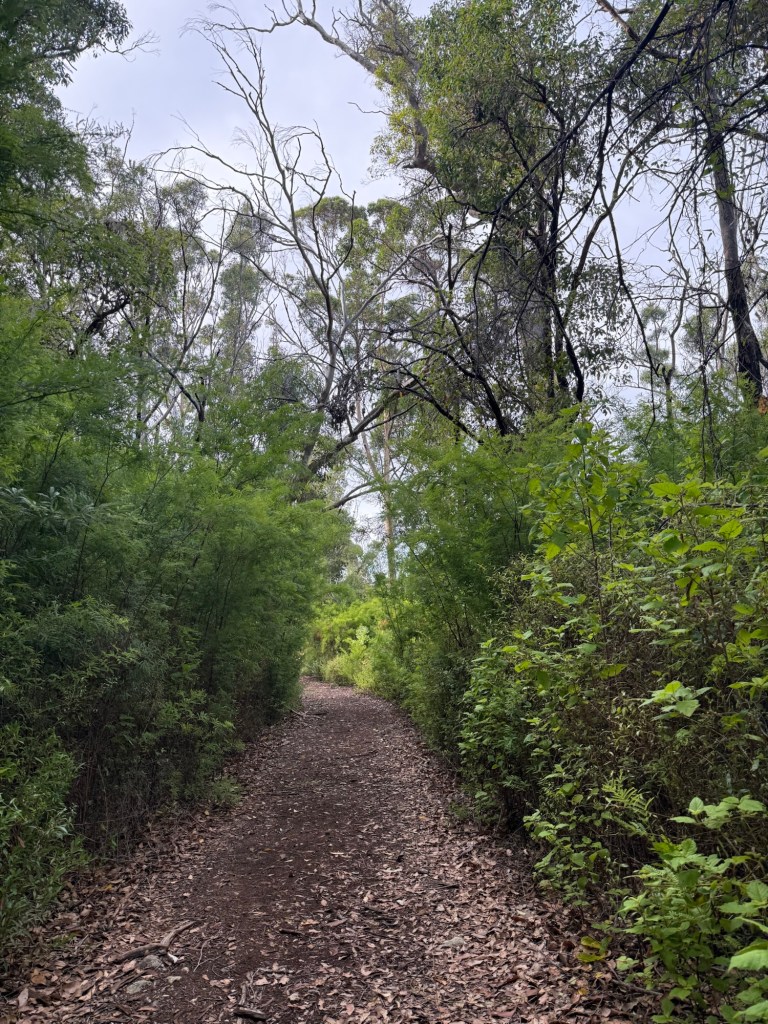
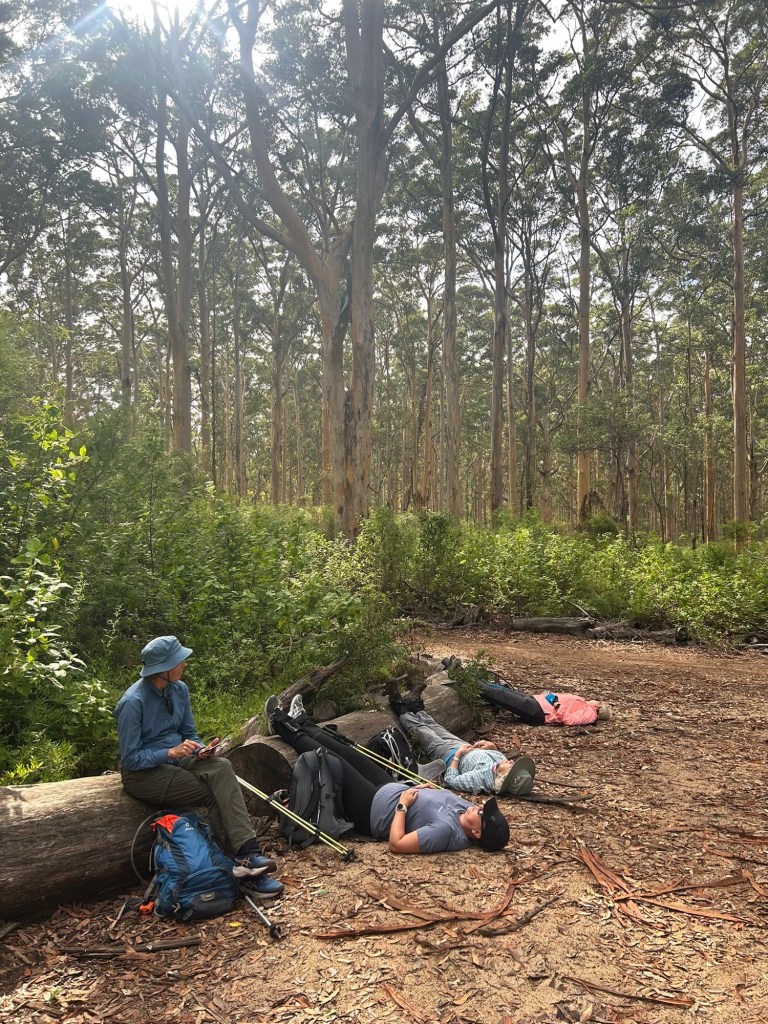
We had a forest bathing experience when Kate encouraged us to go at regular intervals in complete silence to walk the path before arriving at the clearing to observe the canopy of the mature trees. It was another very peaceful meditational experience and a bit different to the beach where we walk in some silence (stoic!) or chat and laugh to encourage and pass the time. While we were all lying down observing the trees a couple of independent walkers came past and kept walking straight. Kate called out to check where they were going and they said they were walking the Cape to Cape. She pointed out they had missed the right turn. They replied they were distracted by us and wondered if it was a medical emergency!
On the track we passed a line of processional caterpillars. Something we say a few times. They line up and move like a piece of string. I think it is also a way to deflect predators because they look like a stick.
A bit of a rest and we were back on the beach heading for home. Another interesting day.
Last night’s wine and nougat tasting was a fun and pleasant treat for us all. We had a very charming Italian surfer/come vintner demonstrating the wines. That is the theme in this region to which a lot of people have been drawn. The surf and the flexible lifestyle of the vineyards combined with surfing is a great life balance. It has a fairly long agricultural history of orchards and dairy that has morphed into vineyards and quality food production. I find it somewhat reminiscent of the Mornington Peninsula with a warmer twist!
We resumed our walk from Gracetown and walked towards Margaret River our halfway mark. Like the eastern coast 90 mile beach many of the streams only flow into the ocean after the winter season rains. There were a few stories of having to wade chest deep through the water in order to continue on the track at various times. I would need to take a float in that case and swim, being so short!
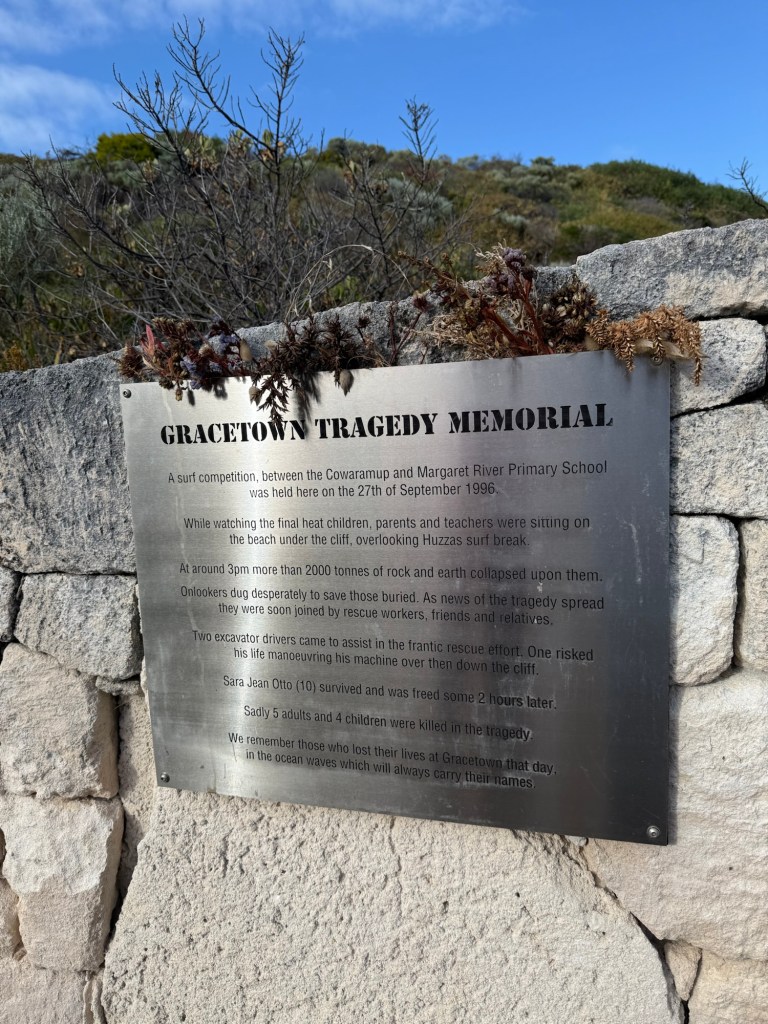
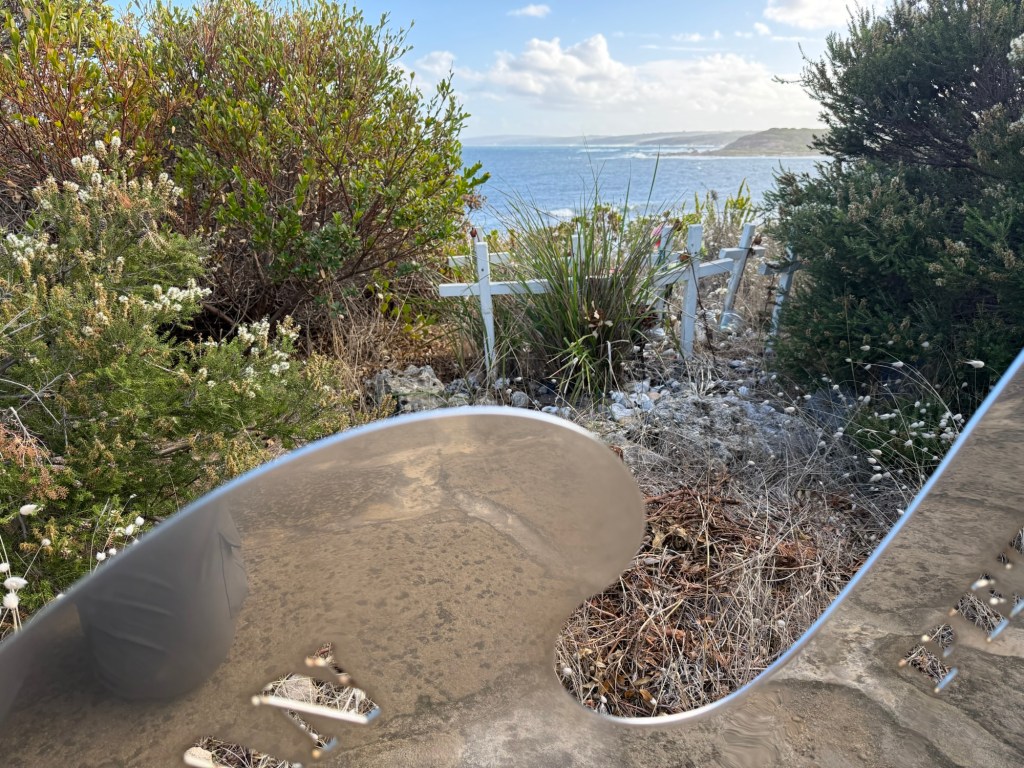
Gracetown was the scene of a terrible tragedy in 1996 when a cliff collapsed at a surf carnival and several people including children died. We passed a memorial to the tragedy that was very poignant. A cautionary tale too to remember that these cliffs are limestone and seep water making them unstable.
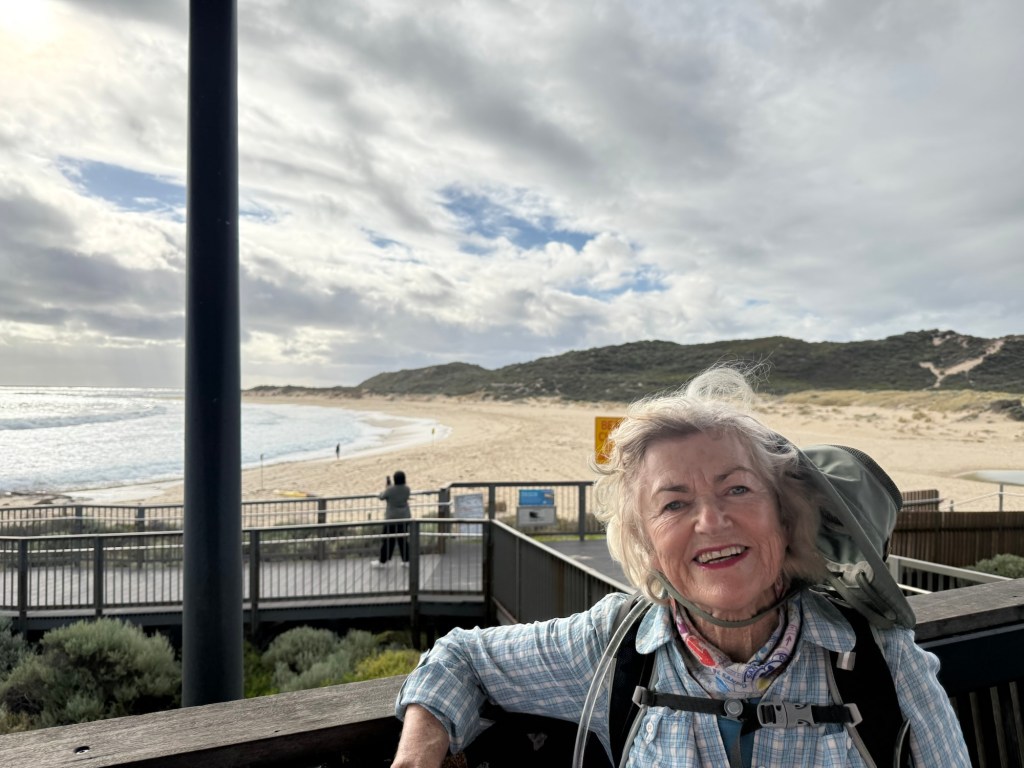
Arriving at Margaret River felt very significant as it is the halfway mark especially for the new hikers. This is where the Margaret River Pro takes place. It is on the international surfing circuit and follows after the Bells Beach Competition. The organisers were in earnest establishing the infrastructure as we passed by.
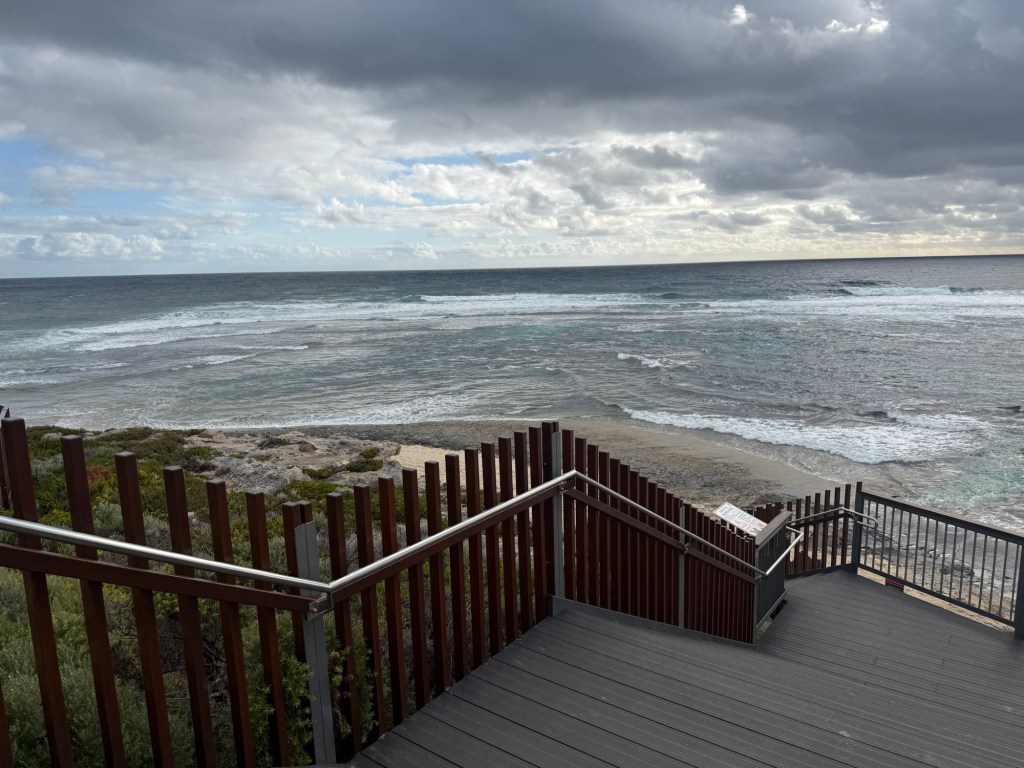
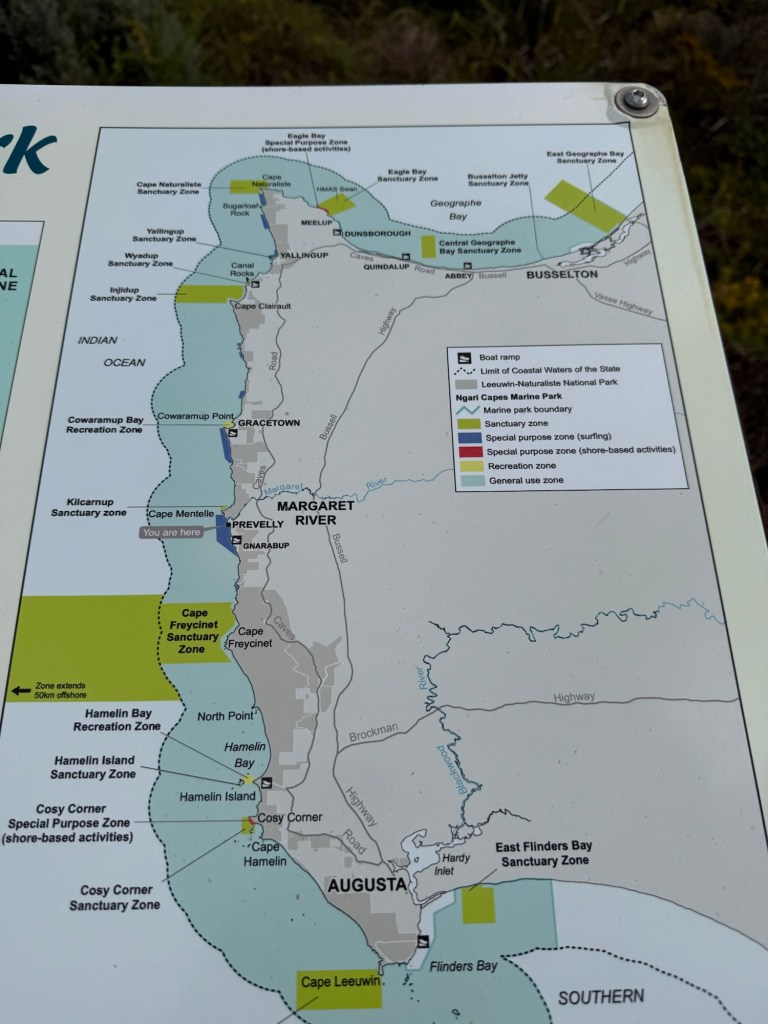
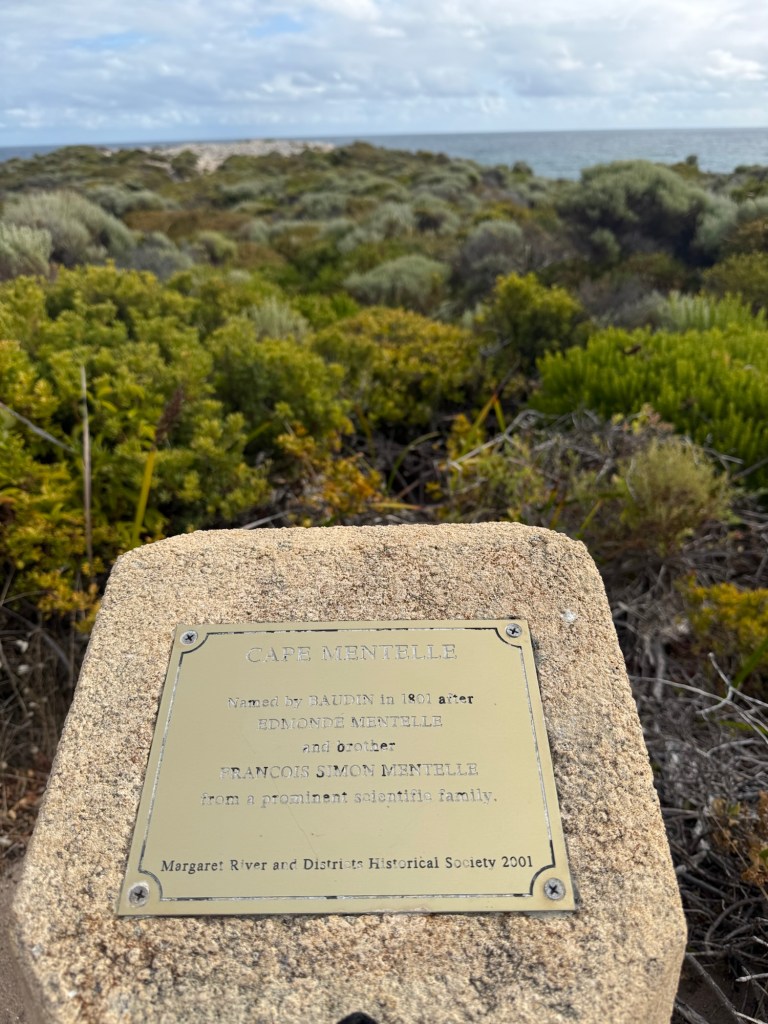
Note the French names. The French were sent by Napoleon to gather flora and fauna for Josephine and explored and named many parts of this coastline. The Captain Boudin was disliked by his crew and after his death on the trip many of the features named by him were changed to represent more of his executive crew. Cape Mentelle was one of the few left associated with his name.
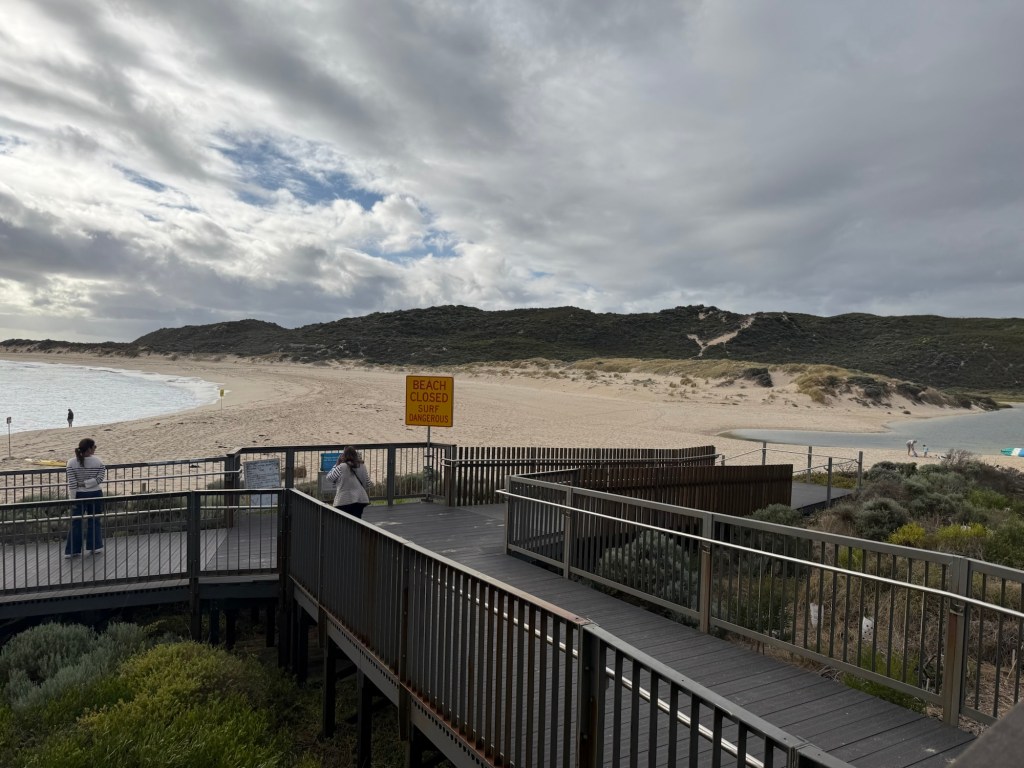
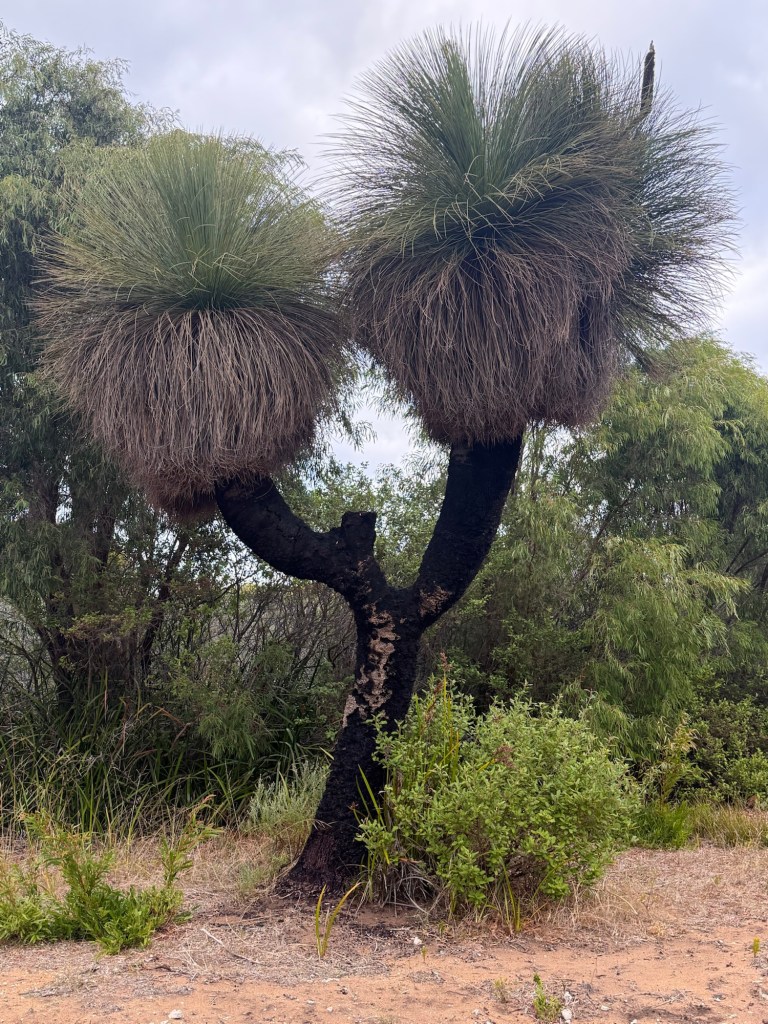
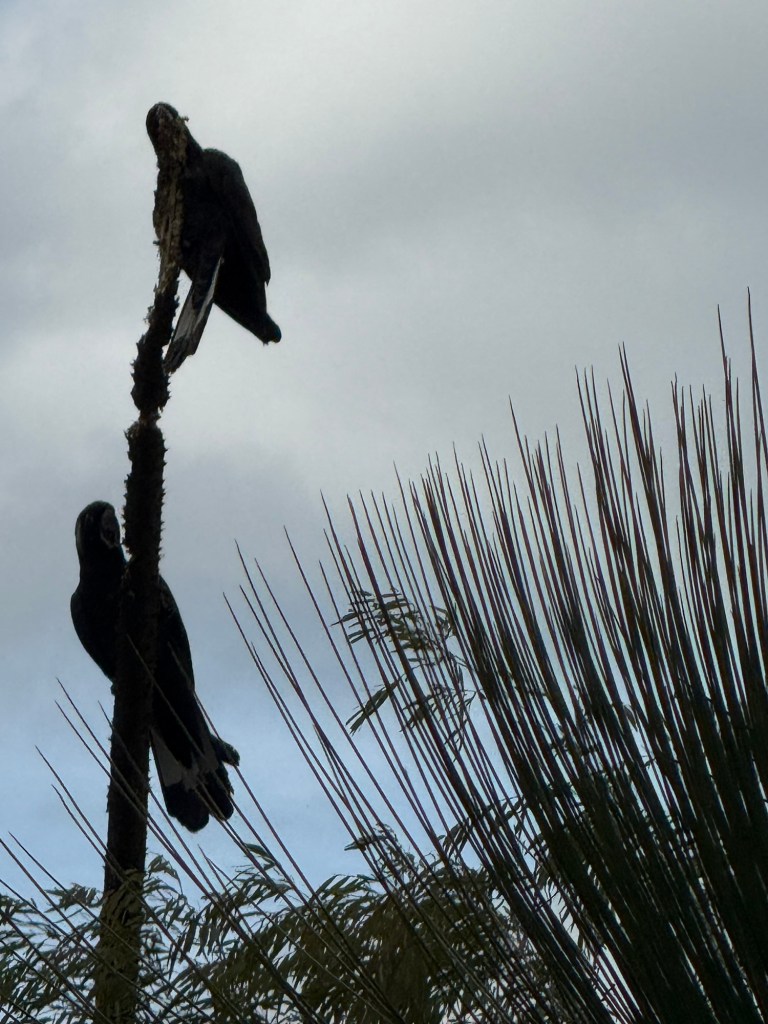
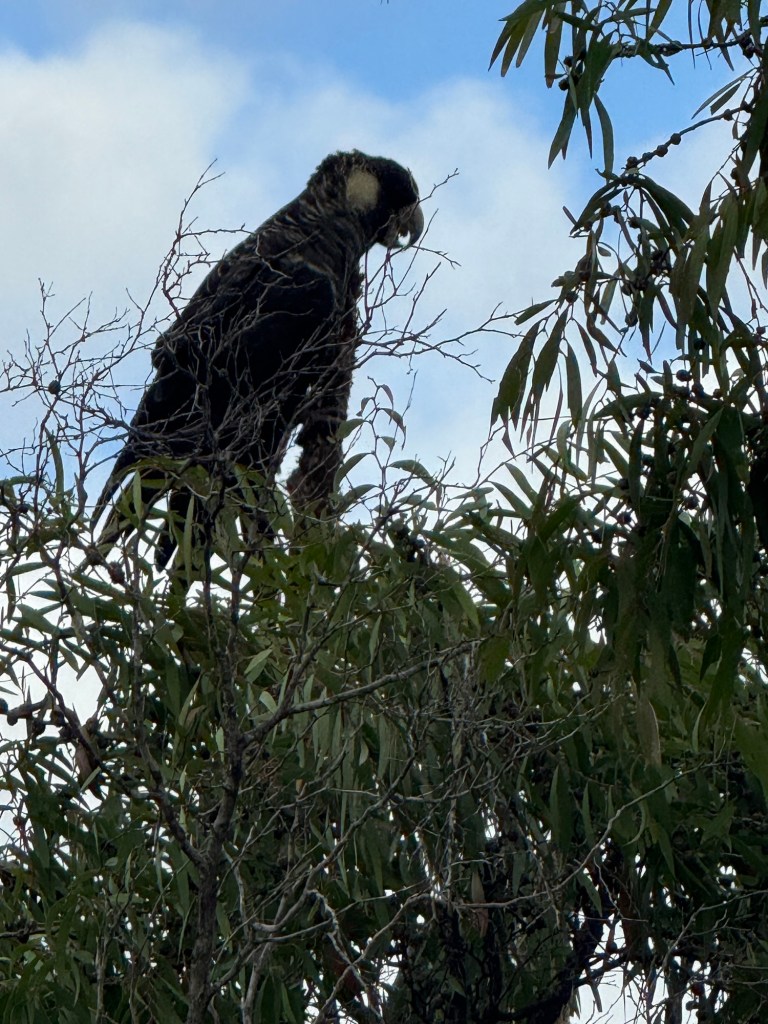
From here we walked inland towards Ellenbrook an historic homestead. We were thrilled to see the grass trees and their flower stalks graced with black cockatoos. They eat the resin which they access by pulling clumps of the flower stalk apart.
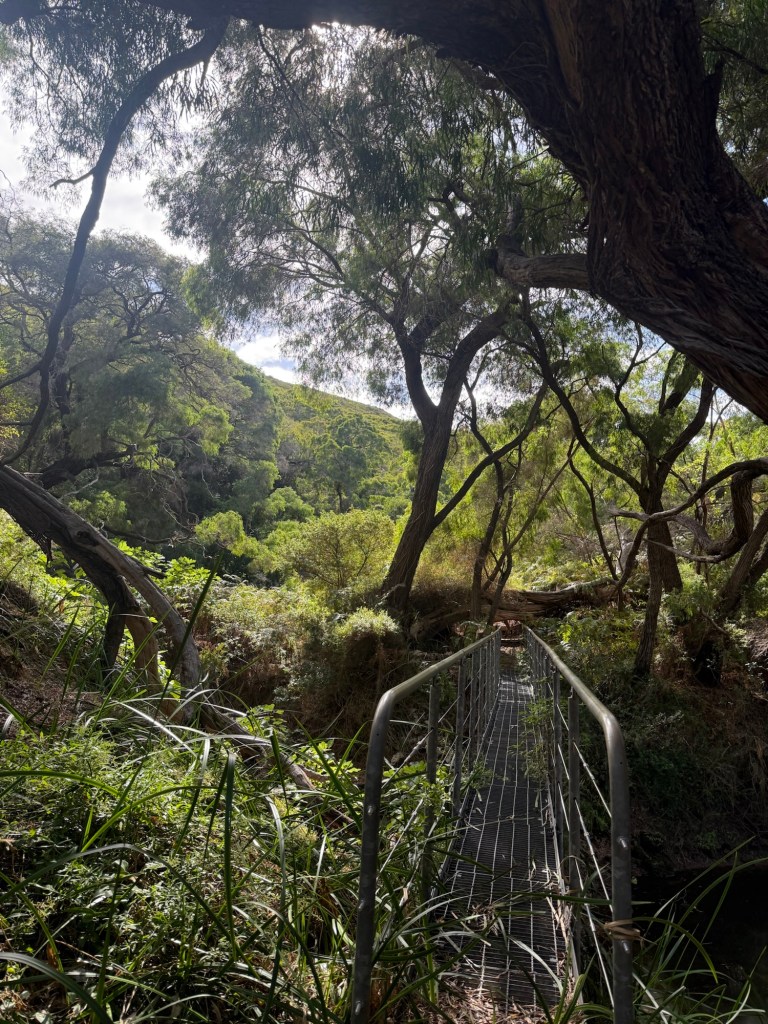
A lunch stop at Elenbrook and then we visited the Indigenous women’s place. A place for birthing and our guide Breezy encouraged us to take a leaf from a bush, giving thanks to the bush and then blow on it with our minds focused on the women in our lives and ultimately our loved ones. We then proceeded down a steep set stairs to a grove of trees and a rather overgrown stream which was the entrance to the sacred women’s place. Men would bring food but didn’t stay and remained at the mouth of the stream where it met the ocean. We all felt a lot of emotion doing this ceremonial walk and I cried all the way down the stairs remembering my mother in particular but all my dearest loved ones and girlfriends. It was powerful.
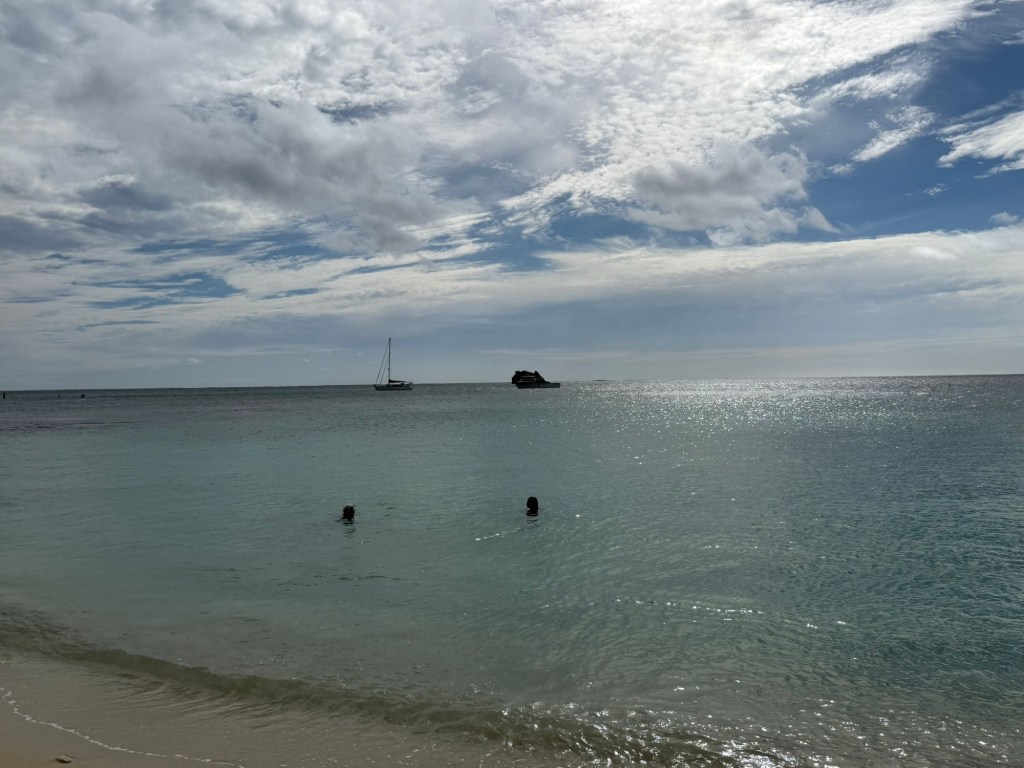
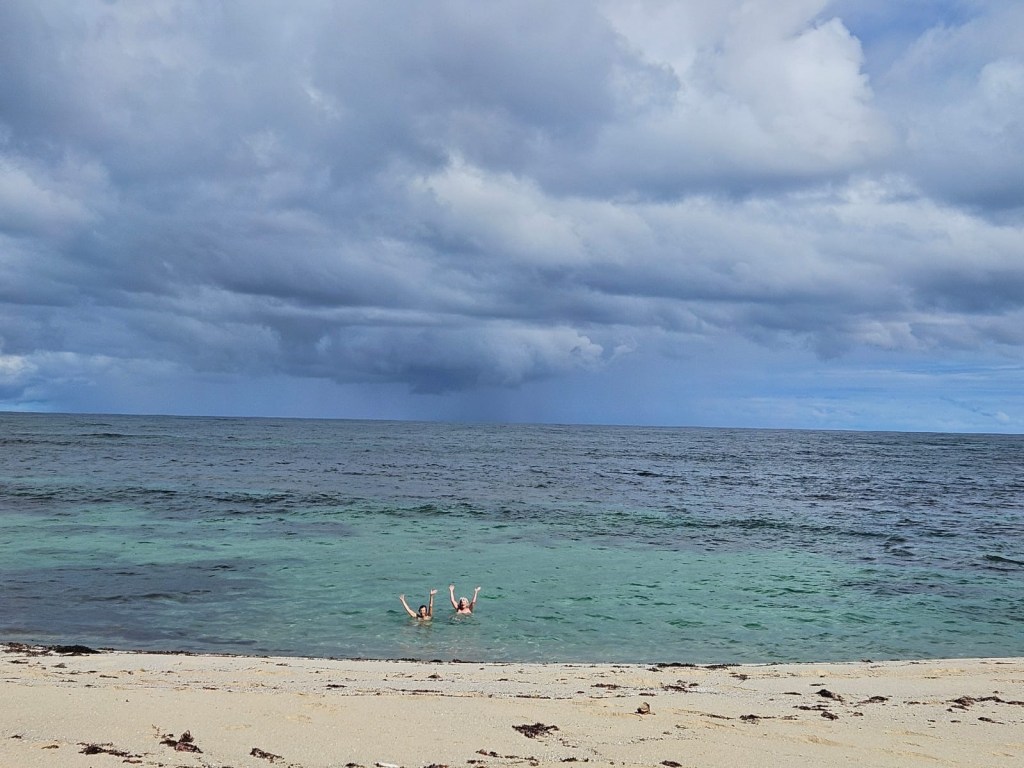
We continued along the ridge and emerged at the mouth of the creek where we resumed walking on the beach. Sally and I came across an Osprey in its nest. They used to roost at Cape Mantelle for nearly 200 years! Now they have shifted so we were delighted to see the nest. We decided to take a swim as we were ahead of the others. Not a soul on the beach and turquoise waters beckoning was too much to resist so we doffed our walking gear and ran into the sea. What glorious refreshing water and such freedom. We were revived considerably and when the others walked past we waited till they were gone and dried off and redressed.
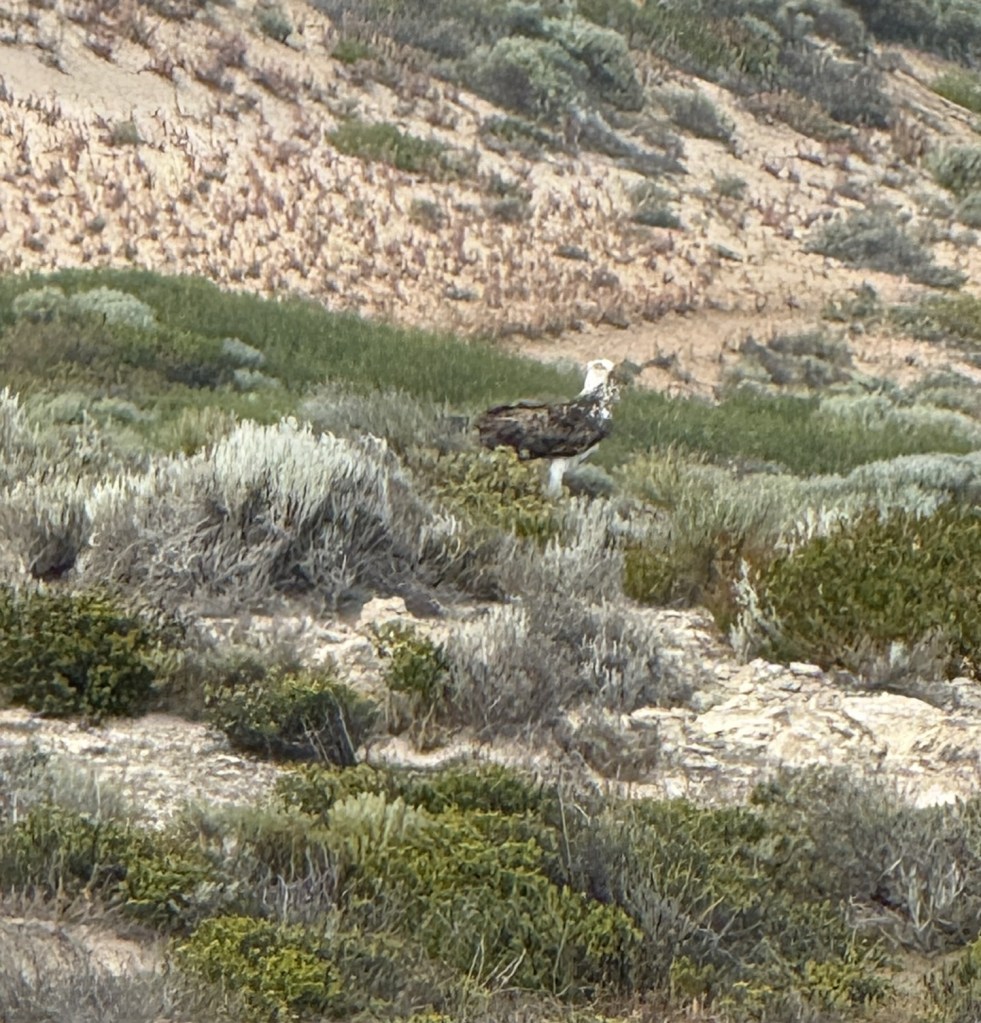
We were so excited to see the Osprey and came across our friends waiting for us on the rocks with feet up. While standing there two ospreys flew overhead and Breezy captured me and the birds in her camera.
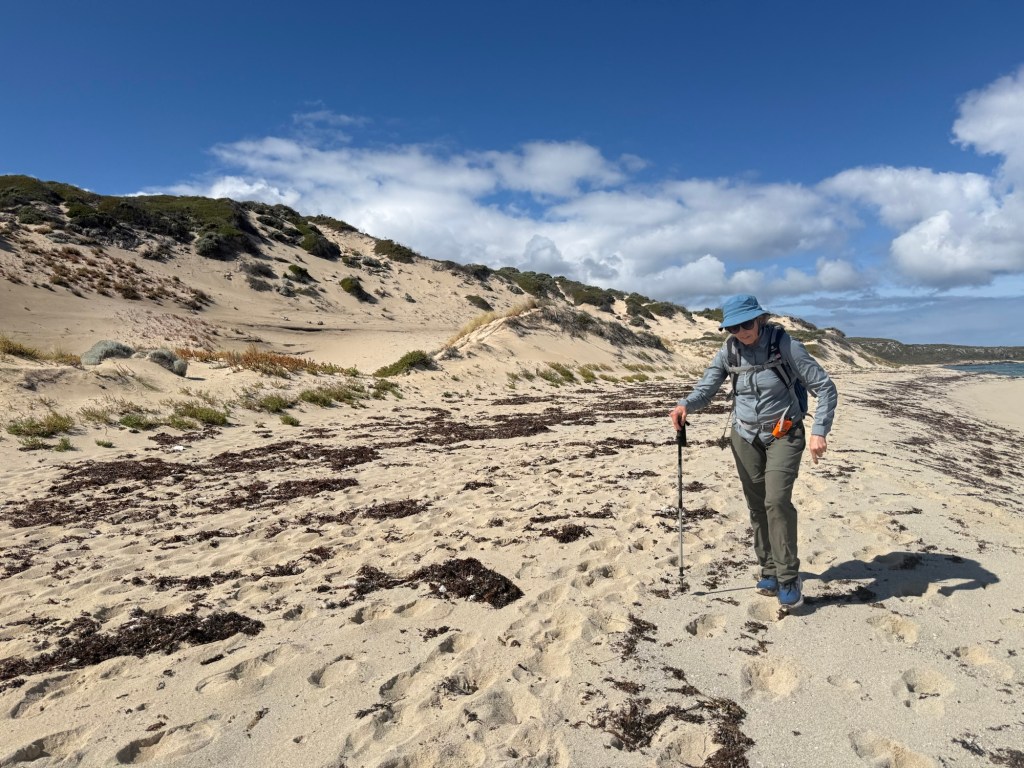
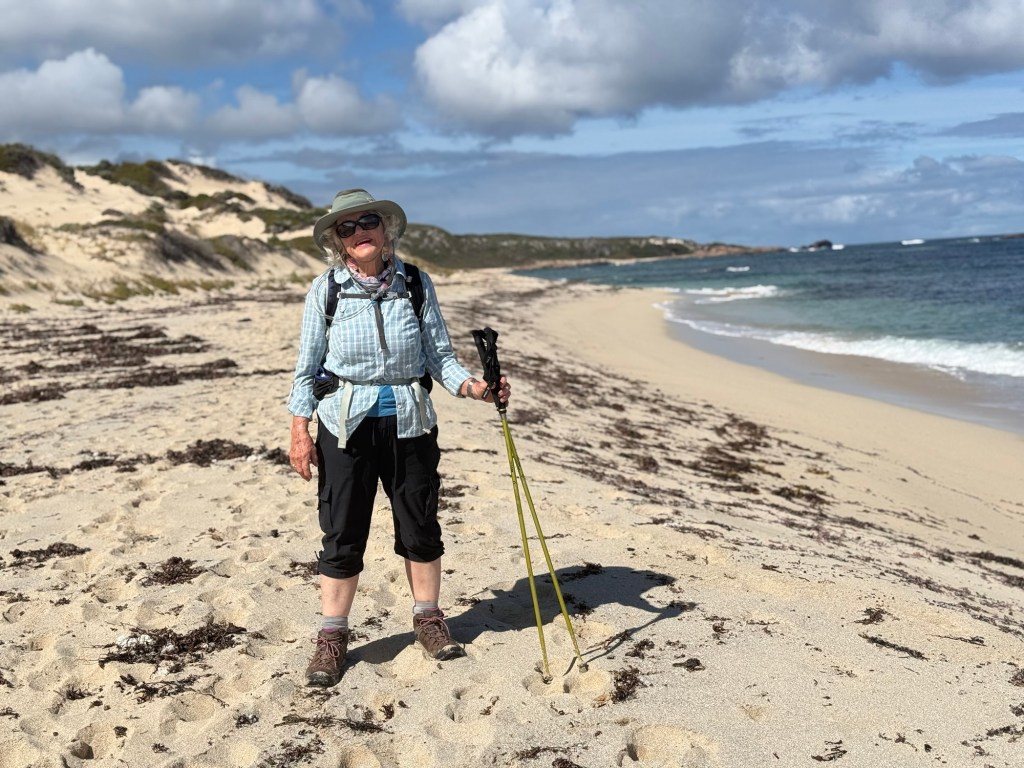
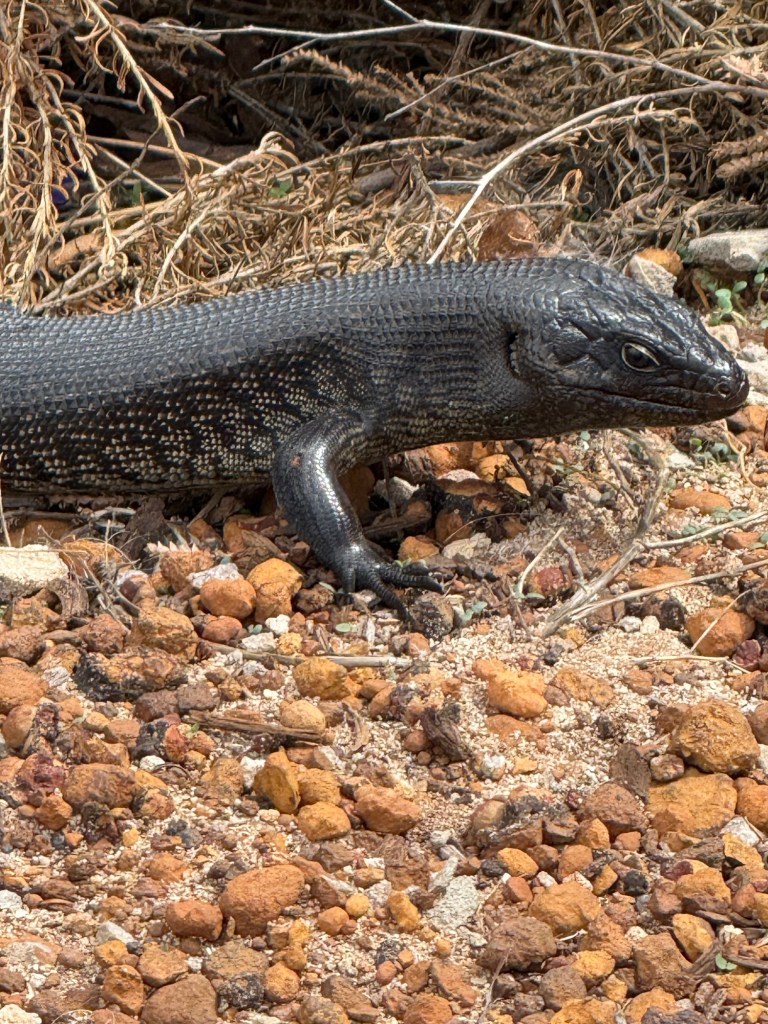
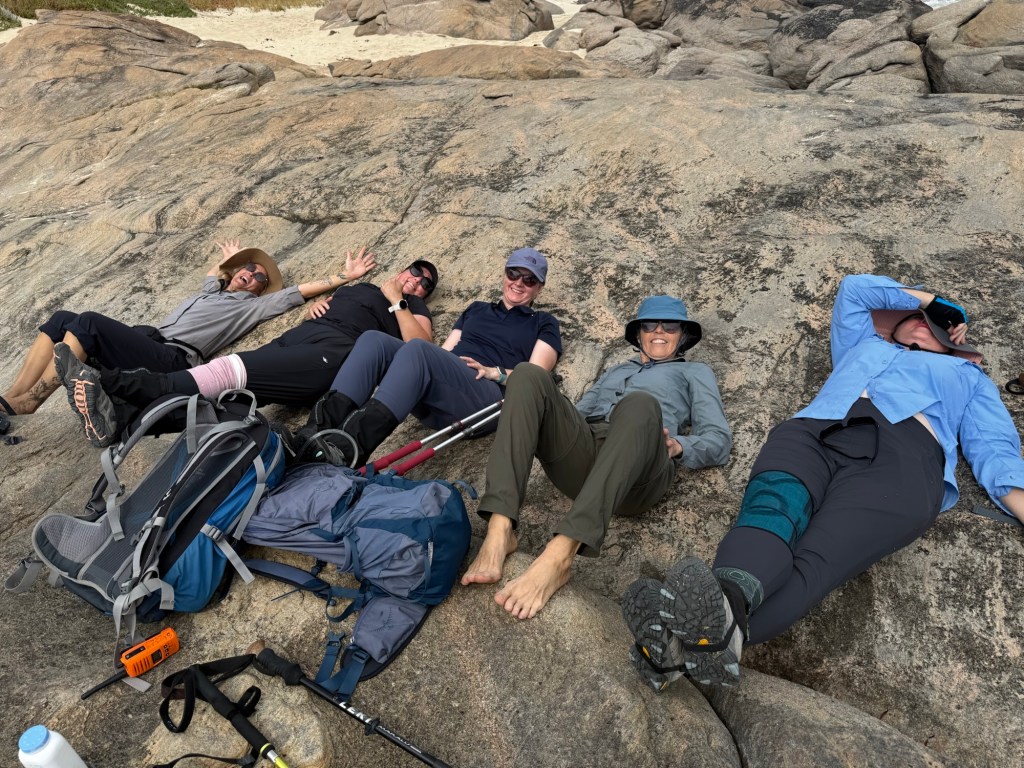
Finally arrived at Redgate Beach for surprise afternoon tea and were greeted by Hot scones, Jam and Cream with REAL coffee. It was like an hallucination and greeted with the greatest appreciation. A great day and back in time for dinner at the Commons (gratefully, a restaurant/bar next door to Surfpoint!). The buzz in the bar was full of energy and lots of fun. We had some bubbles and dinner to celebrate and headed off to bed about 10.00pm.
After a fortifying breakfast we returned to Moses Rock to continue our trek. Today we are very aware of the different flora as we walk across the limestone headlands and cliffs. Some of those cliffs are quite unstable so the track veers a little more inland but still with sea views. The vegetation is mostly low and wind pruned. Our group is forming a solid bond as we encourage each other and nick names are becoming part of the fun. Sally a fast, effortless walker across sand is the Gazelle. I am not far behind but not as lithe, the Antelope. Jacqui is Jacqui 5 breaths because on all hills she needs a stop for 5 breaths, Toni is Corner shop because whatever you need she has it. Sharon is Sharon no tomato and Lauryn is Where’s Lauryn because she is stoically quiet.
Our guide today was Sue a specialist in flora. She also works in a nursery. We were made aware of so many different plants. The red flowers are so pretty amongst the greenery.
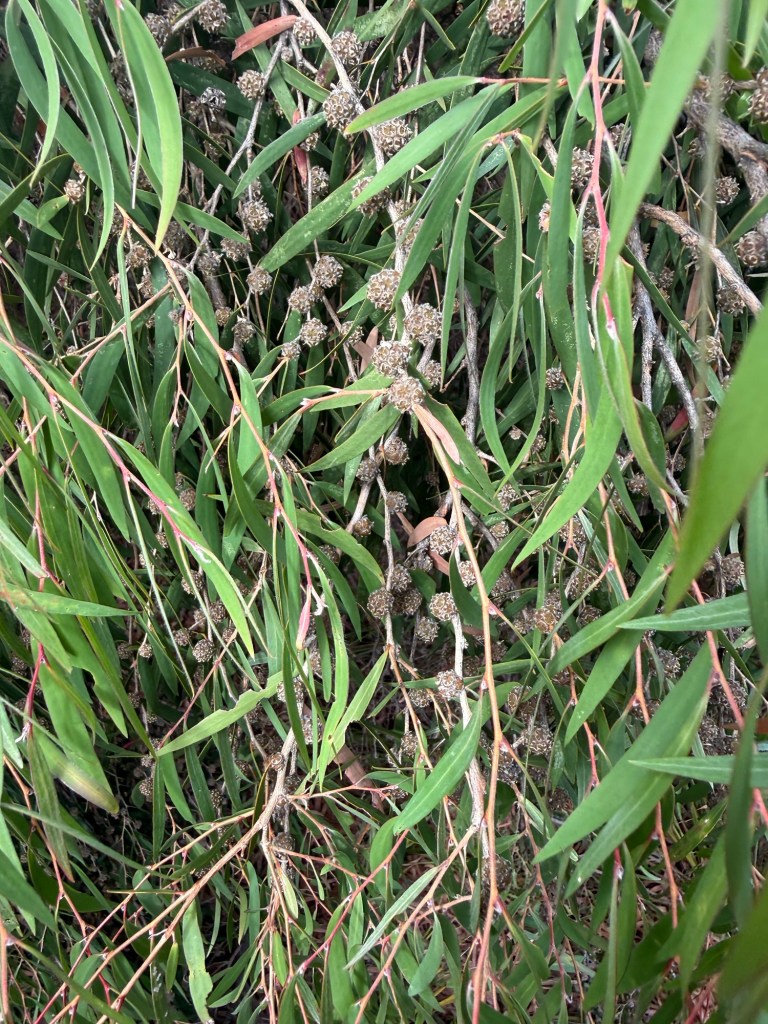
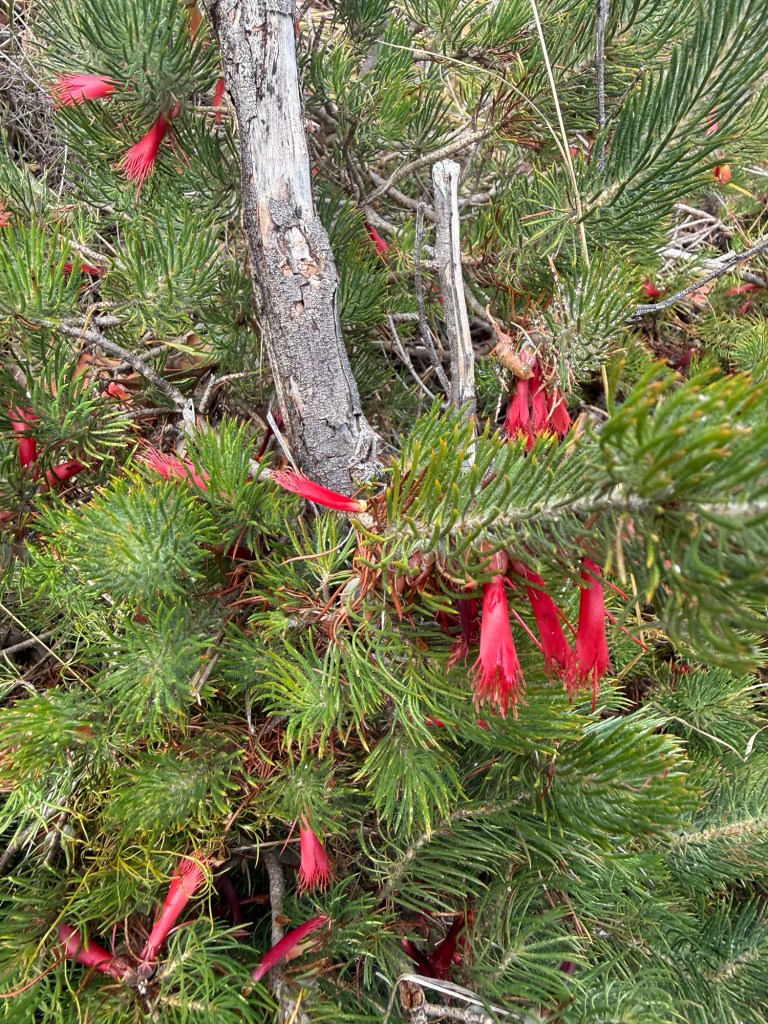
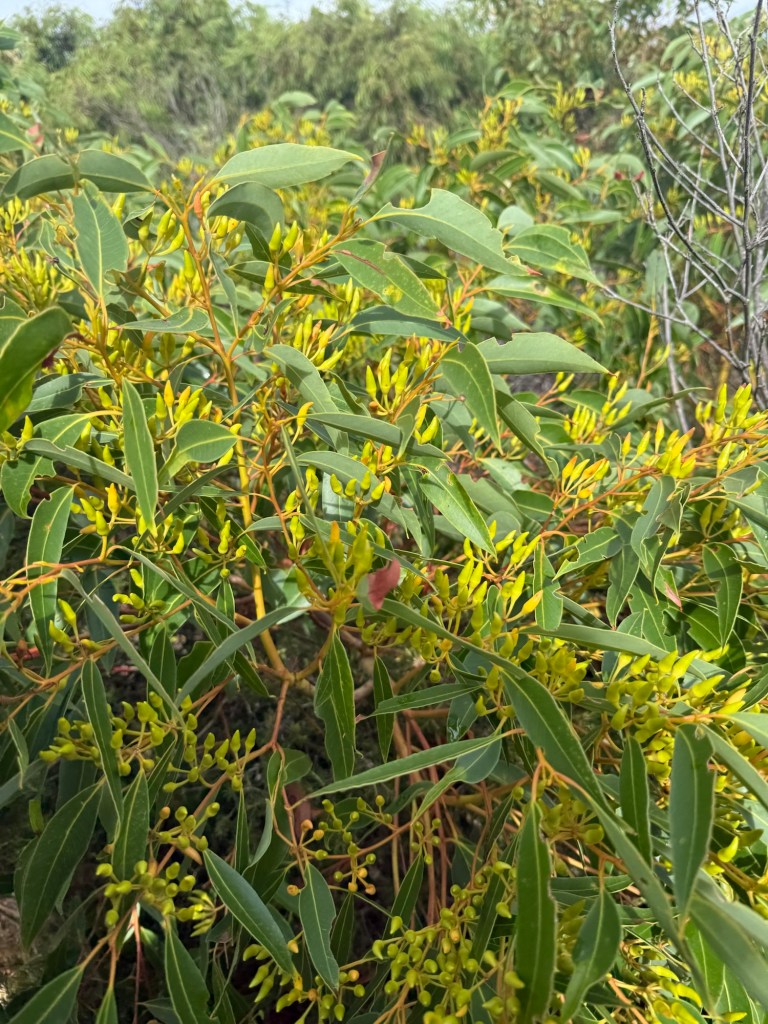
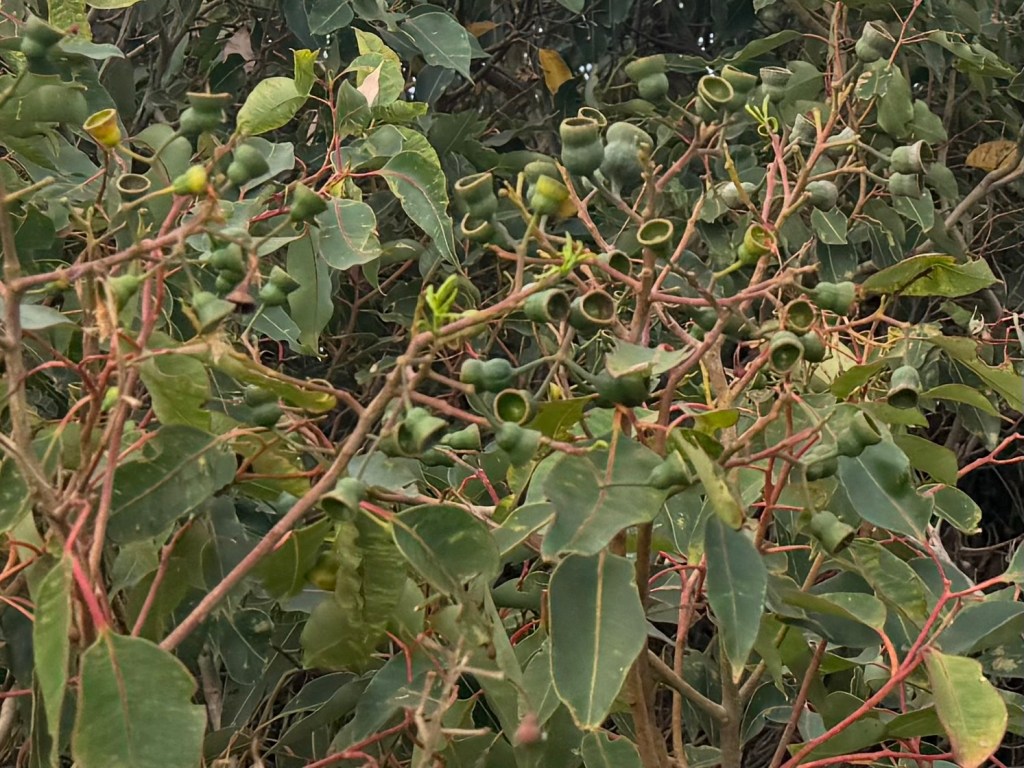
Our goal today is Gracetown which seems a very long way away! Sally is keen for another swim so when we retun to the beach below the Wilyabrup Cliffs she takes a quick swim a la natural. Getting in and out of a swimsuit on a deserted beach seems pointless and too time consuming. She is a devoted ocean swimmer. I am inspired to overcome my horror of cold water and join her-but not today!
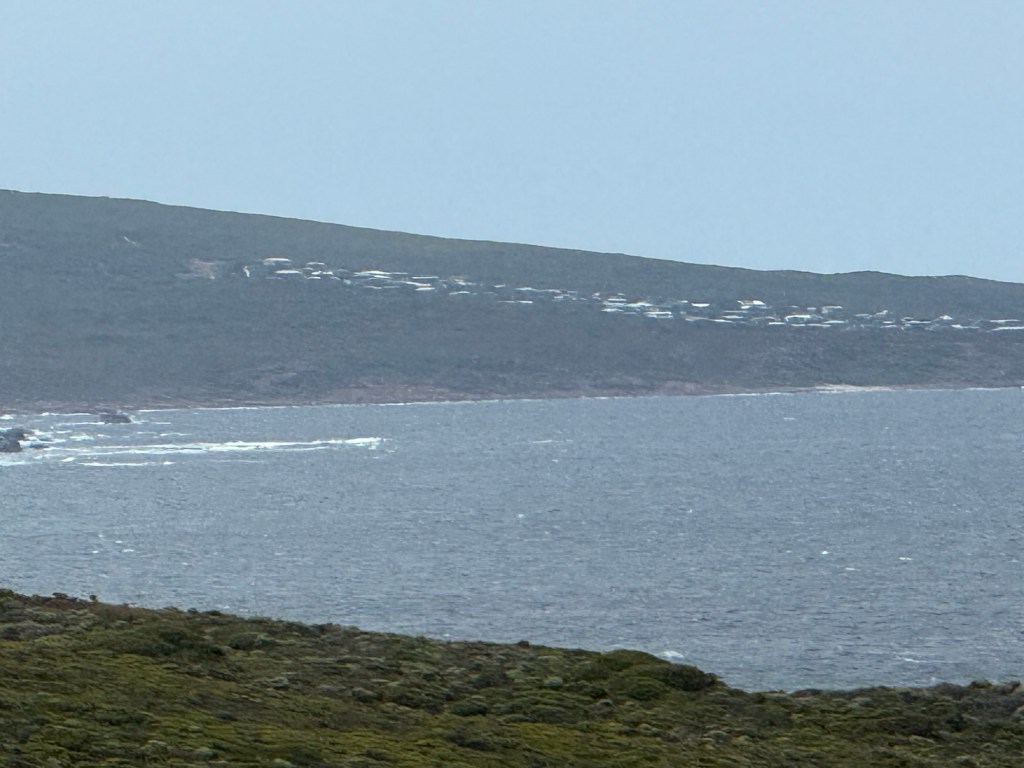
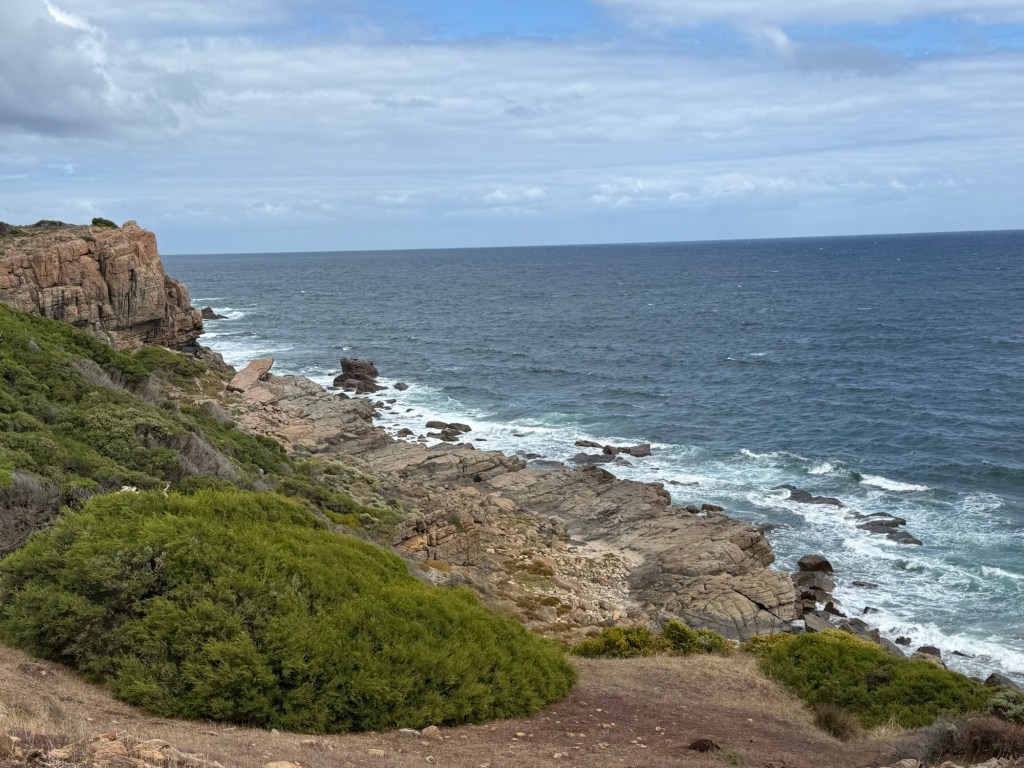
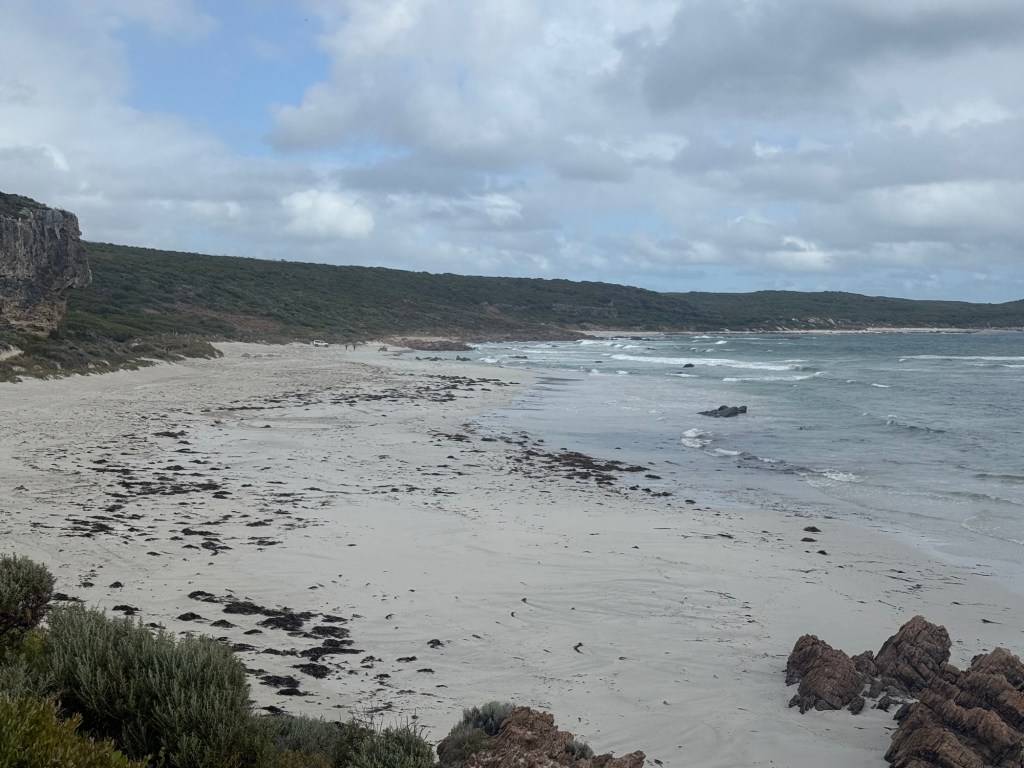
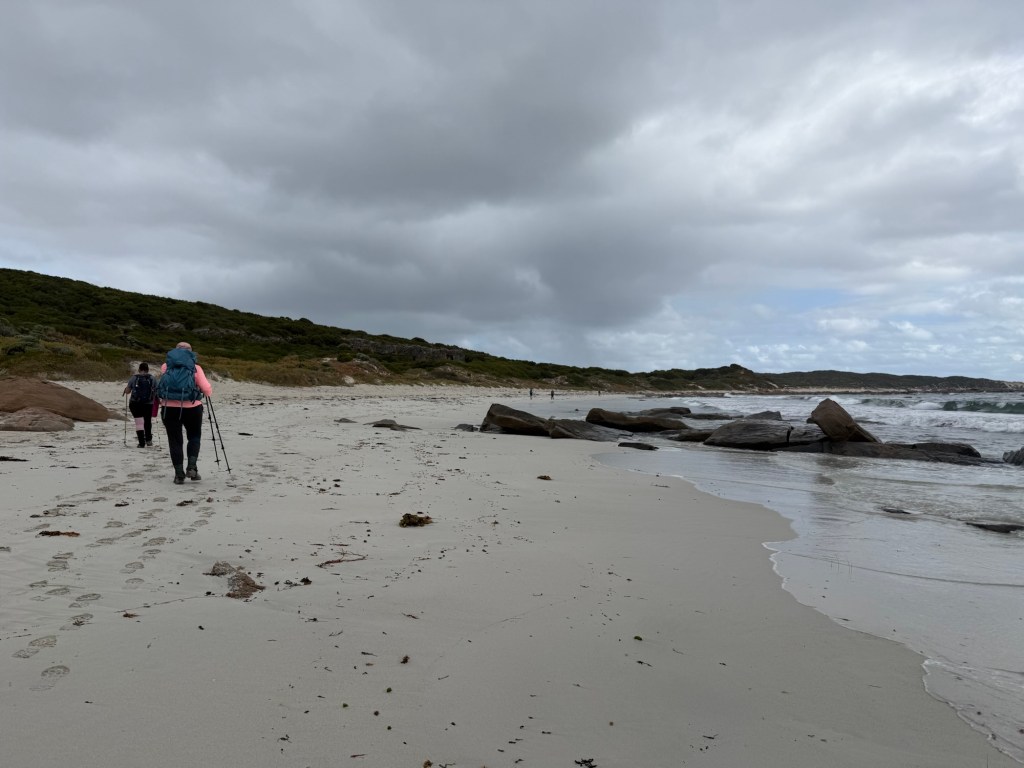
We know now that walking on the beach usually means an ascent over a dune of some sort to return to the cliffs and upper tracks we are traversing. They are steep and deceptively tough to climb. I have got a system of sticking my poles in and walking up to them. It works. My arms are getting very toned!
Passing beaches with names like Gallows and Guillotines, evokes the drama of surfing in these rocky waters. Gracetown slowly comes into view. We are looking forward to the treat at the end of the day which will be a wine and nougat tasting at a local boutique winery. It spurs us on.
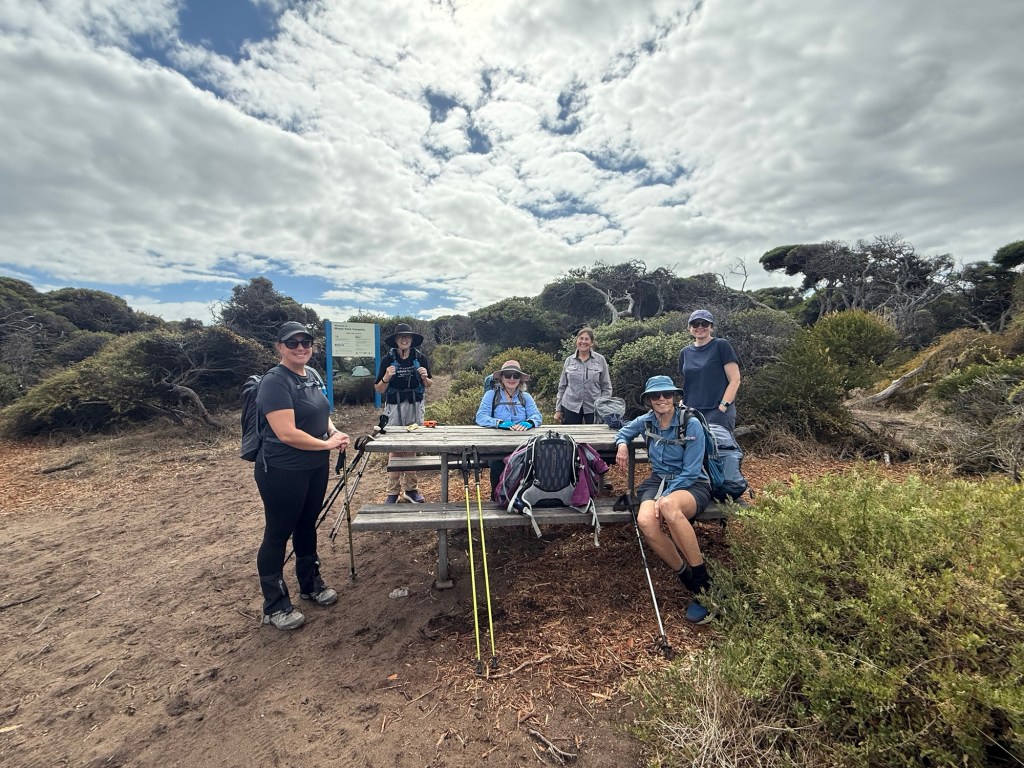
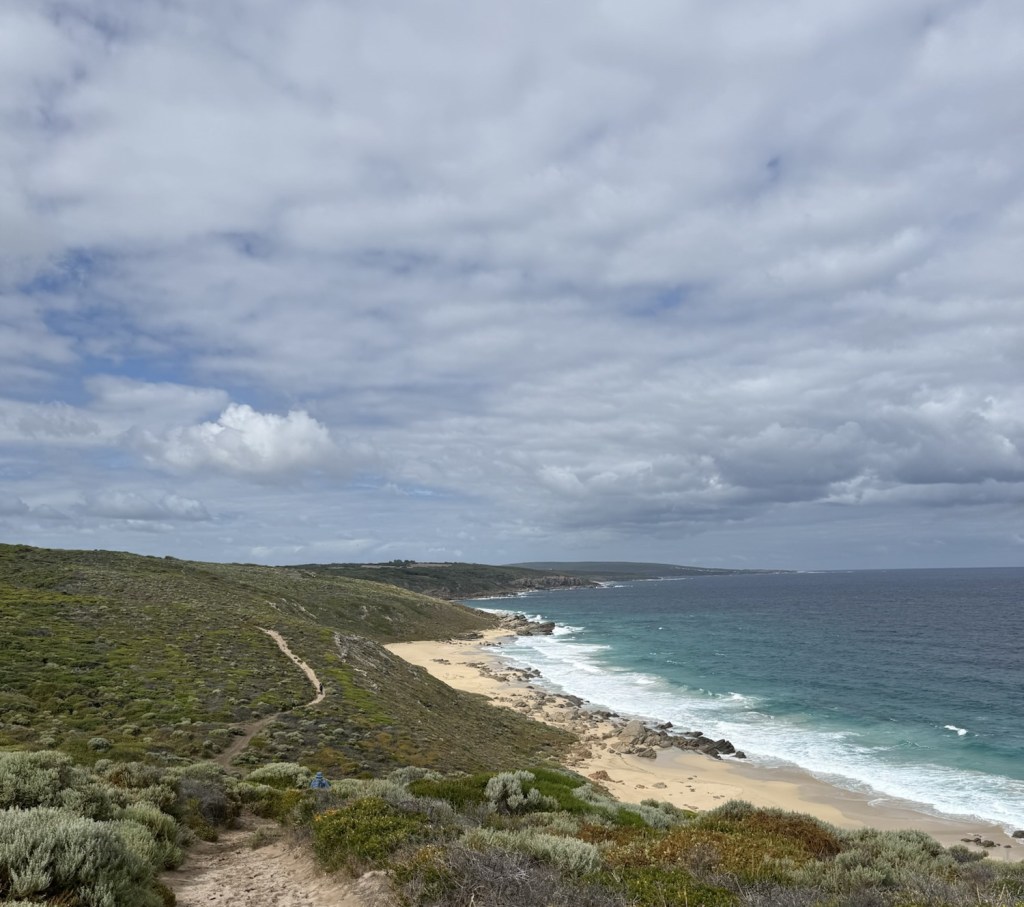
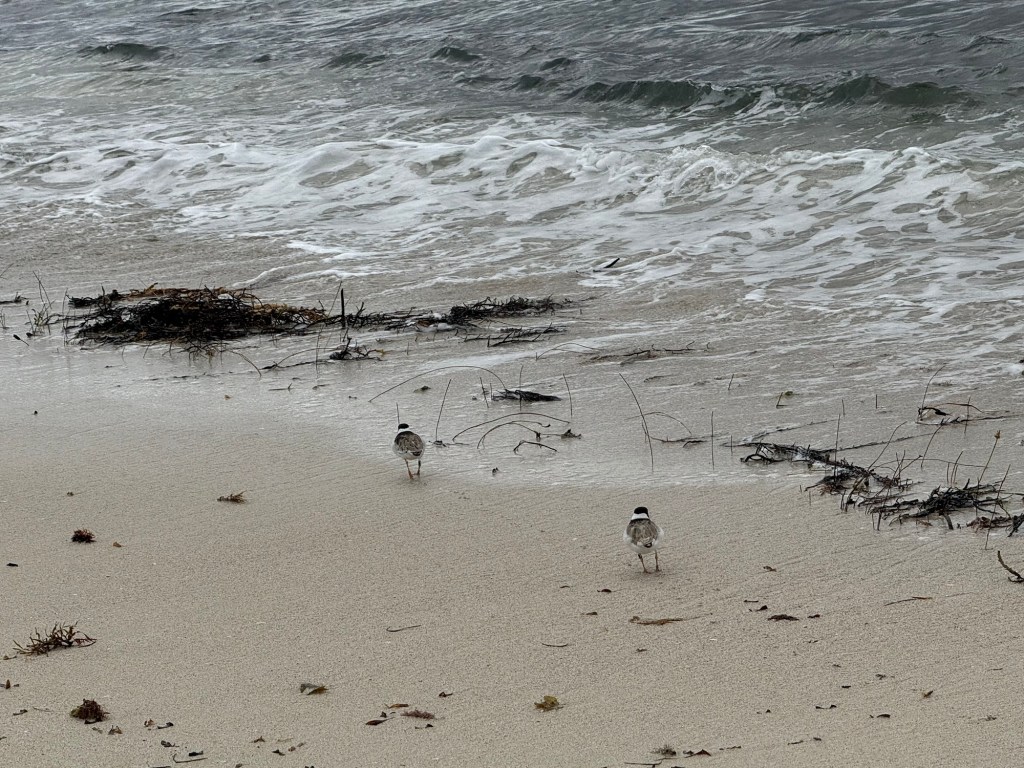
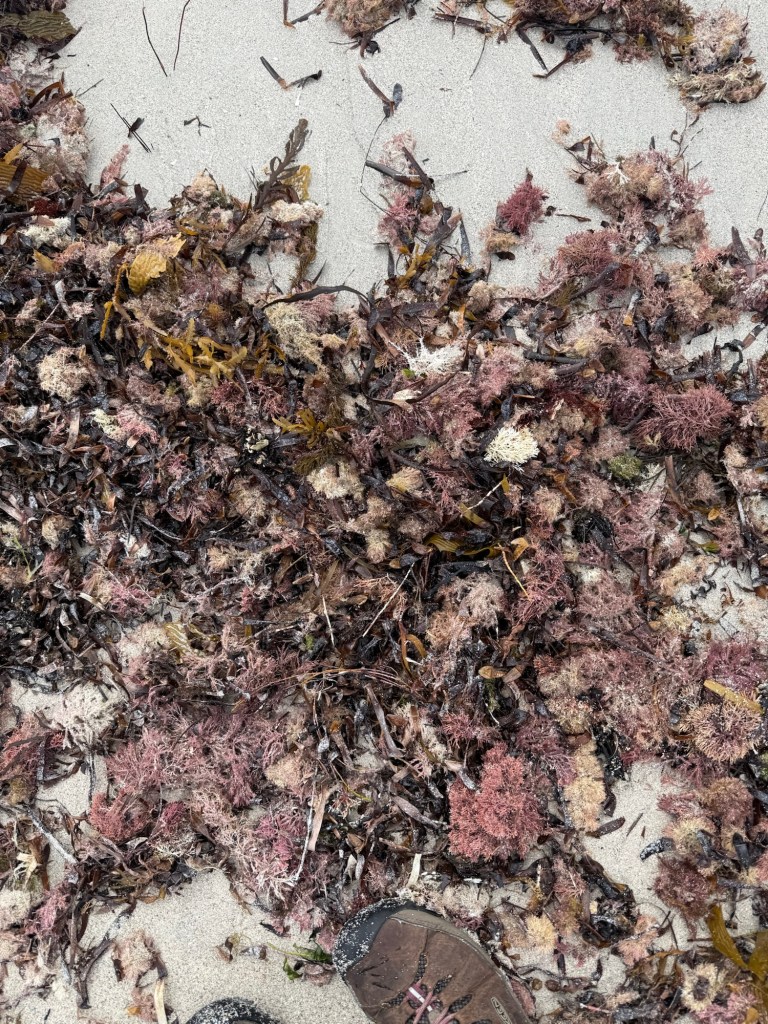
Off shore there are many marine reserves along this coastline. It is frequented by whales and dolphins and seals who use the warm Leeuwin currents mingled with the cool waters to coast back to the southern oceans after birthing their young further north. The mingling of the waters creates huge finfish diversity and supports large seagrass meadows off shore.
YALLINGUP TO MOSES ROCK 17.5KM
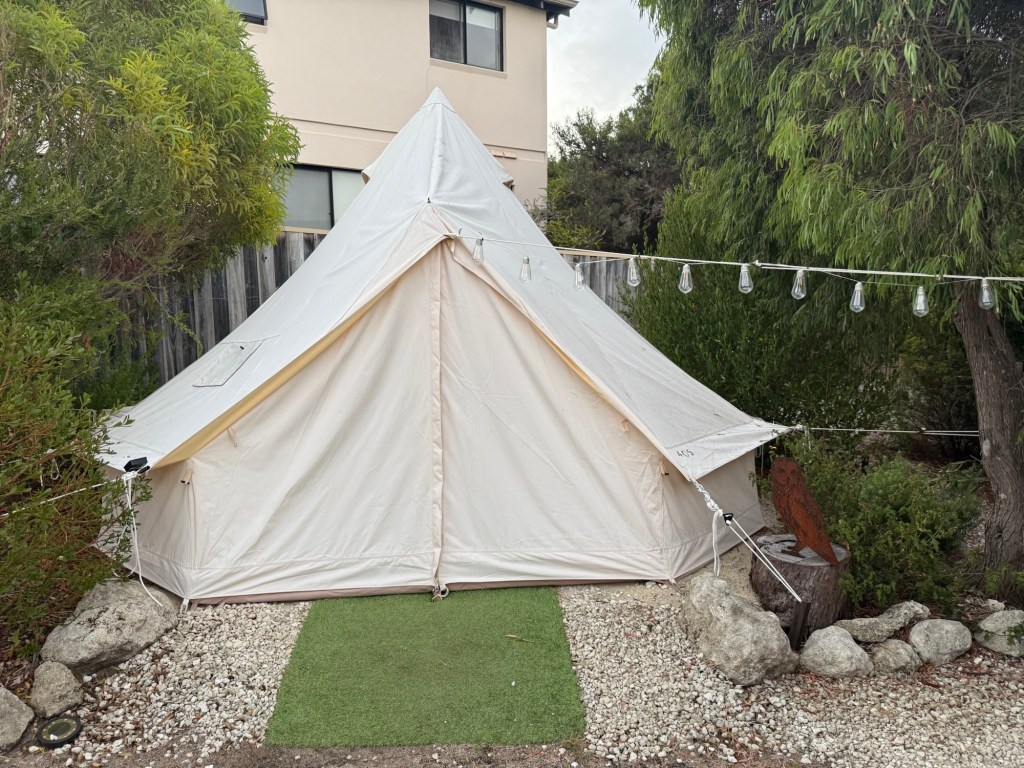
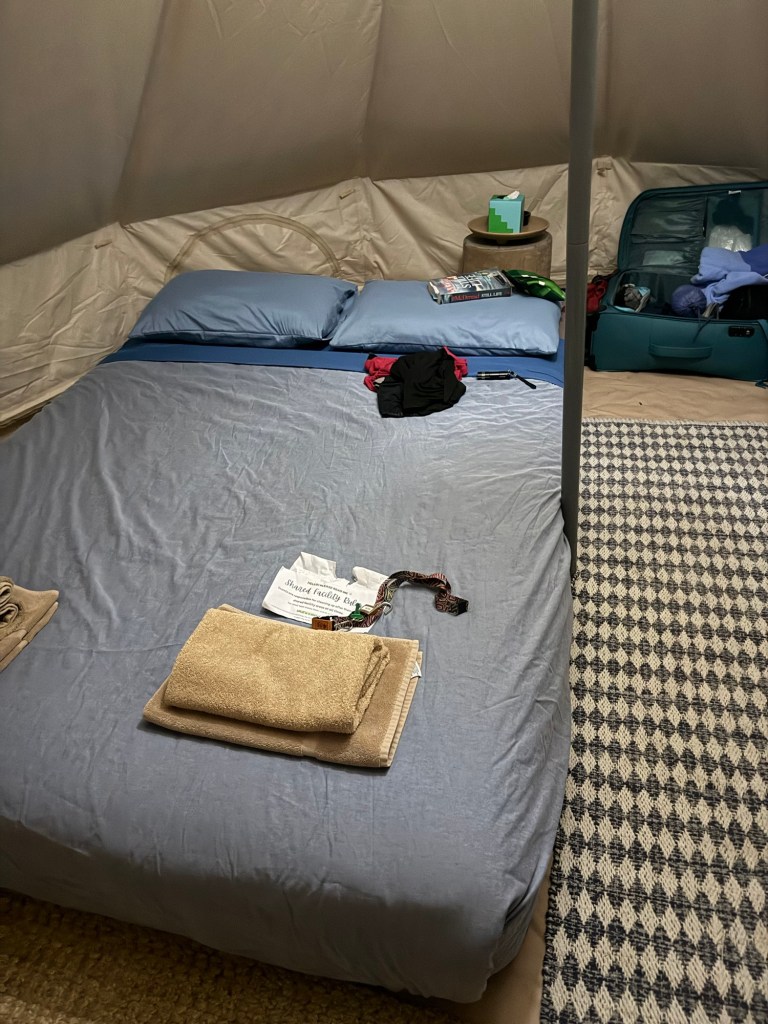
Surfpoint is our base at Prevelly, about halfway down the coast. Here we had options of glamping tents (mine) and or rooms with or without facilities; so most budgets can be catered for on this tour. All food is provided but that means self catering for breakfast, with lots of options and all allergies accommodated. I had my own shelf of GF breakfast products and even a toaster. Morning tea and lunches were provided along with a little container of trail mix. Dinner was prepared and left in the fridge for us to heat up when we wanted to eat. Plenty of coffee and tea available, no wine except for the first night and the last meal. The food was delicious, healthy and plentiful.
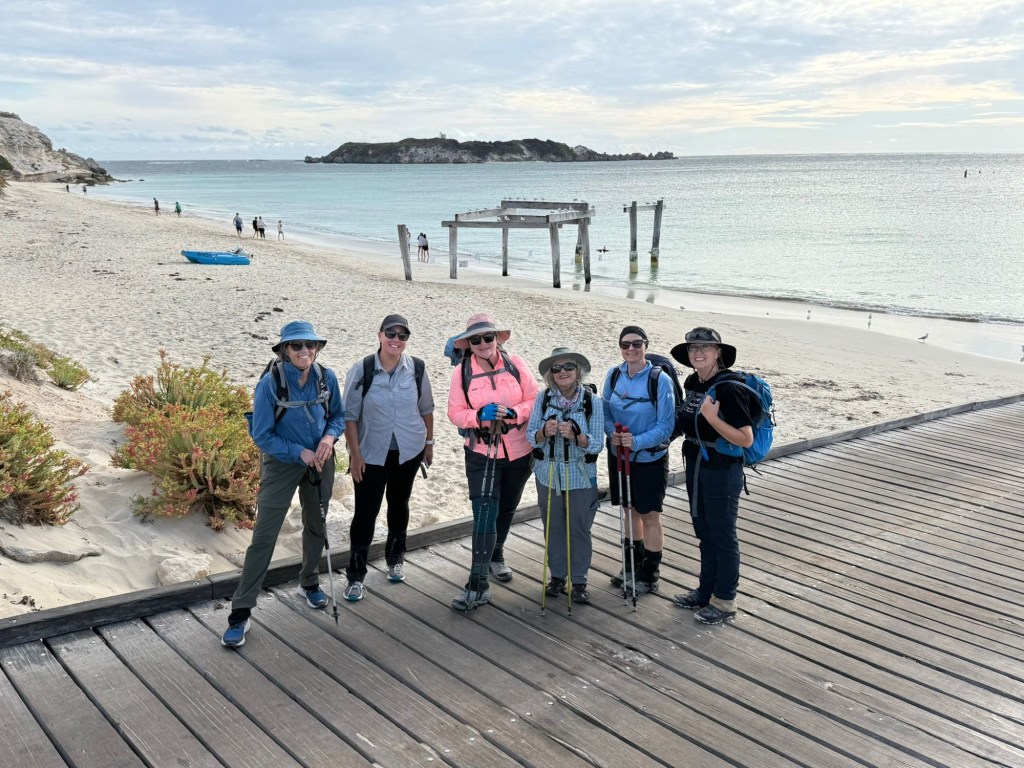
By the time we set off again this morning we had started to get the measure of our group. Six interesting, independent supportive women. As the day wore on and we got to know each other better real connections began to form. As the oldest ( it seems to be a theme now!) and perhaps the most experienced hiker, though Sally has undertaken several multi-day hikes too, we tried to be encouraging as the other four were complete beginners and this is a big hike for your first. Both Sally and I knew the others would get stronger as the week went on.
Today we started where we finished at Yallingup and today’s guide was Breezy, a former Yoga teacher and very spiritual person. She had the most amazing stick-the flower stalk of a grass tree that she had found and decorated with emu feathers. It was very strong but light.
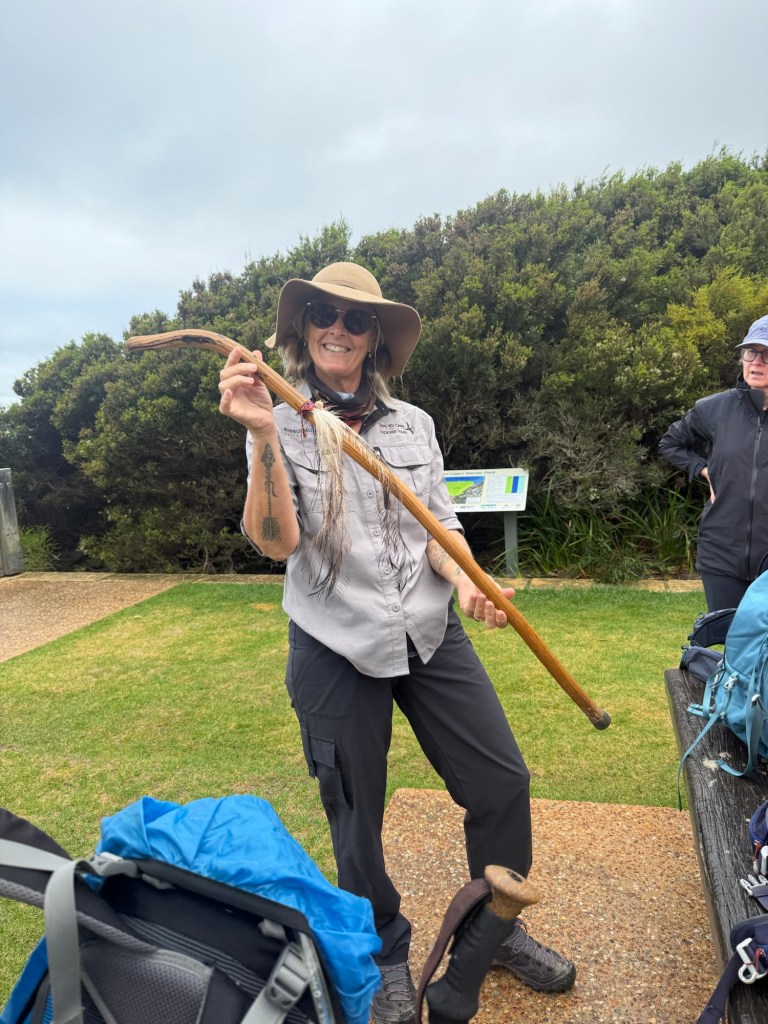
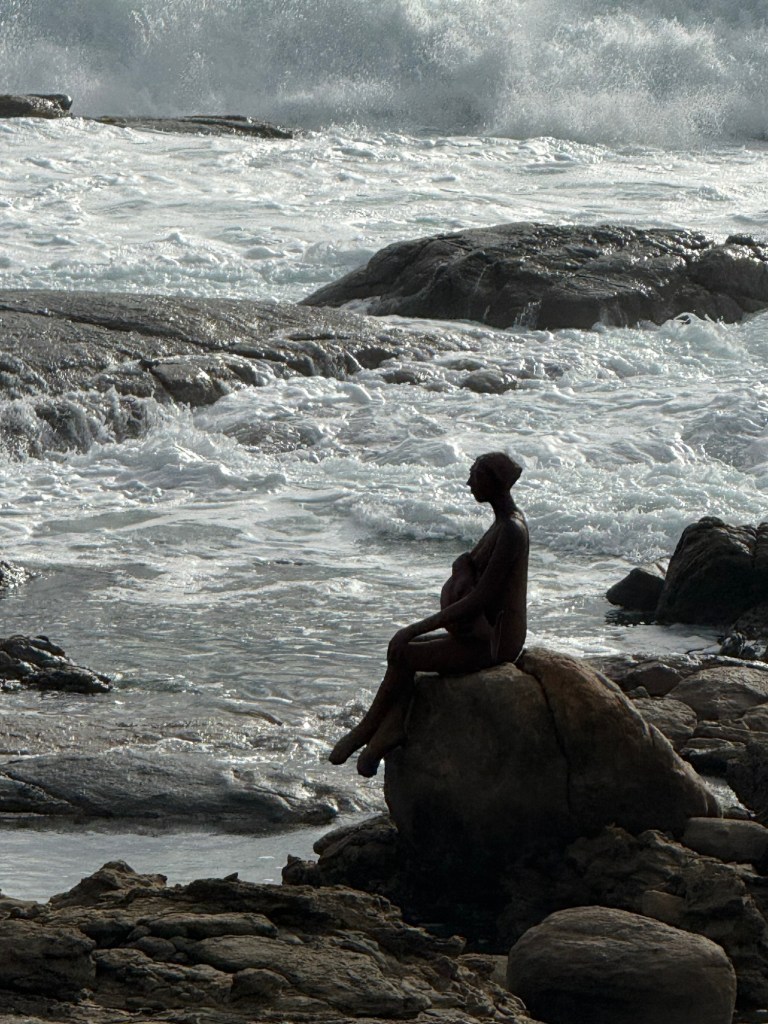
She told us about indigenous sculpture at Lovers bay which is part of the songlines. Two young people were in love but could not marry because of the skin laws and when the young girl married the arranged partner, her lover died of heartbreak . She sits on the beach plaiting her hair and looking toward the horizon and the setting sun, where she will be reunited with her true love. Breezy said she always brings a shell to honour her story but they are always gone when she comes again.
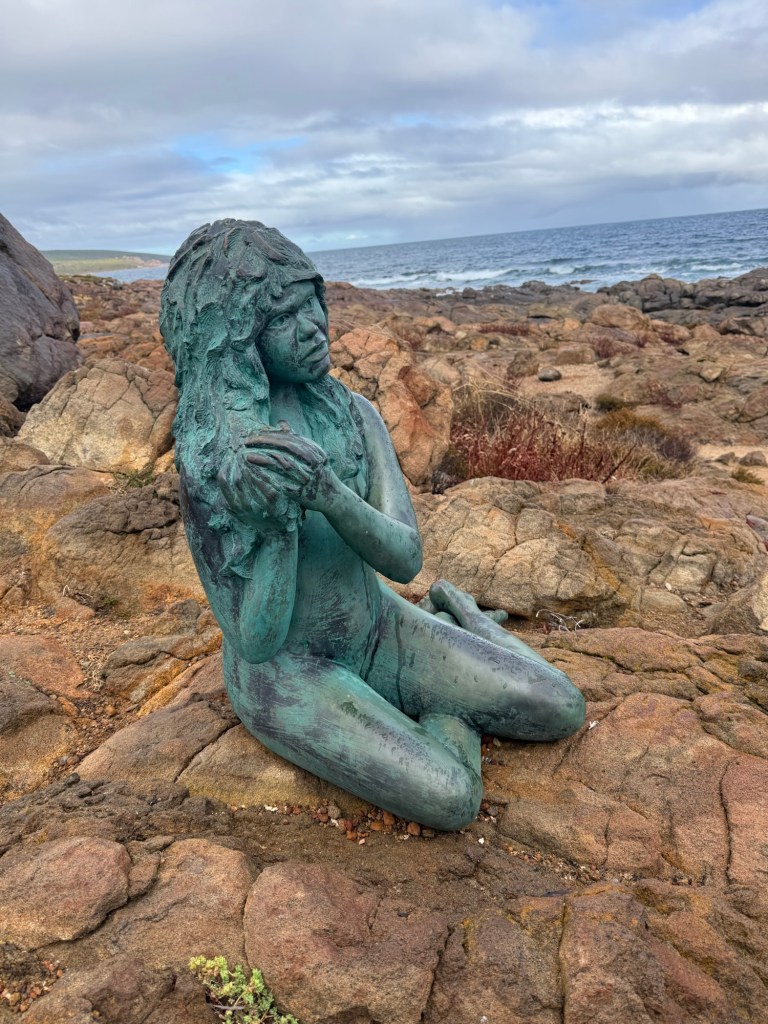
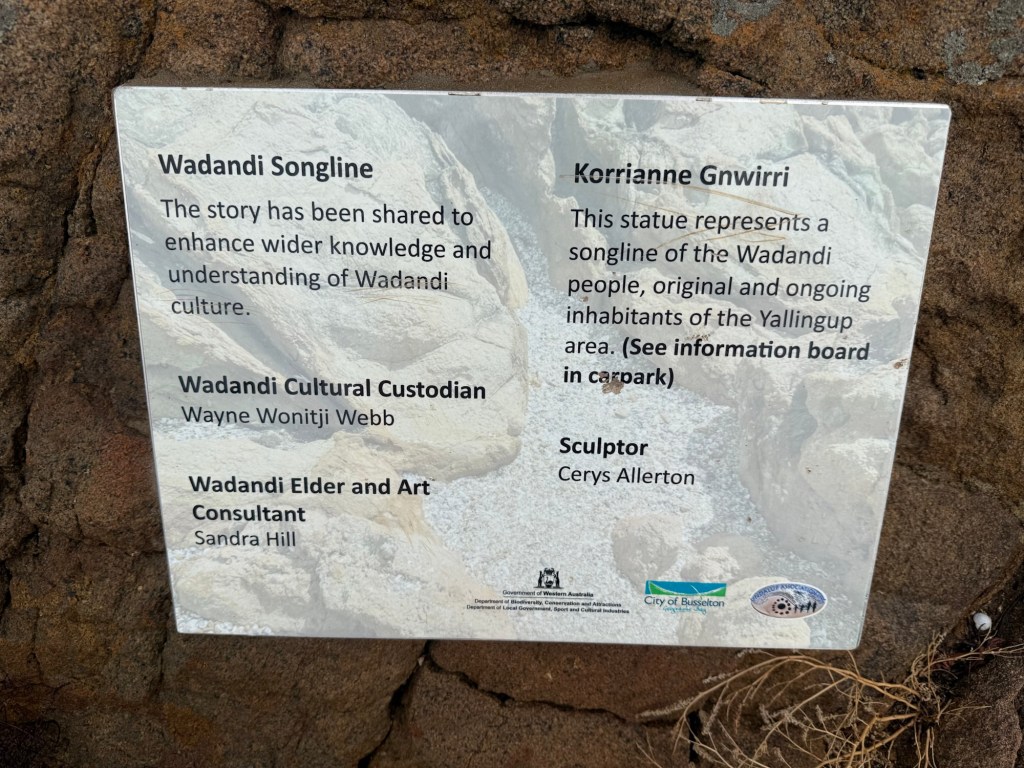
From here we progressed over Torpedo rock towards the granite boulders and on to the Aquarium, a small protected pool where Sally had a quick swim and I waded. We learnt a fantastic trick with talcum powder. Once you dry your feet, talcum dusted on then clings to the sticky sand and just falls off leaving your feet dry and free of sand. I had never heard of it but it was a revelation.
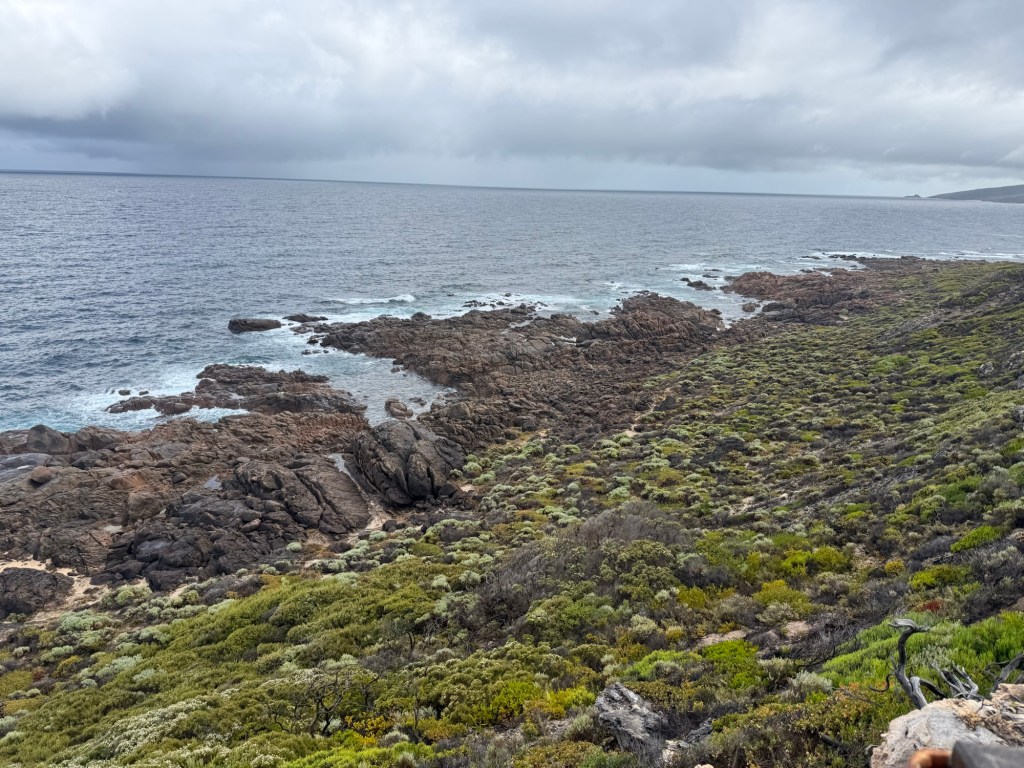
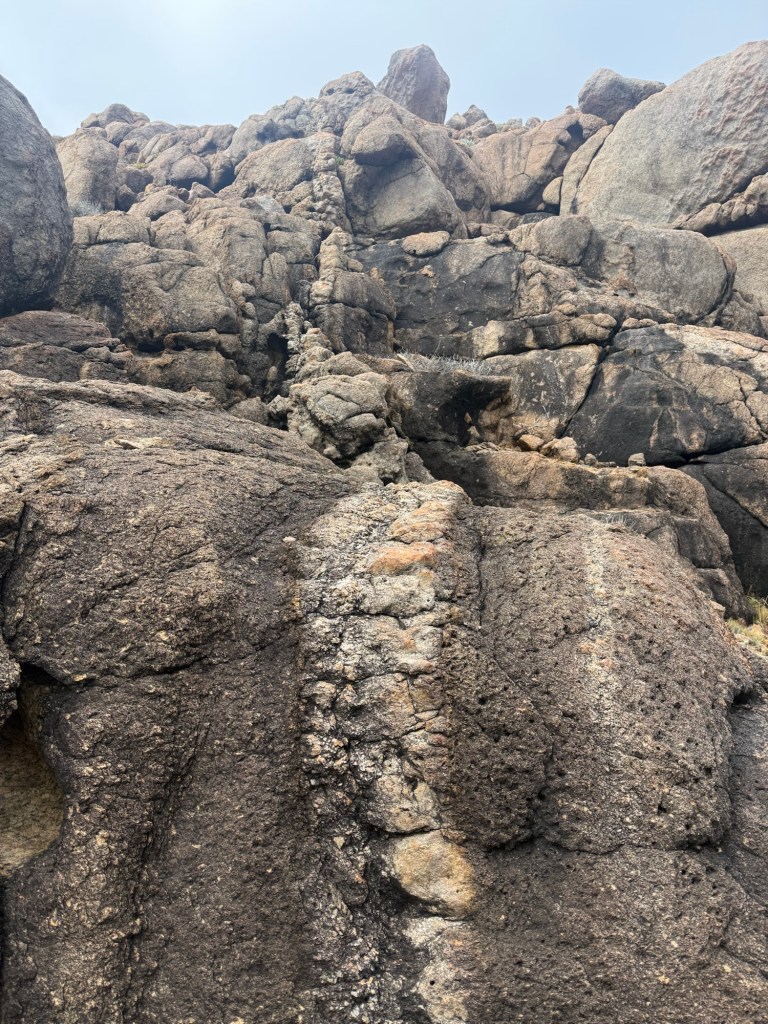
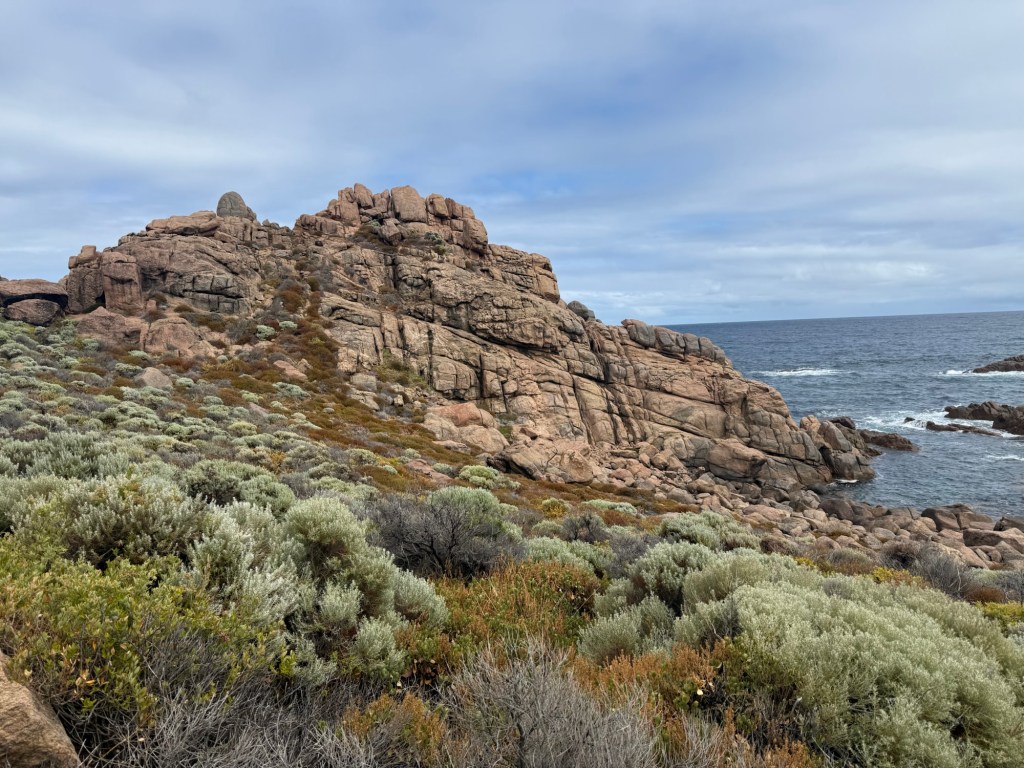
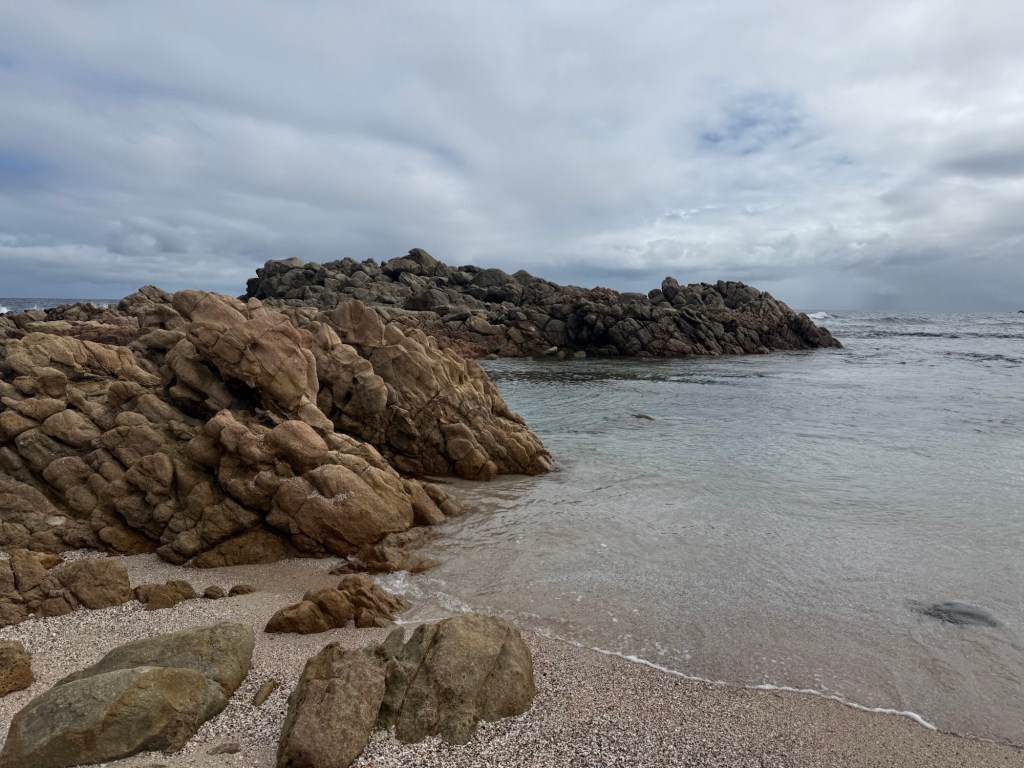
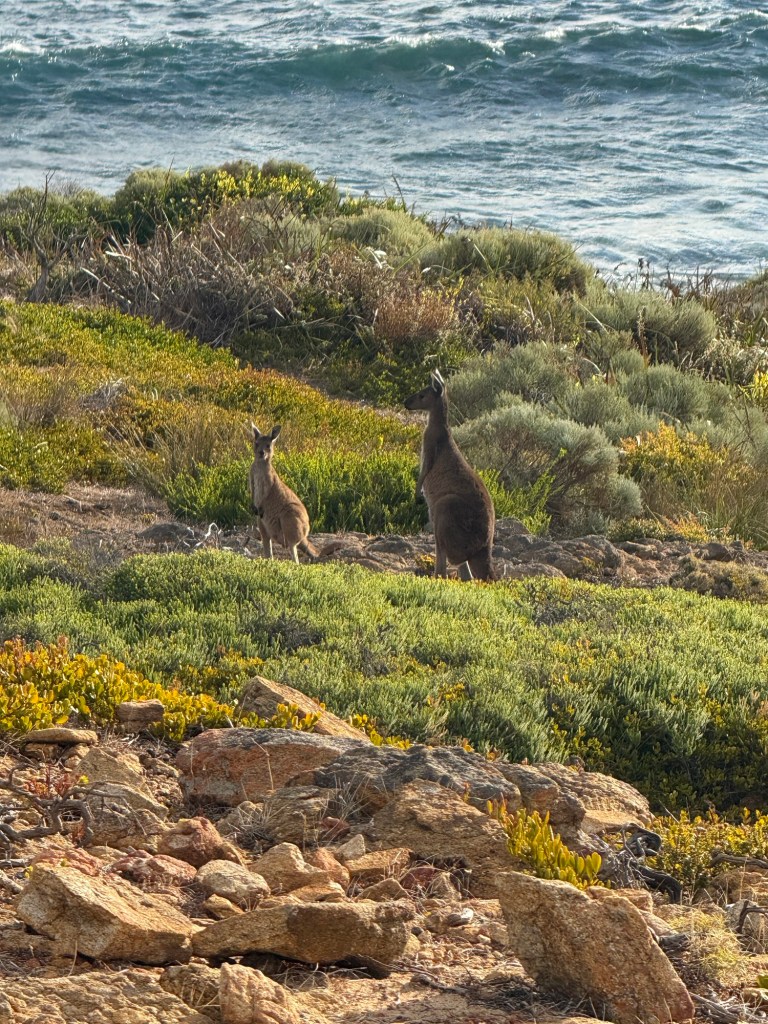
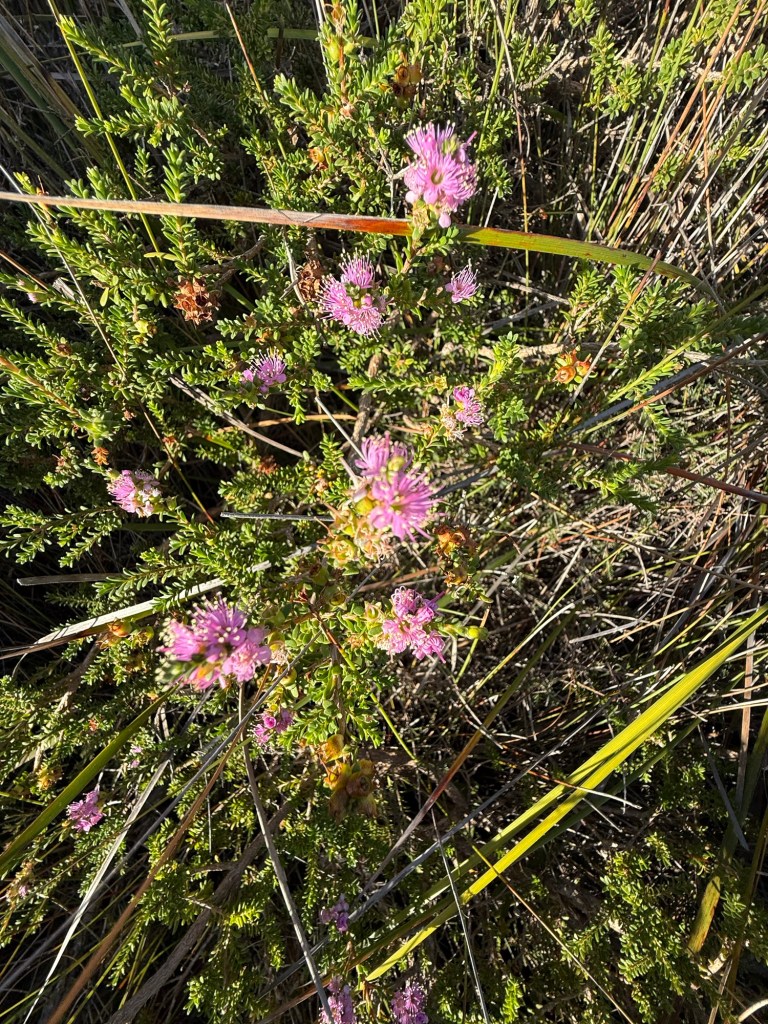
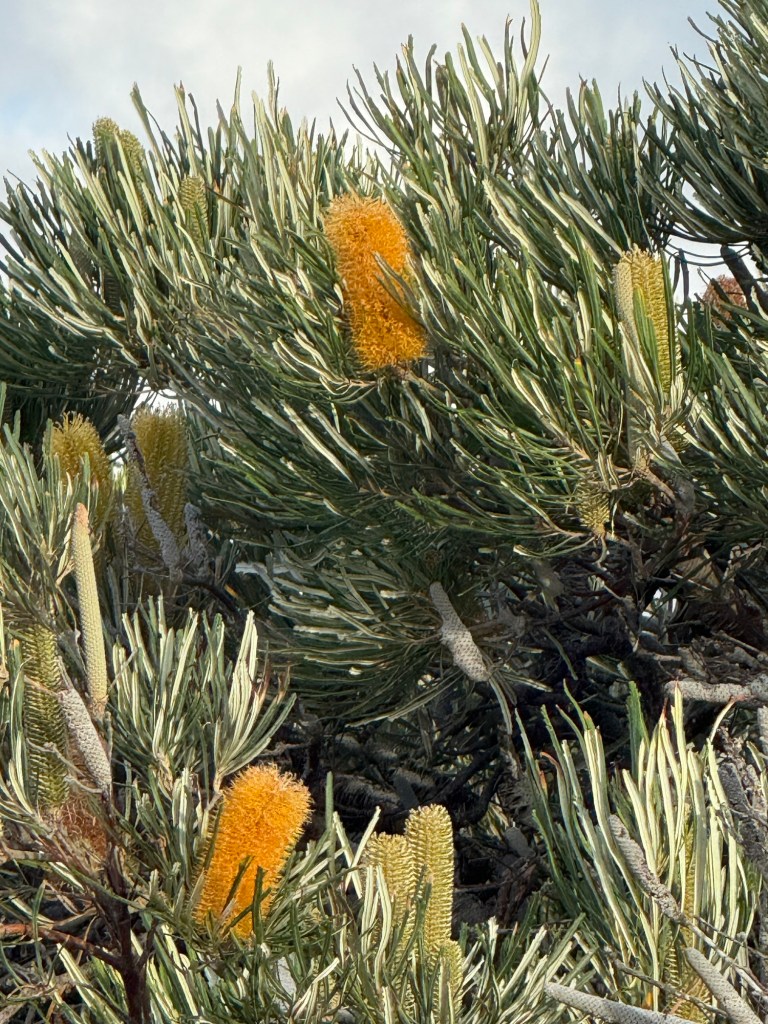
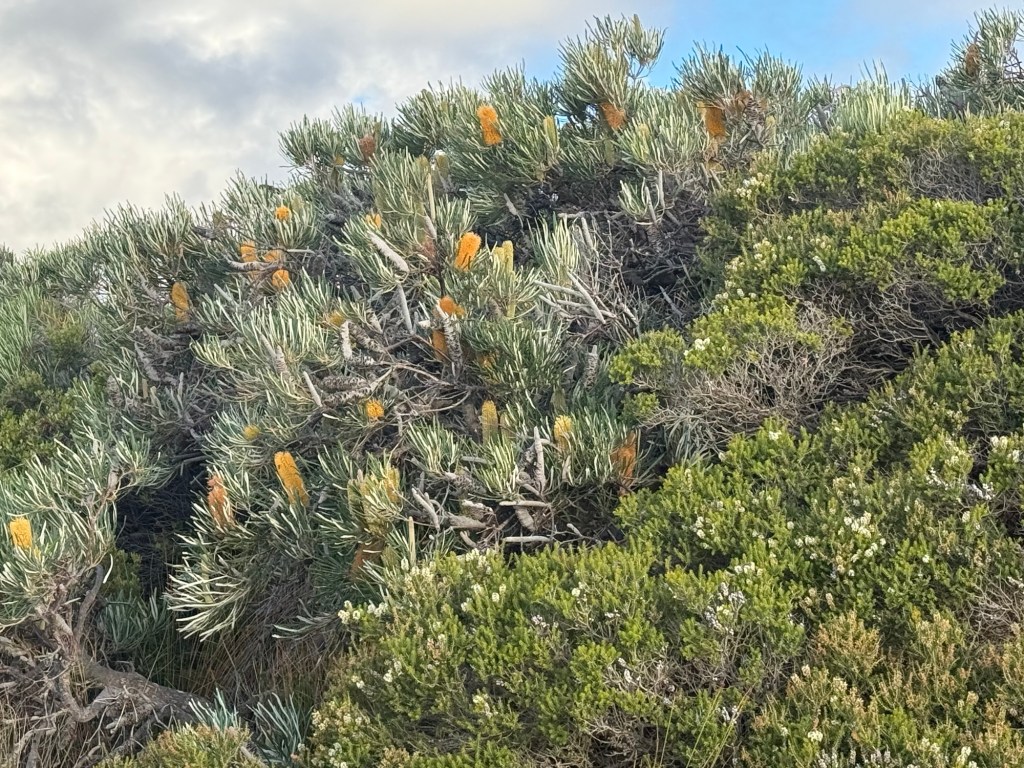
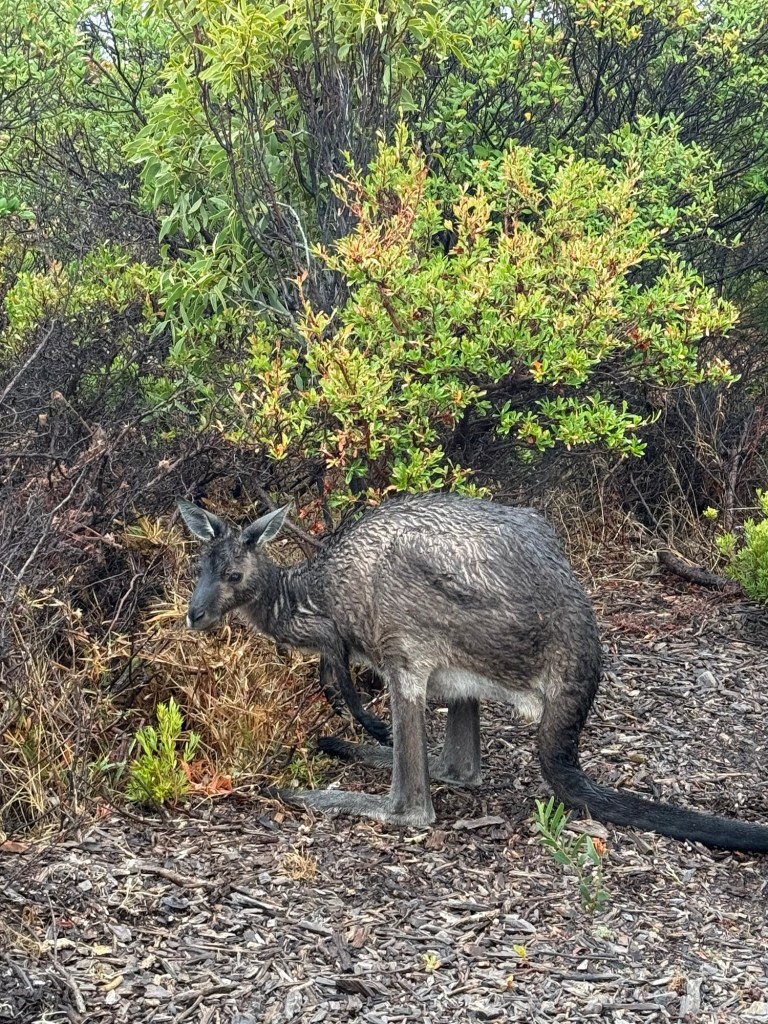
Back onto Injidup beach and then back up to the cliffs to wander through Banksias, and other coastal flowers. This looked like a Japanese garden-of pruned rounded shrubs. An occasional open space revealed curious kangaroos.
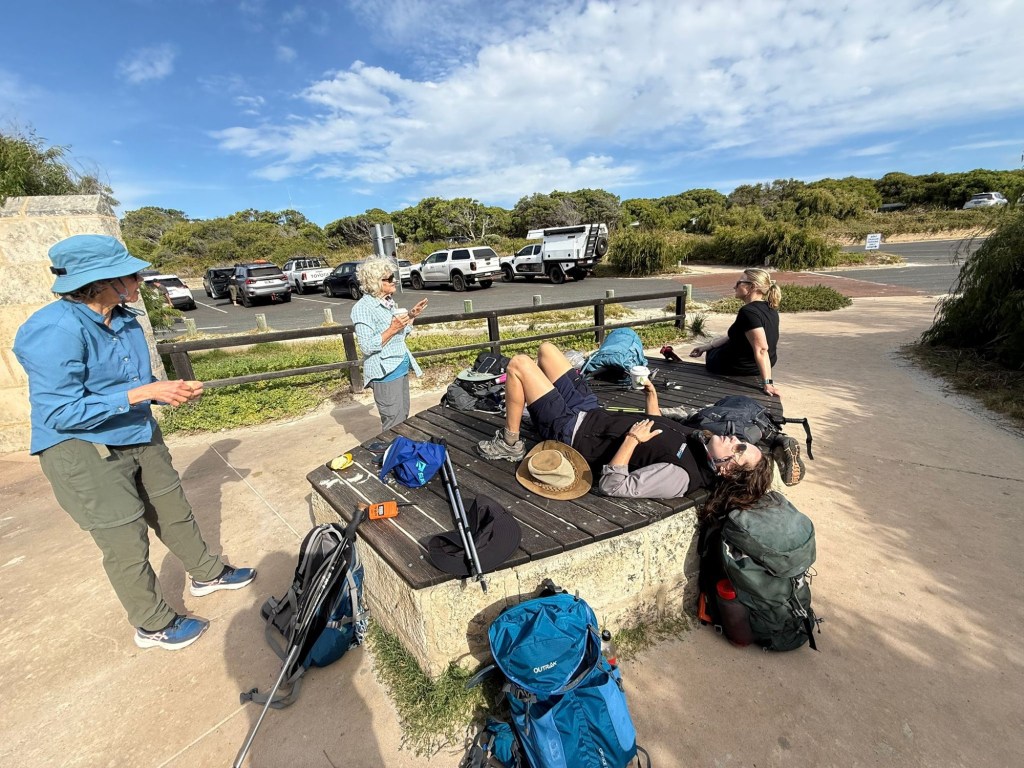
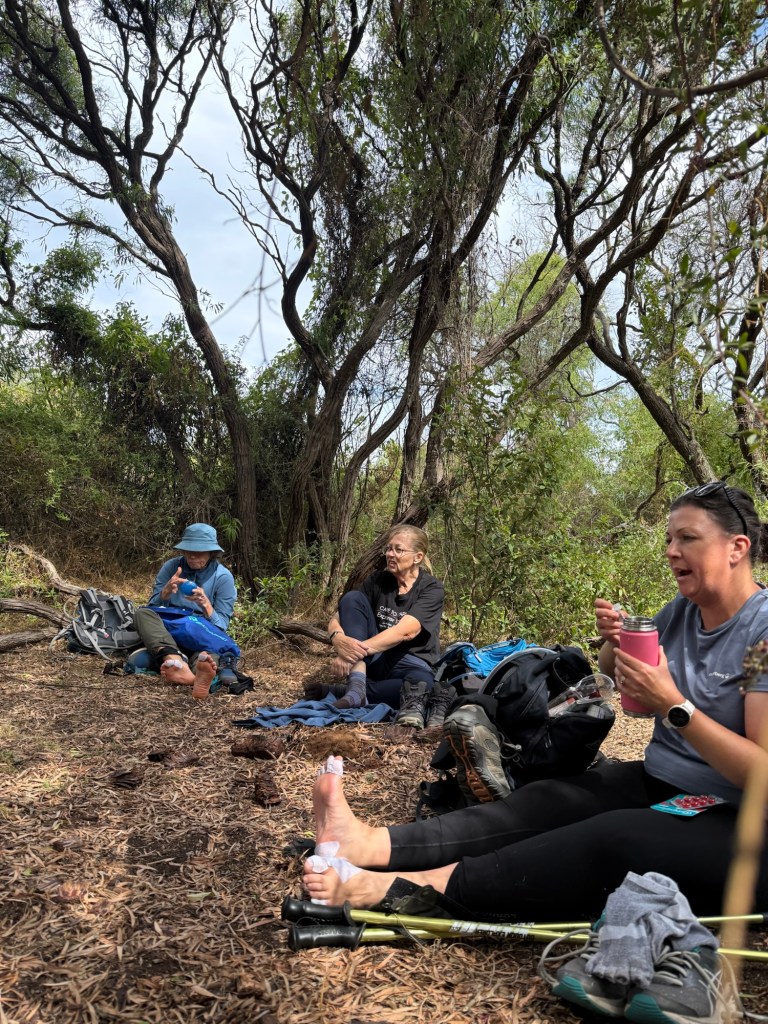
We finished up at Moses Rock. We were all tired out and found the bus back to Surfpoint was full of laughs and groans. We were all desperate for our showers and I think I just squatted to take off my boots and fell backwards into my tent. A few minutes of legs up on the bed and I felt ready to shower and dine. We found the foot baths provided with Epsoms salts a great soother and we all compared our progress amidst many laughs. 2 days down.
I have arrived in Perth from Melbourne to join a group on the Cape to Cape walk. Unfortunately Perth is being impacted by Cyclone Narelle in the north so it is wet and grey and a bit chilly. Tomorrow we are picked up and driven to Cape Naturaliste to start our walk
I was meeting a friend from the Caucuses trip for dinner. By 6 pm the weather was blustery and very wet. There were huge puddles we had to dodge and my lightweight umbrella did several inside out flips. The Indian restaurant we went to for dinner had sandbags at the front door! The puddle on the road was so deep every car turning left splashed the footpath so completely they needed to prevent inundation.
It was a bit calmer when we left at 9pm. I was tired after an early start and long flight so crashed quickly into a deep sleep. At 12.30 I was rudely woken by the hotel fire alarm. I poked my head out to smell but decided to comply when it lurched into Evacuate! I found my shoes and fleece and( grateful for my leggings) headed down the stairs. I was correct that it would be a false alarm but you never know.
Back to bed and sleep till 5.30am. I am being picked up at 8.00 but after eating so much last night I am not sure I can face an early breakfast.
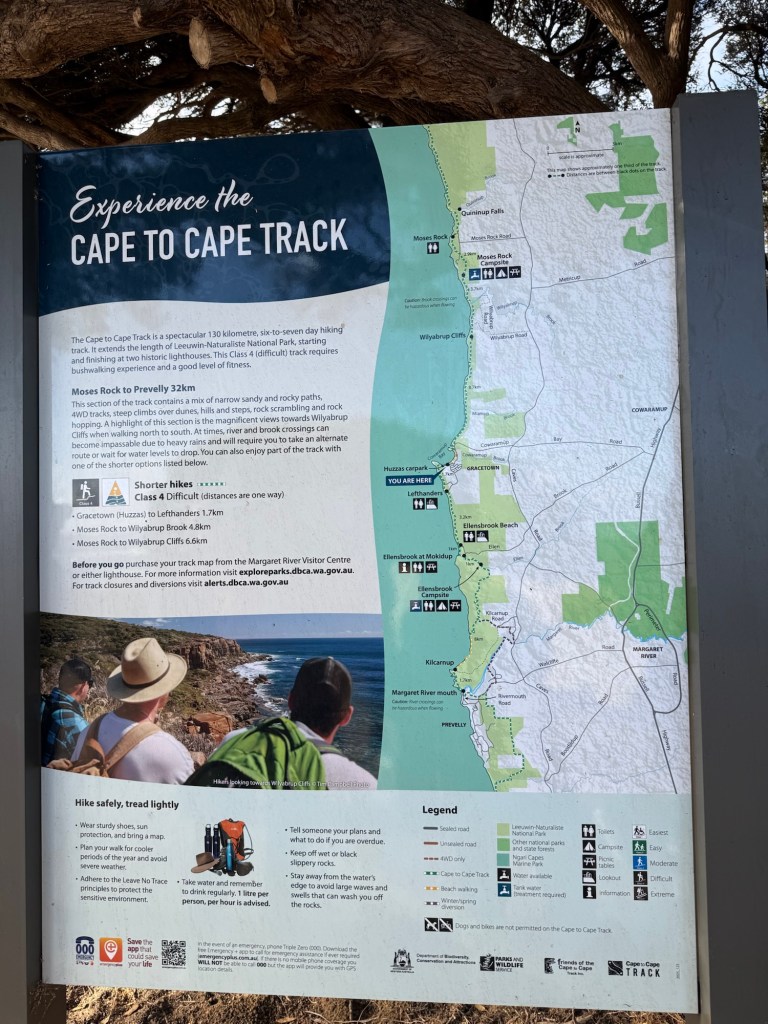
LOCATION of the walk. This is taken from the brochure of the Cape to Cape Explorer tours. A very friendly and efficient group.
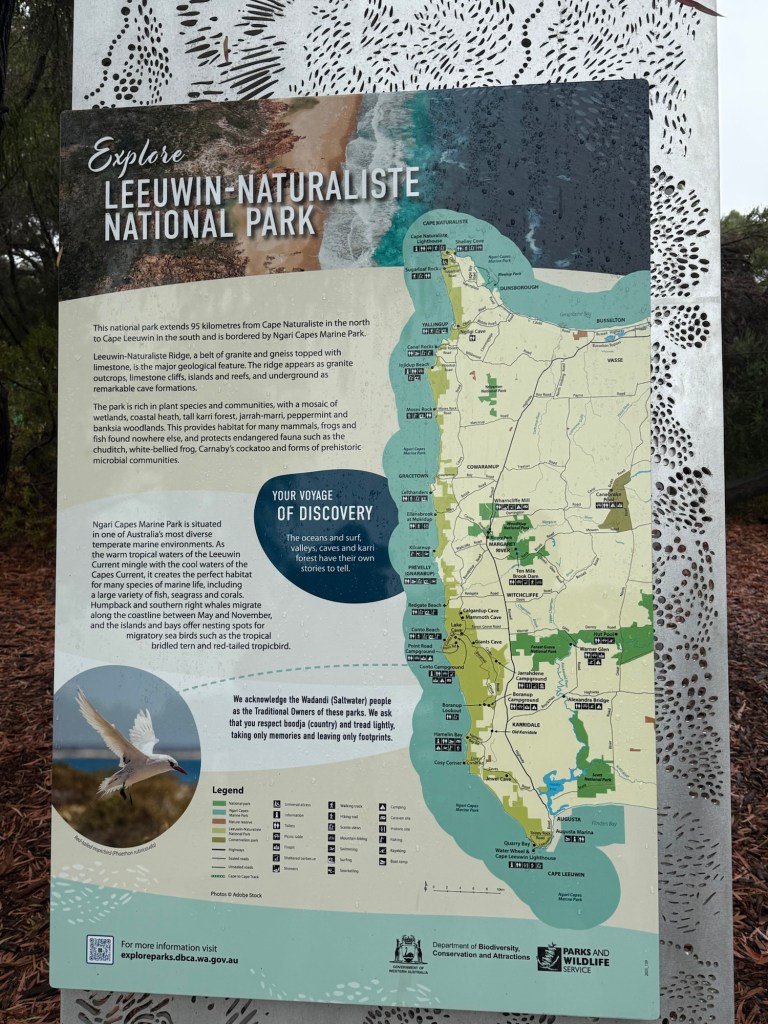
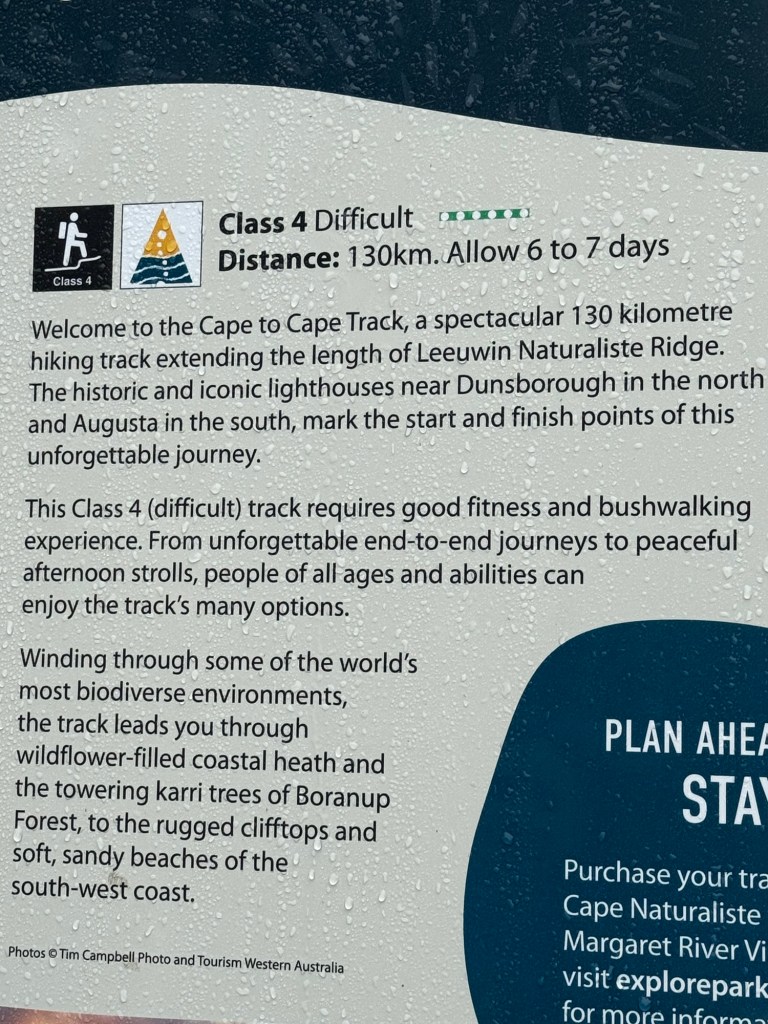
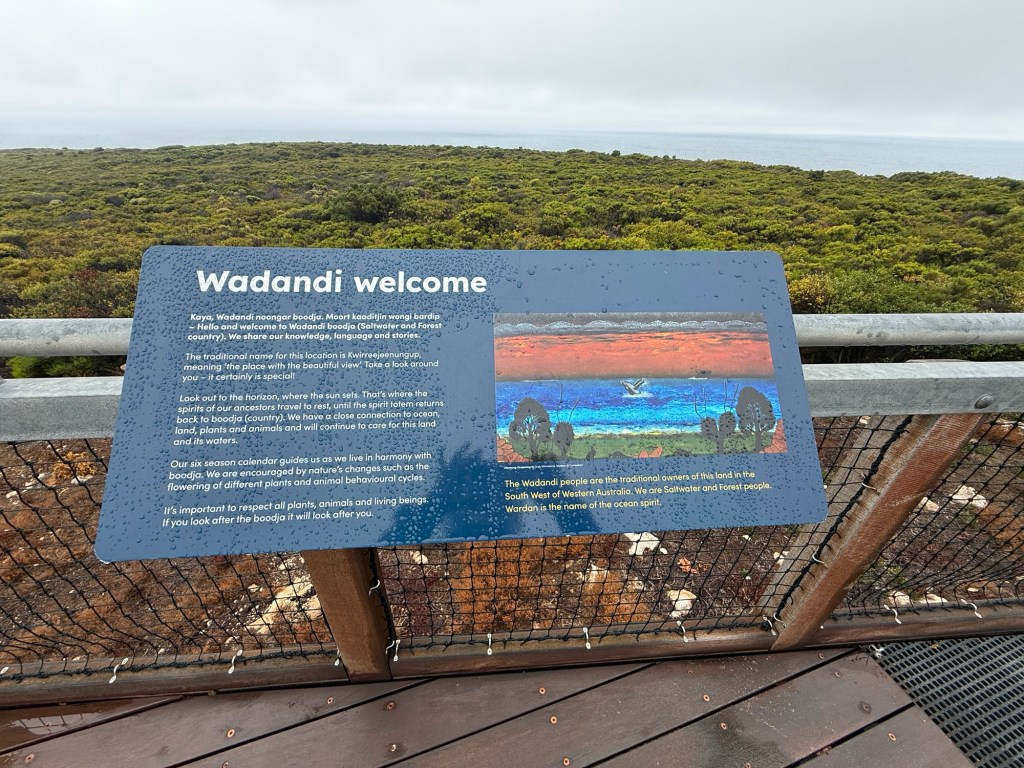
In the far south-west corner of Western Australia, a broad peninsula projects into the Indian Ocean – ancient, wild, and stunning.
Running north to south along its western edge is the Leeuwin-Naturaliste National Park, the setting of the 124km Cape to Cape Walk Track, and backdrop to the Margaret River region. Beginning at Cape Naturaliste in the north, the Cape to Cape Track meanders through windswept limestone ridges, deserted white beaches, giant granite marbles, and towering Karri forest to finish up at Cape Leeuwin in the south.The Margaret River Region is renowned internationally for stunning scenery, world-class beaches, gourmet food, and fine wines.
Sounds so enticing! It will be a balm for my disappointment at not going to Spain.
When I emerged in the lobby in time for the pickup there were a few others and we hastily introduced ourselves and headed for the bus. It is still raining! As a hiker I don’t mind if it rains while you are on the track but it is quite literally a dampener when you have to start from a warm place and walk into the elements. That is a test of your fortitude and part of the adventure.
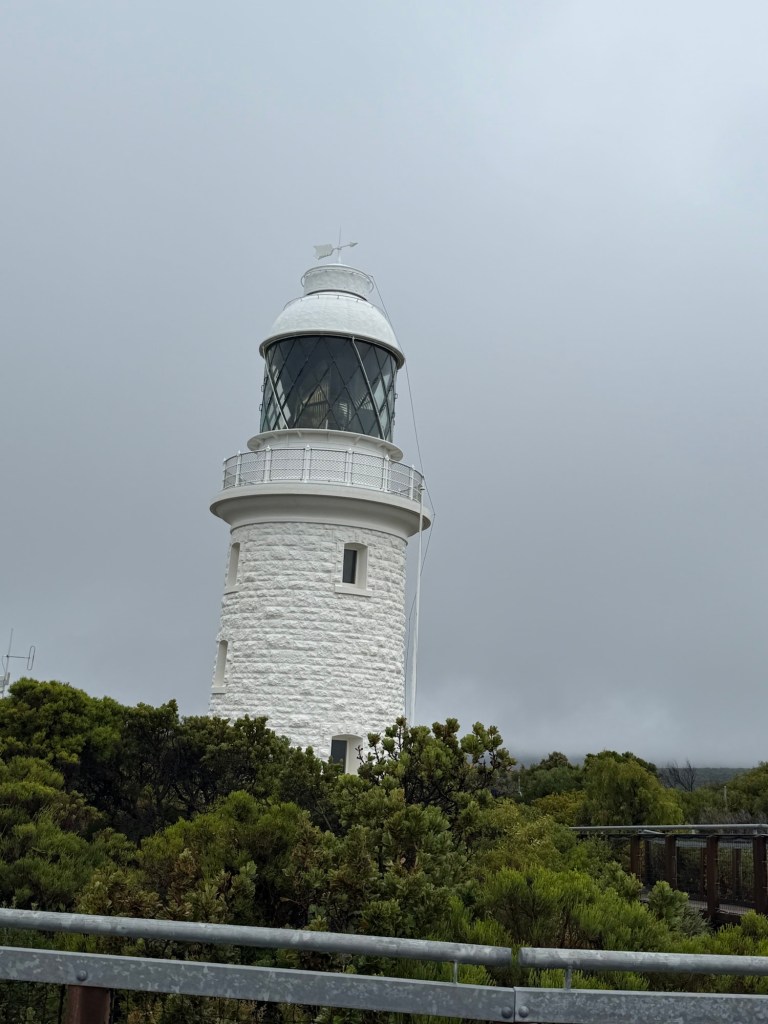
By the time we arrived at our halfway stop for breakfast, the Miami Bakery which had very cute colourful painted kangaroo sculptures all around the garden, the bus was in trouble with stuck gears and we needed to wait for a replacement. It soon arrived and off we went again. It was still raining and cold. Not long after we arrived at Cape Naturaliste Lighthouse and the beginning of our walk. Our guide Mike had a geological theme to share with us. It was the beginning of the routine of specific themes for each day and each guide.
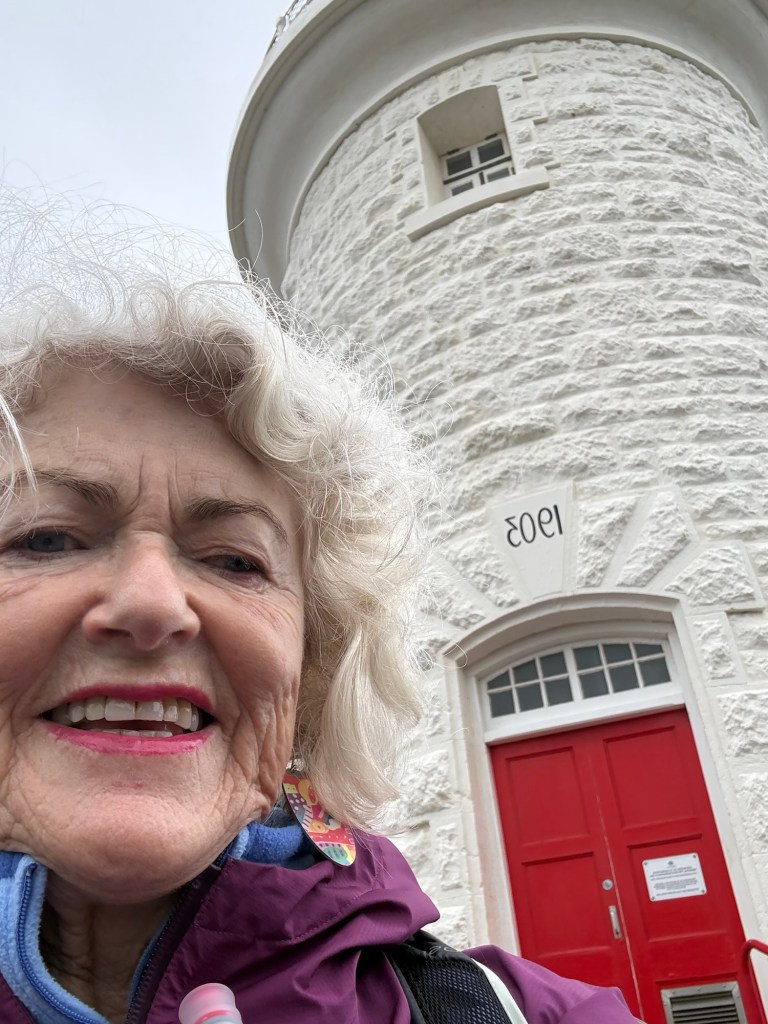
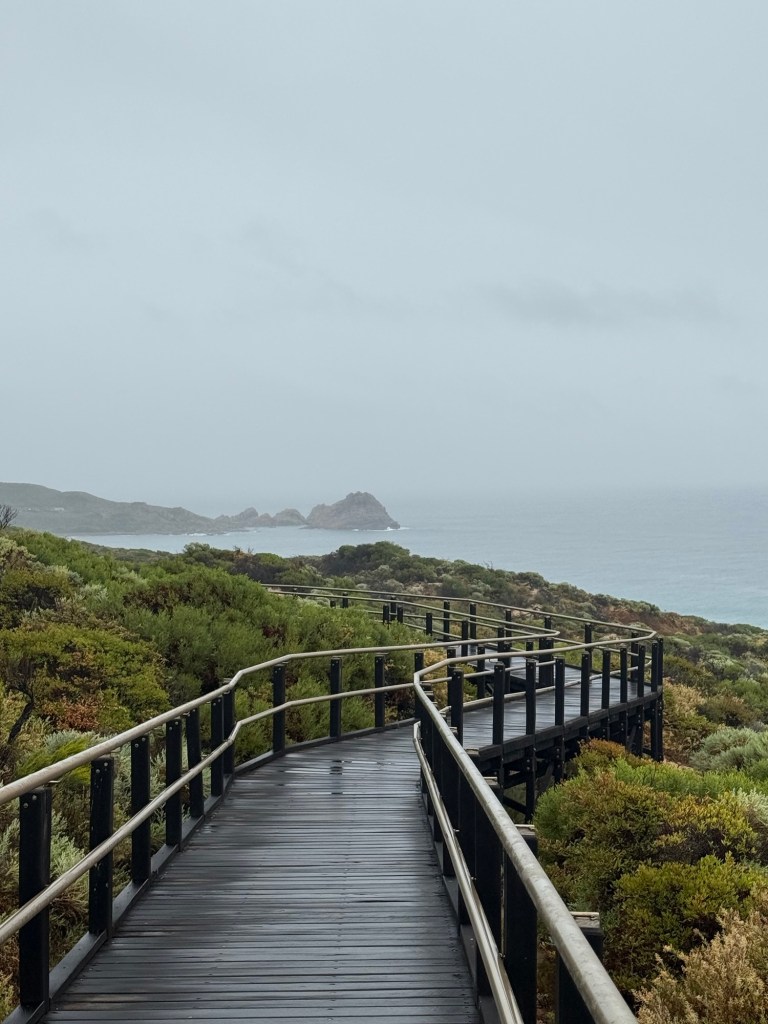
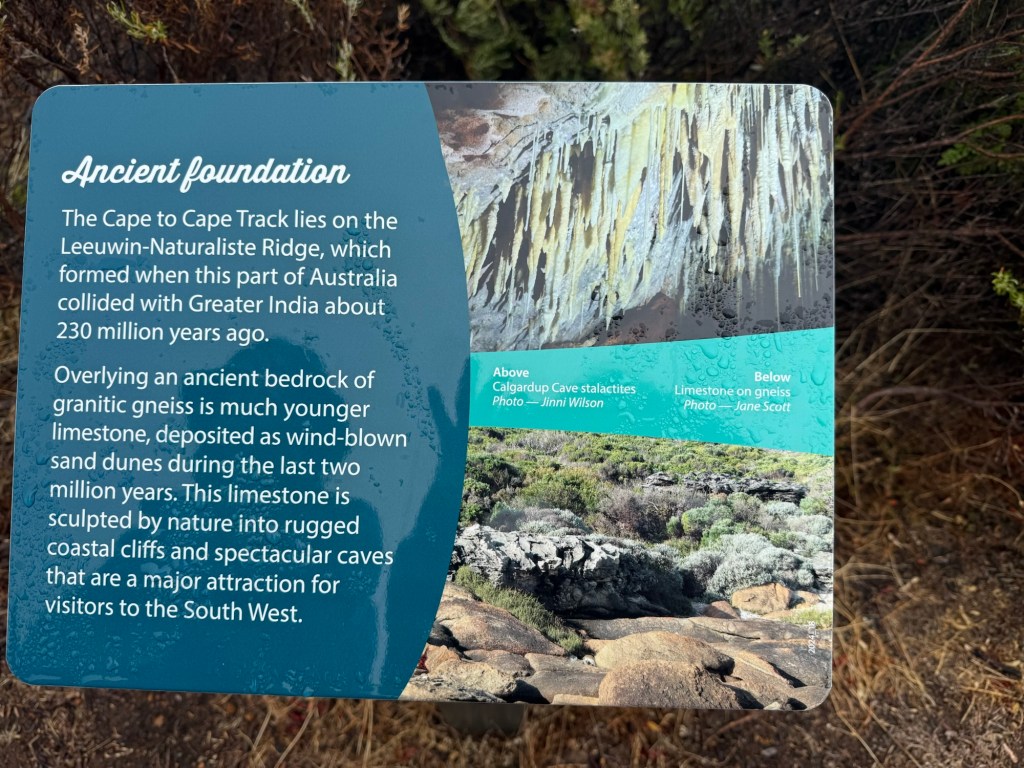
Mike explained that this part of Western Australia was a remnant from when we separated from Gondwana and India drifted north.
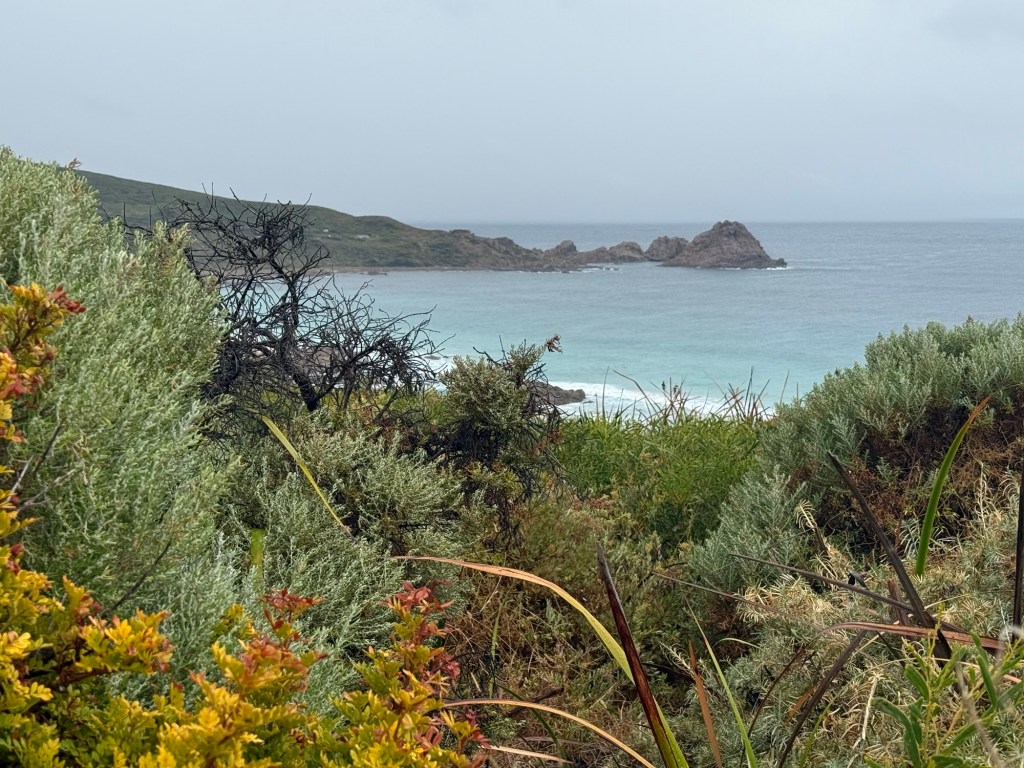
Our first prominent granite outcrop was Sugarloaf Rock.
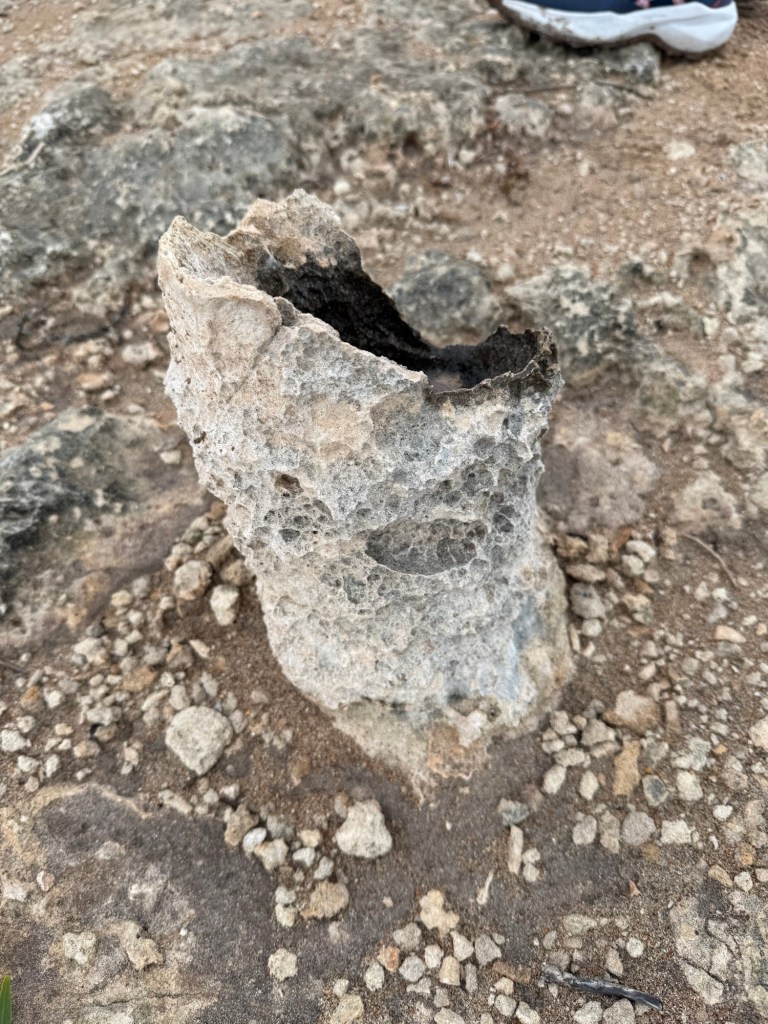
Other strange things we came across were limestone remnants of forests! Hard to imagine but they were tree trunks or roots that were encased in sand that became limestone over time.
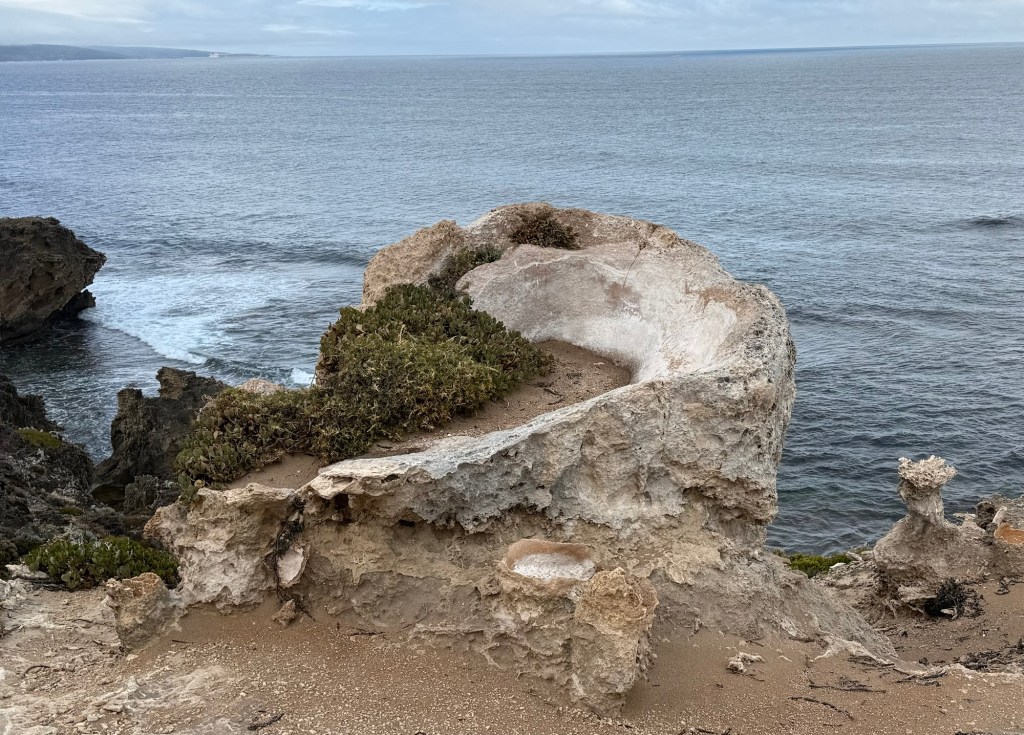
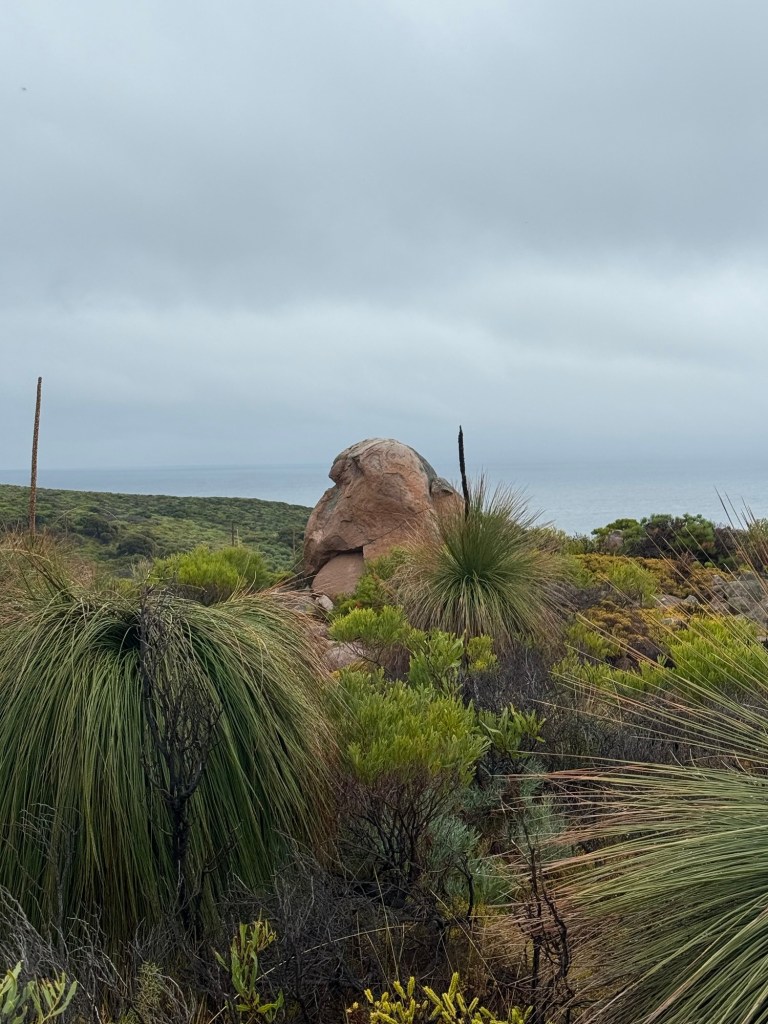
We continued walking in blustery, drizzly weather for the rest of the afternoon. I was getting hungry as I had been only able to eat a Chia pot at the cafe! Bakery not the best for gluten free.
As we progressed through the coastal heath we could look back at Sugarloaf to see our progress.
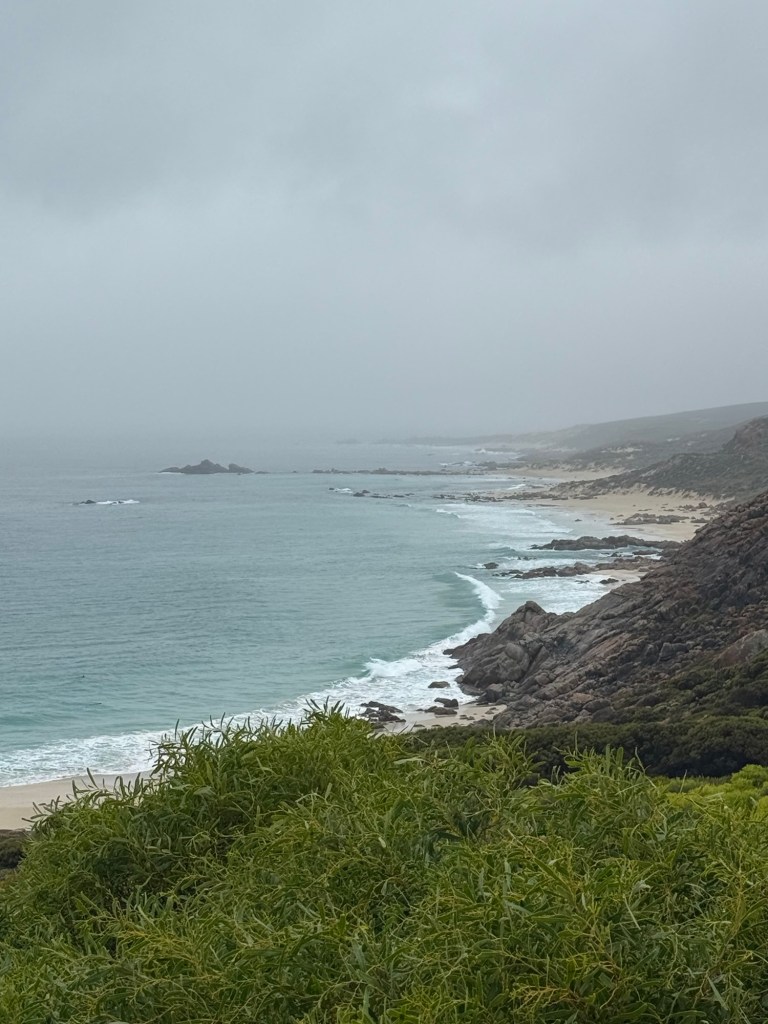
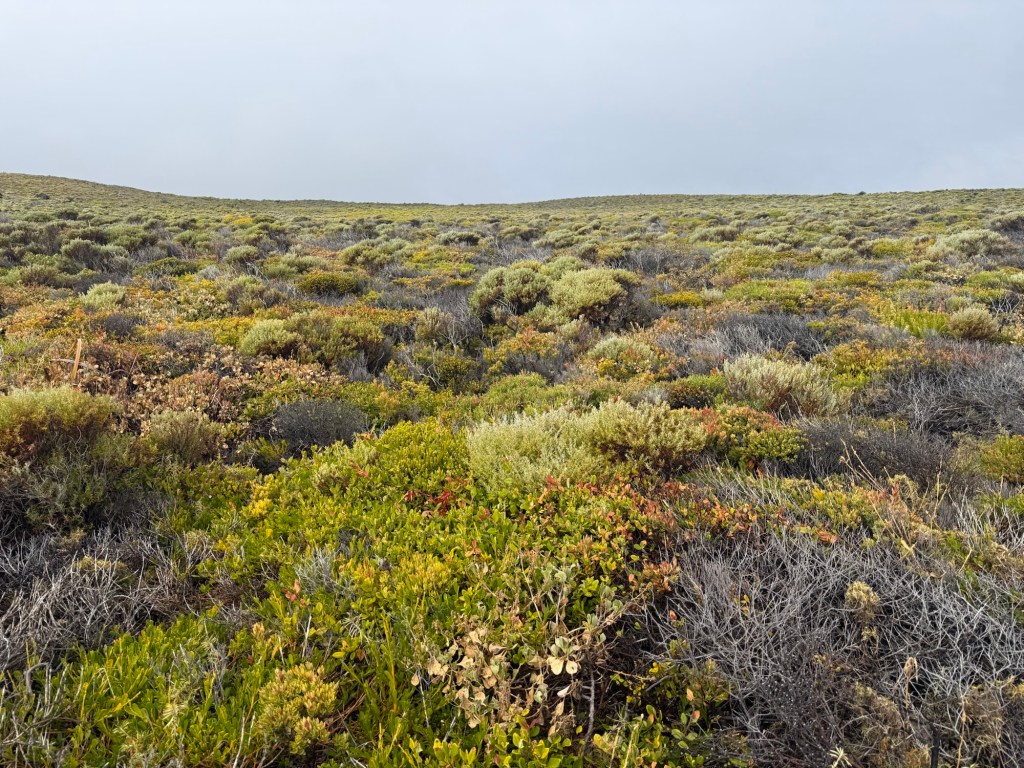
I hadn’t bothered with rain pants (I hate them because you seem to get as wet inside as you might have been outside!) which was okay as the weather was drizzly but the heathland path was narrow and so I was pretty wet from the thighs down from brushing against the plants. Wet but still warm and quick to dry when we left that terrain and returned to the beach. It was a long day when we finally arrived at Surfpoint our base for the week.
Last night while we were recovering in the sun on the balcony, I had the last of my tube of pringles out for a salty nibble and Peter from Port Stephen’s wandered over with a small bottle of Jack Daniel’s. He asked if I would like some as a thank you for sharing the Fruit crumble the night before. I had no hesitation and received a tipple with great enthusiasm and gratitude!
We were amused by the number of walkers stretched out on the surrounding boardwalks in the sun having lazy naps. Peter used to work for the Department of fisheries in NSW and had some amazing stories to share. He has only recently retired and had been hiking in the Snowy mountains before coming down to the three capes with his friends. One had pulled out at the last minute which was the place I had taken. A charming guy with a great sense of humour and gentleness about him. He was so tall that i would need two or three steps to cover the same ground!
The ranger called us all for the evening talk which usually covered the next day‘s activity and our departure from Fortescue Bay to Port Arthur. There are two groups as the track out is too rough for a large bus. Sam was on the 2.00pm and I had decided I might need to take the whole day so elected for the 4.00 pm.
That night I ate everything except a couple of protein bars so the pack would be as light as possible. We were expecting a sunny day like yesterday ( about 18C with a cool breeze) and although the day was shorter (14 kms) the time was about the same, 6-7 hours due to the elevation and stairs. This hike might be three capes but I am sure it is 30,000 stairs! My knee had had a bit of a twinge the night before so I strapped it and my dodgy foot. I was very grateful for my walking sticks too. They really helped to take the pressure off the knees.
That night we actually played cards rather than go to bed. Good old UNO is easy to play and we invited Mark to join us. It turns out Sam is an expert after playing lots with her kids. mark was strategic but still neither of us could win a game. He left to go to bed and Adele the young daughter of the small family group took his place. Well she beat Sam and I just failed every hand. It was fun and probably revved us up because I didn’t sleep as well that night.
Up early and away quickly we entered an amazing change of forest. In this cold outcrop there was a rainforest with ferns, moss and large tree ferns. It was so different and hilly. Lots of steps!
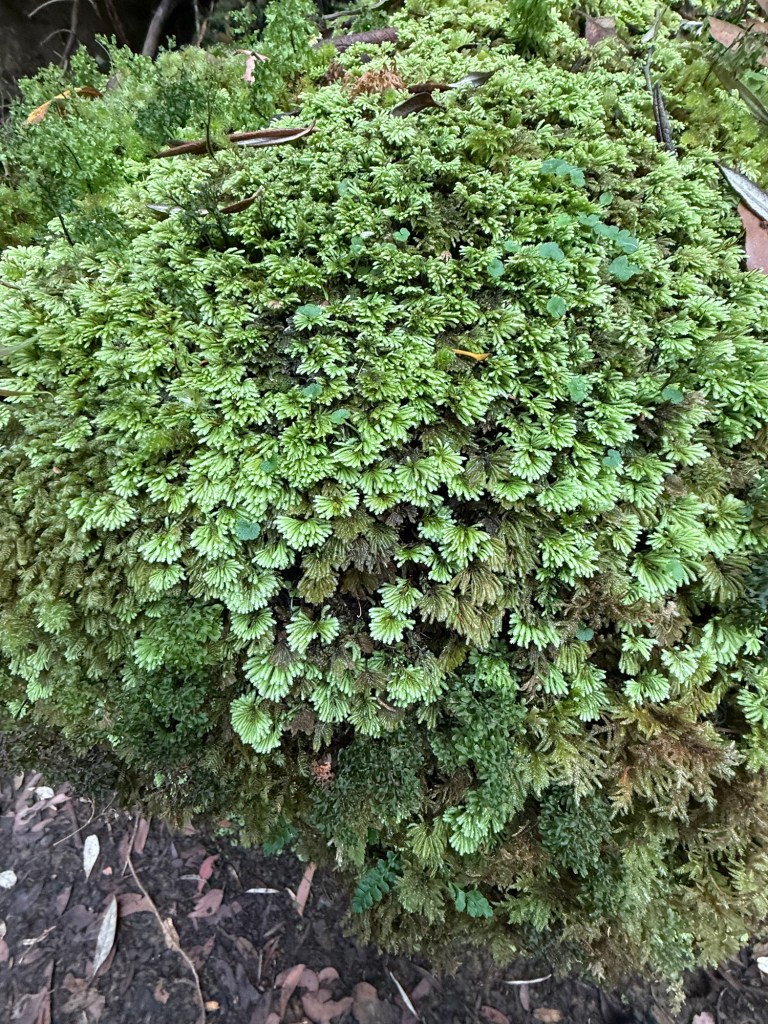
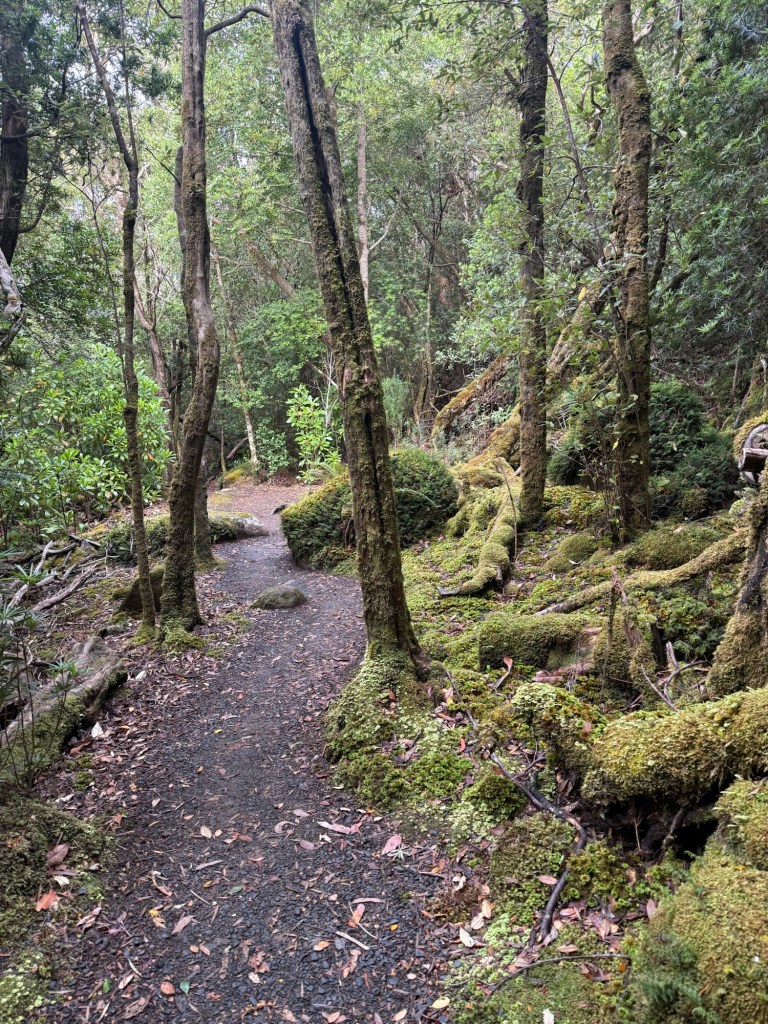
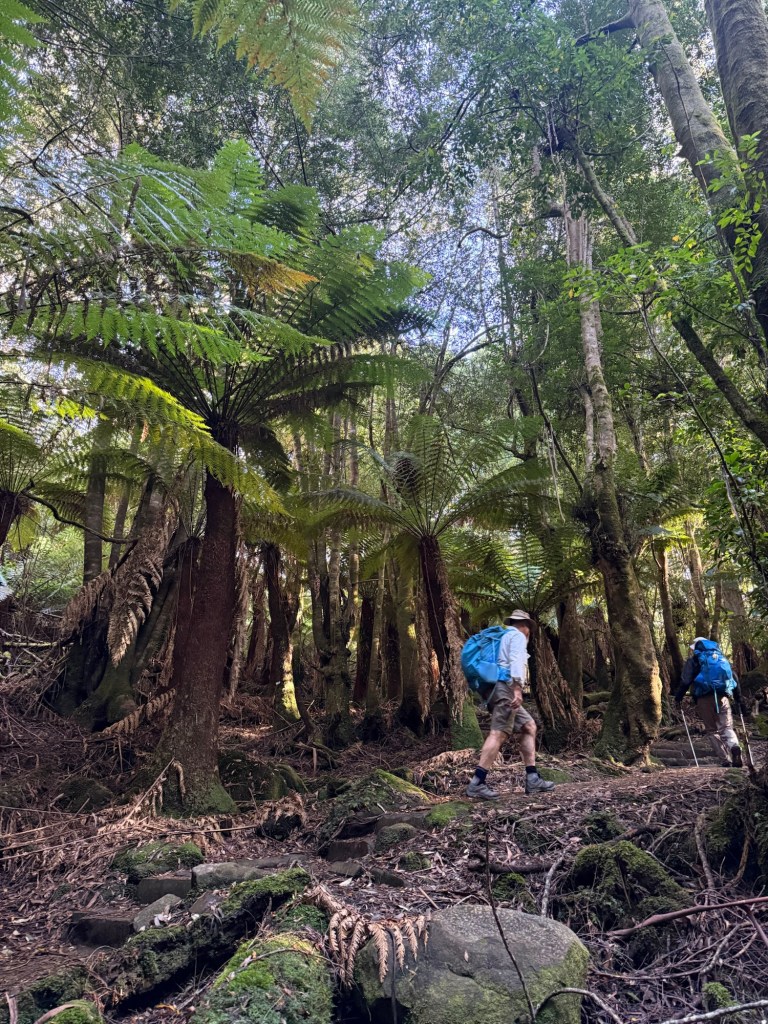
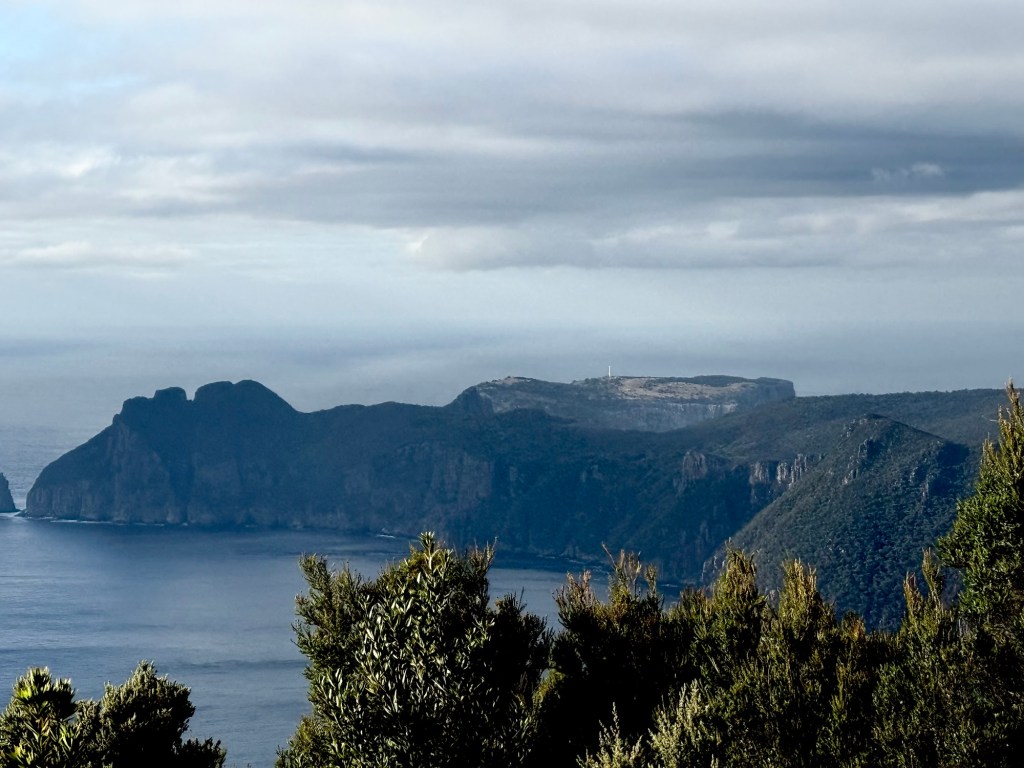
As we walked through this magical forest I saw a moss covered log that I thought looked quite biblical. Was I hallucinating after all the steps?
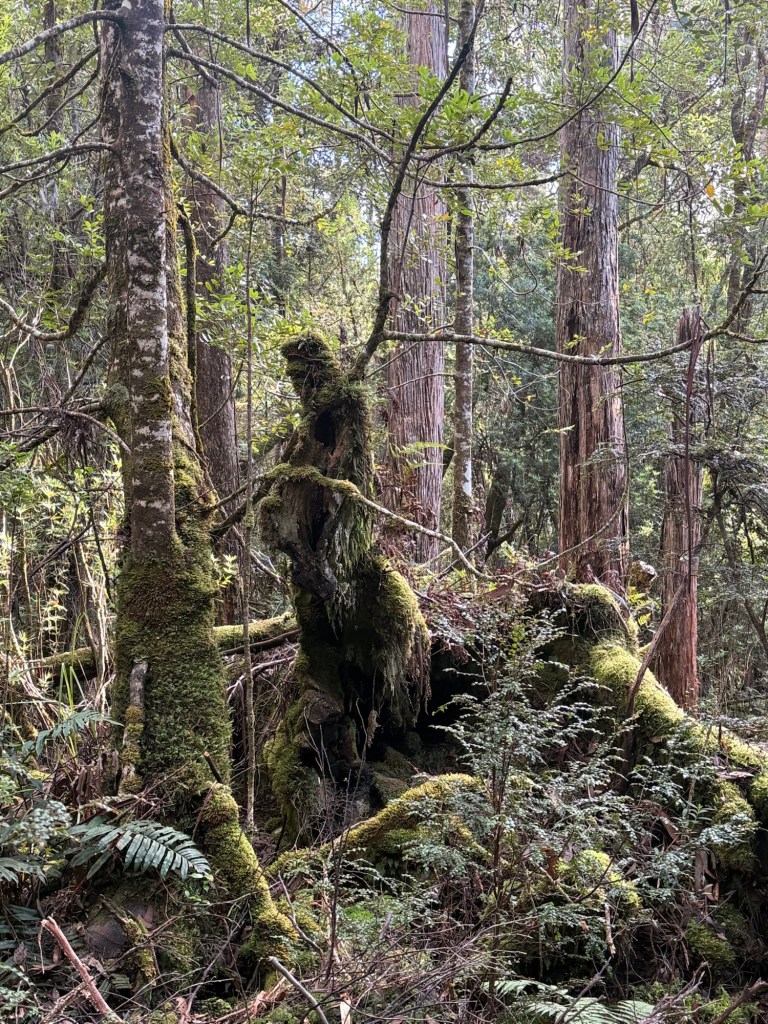
I climbed and climbed and then we arrived at the Copper Throne or Once upon a time, apparently a few walkers picked up leeches here but I was spared that.
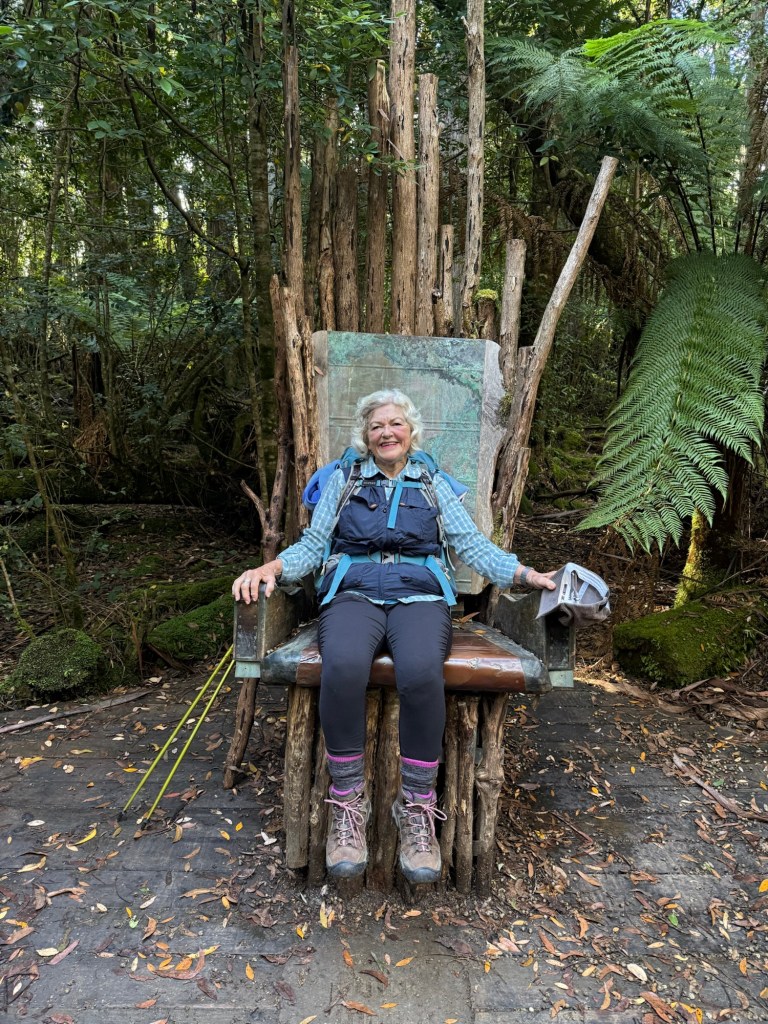
Any seat was a relief after cresting Mt Fortescue. Then the next view was Pillars of the South. Trying to capture the colour of the sea was beyond me.A deep sapphire blue always but never able to be replicated in my photos. The creamy white foam around the rocks below and the shallower turquoise surging and retreating all the time so that the sound of the sea was our constant companion. It is a soothing sound.
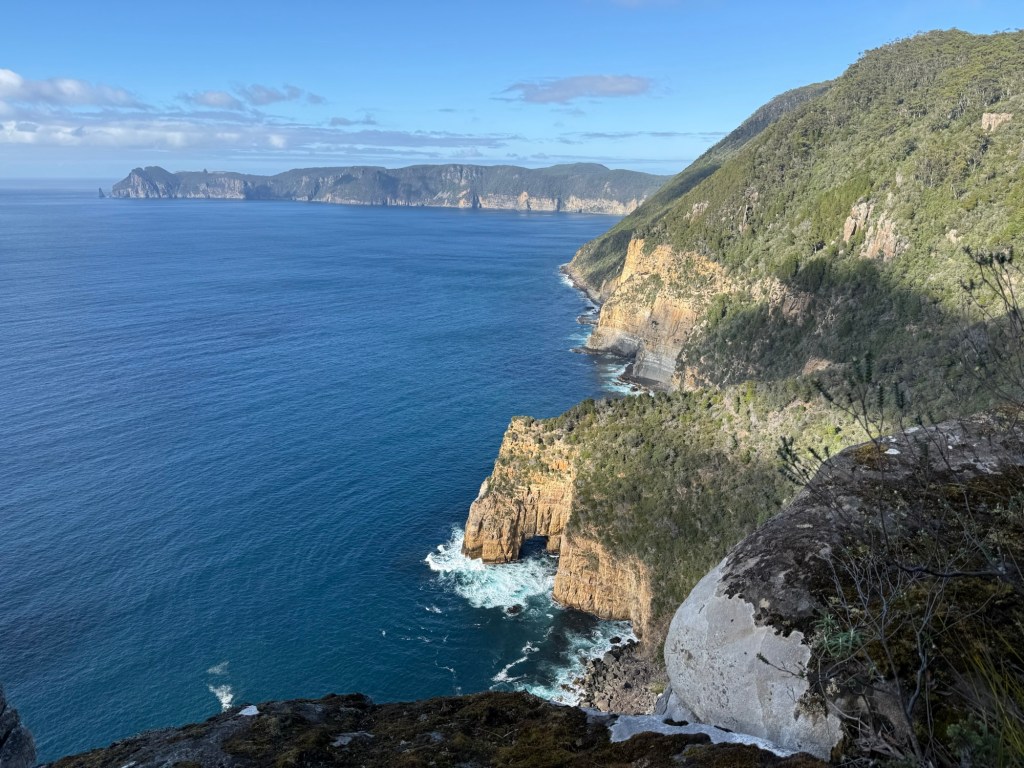
What I couldn’t understand was the absence of sea birds roosting in the cliffs. They were on the water but we barely saw any roosting on the cliffs. The forest was quiet too, with the grey strike thrush the most common sound I heard.
Finally I arrived at the turn off to Cape Hauy. I was weary after all the steps up and down to get here but I proceeded to take off my large pack and set off for the Candle Stick and the Totem Pole out at the end of the cape. A few returning walkers ( day trippers looked so fresh because they only walked up from Fortescue Bay an hour away) encouraged me with how fantastic it was. I looked out over the valley and groaned but never wavered.
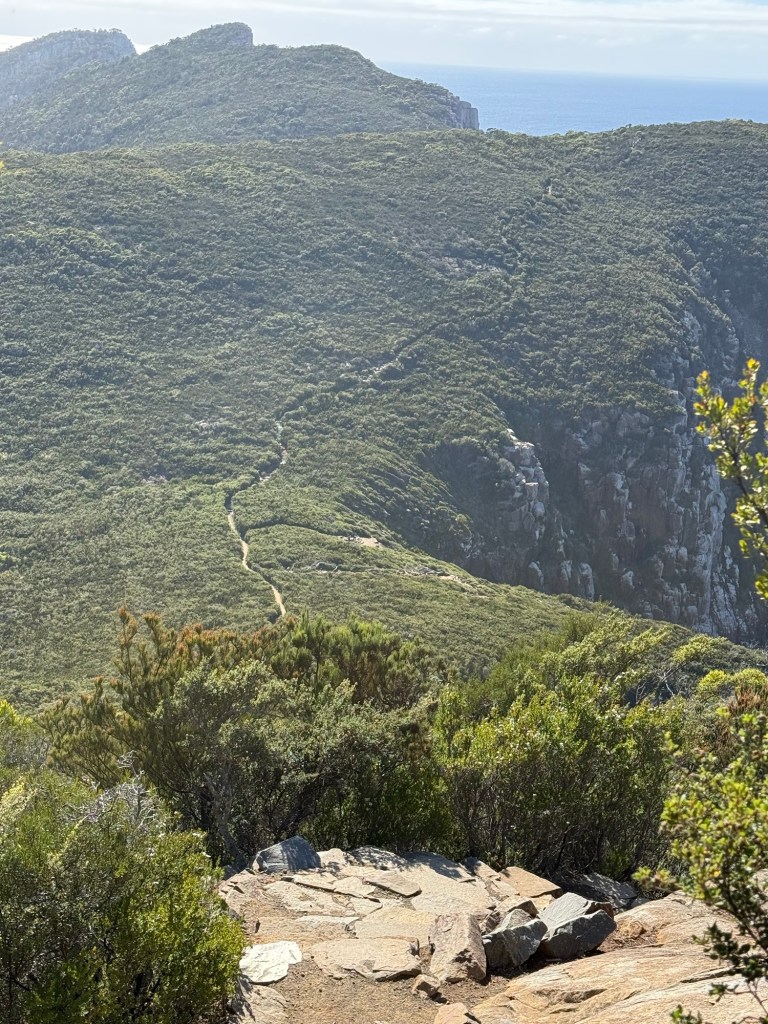
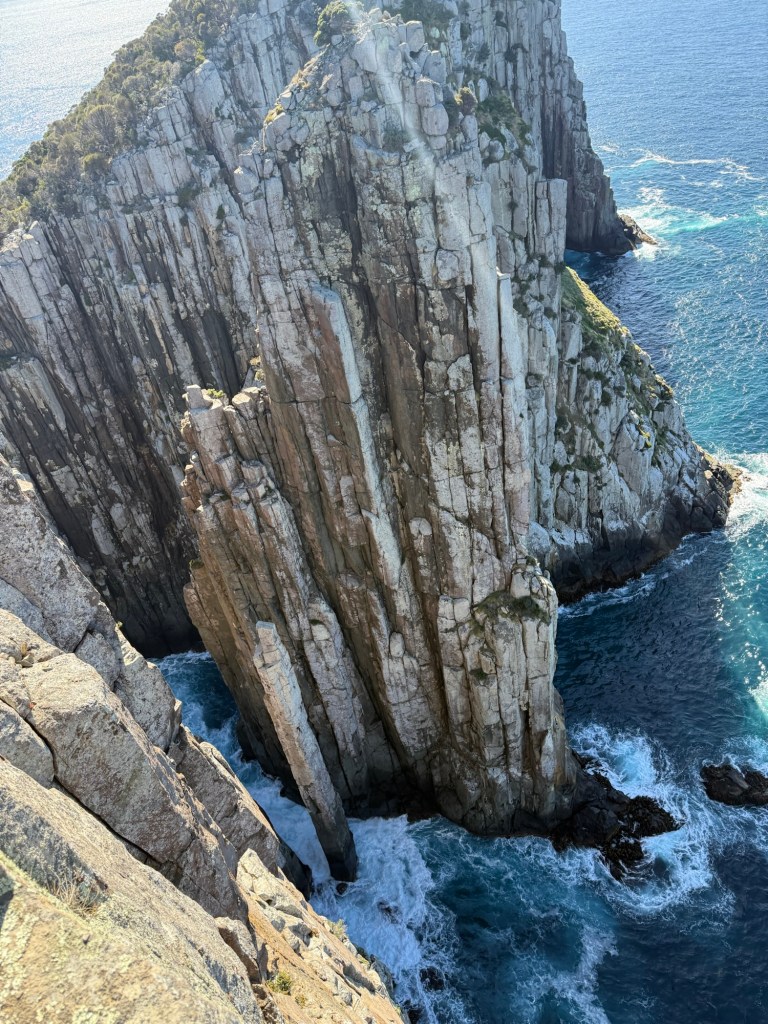
Onwards I plodded and got hotter and hotter with the effort but finally reached the end where you can marvel at the challenge to climbers offered by the Candlestick and the Totem pole. Terrifying to me. As we looked over the sea below was boiling with a school of fish and a dolphin and seal having a good feed.
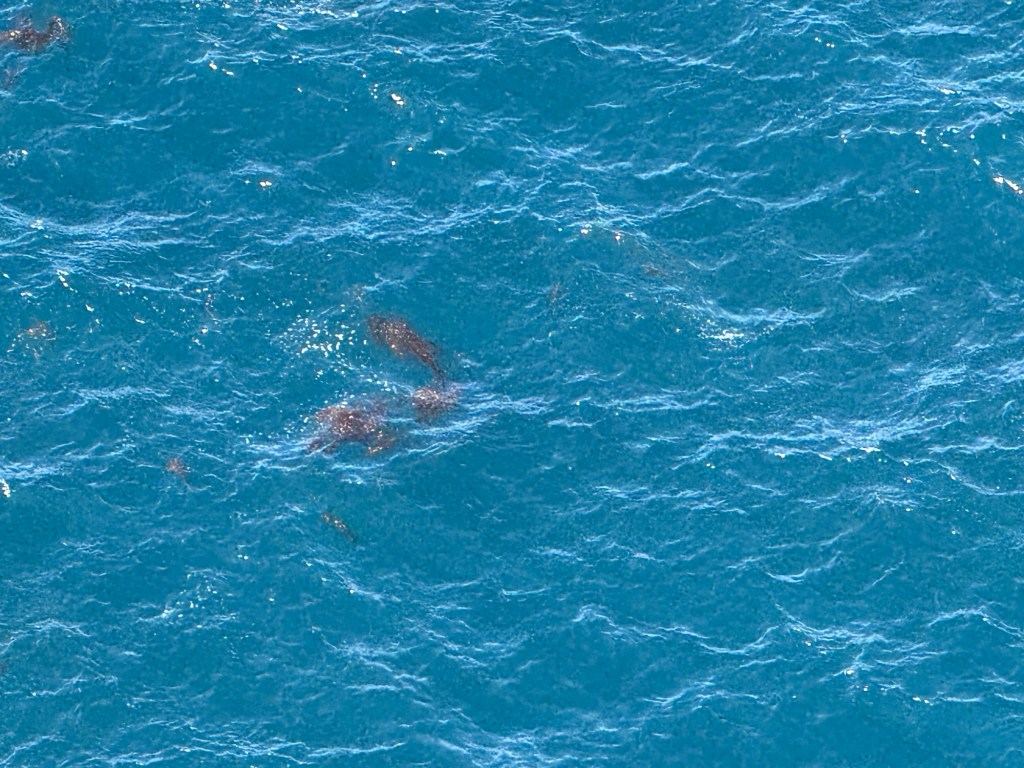
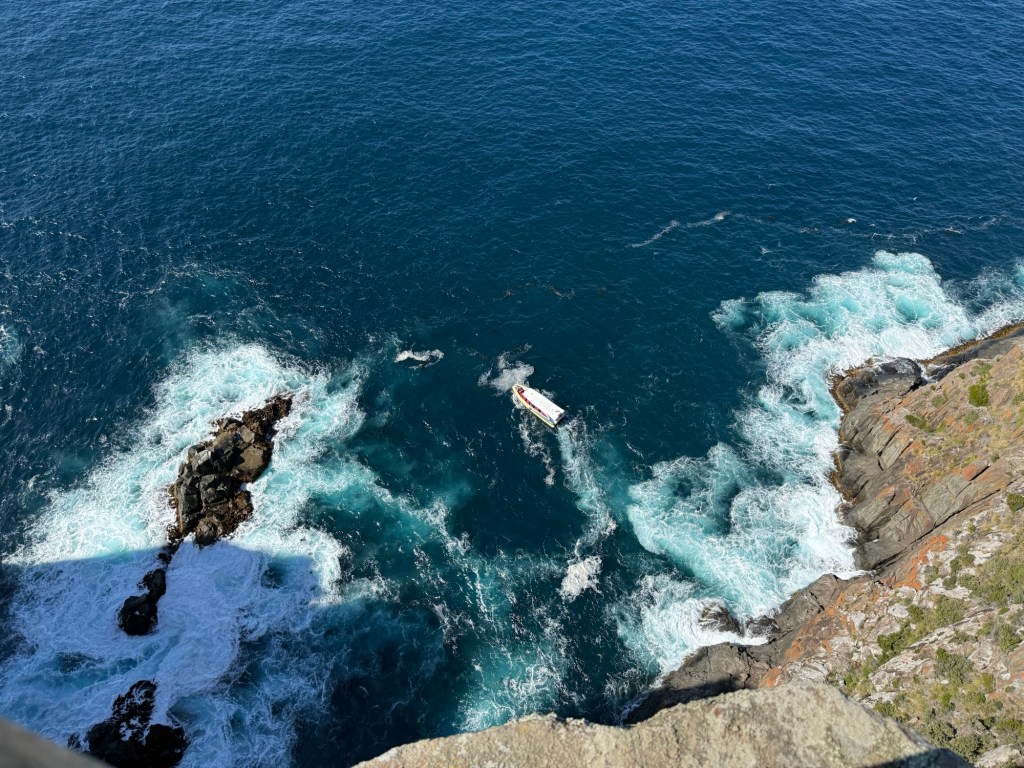
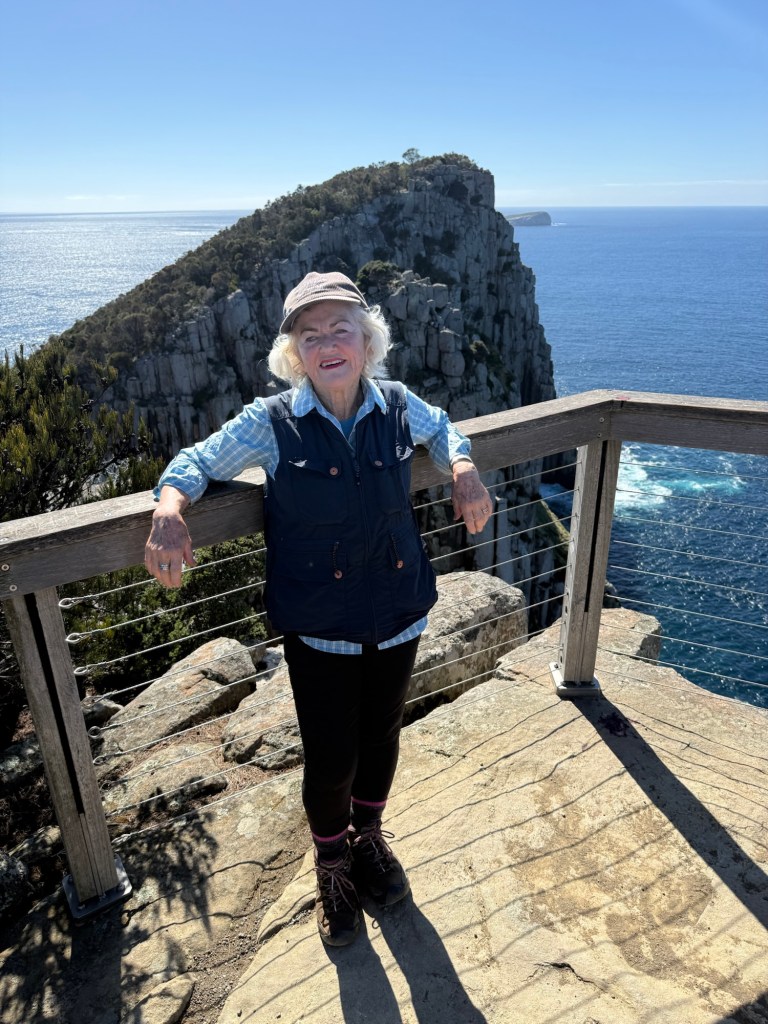
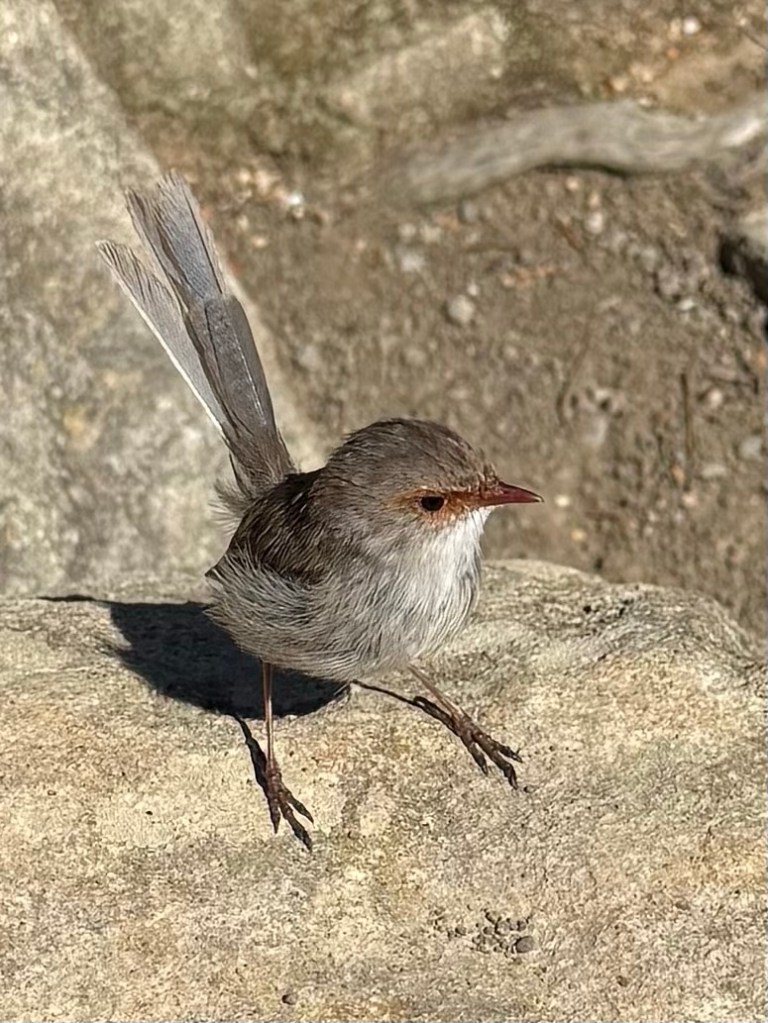
I stopped for lunch and managed to capture a little wren who was hopping around for crumbs. They dart so fast it was hard to get a good picture.
I hauled myself up and headed back up the stairs again. Just as I was almost back to the top I met three women who commented on my lipstick. ( By now my cheeks were as bright as my lips!) They thought it was extraordinary while I thought one of them was. She was wearing sequinned hot pants over tights, a cowboy hat and dangly earrings! They decided they all needed lipstick and we should have a group photo. Honestly I don’t know what is so odd about the fact I wear lipstick even when hiking. Without it I look like I am dying and it weighs nothing in your pocket.
I reached the top and was excited to see only another hour to go. But still steps!
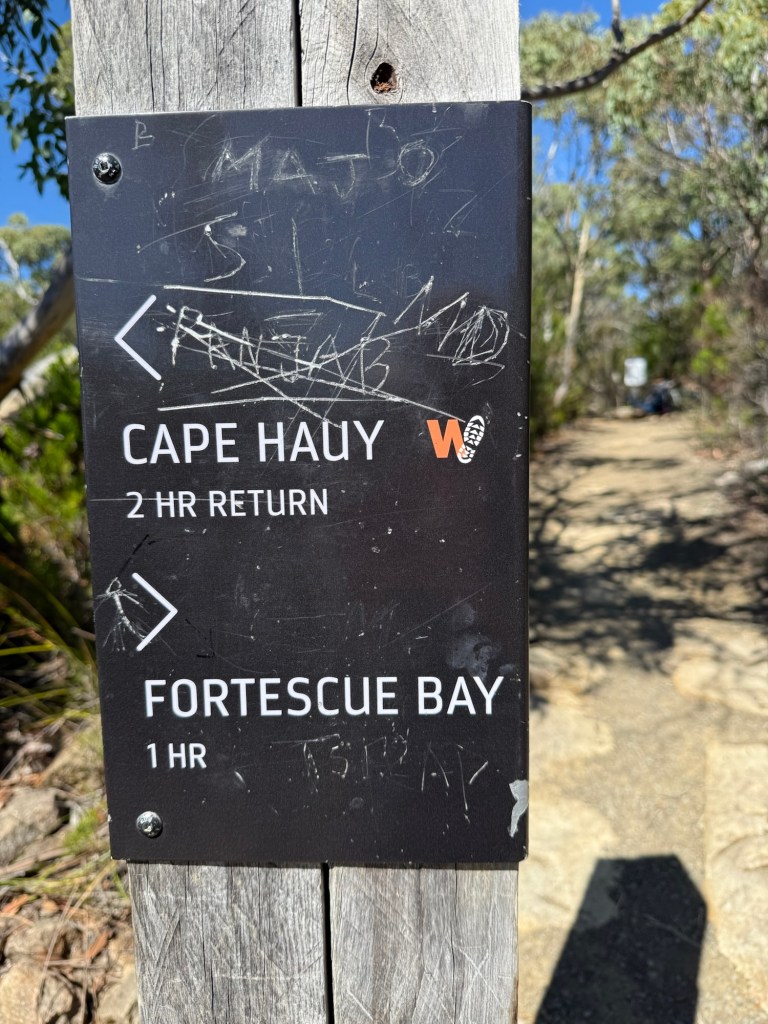
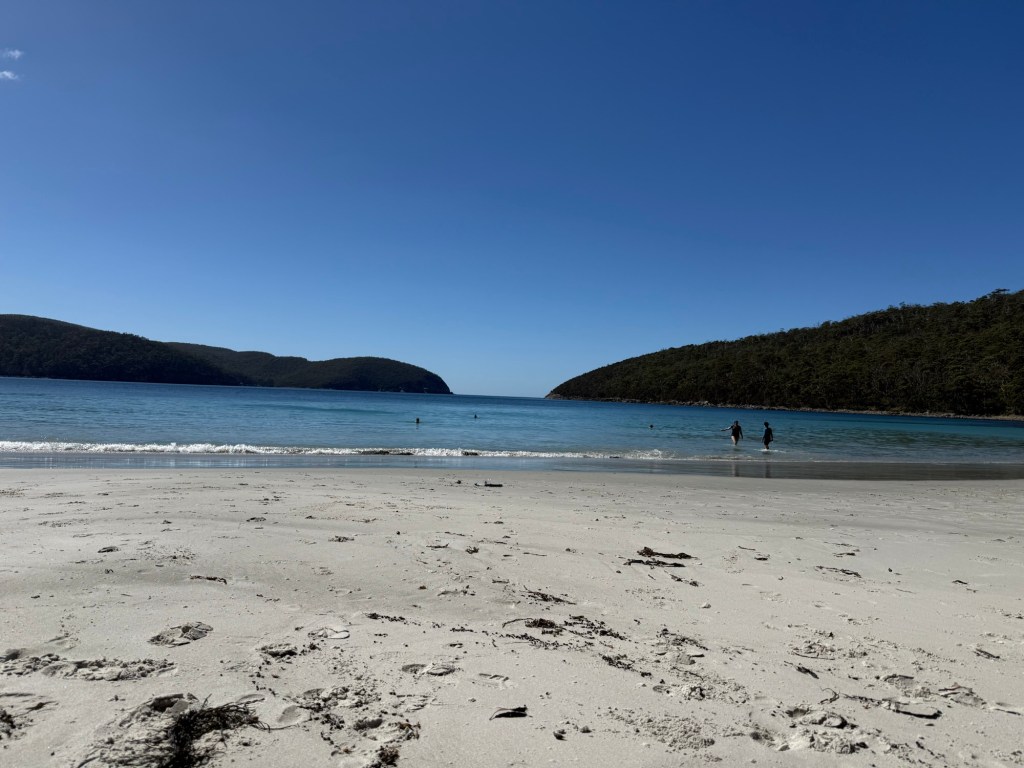
Once I got to a flat downhill path I was flying! The beach at Fortescue Bay came into sight which gave me a further boost. Soon I was there and I had made it by 1.30 pm; 6 hrs for an older hiker was something of which to be proud. I met up with the early departure group but elected to change into my swimsuit and go for a swim. No dramatic plunge but a tentative wade in up to my neck and a quick breast stroke was all I could mange. It was crystal clear and very cold. FREEZING! It is the southern ocean after all. Little fish swam around me and I waded back to thigh height and let the water soothe my tired legs and feet. I had laid my hiking gear on the sand to dry as it was wringing wet. Good old merino, no smell! The sun dried it quite quickly and I recuperated for awhile before using my token for a shower and heading up to the others and the bus stop to be taken to Port Arthur.
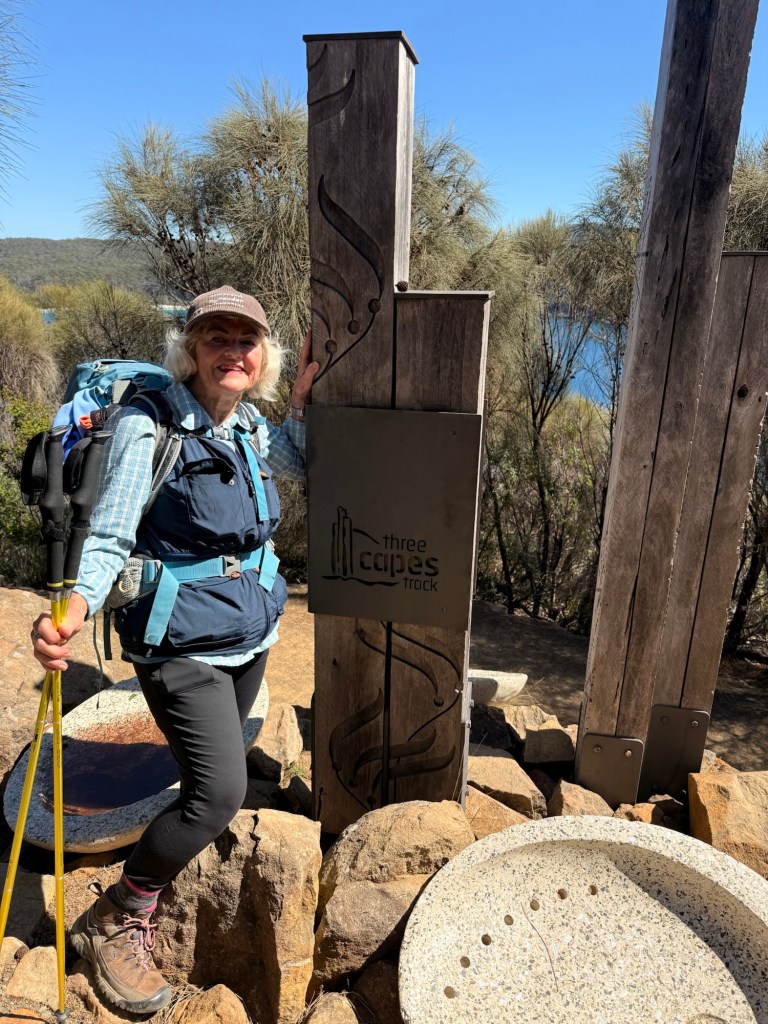
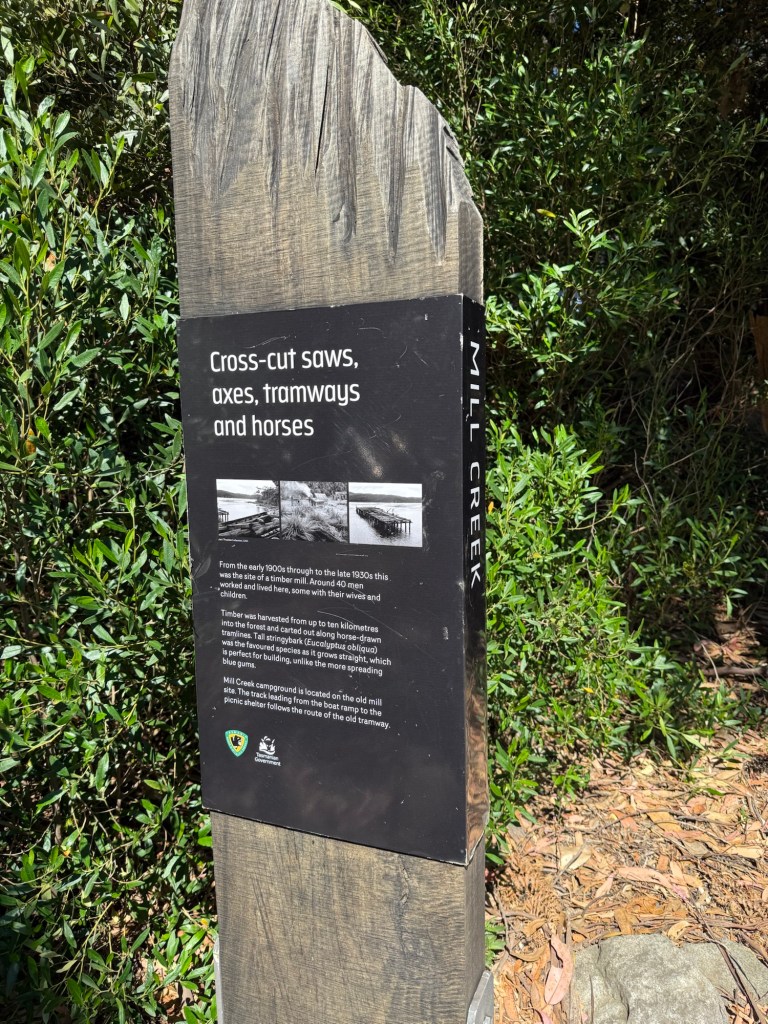
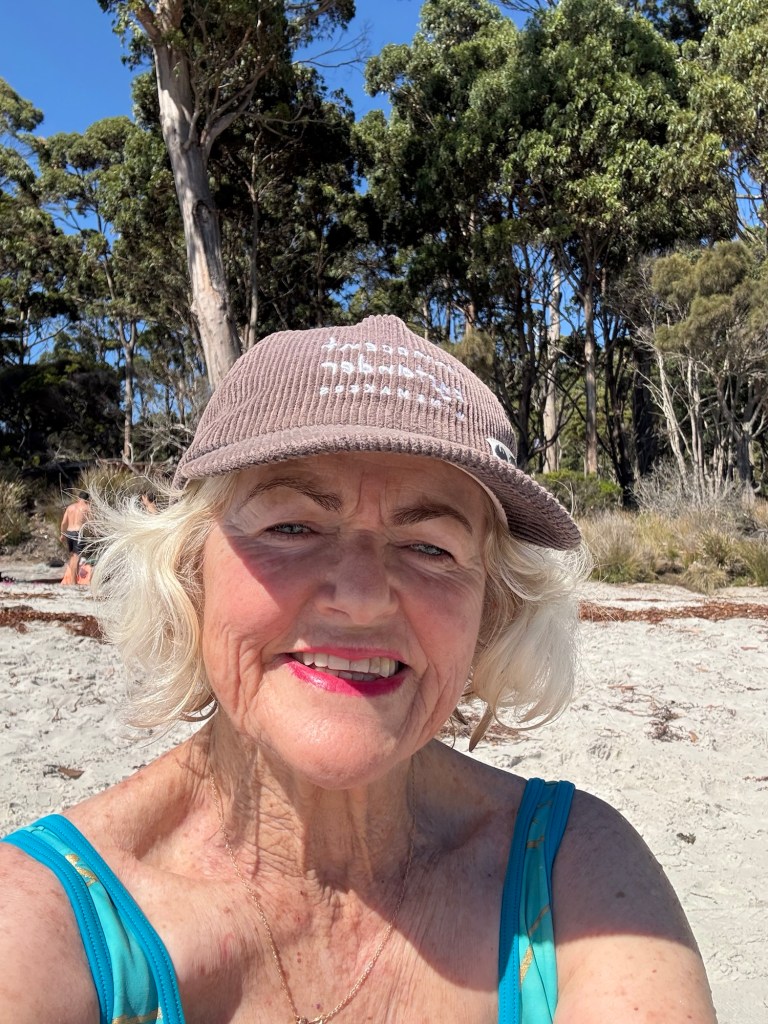
It was a brief stop at Port Arthur to collect my suitcase, deposit my rubbish (you have to carry out all rubbish) and back on the bus to Hobart. We were all pretty dozy but detoured to drop off some hikers who were catching flights that night. I had elected to stay overnight and leave the next morning.
I felt pleased I had managed to keep up with everyone and carry a full pack. I was happy to have made a new friend and that I had done it on my own. Most people were surprised that I had come solo. I had time to relax and unwind from all the disappointment of my cancelled trip. It was the best medicine.

