Baku and Gobustan

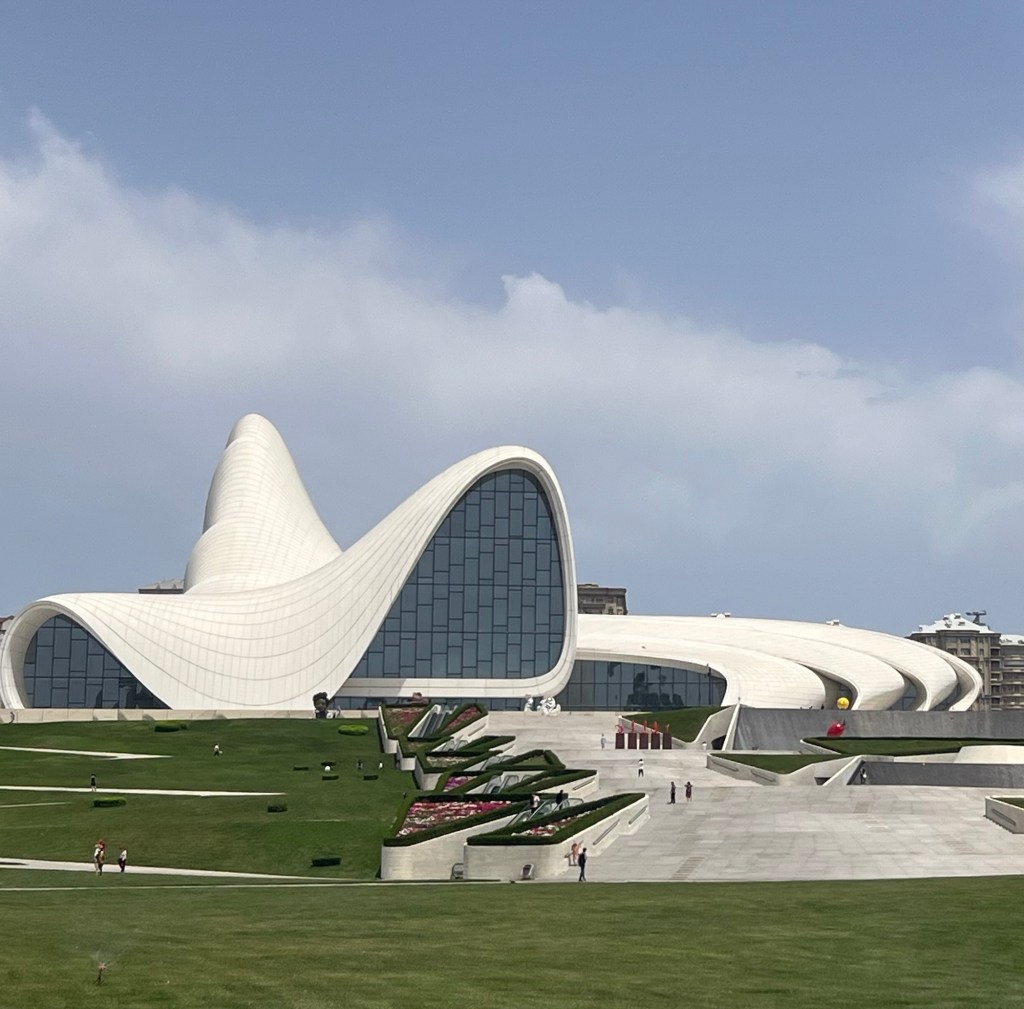
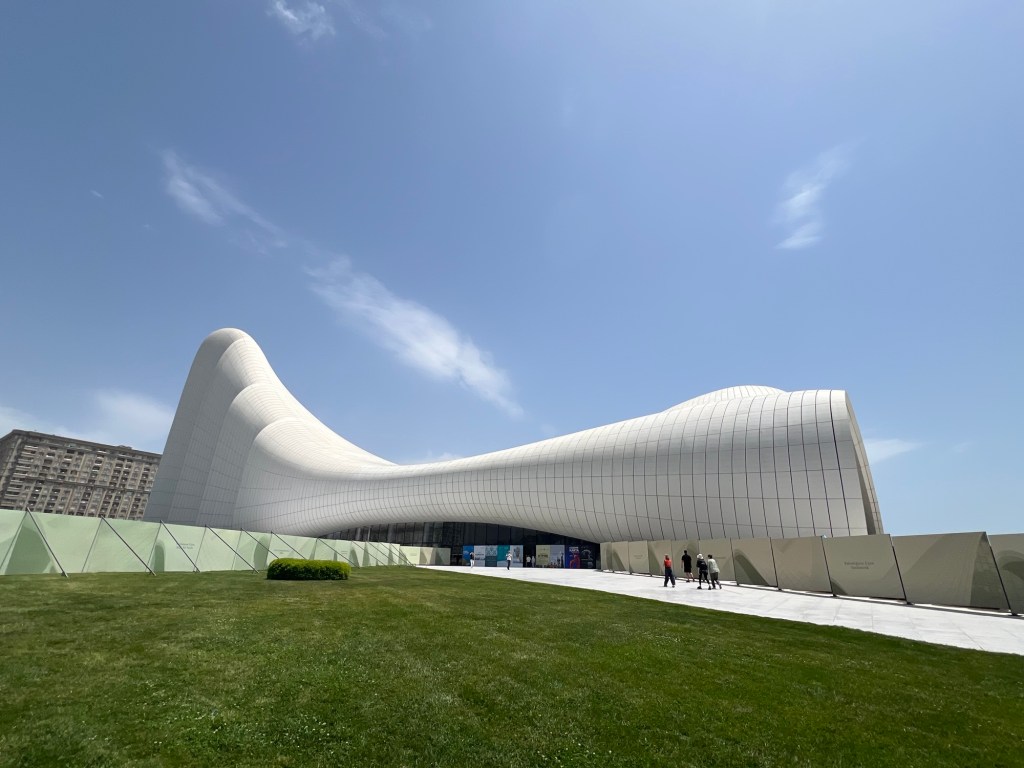
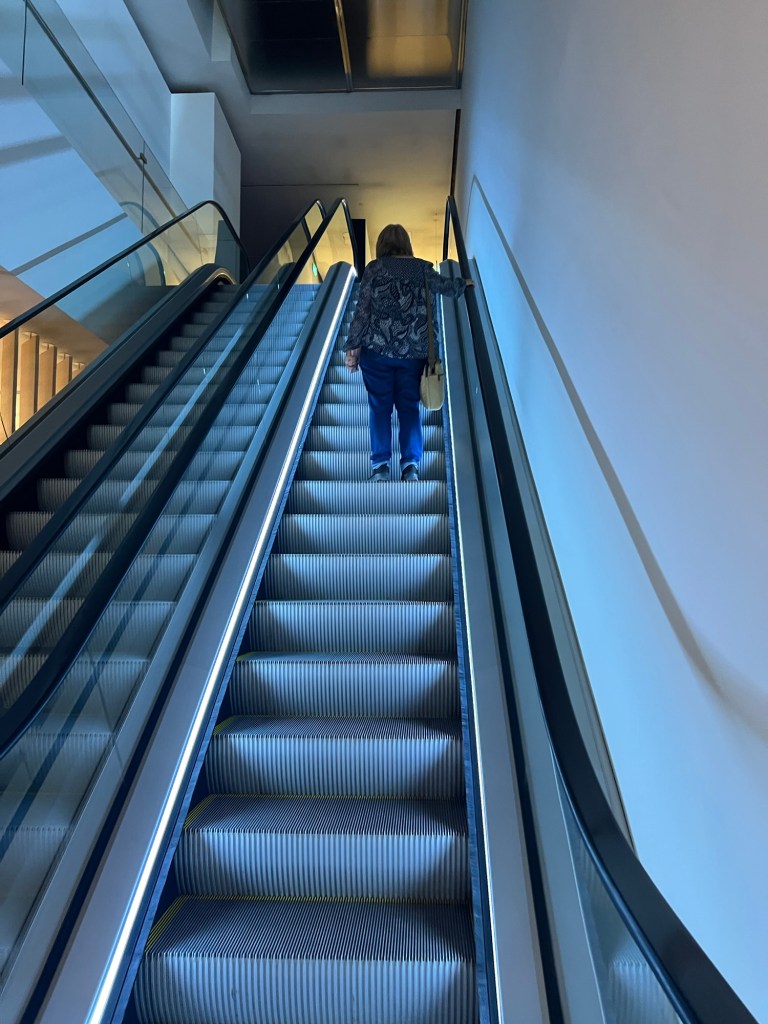
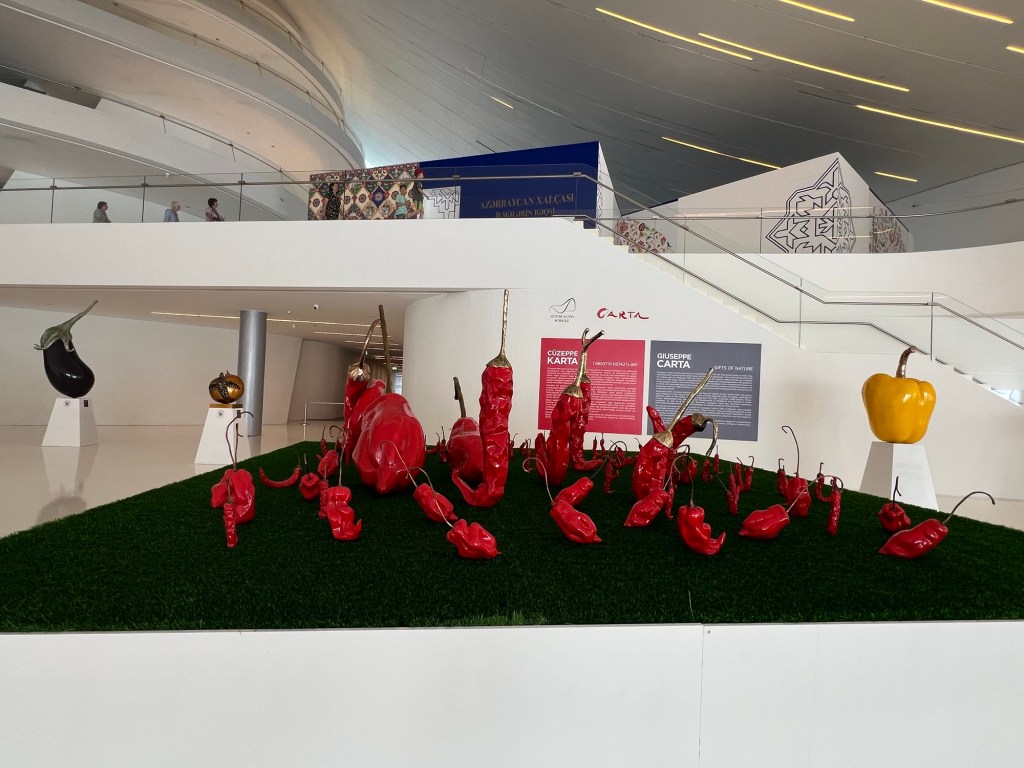
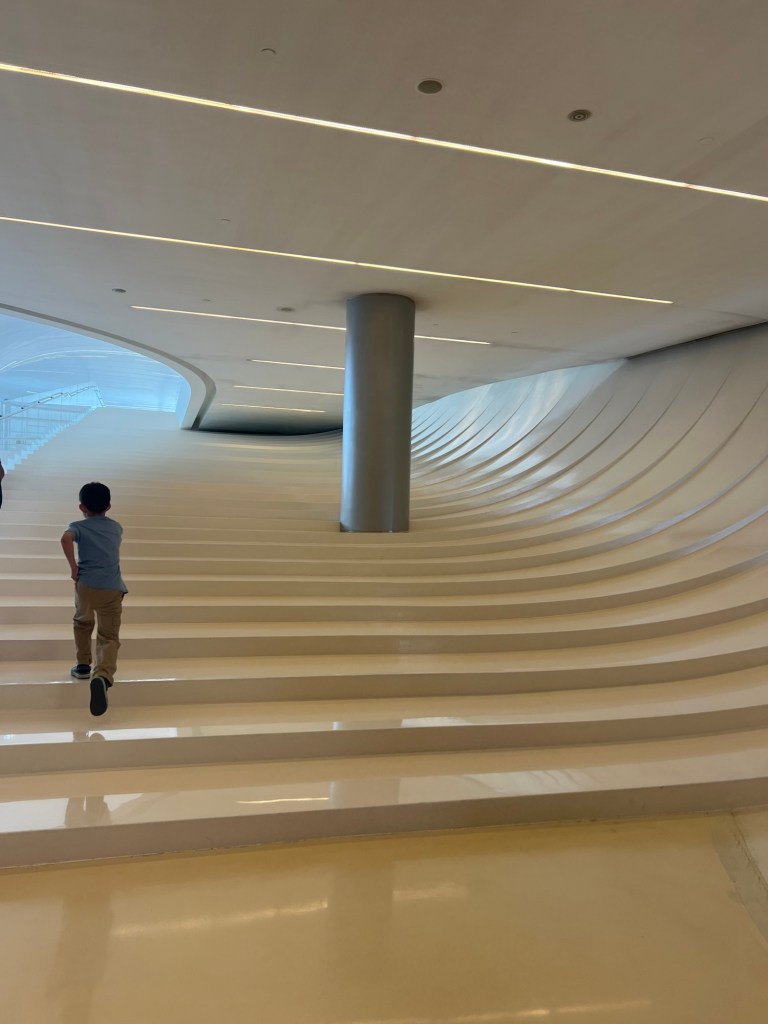
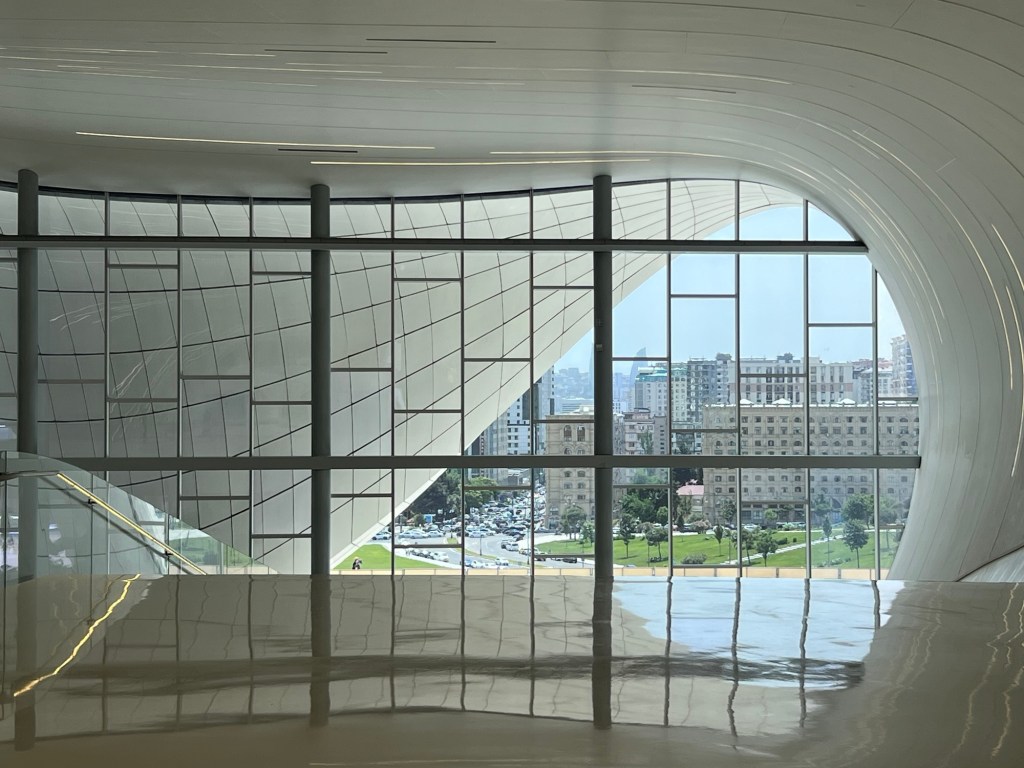
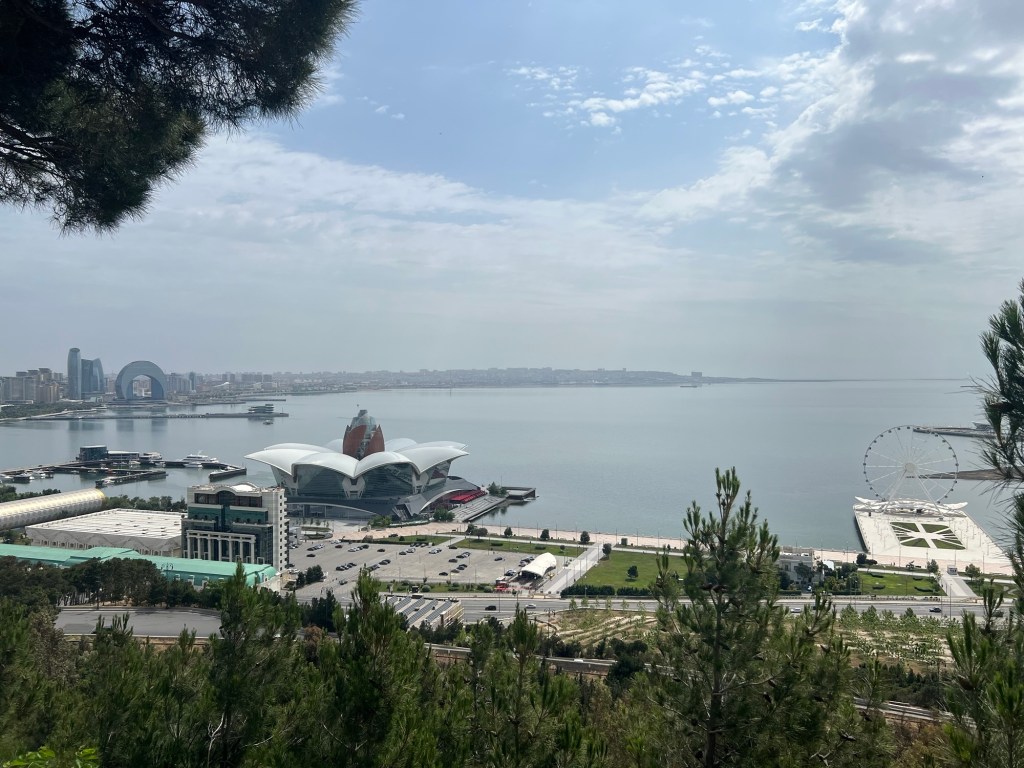
We visited the Heyda Aliyev centre designed by the world renowned architect Zaha Hadid. We had seen this awesome white wavy building as we drove in and around Baku. Entering it was an experience in itself regardless of its contents. It was like being in a cloud. Soaring ceilings, light and white, even the stairs! Not corners just curves. Its design was a direct rejection of the conformism of Soviet rule and Brutalist design. Aimed at accessibility to all and as a space to celebrate Azeri culture and arts.

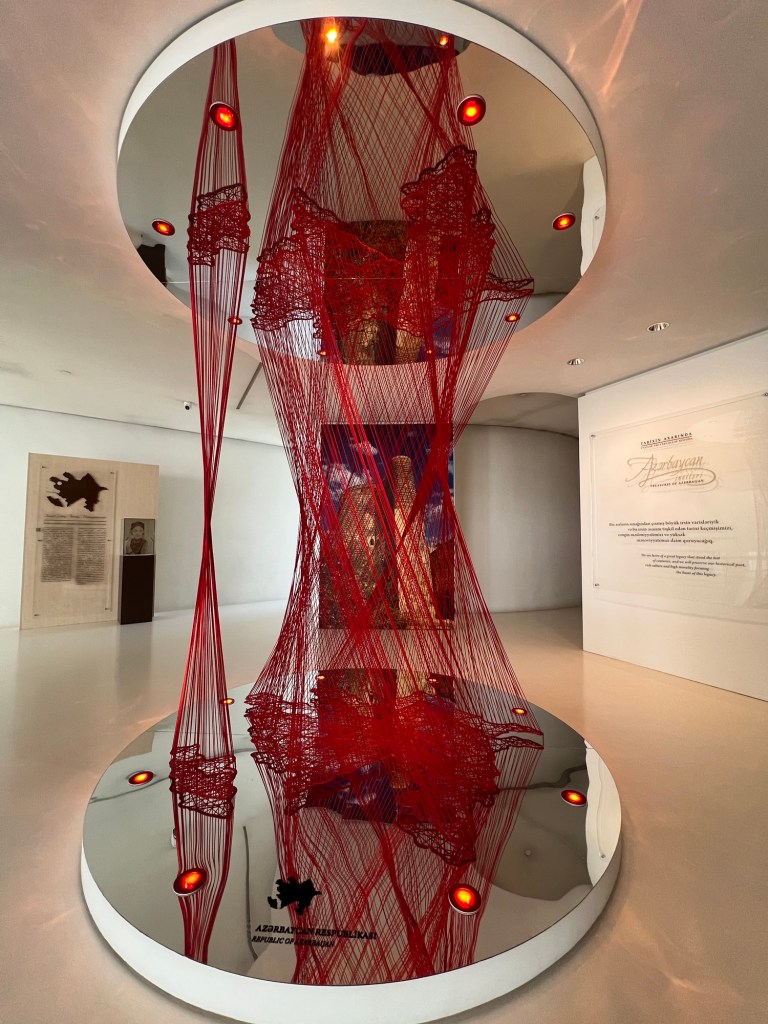
Floating scarves- Dance of Kelaghayis/ Danial Vürtzel

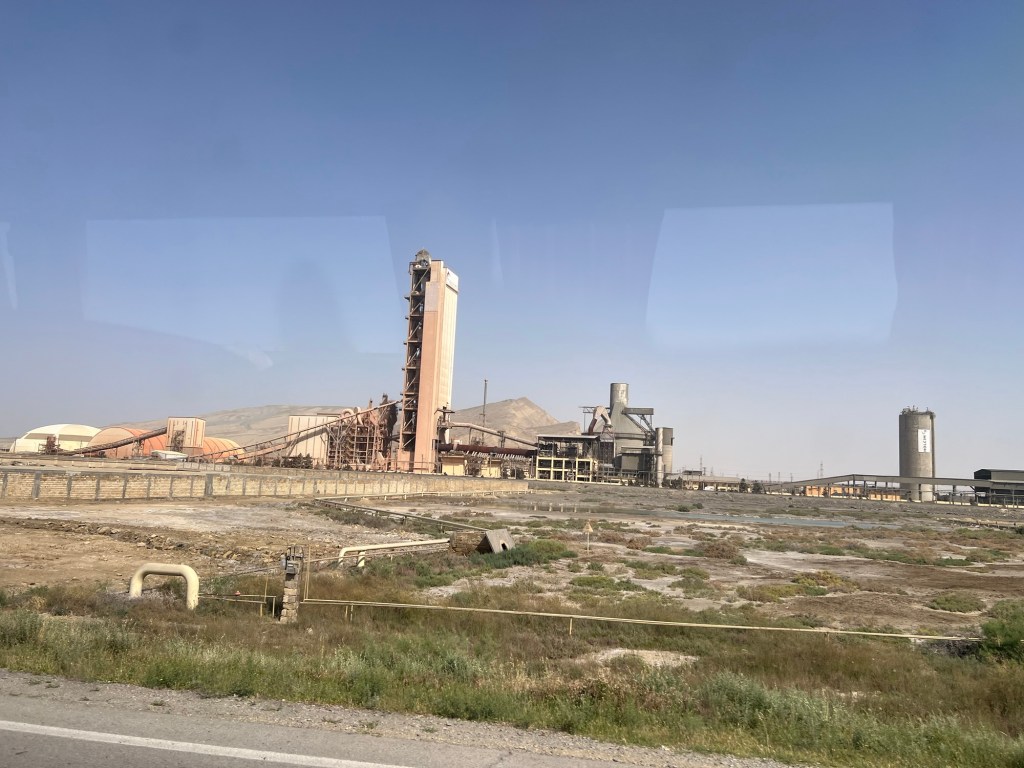
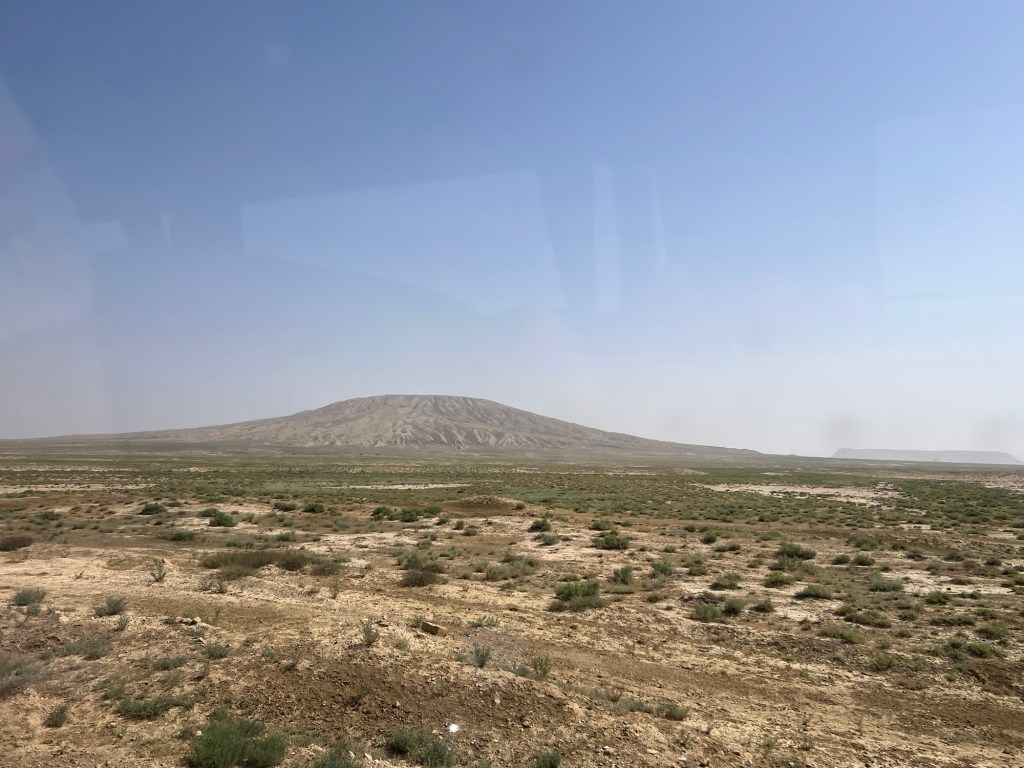
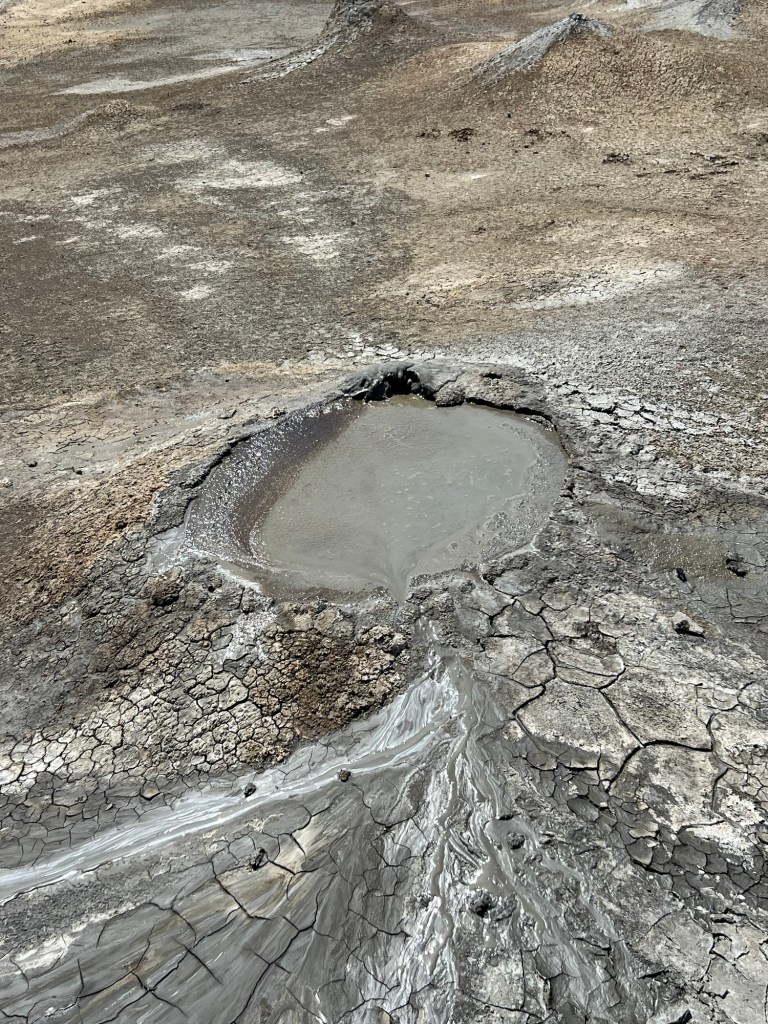
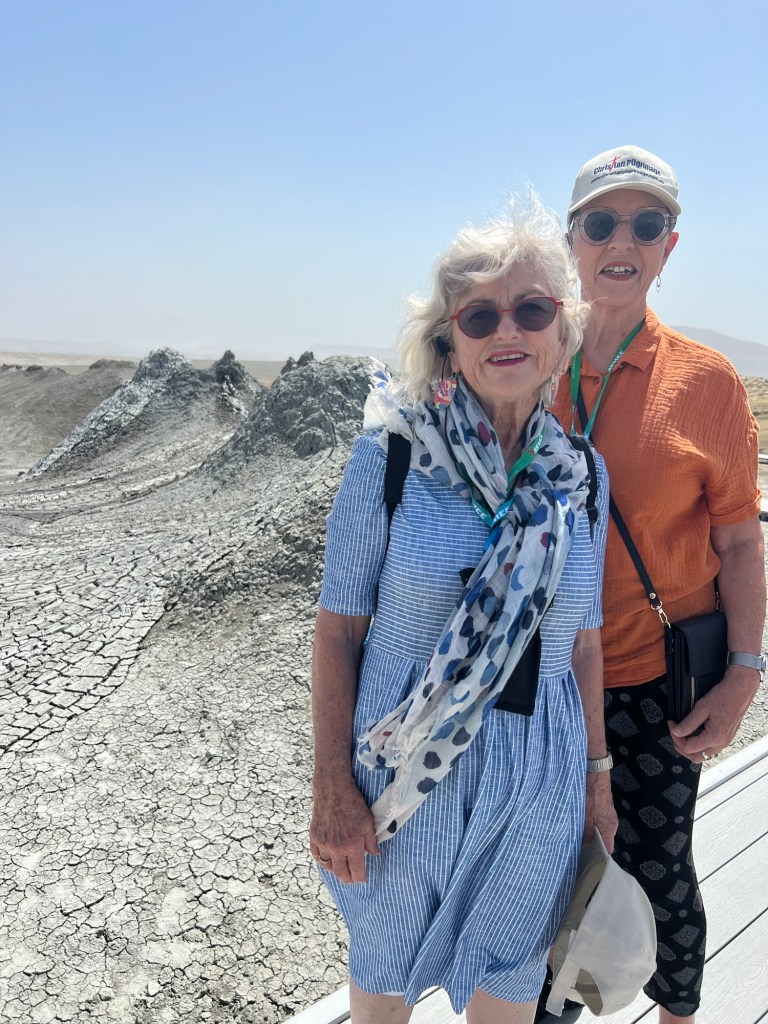
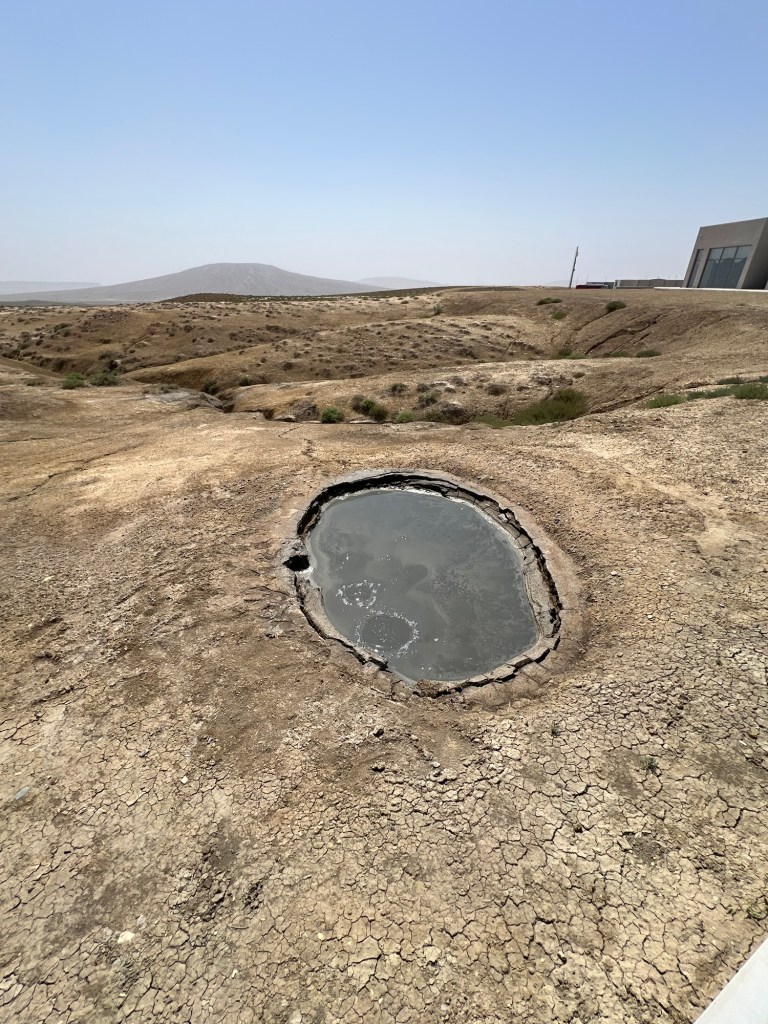
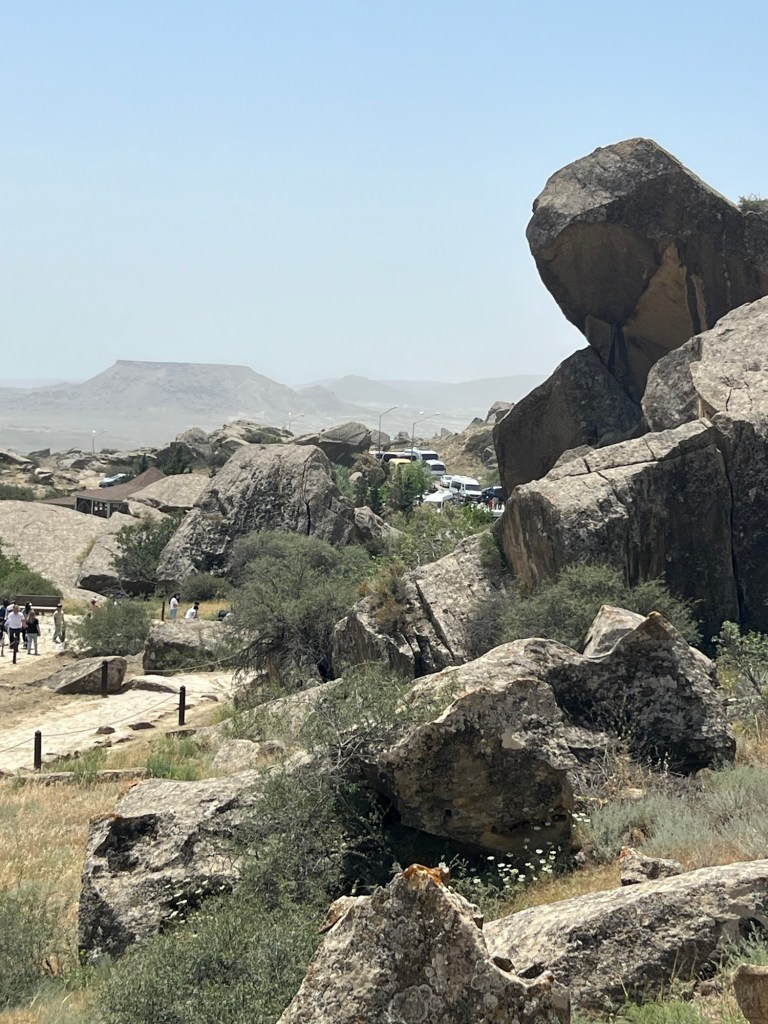
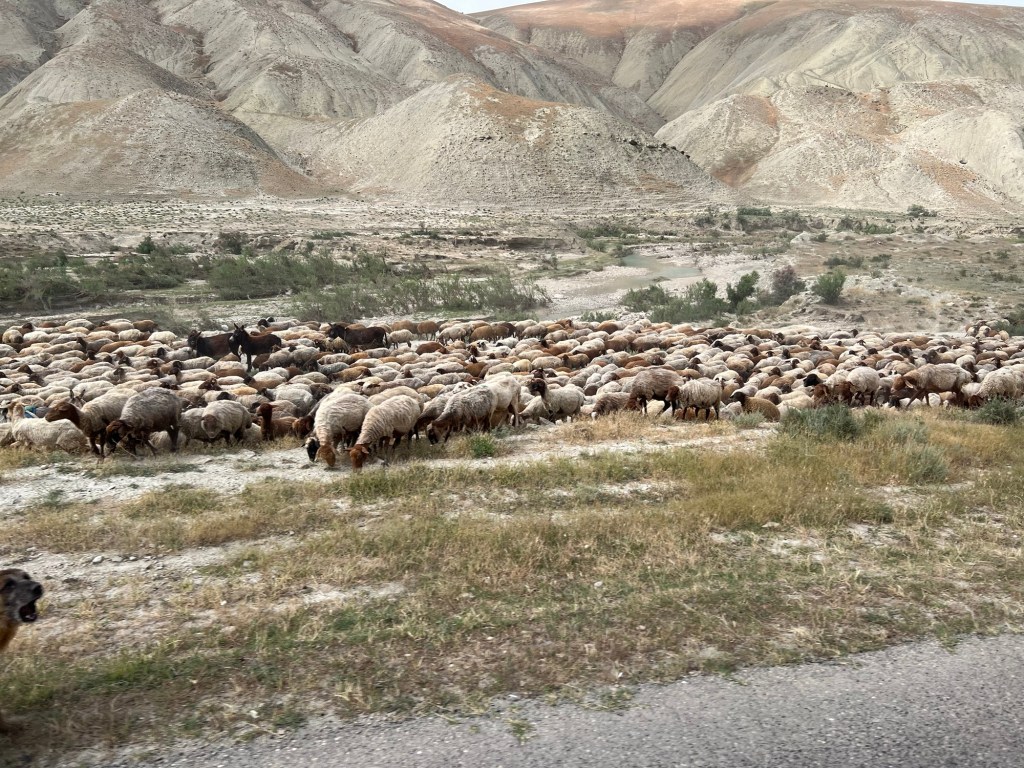
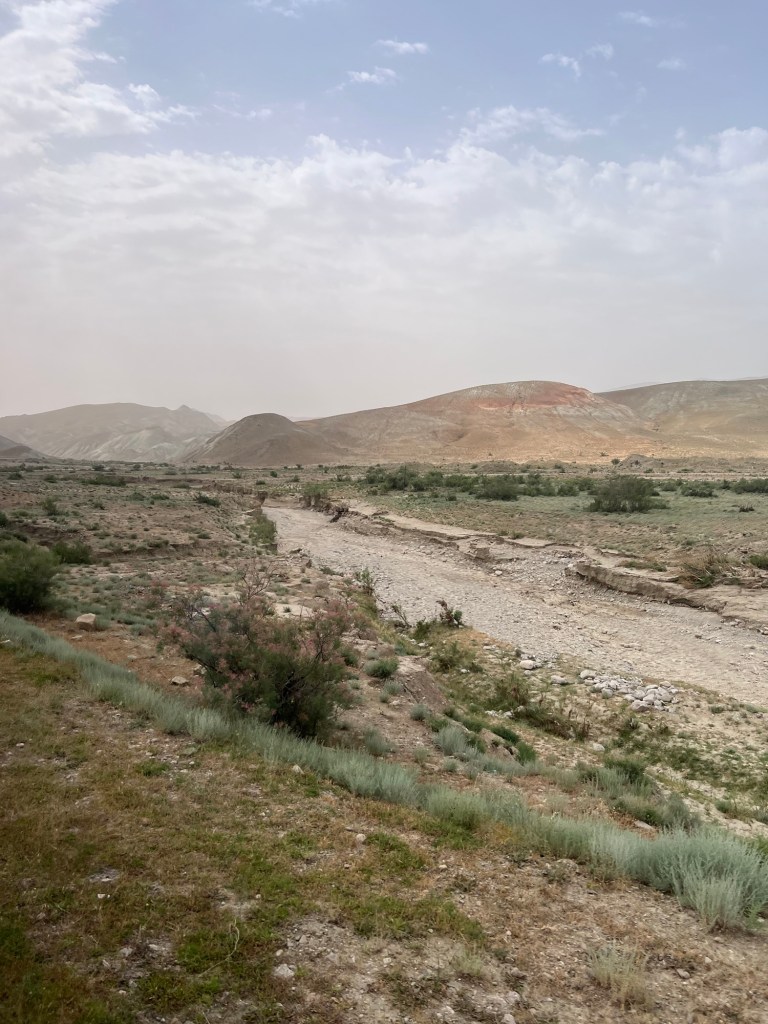
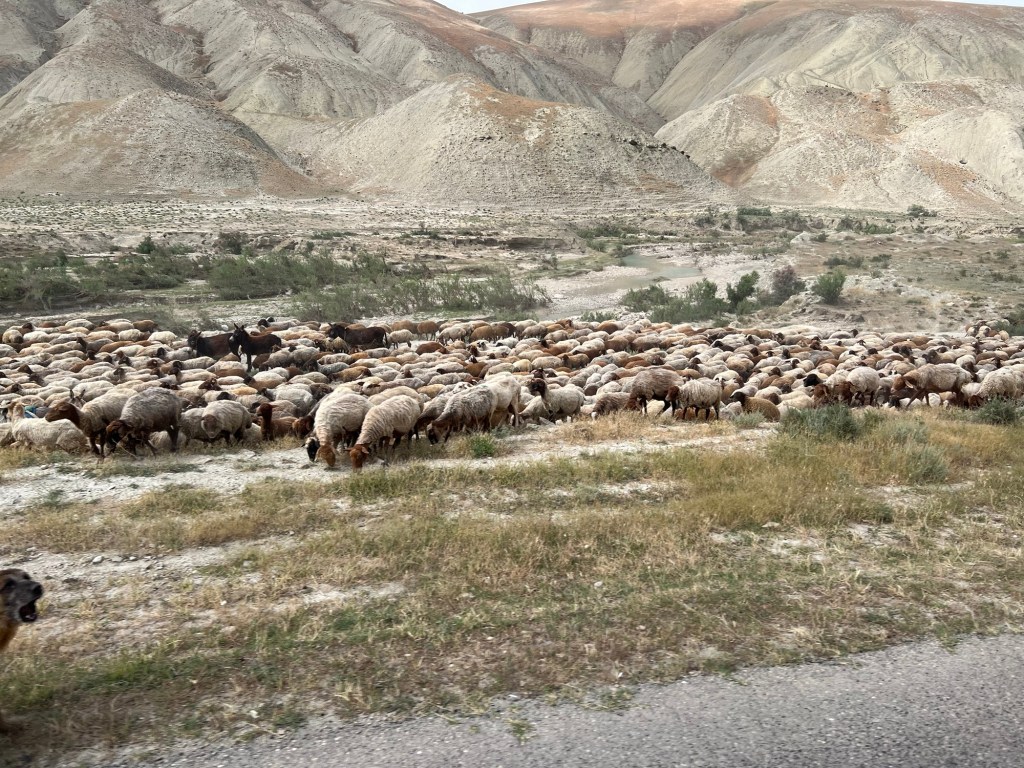
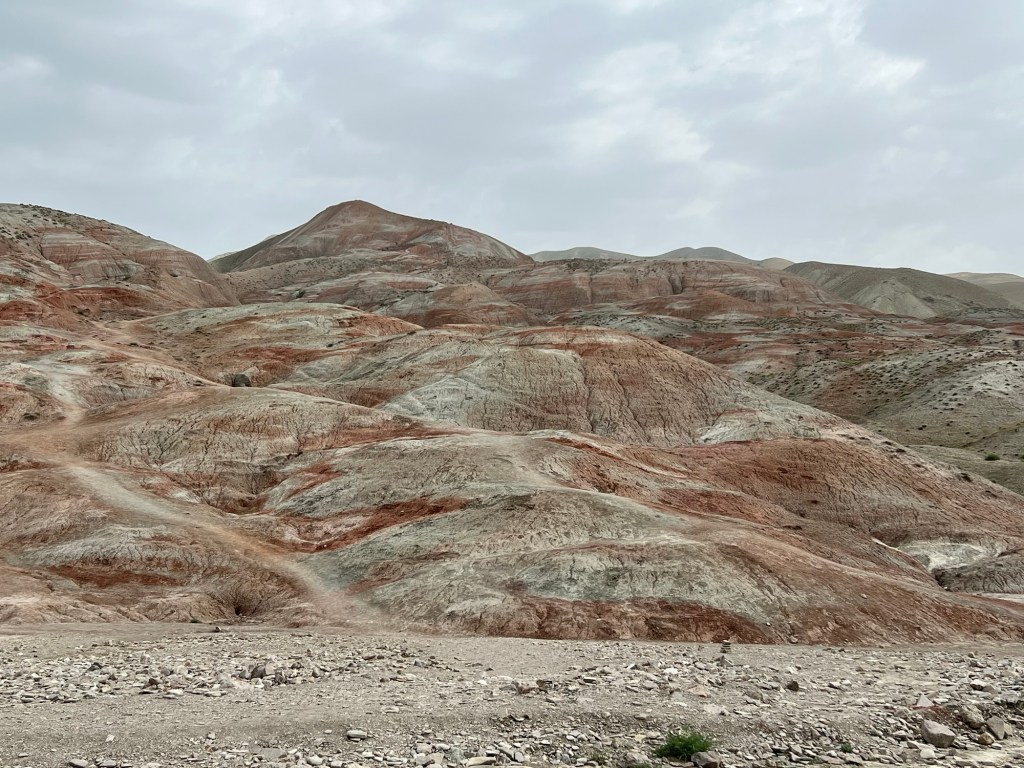
Another excursion out of town to see the Mud volcanos seeping methane, oil, and mud. It isn’t hot though as one would expect. Driving to Gubastan we were once again in the Luna scape, barren dry and almost treeless except where trees had been purposefully planted. Despite the look we saw shepherd with flocks of sheep.

The landscape we were traversing

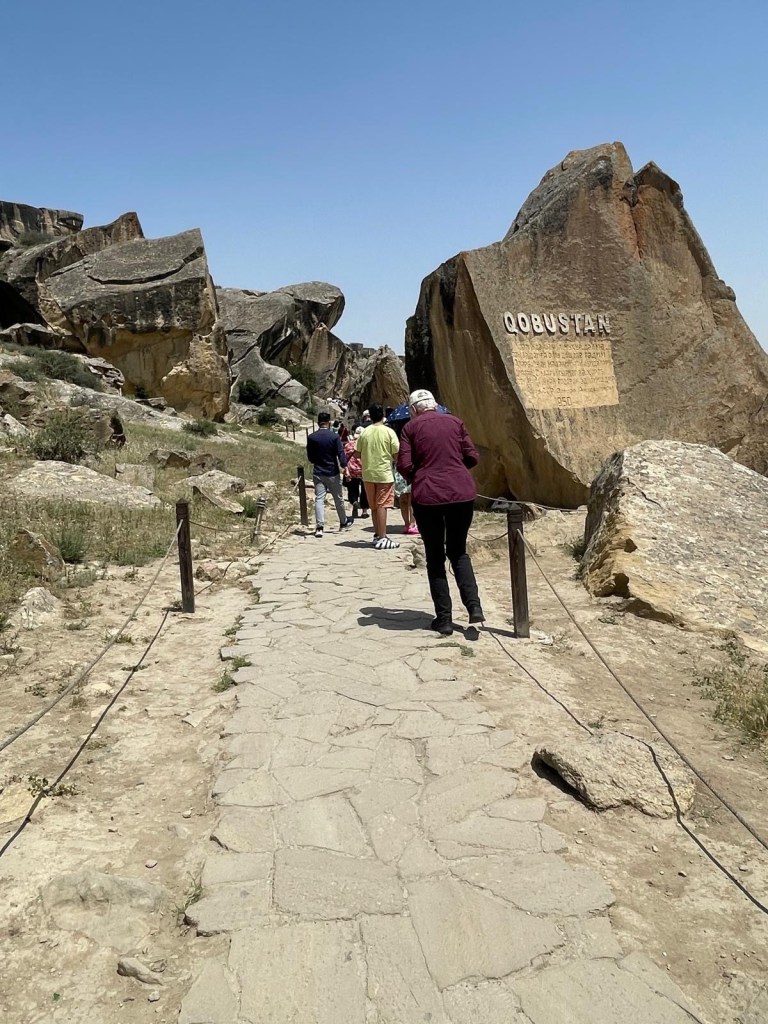
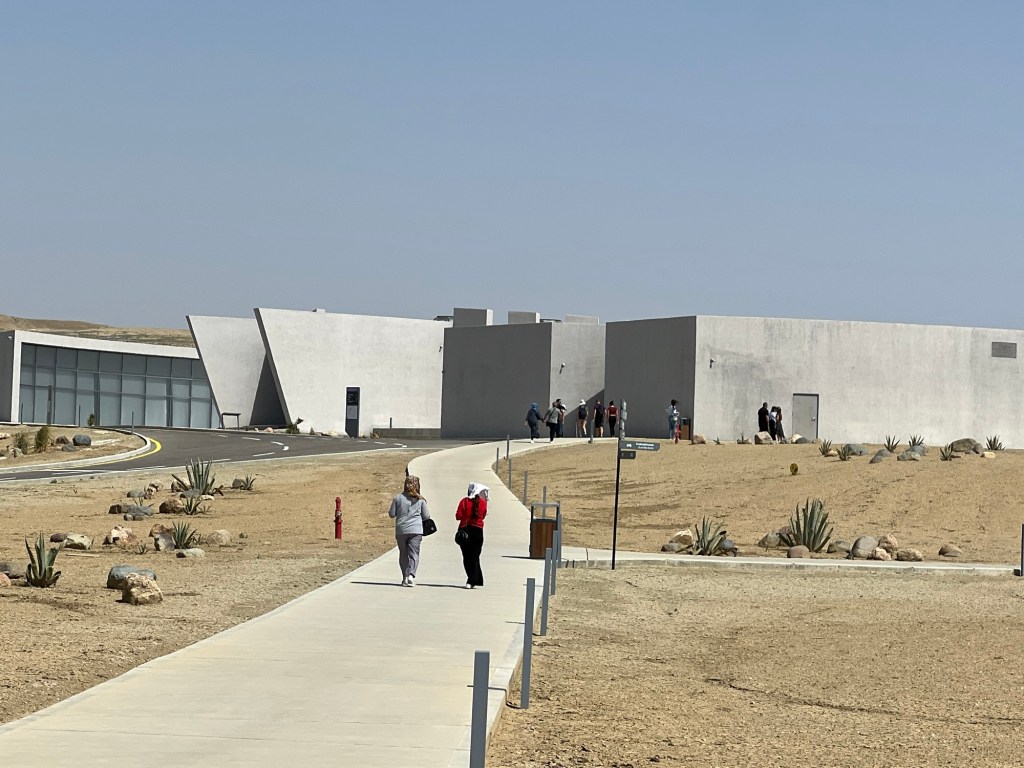
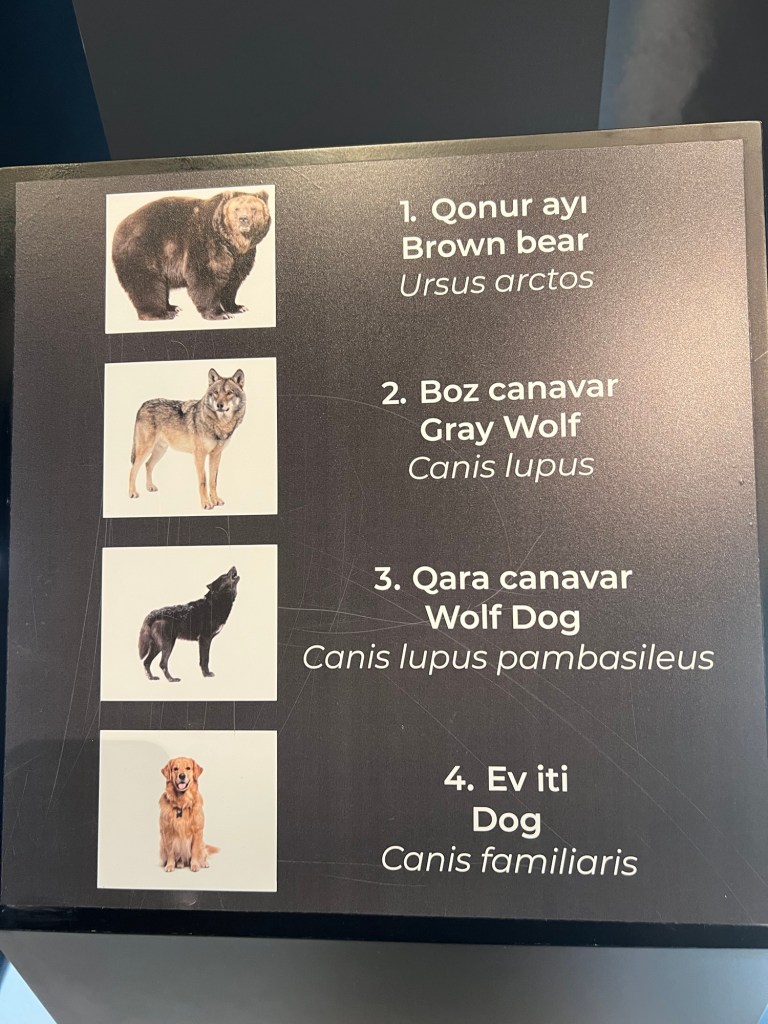
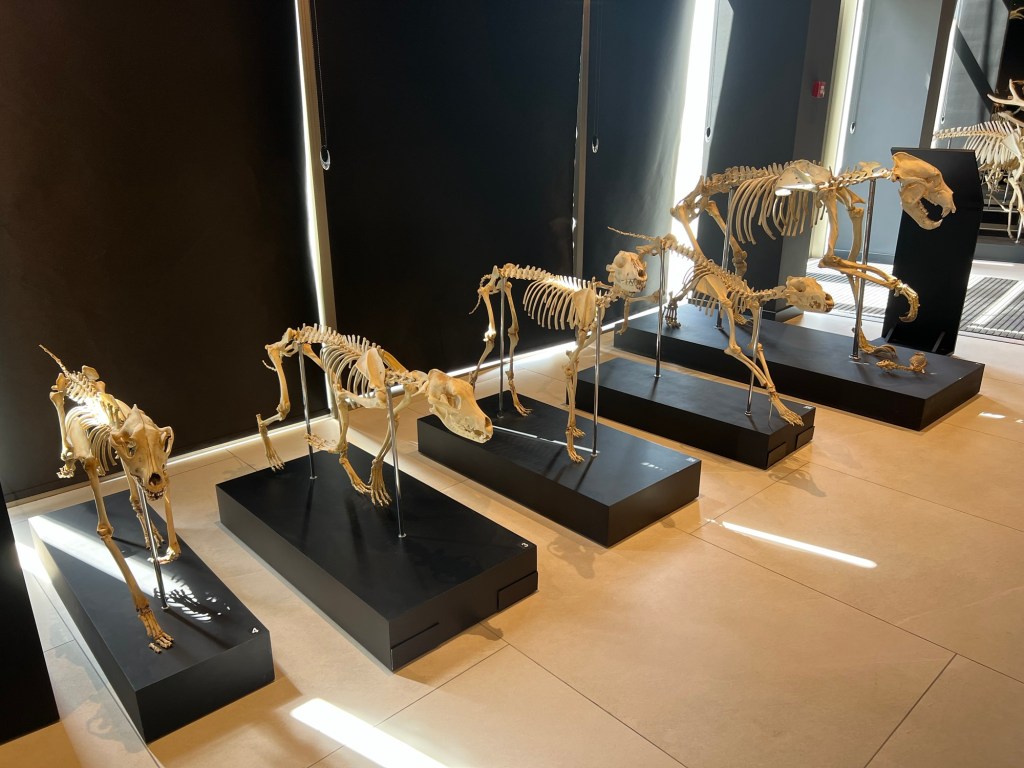
Arriving at Gobustan National Park we found a very new complex (only open a couple of weeks) with a museum of cetaceans from the Miocene and Pilocene periods (23-5 million years ago approximately) that had been discovered in this area under the mud. Would have liked more time in there.

Azerbaijan has the most mud volcanoes of any country spread across the country. (350 of the 700 across the world!) It is no surprise they are associated with oil fields and apparently not unlike the surface of Mars. My view it was a lunar scape was close – just wrong planet!

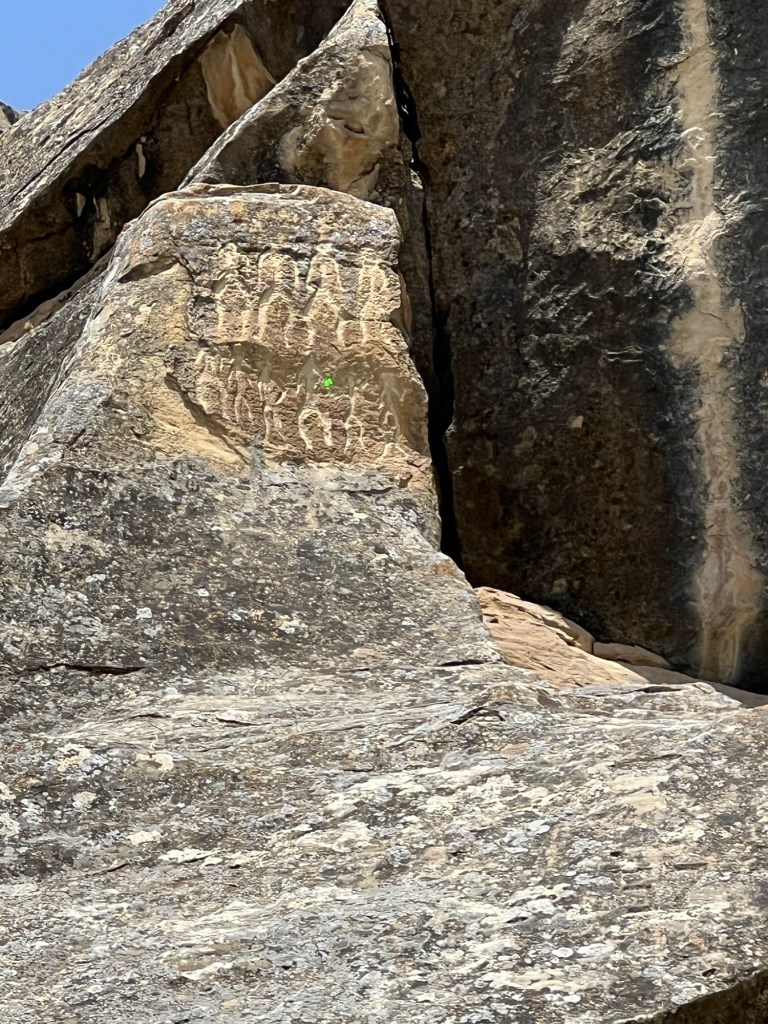
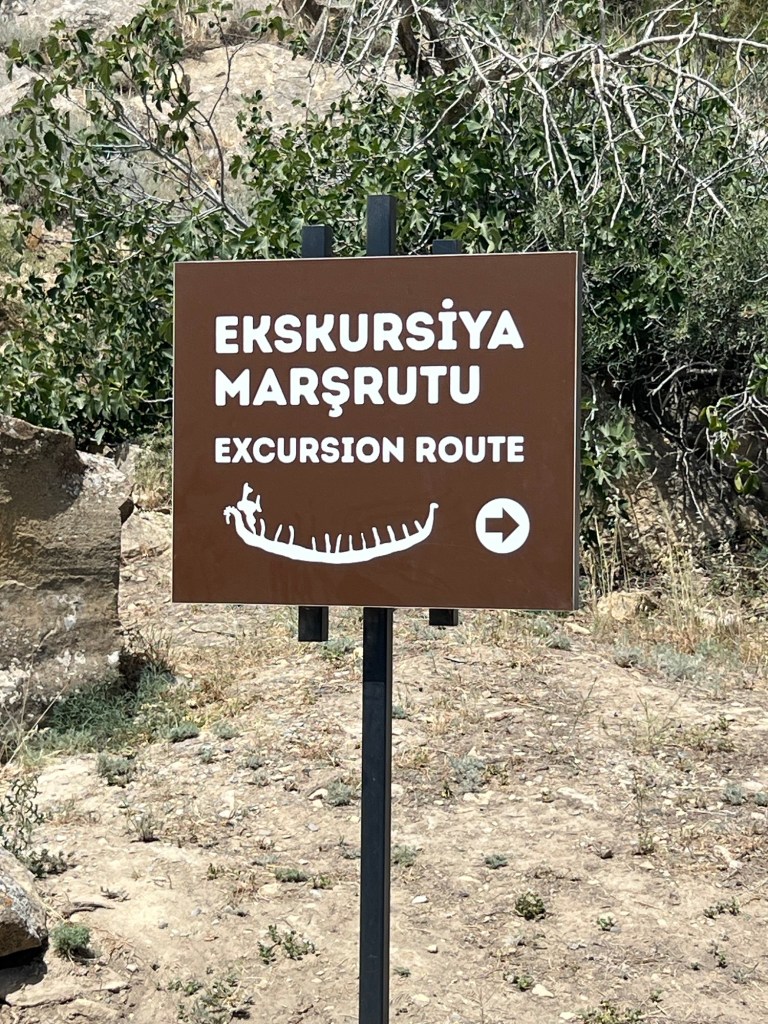
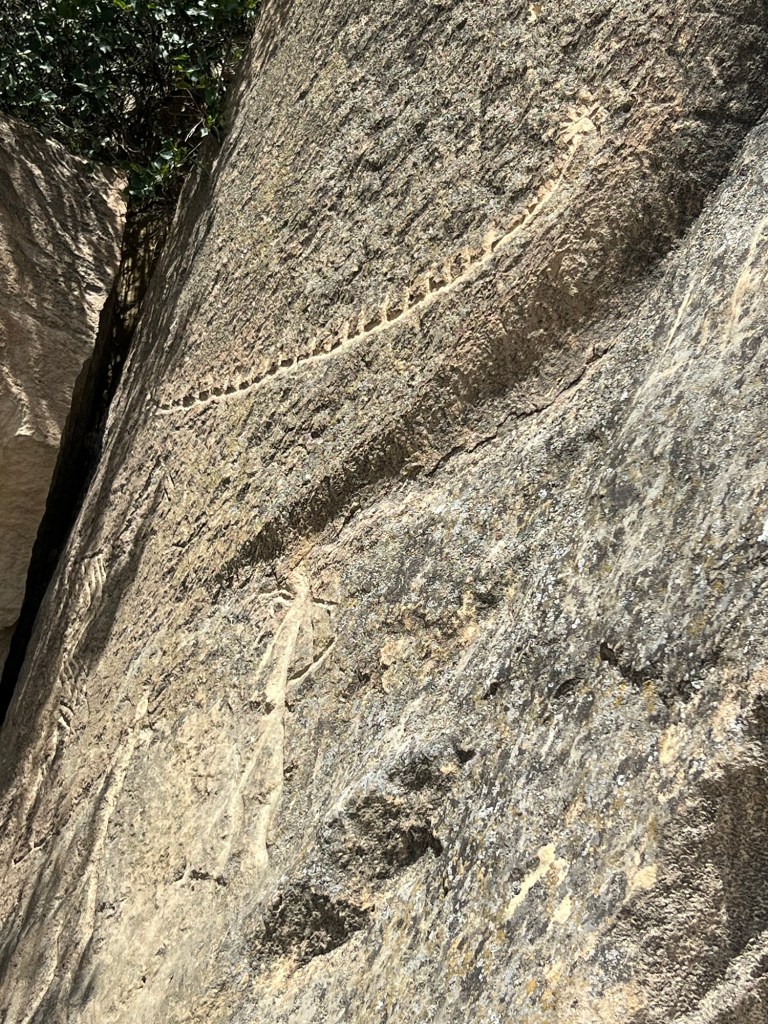
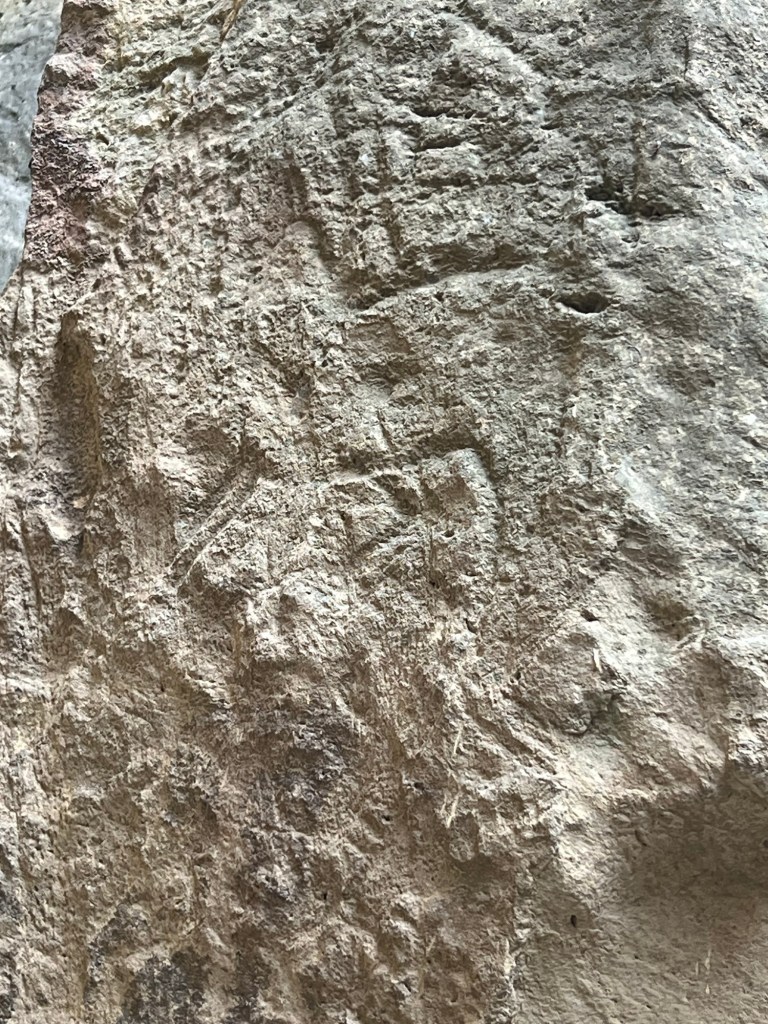
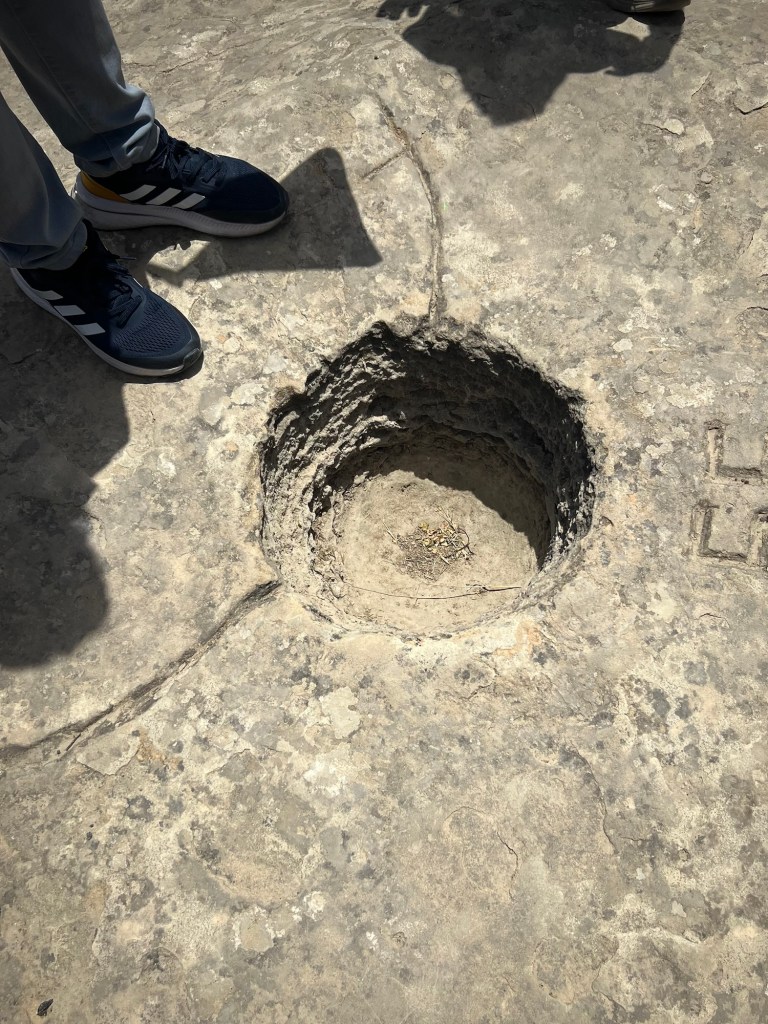
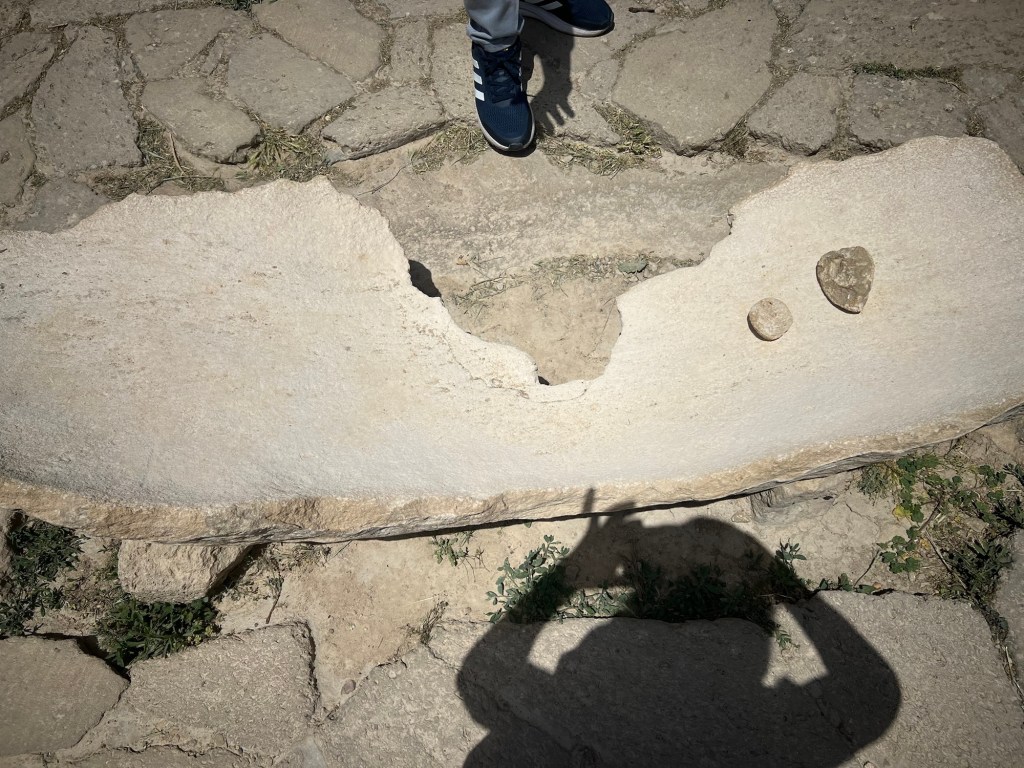
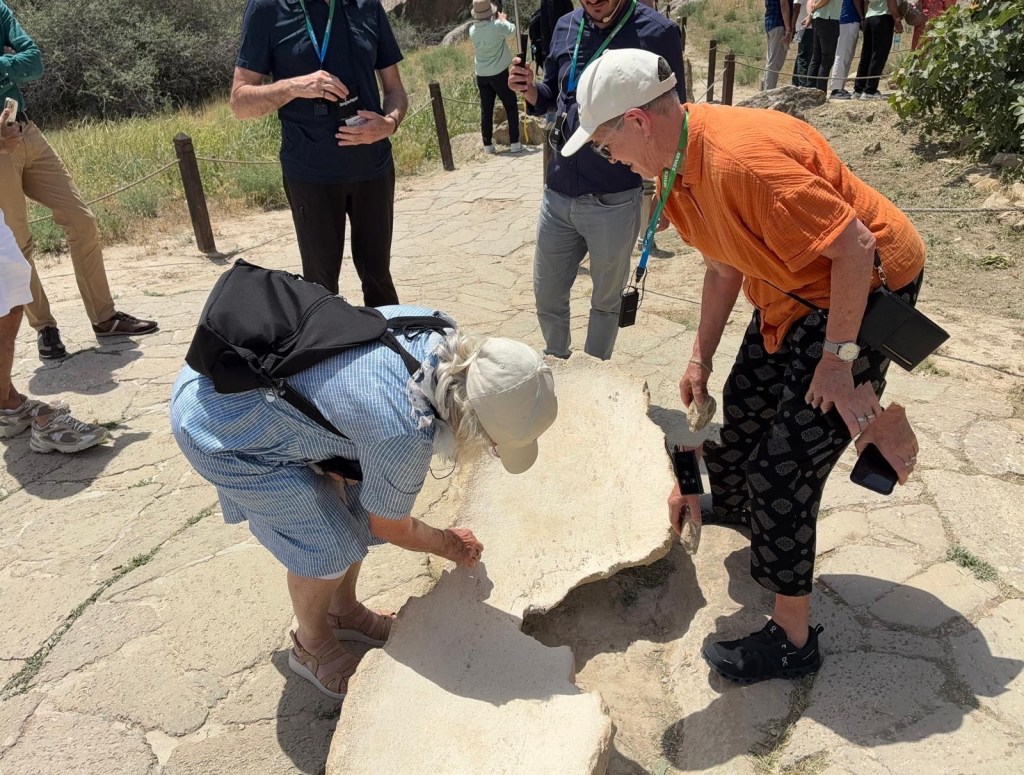
Within the park was another mountain with petroglyphs from ancient inhabitants. Hordes of tourists made this a bit of a chore in the heat but was quite interesting. The Soviets apparently had carved numbers beside the examples which Anne had assumed were part of the inscriptions! We all had a chuckle but you see so many marks made by stone that it was understandable to consider they were some other symbol that just happened to look like numbers to us!

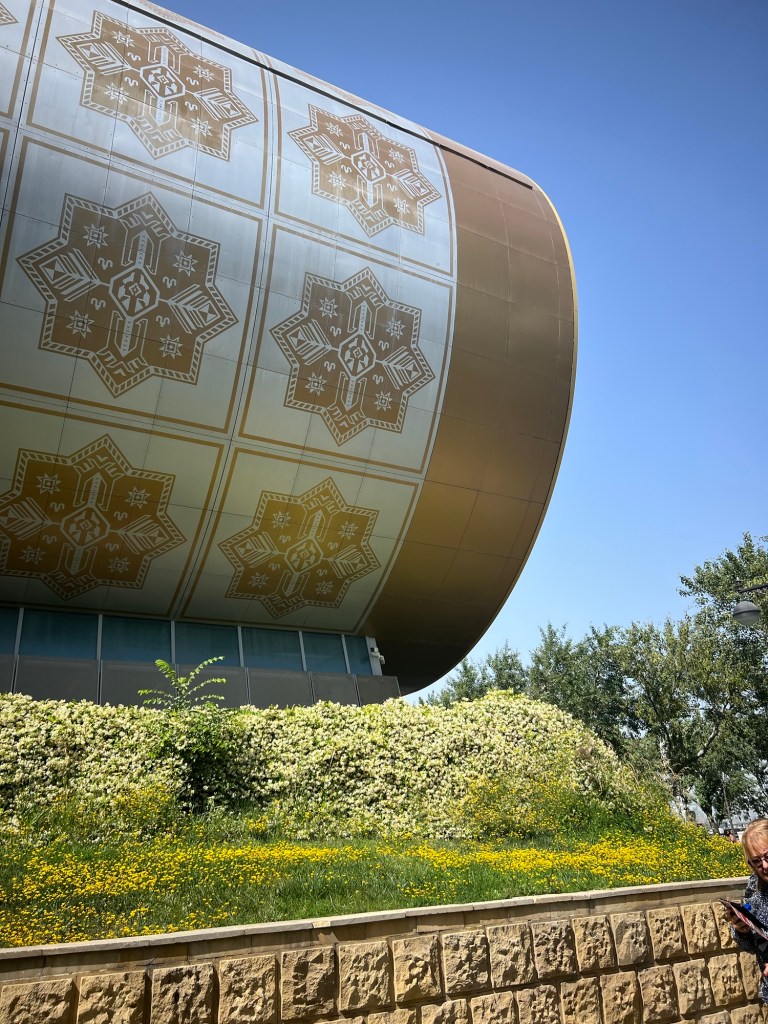
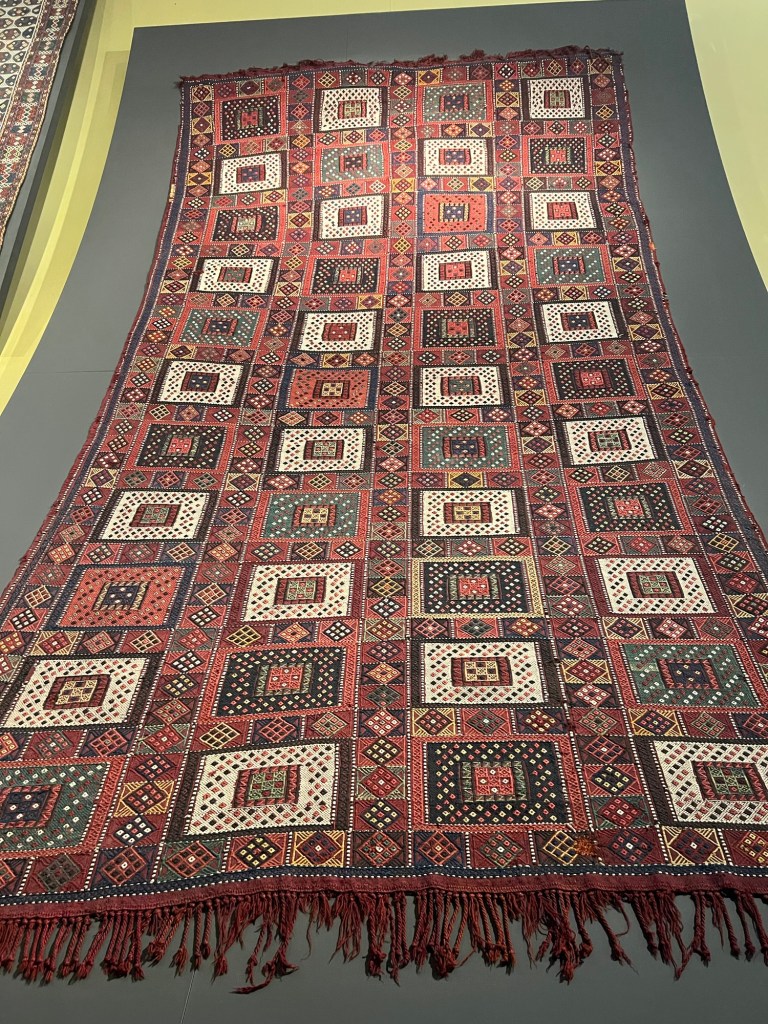
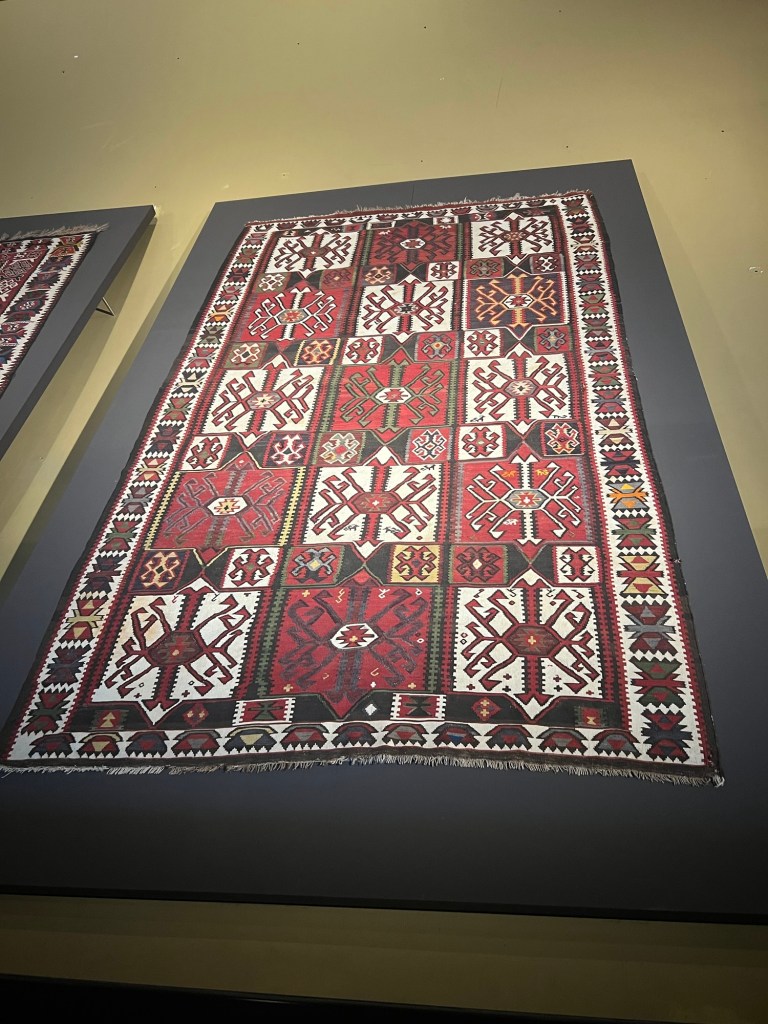
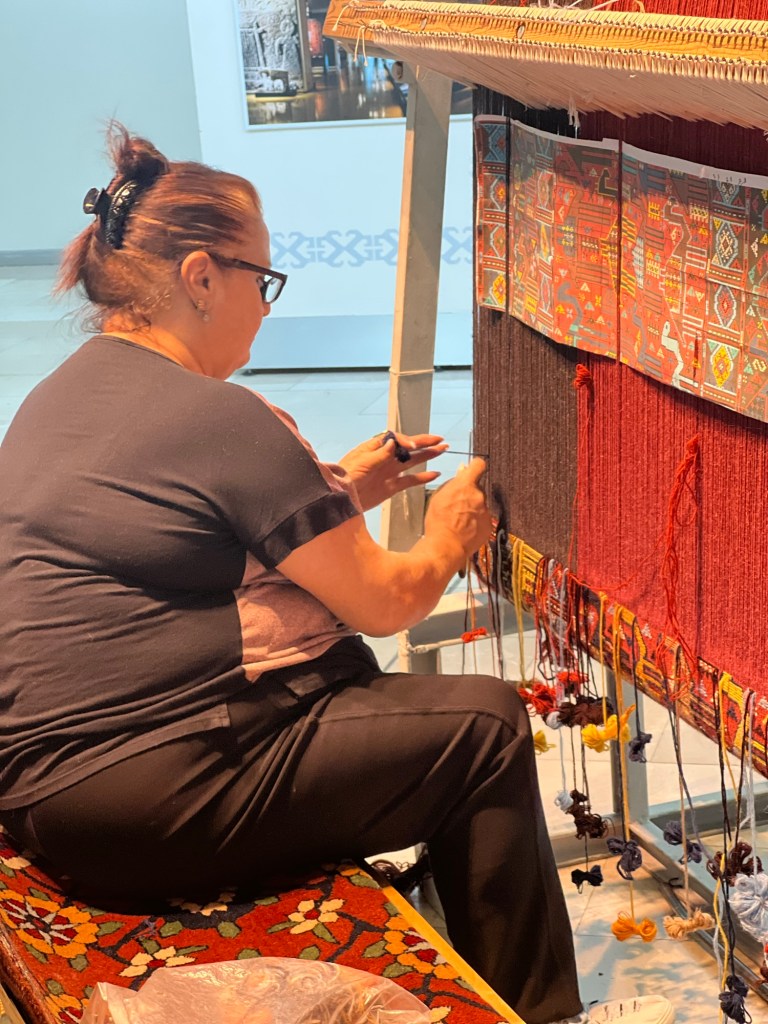
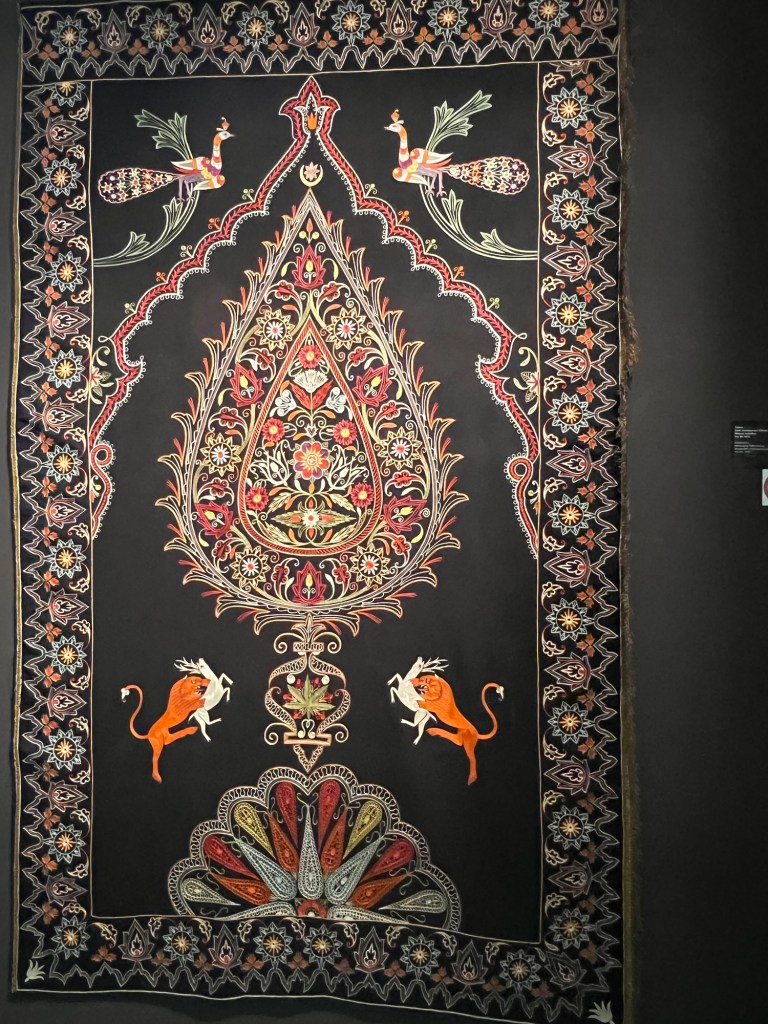
A more modern view of art and craft was evident at the Carpet museum, housed in a building built like a rolled up carpet!

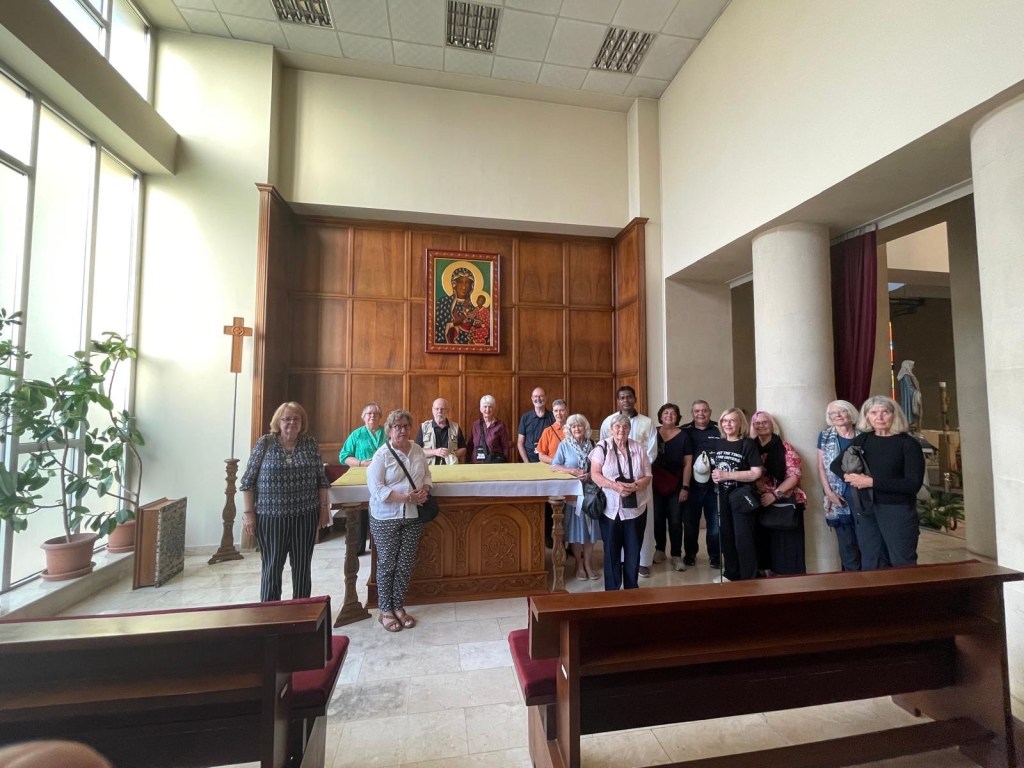
Another place that could have absorbed more time easily but we were off to do some souvenir shopping then a mass at the Catholic Church to finish our tour.

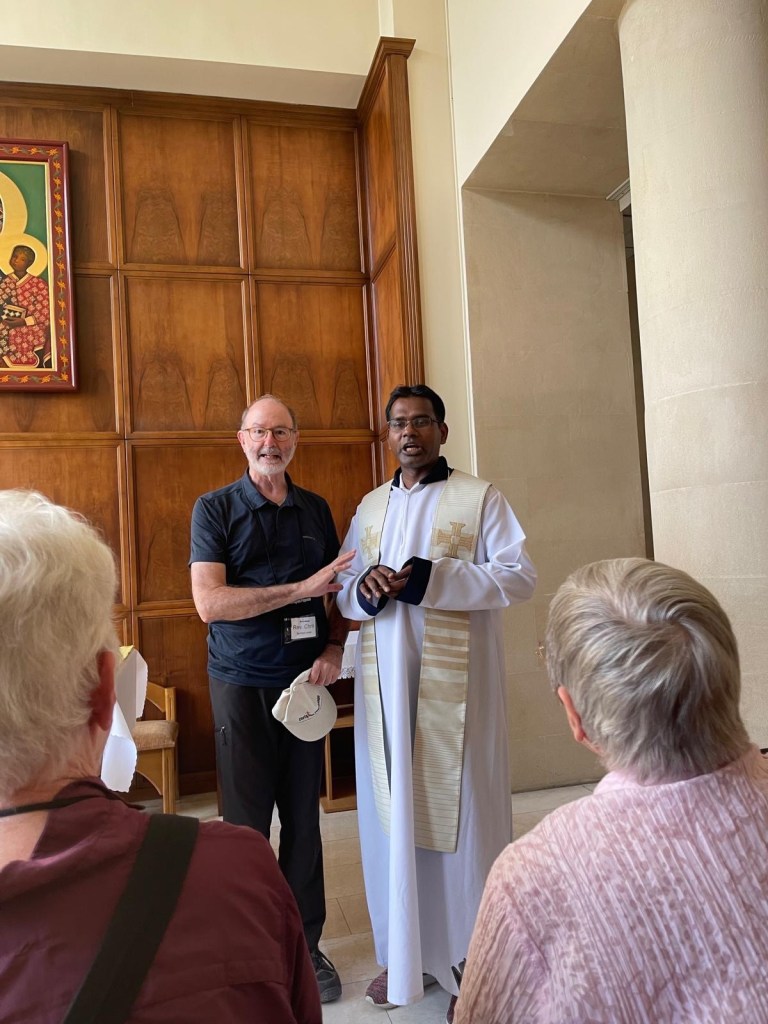
The priest was from the Silesian order in Chennai and he spoke of having a multicultural parish which consisted of 5 priests with a variety of languages. He was rather old school and we were blessed and given little tokens which he assured us would protect us against all dangers (a very big promise that John our tour leader asked us not to test!).

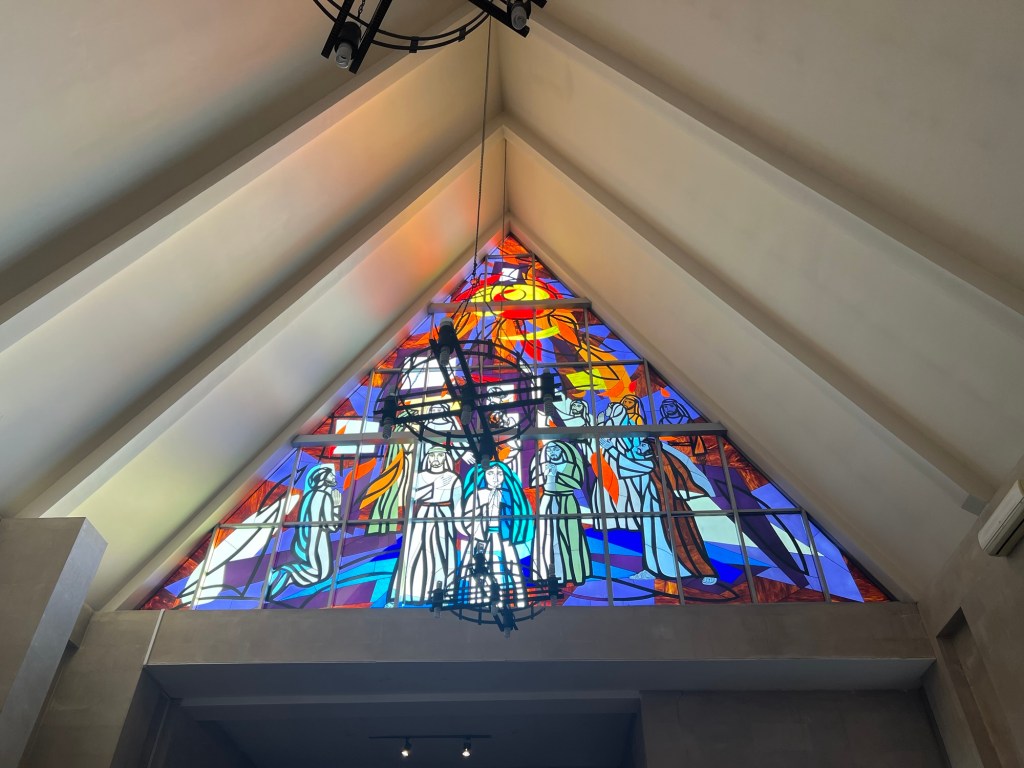
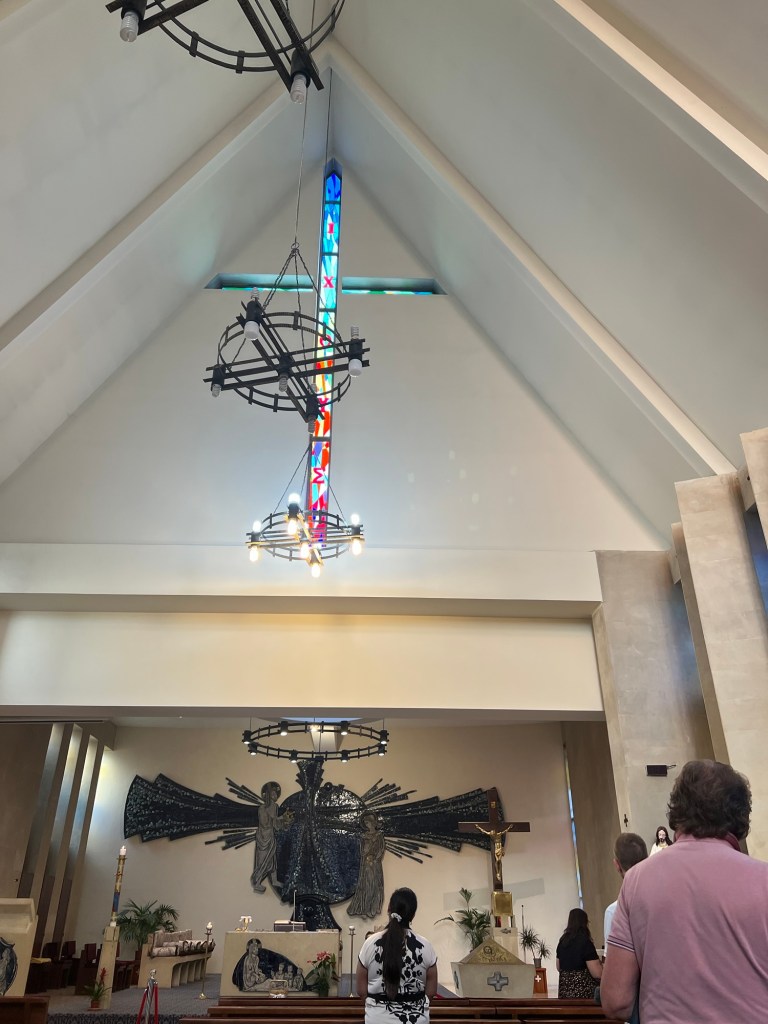
The church was very plain compared to all the orthodox churches and mosques we have visited but had beautiful stained glass.

Azeri dancers confirm their relationship to the Caucasus region- so like the Georgians we saw

Tonight was our last of the trip and so we were having a banquet with a surprise of local folk dancers. They were elegant and we were urged to get up. Anne, Randa and I obliged. It was fun but we had no idea what we were doing and in comparison to the dainty elegant female I am sure we looked like galumpers!

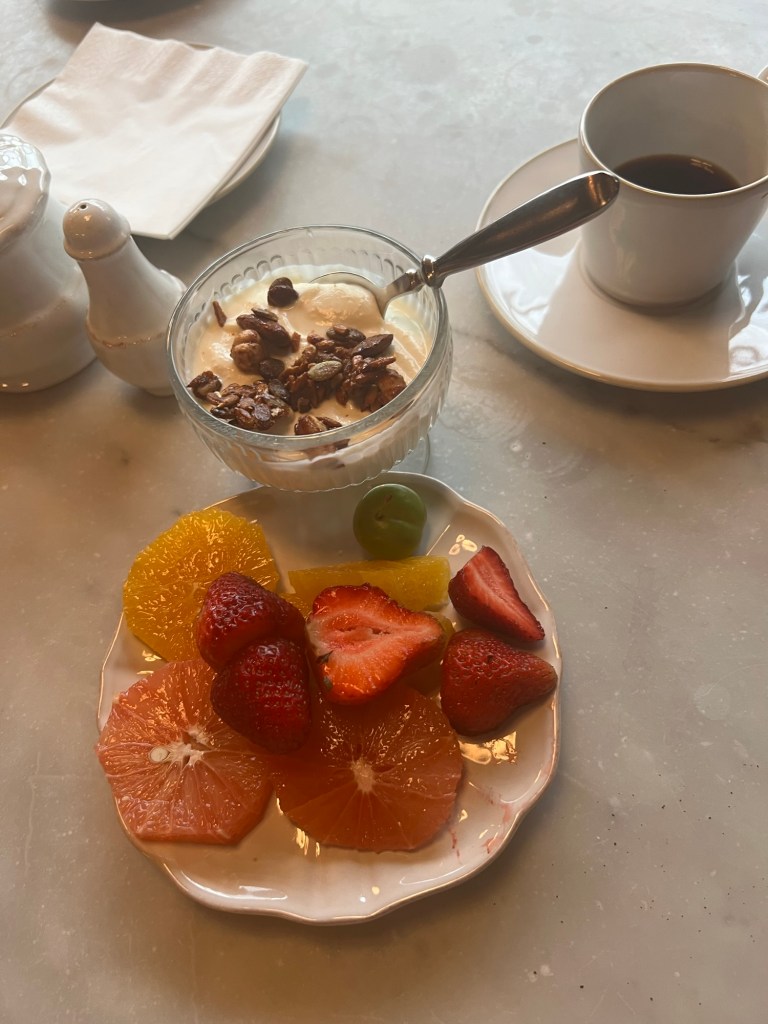
Next morning at breakfast we noted some of the mistakes in translation.

Some exploits of our travels: such as the taxi without an extra seat that didn’t deter the ever cheerful Beryl, who quietly climbed into the boot of the hatchback!

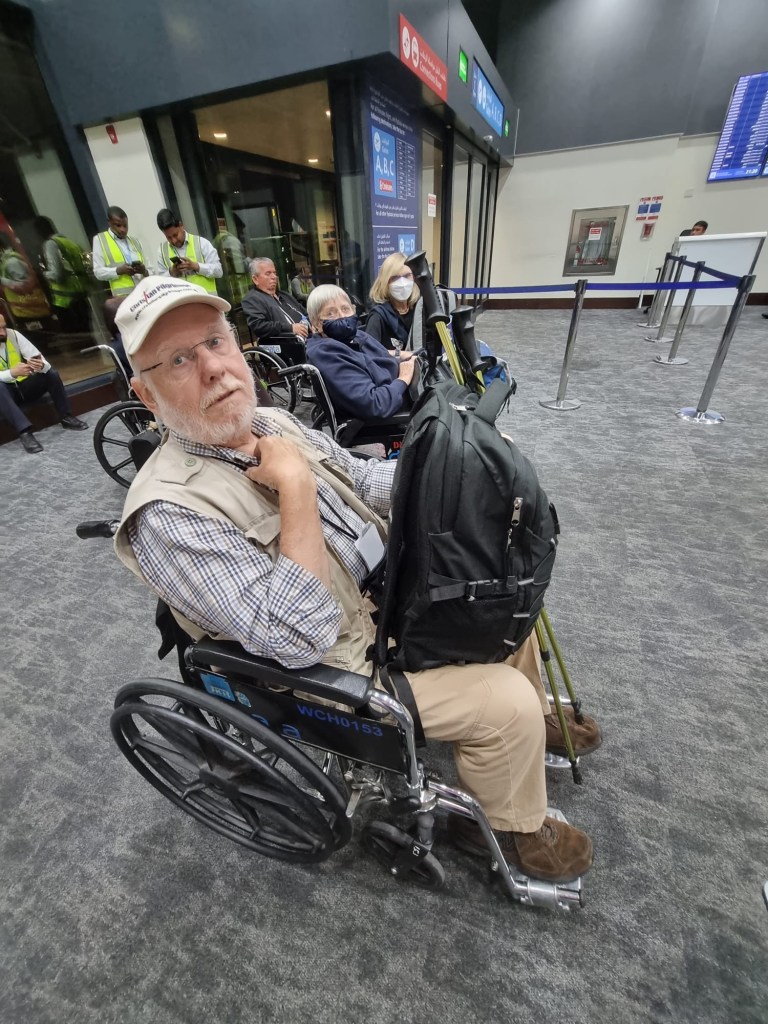
Ray who had back problems but came to ensure his wife would have this trip and was always cheerful and great company, despite his physical discomfort.

Always queued for the pit stops.

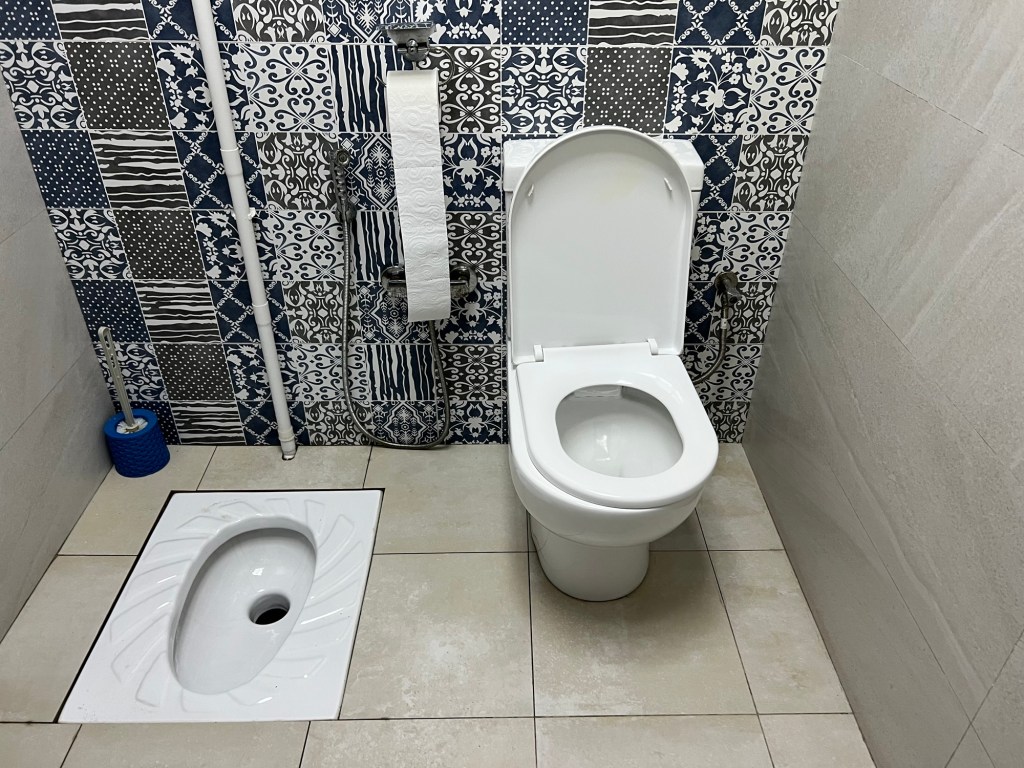
The toilets that surprised:

Customer service exemplary! A choice of styles.

Toilets are always a challenge when travelling and we came across a few that left a lot to be desired. For those that aren’t used to squatting some where just a bend too far! This was a pleasant surprise at a lunch stop in Guba( Quba).

Service when we could pay individually was common and not the effort it often is here in Australia.

Our last night at Baku caused Anne some anxiety when she couldn’t find her house keys or credit cards. I said we need to call on St Anthony and quoted a chant Trish ( in our group) swore by.

‘St Anthony full of grace please reveal the hiding place.’

Sure enough next morning when Anne went into the bathroom it suddenly occurred to her where she hadn’t looked and there were her keys and cards!

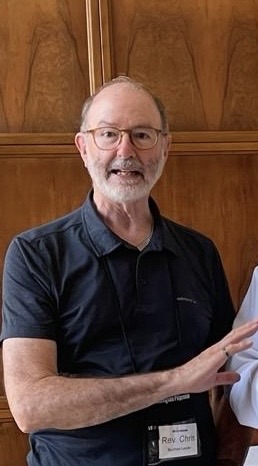
Our spiritual guide was alarmed when we joked about no choice in the attendance of morning prayers on the bus. We were trapped. He had no wish to force anyone. I reassured him I was joking! Chris was very relieved. It was a meaningful part of the experience that added an extra dimension to our explorations. His willingness to engage in discussion with our Orthodox and Muslim guides on differences and similarities across faiths was enlightening.

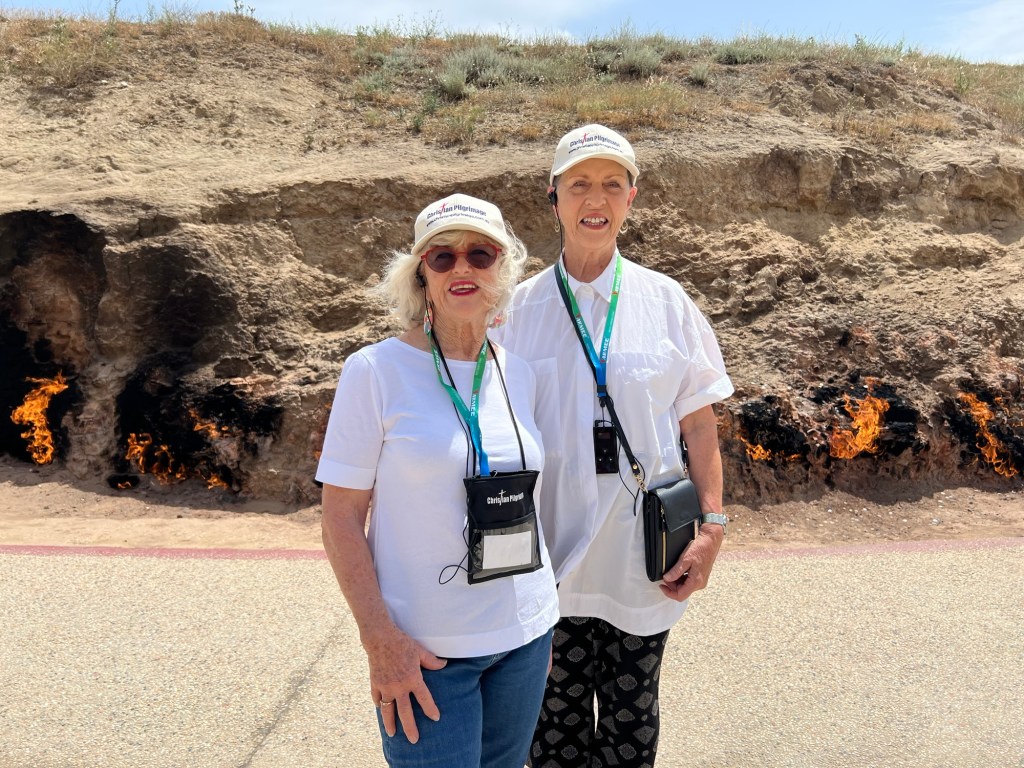
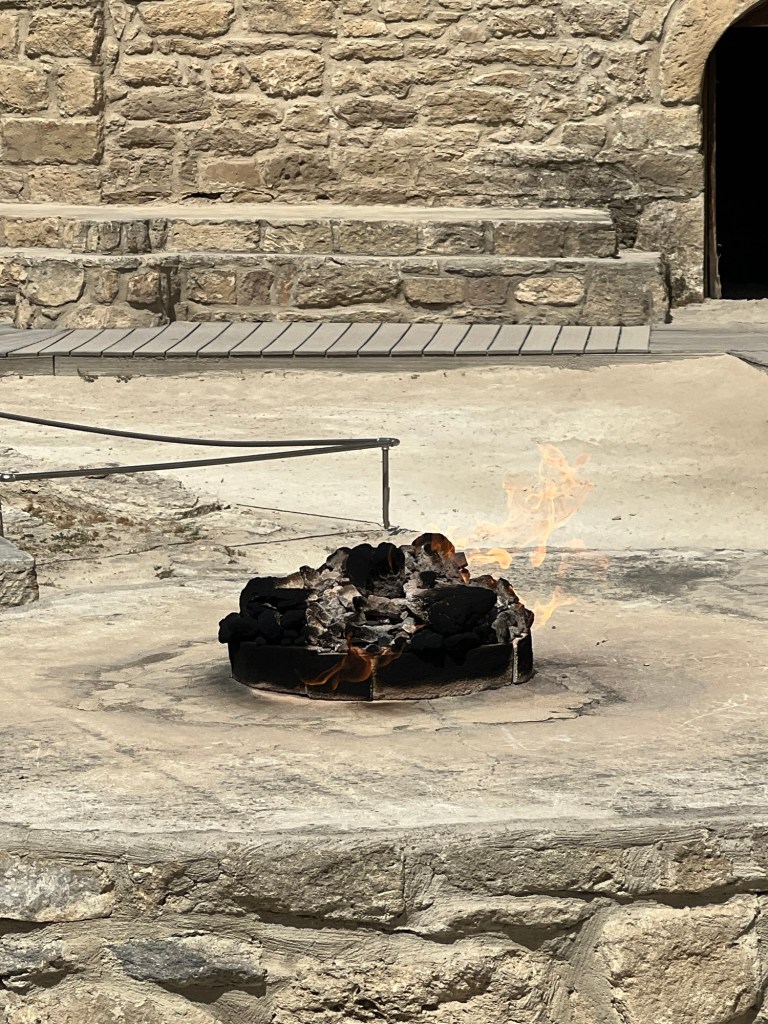
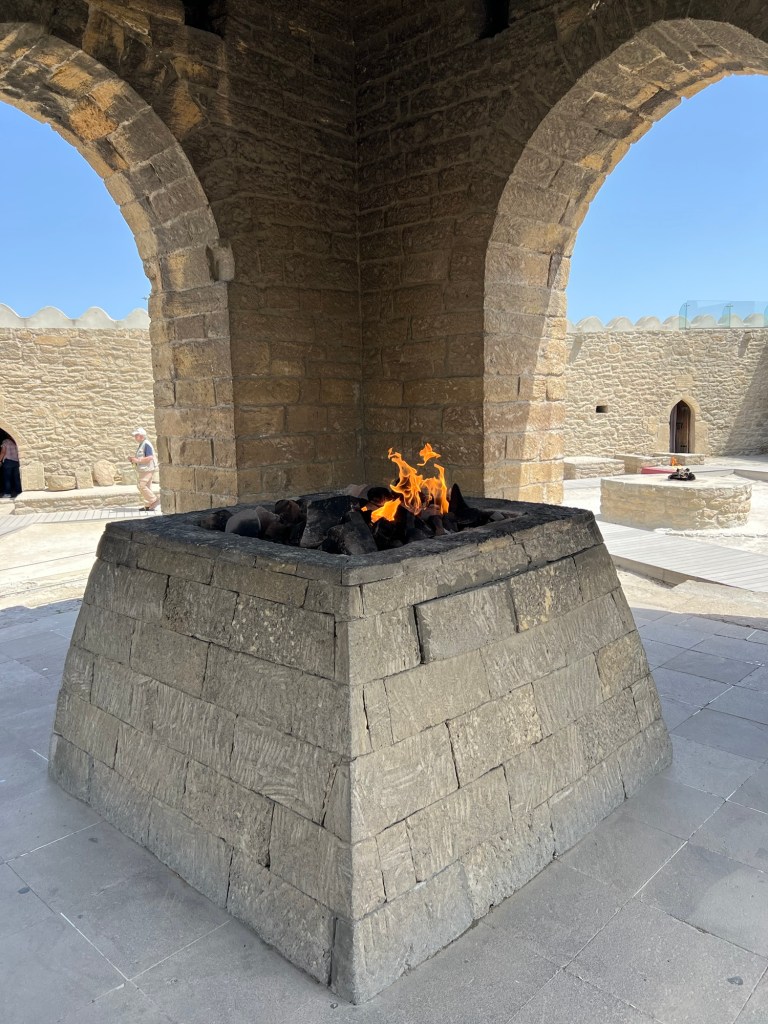
At fire mountain

It is a surreal experience to see flames coming out of the ground and it isn’t a bush fire!

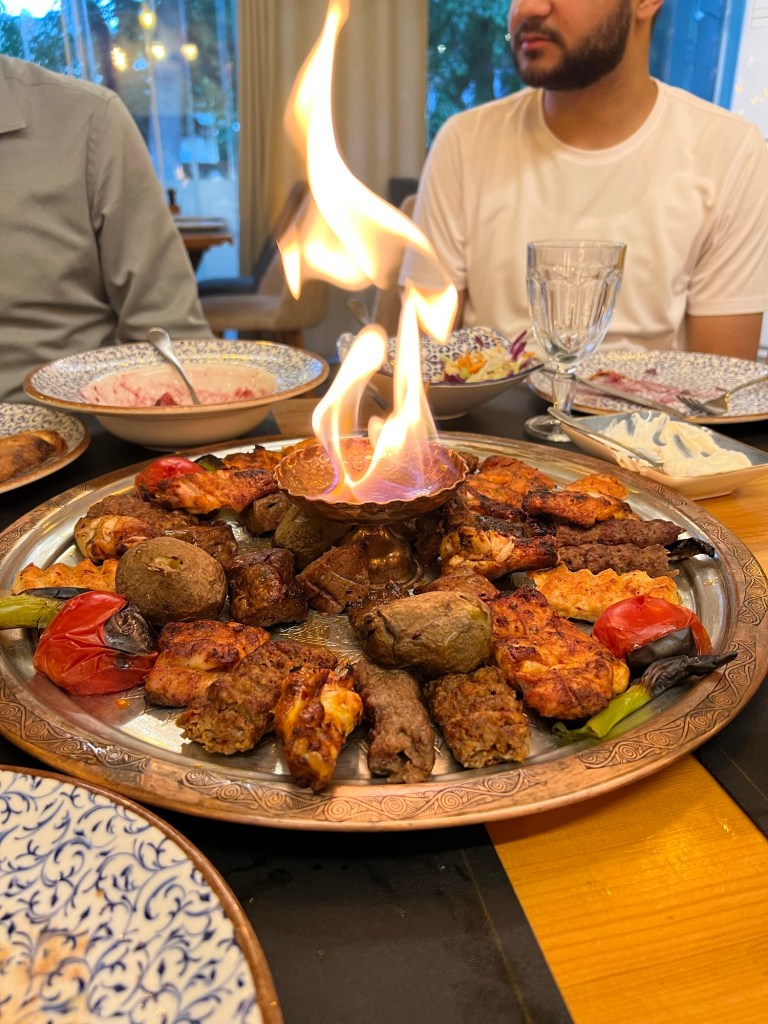
Many meat dishes in Azerbaijan came with flames.

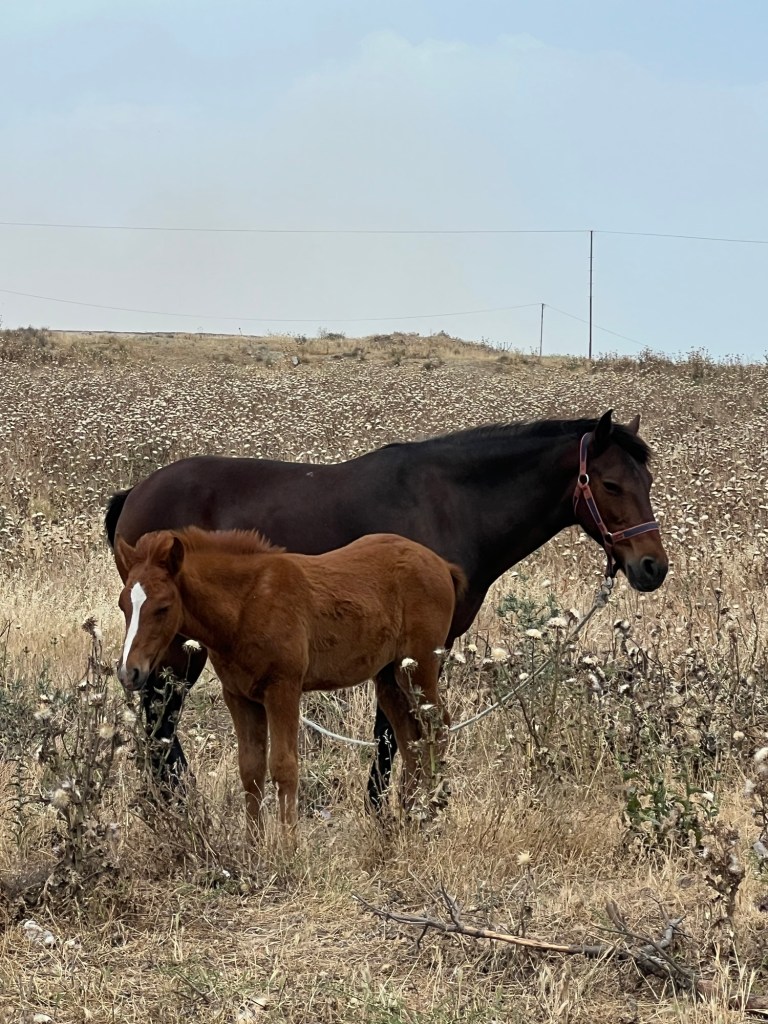
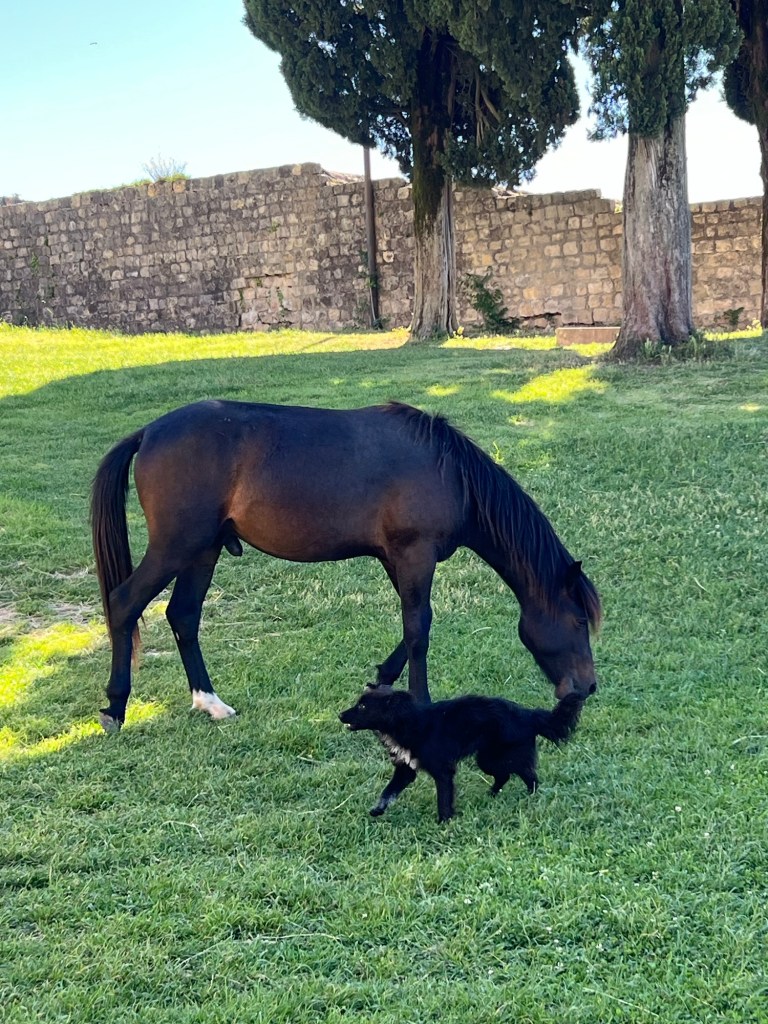
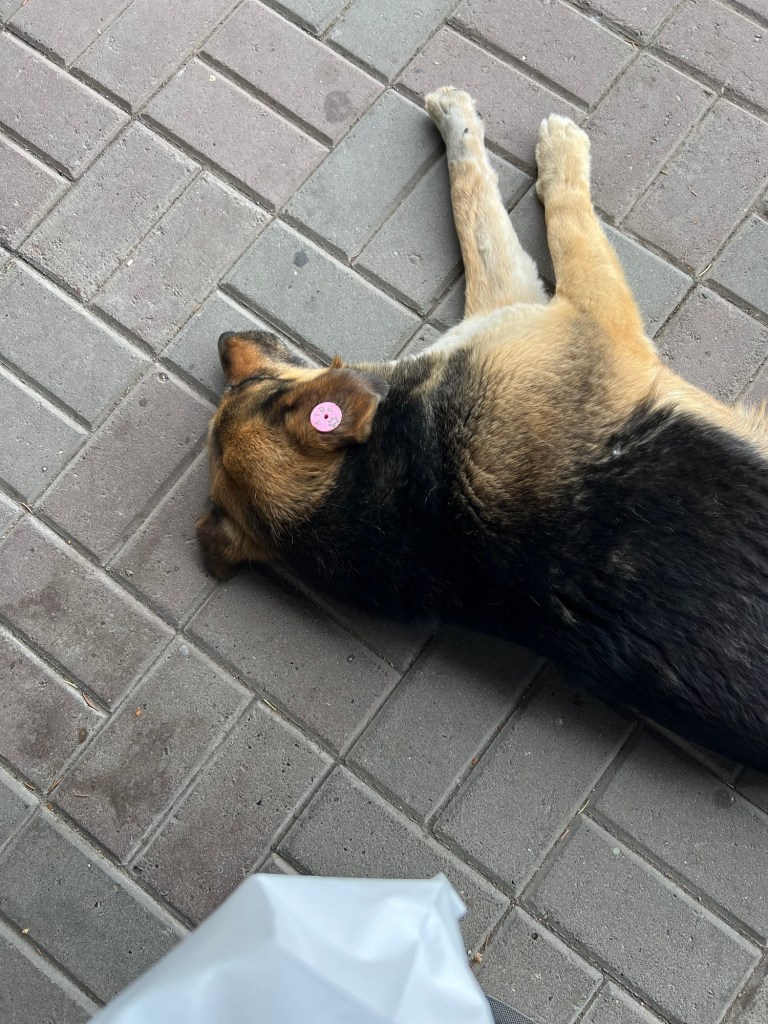
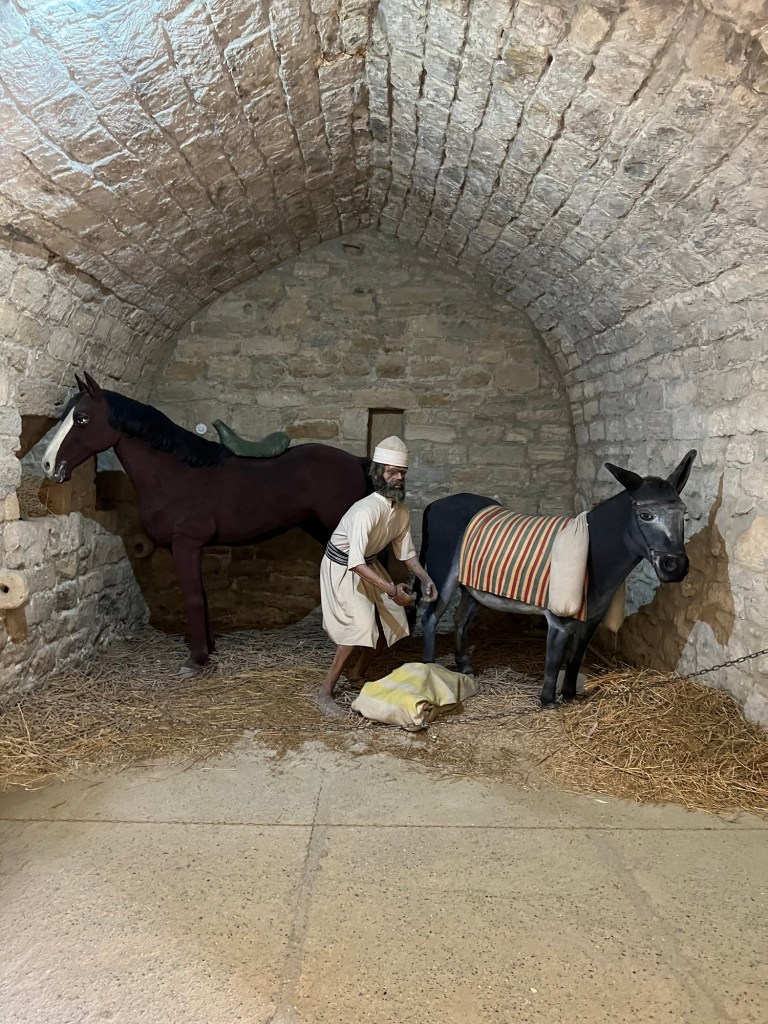
In all countries we visited, animals roamed freely, big and small, healthy and happy.

This has been a wonderful experience exploring countries so unknown and so politically challenged, historically and even presently. History is ever present and intertwined with faith, humanity and politics.

To meet a group of people who were completely unknown to us under the auspices of a Christian Pilgrimage raised a few eyebrows when we told our friends, but our trust in John and Randa was justified by finding our companions well travelled, interesting, humorous, kind and helpful human beings. I thank you all for the companionship and friendship we have found.

Thursday Baku and Quba

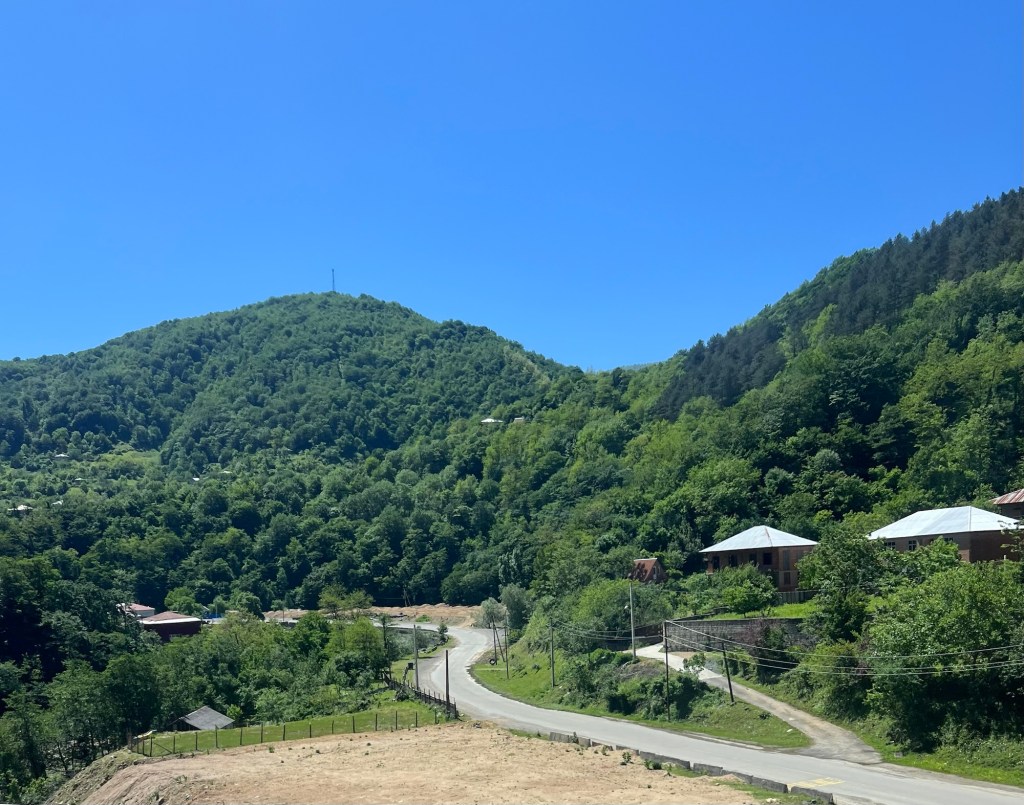
Today was a venture into the country side. What a contrast to around Baku. Outside of Baku is like desert and there are Donkeys( oil wells) and gas towers but as soon as you go towards the hills everything changes. It looks more like Georgia.

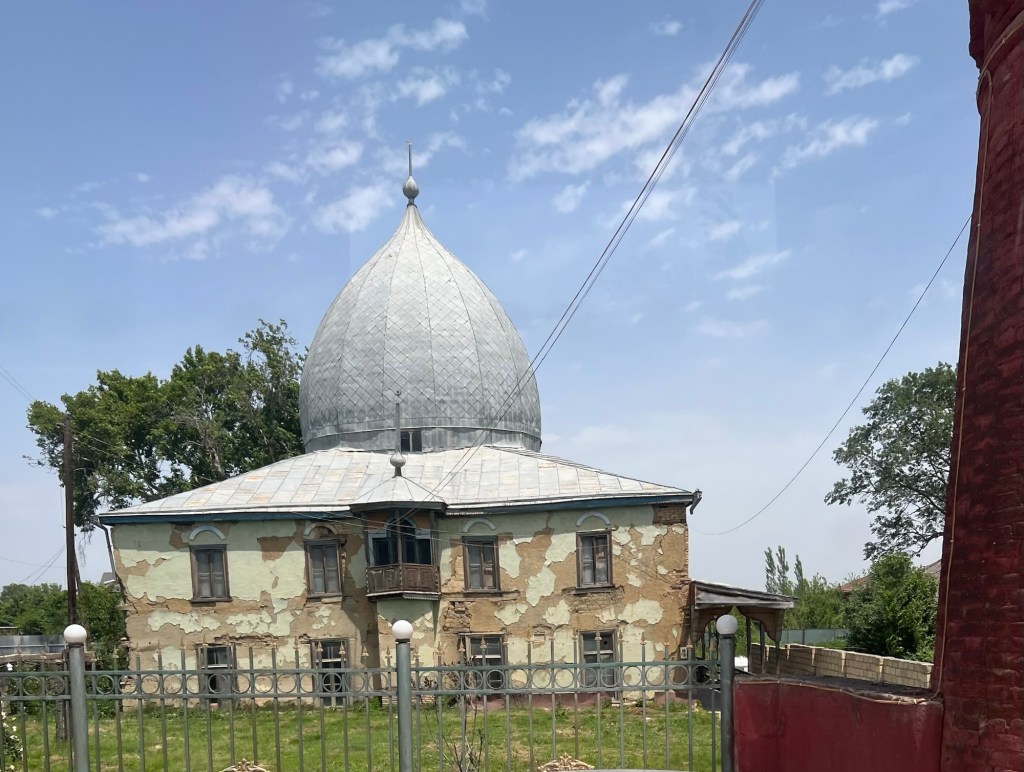
As we entered Quba to visit the Mosque we passed a former Mosque which was very quaint.

Abandoned or repurposed?

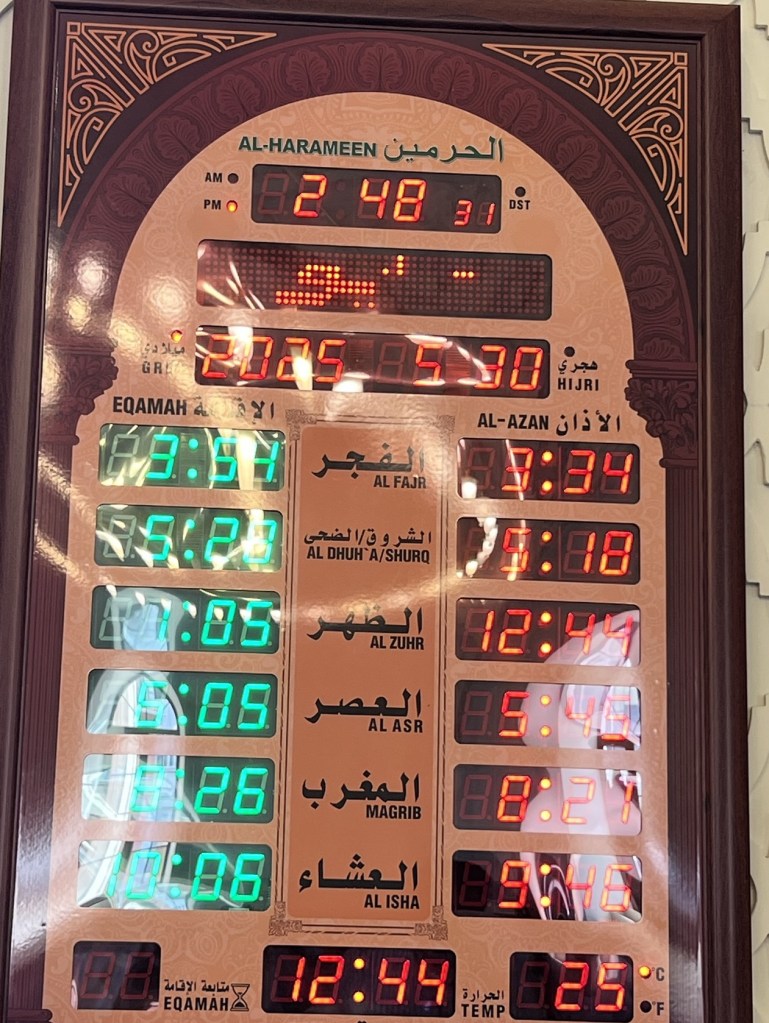
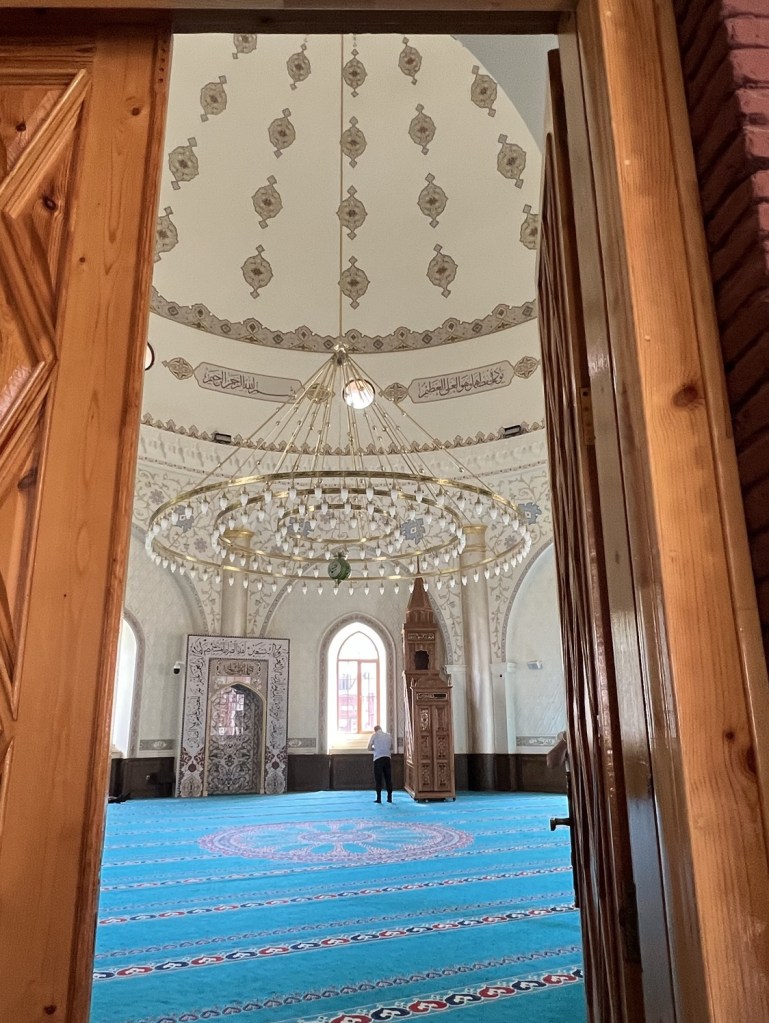
The new Mosque was built with the help of a Turkish group. It is traditional in colour and beautifully tranquil inside with a glorious aqua carpet. On the wall was an illuminated sign which at first glance looked like the money exchange rates but of course they were the prayer times!

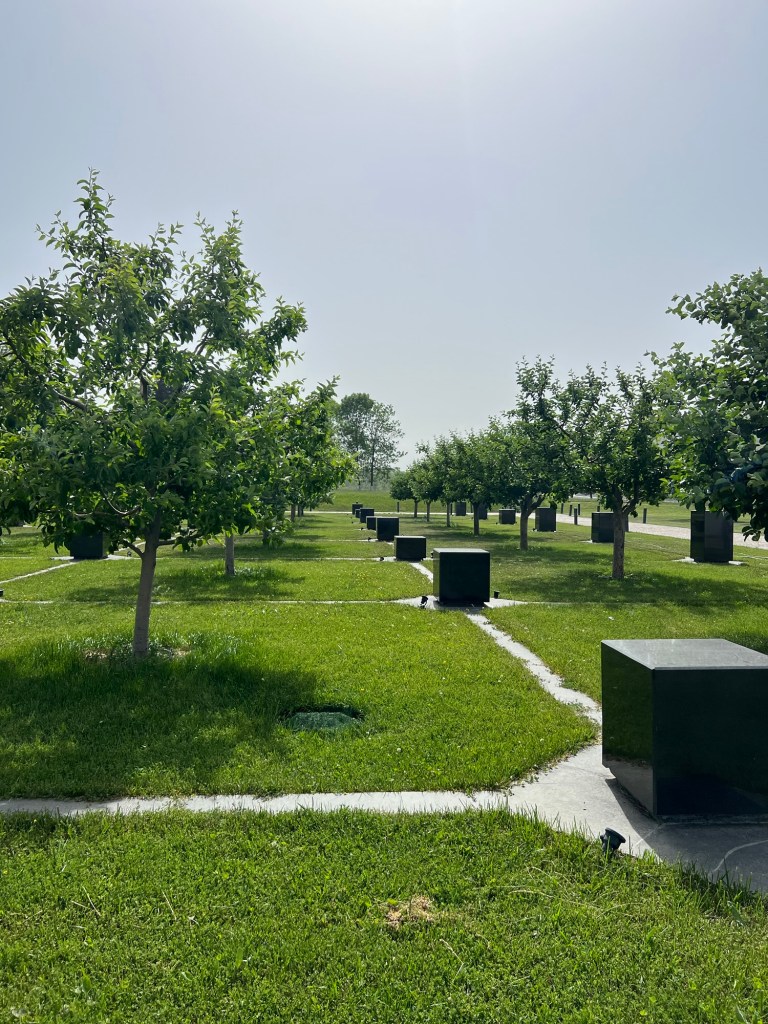
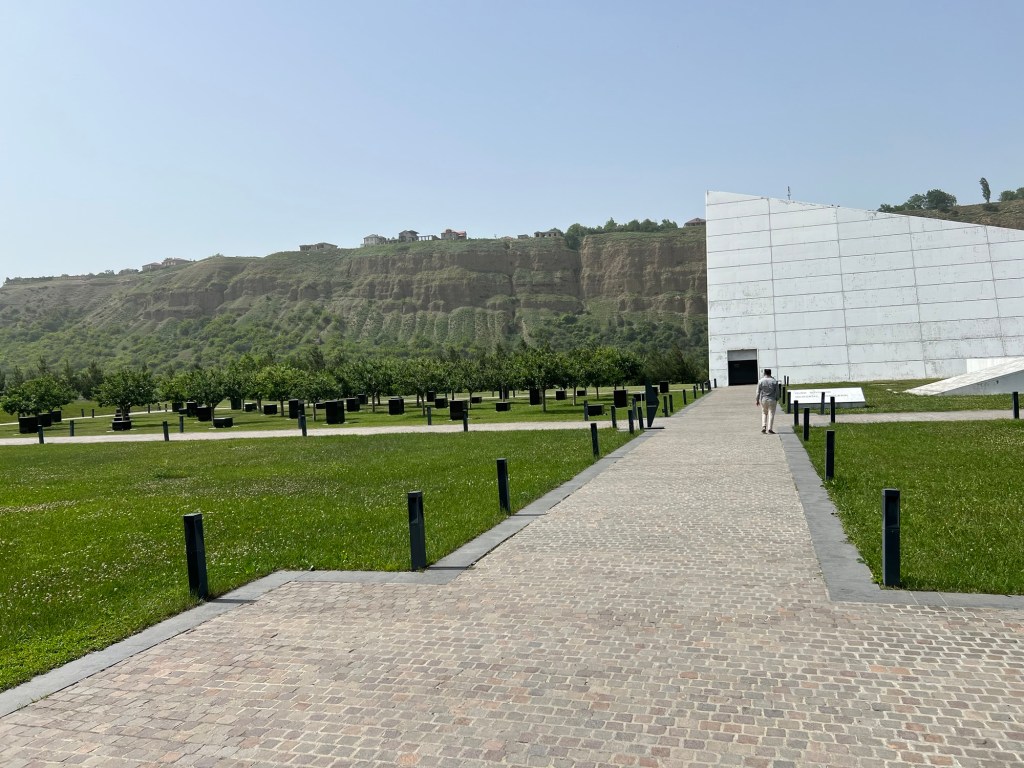
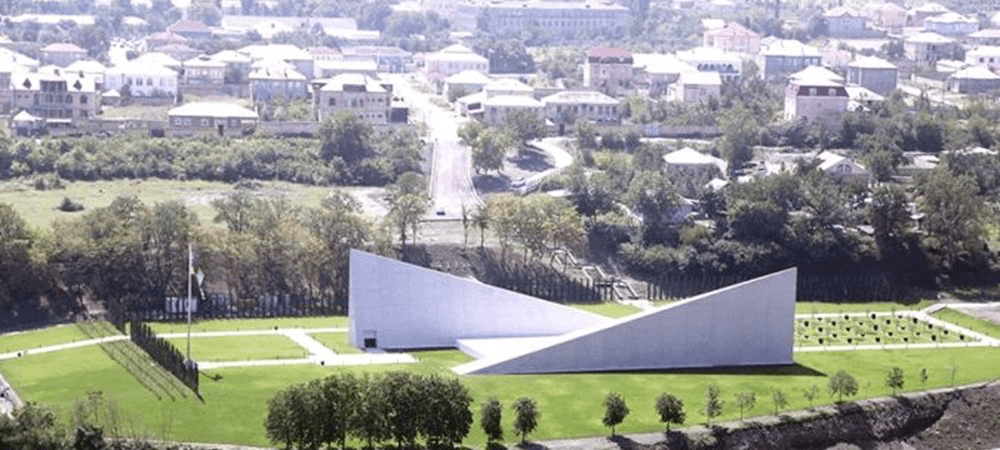
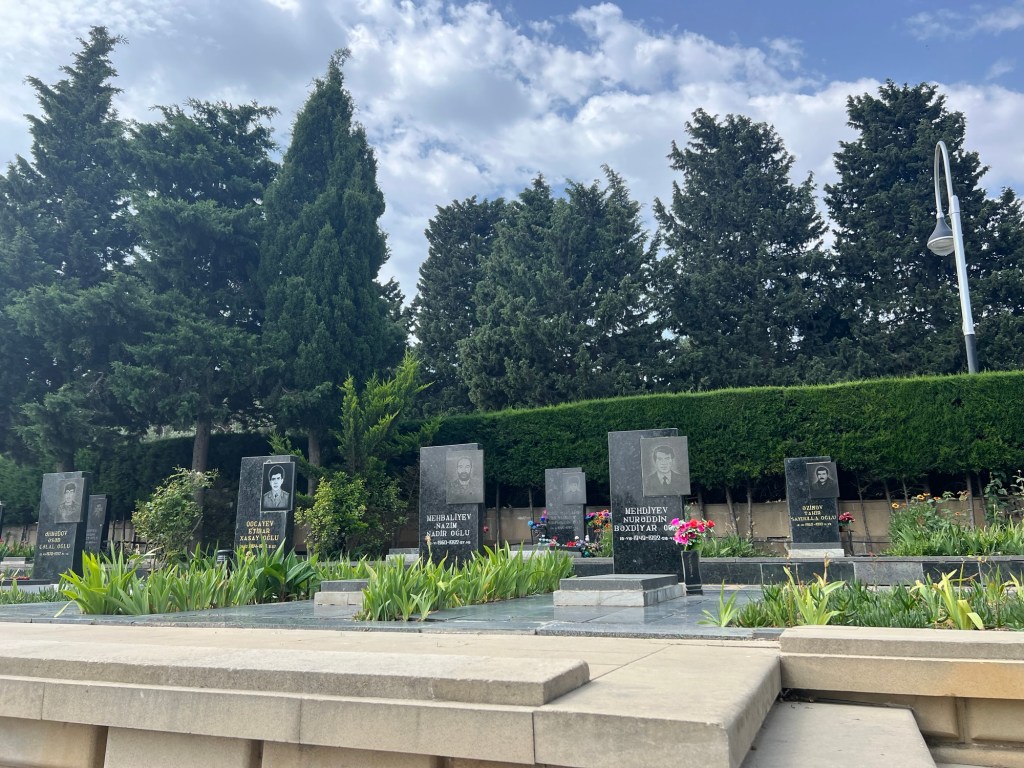
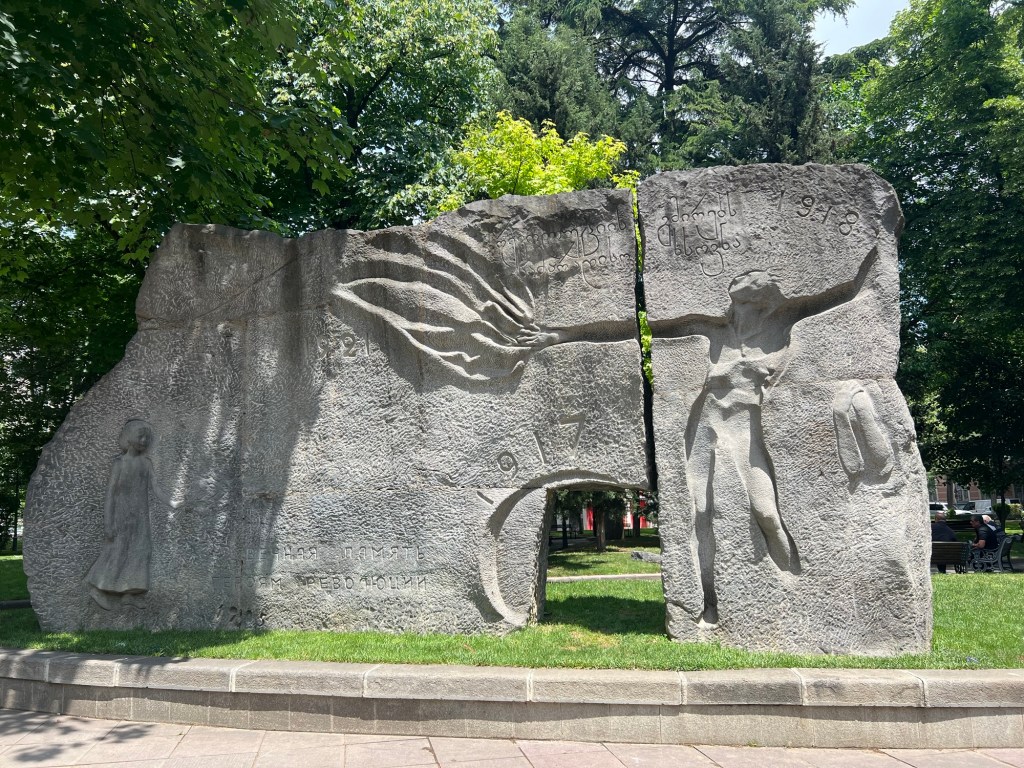
Our next stop was the Genocide Memorial Complex in Guba city (Quba) constructed in 2012-2013. This memorial commemorates the massacre of many villagers in Azerbaijan by Armenians under the Bolshevik name in 1918. Later the perpetrators were lauded as heroes by the Soviet Union. The history was distorted and after independence when the real facts were revealed the monuments to those false heroes were removed from Baku and replaced by the gardens that line the coastal path. The sharp angles of the monument express the severity of the suffering. The way to the surface from underground symbolises the impossibility of hiding the truth.

This memorial was a poignant reminder of the difficulties the three countries have experienced. Much of the division was perpetuated and stoked by the Soviet Union. They moved populations to disperse their culture and enforce control. These issues are so hard for us (white Australians) to grasp. I think many First Nations Australians would understand.

This Memorial was a sombre tribute to explore. The boxes in the garden were all different shapes to indicate the ages of the people slaughtered. The trees were apple trees that are symbols of the area and hope for the future.

The actual massacre site was discovered during construction works in the area. After research in 2007 the identities of the victims were identified.

This cast a serious feeling over all of us and we all spent the trip home reflecting on the continual stress and threat with which these three countries struggle.

On the return trip to lighten the mood Anne and I challenged the bus with the Age newspaper weekend super quiz. Anne and I do this with friends every week. So it was a chance to increase our ‘brains trust’! It was a great diversion and I became the regular quiz leader on long bus trips. We discovered areas of strength amongst the group. Ray was great on military history and warfare, Monica was excellent with Geography and the rest all contributed so we managed scores in the 20s. A better result than I get on my own!

Another included dinner tonight so when we arrived back at the hotel, it was a quick freshen up and off we went to dinner.

Another salads and grilled meat meal that was so generous we felt obliged to eat. I felt like a stuffed whale and when Anne and I got back to our room I fell asleep fully clothed for a half hour or so!

On the way to our restaurant,

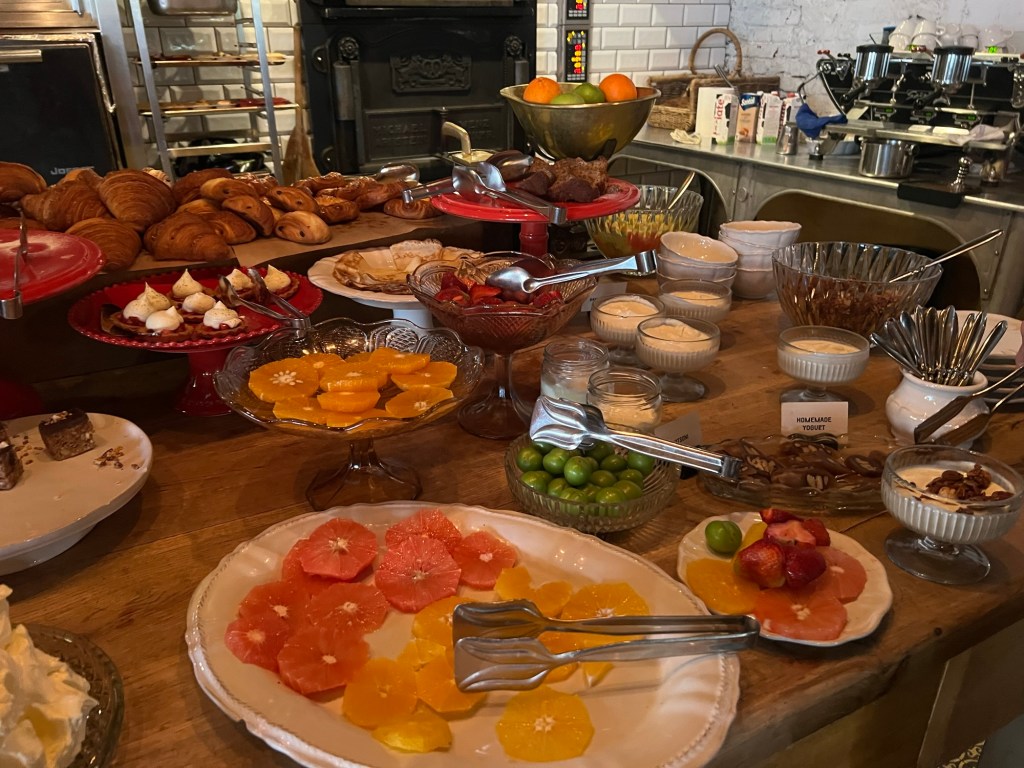
Restaurants here are very generous with portions and while a lot is salads I am sure I am putting on ‘condition’! The breakfast spreads are also very savoury and diverse. Barely a cereal bowl to be seen though it is offered. I like all the salads at breakfast. I started to do that a bit before I left on this trip and I enjoy the variety. But it is so easy to fill a plate. I haven’t had toast at all though I crave it. Gluten free bread is rare.

Baku Azerbaijan

This account is a bit of a hotch potch of impressions and information.

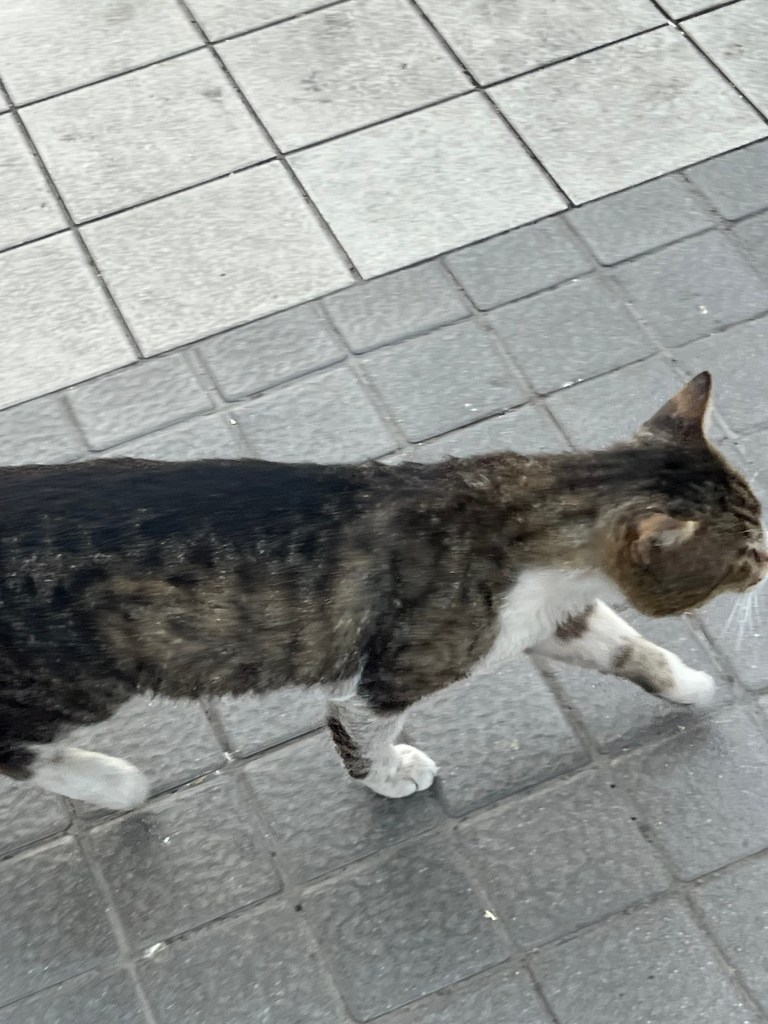
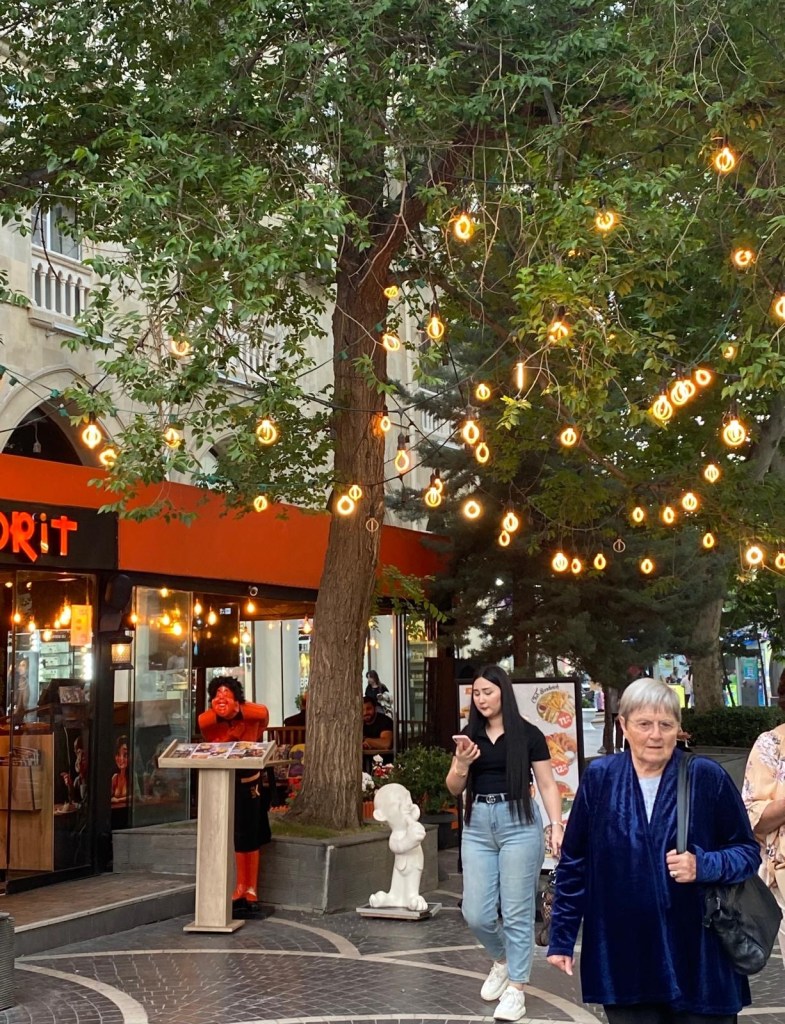
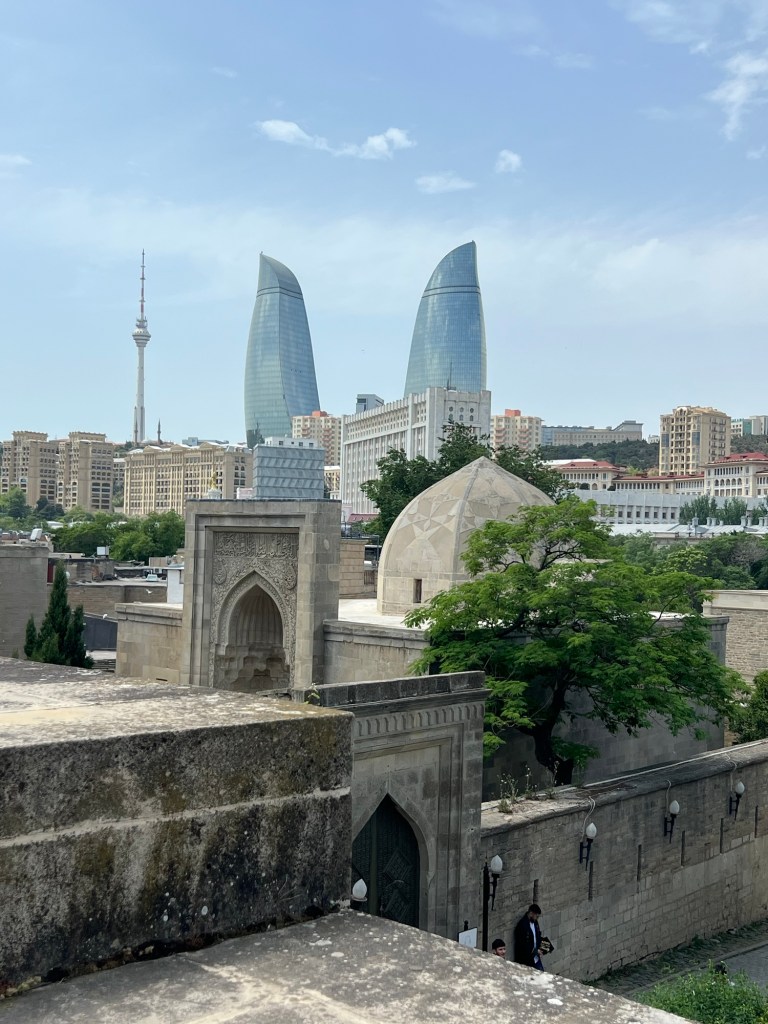
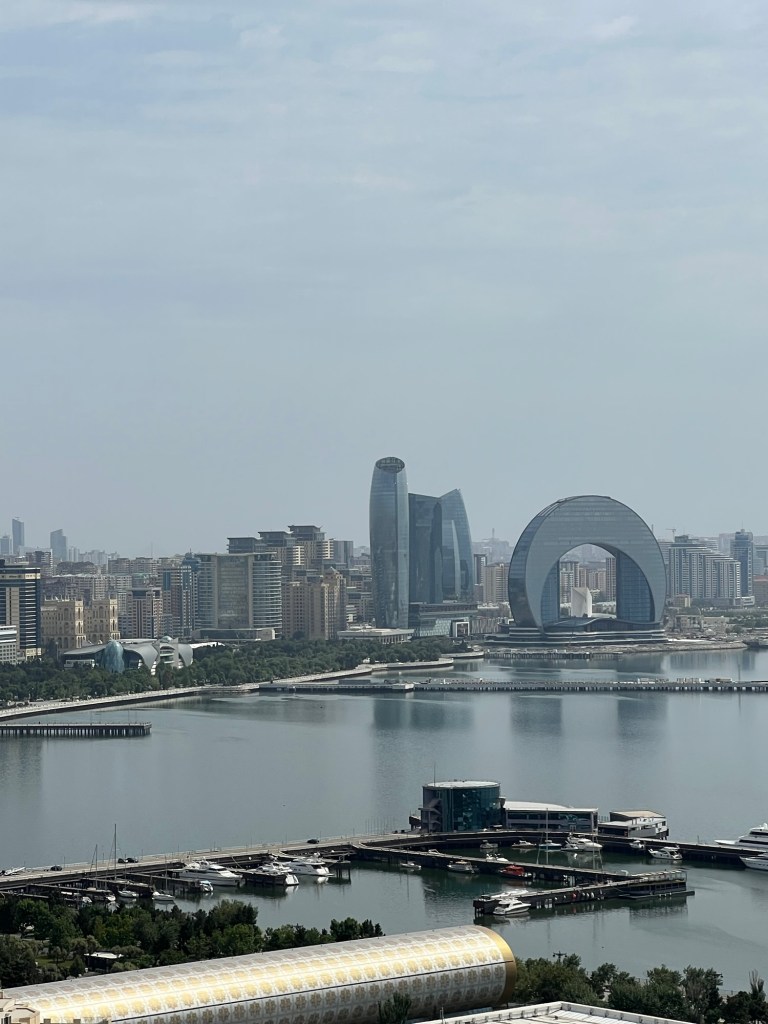
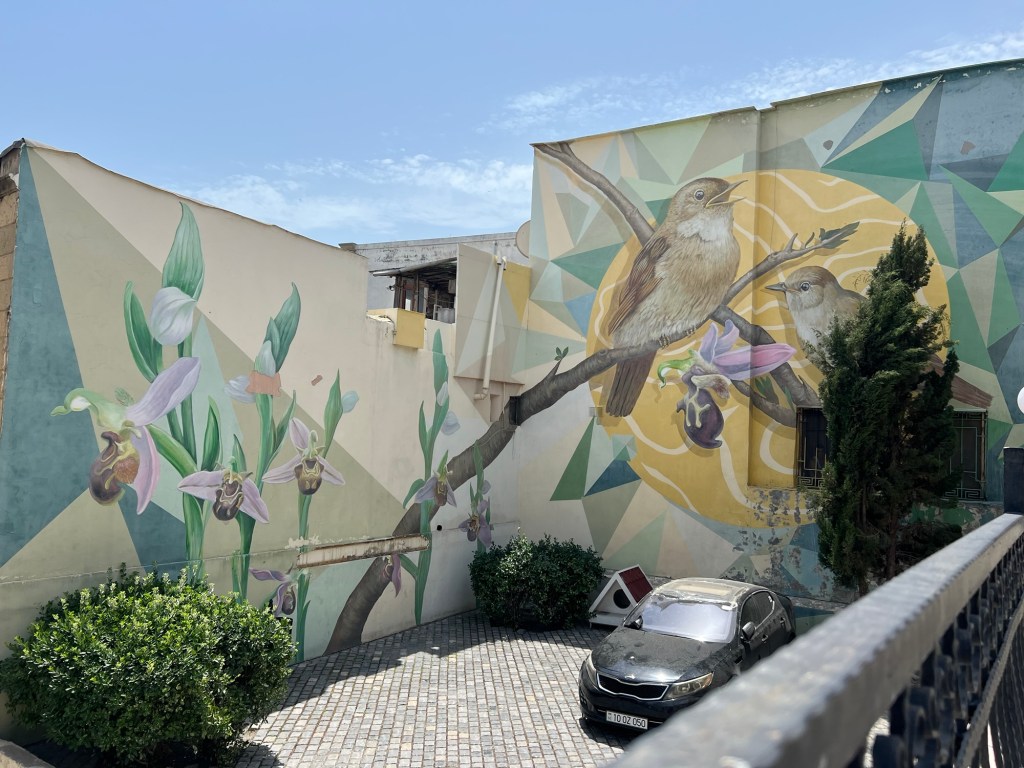
What an amazing surprise. I had seen the famous flame buildings in photos but had no idea the city was so modern and European looking. Also different is the stray animals are cats not dogs! There are little cat houses everywhere and the community feeds them. We have seen kittens frequently.

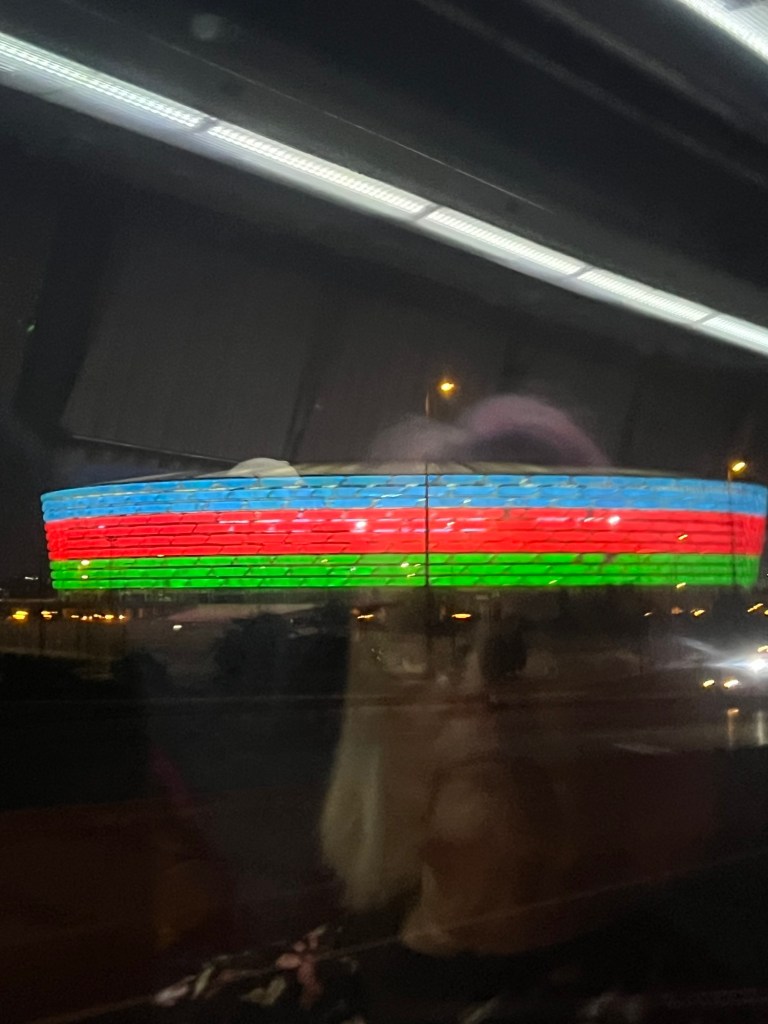
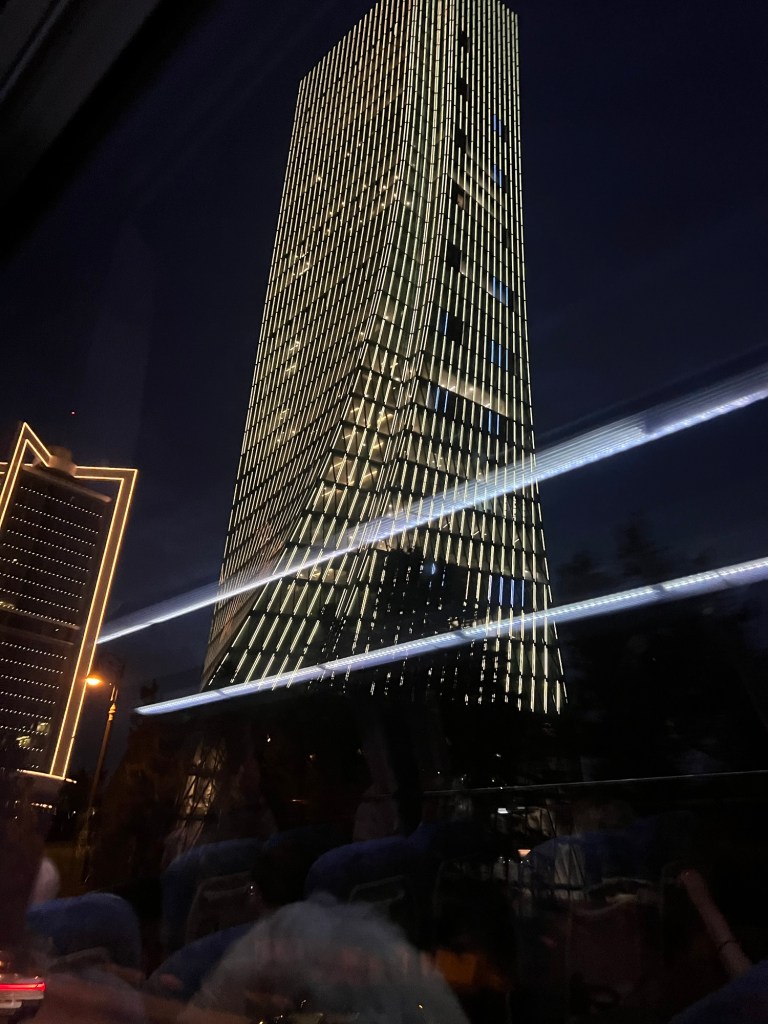
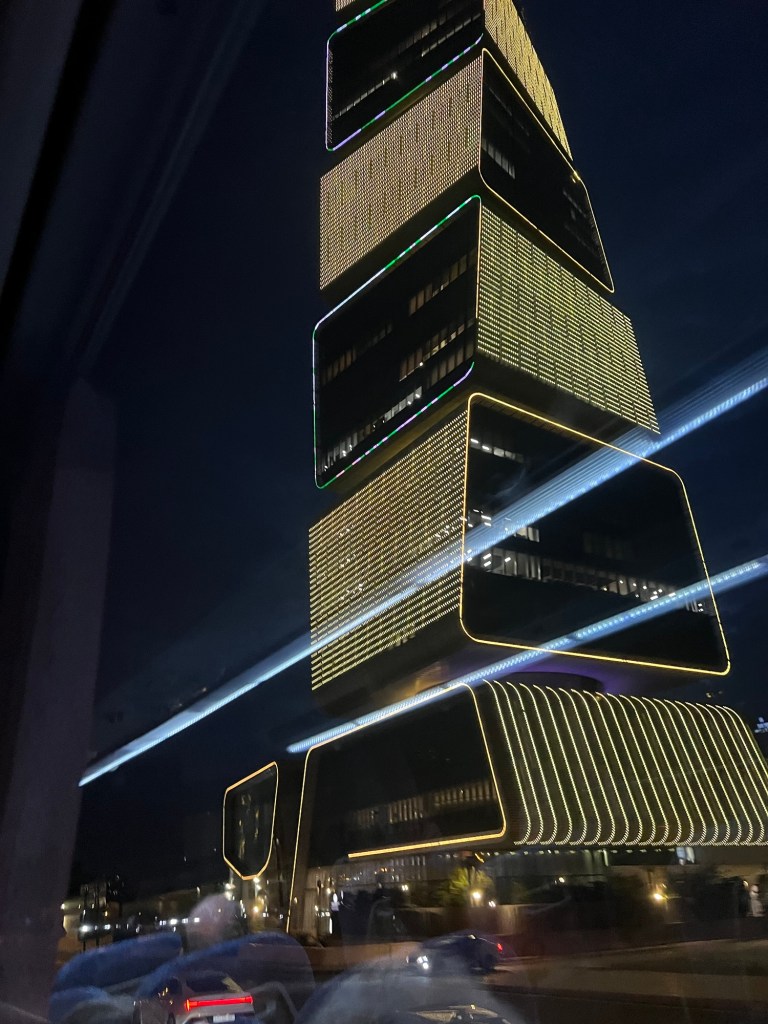
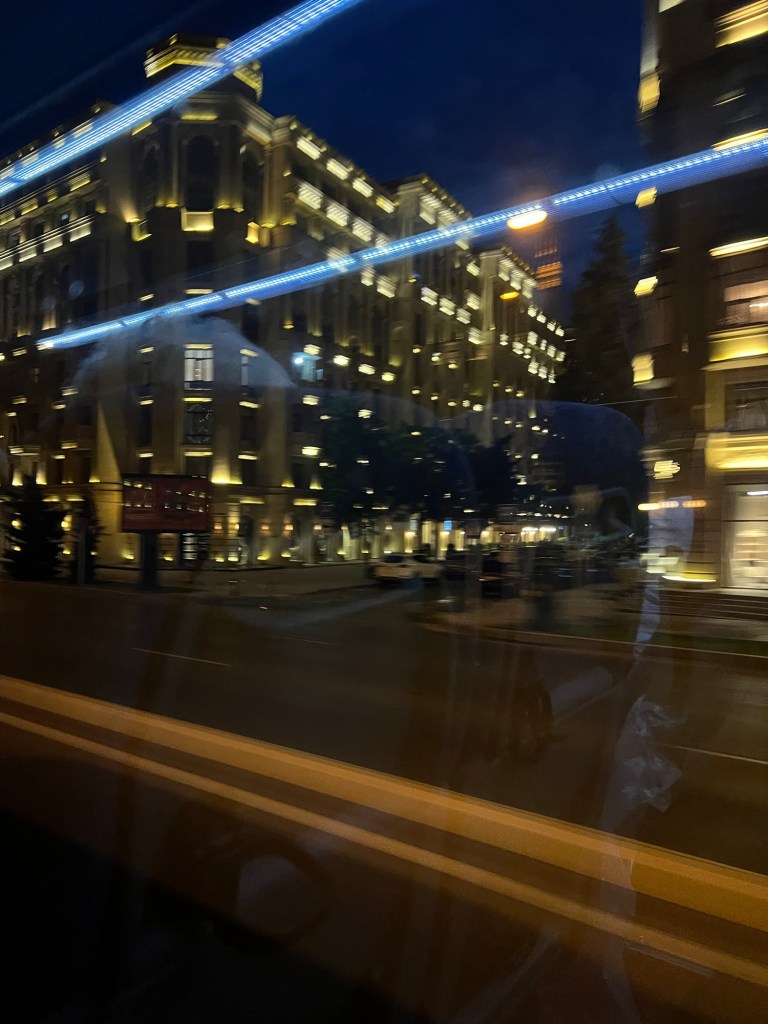
At night the buildings are lit up and really dramatic.

Next morning we set off for our City tour. The city is huge with electric buses and metro system as well as traffic issues on the road. Drivers seem polite and stop for pedestrians, mostly.

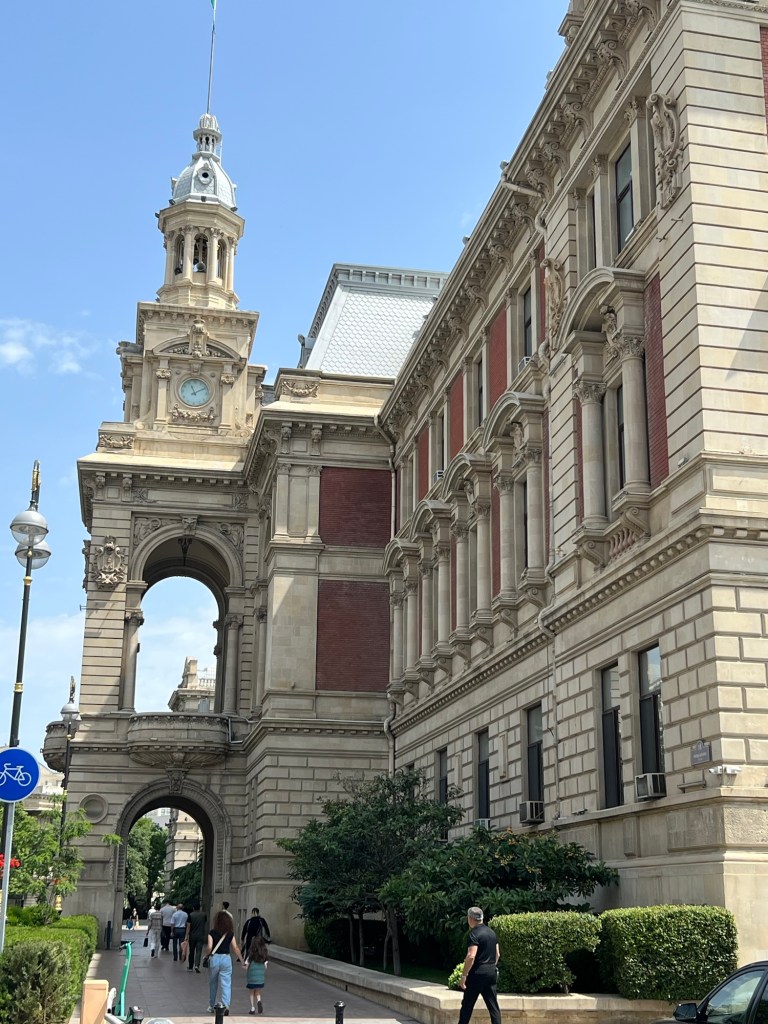
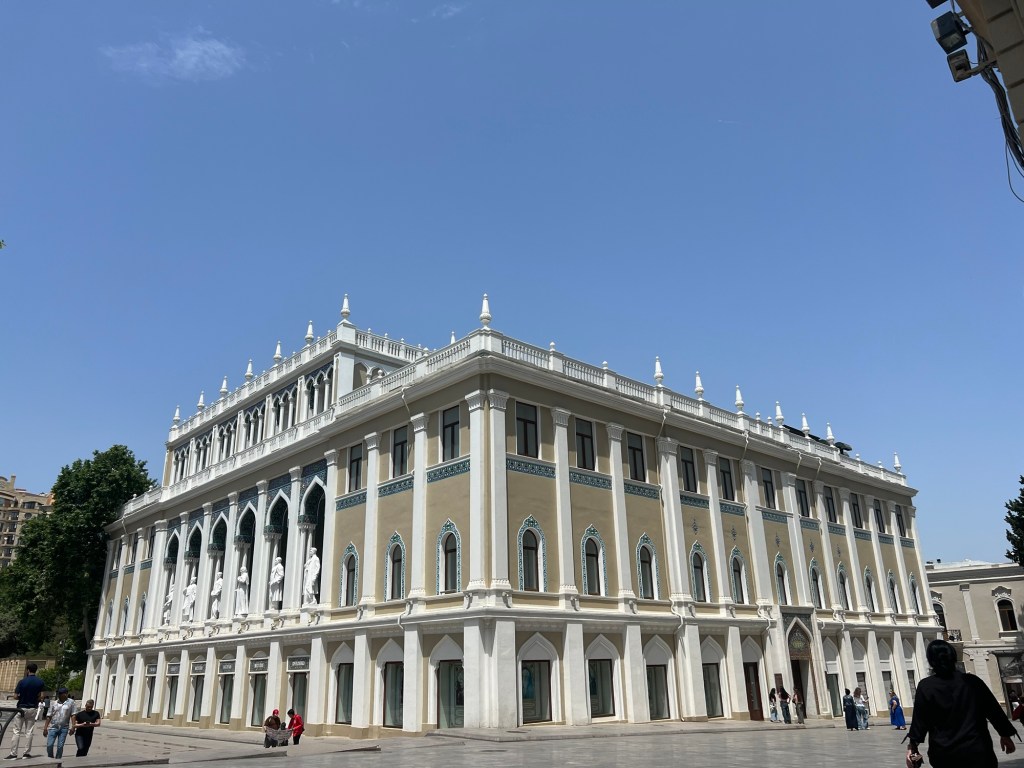
The city has quite a European impression apparently due to a few Polish architect during the Soviet era.

We discovered their underpasses are like museums with Marble and large photos of places in Azerbaijan. No grafitti and escalators at entrances and exits.

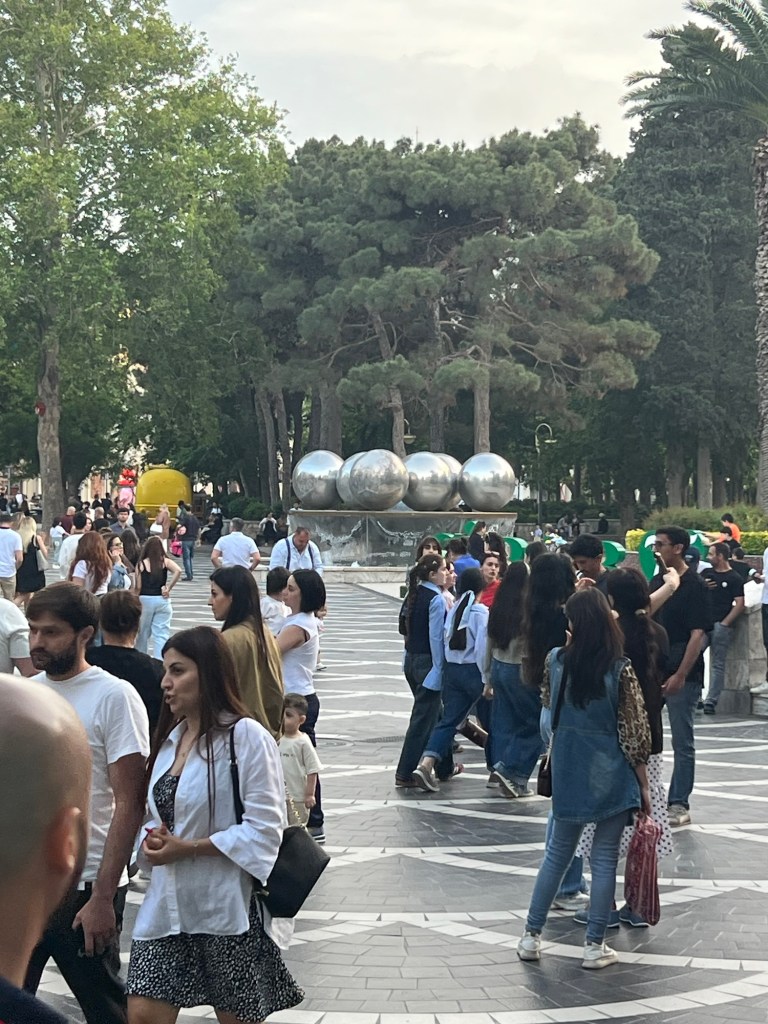
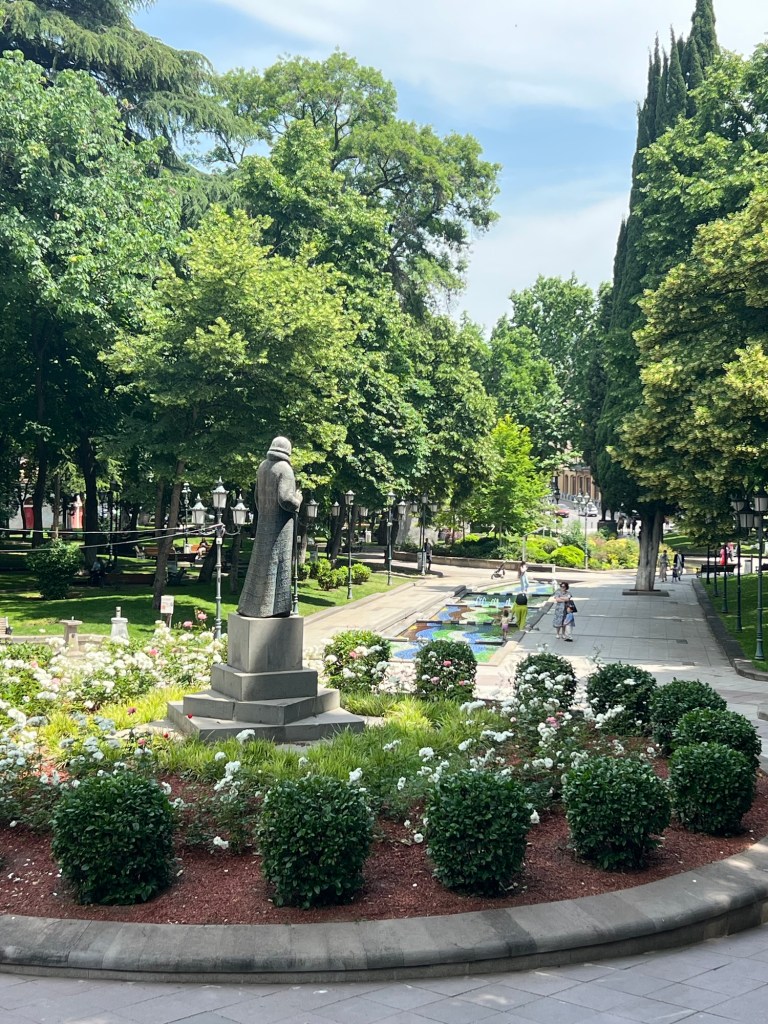
Park in centre of city
Our Hotel

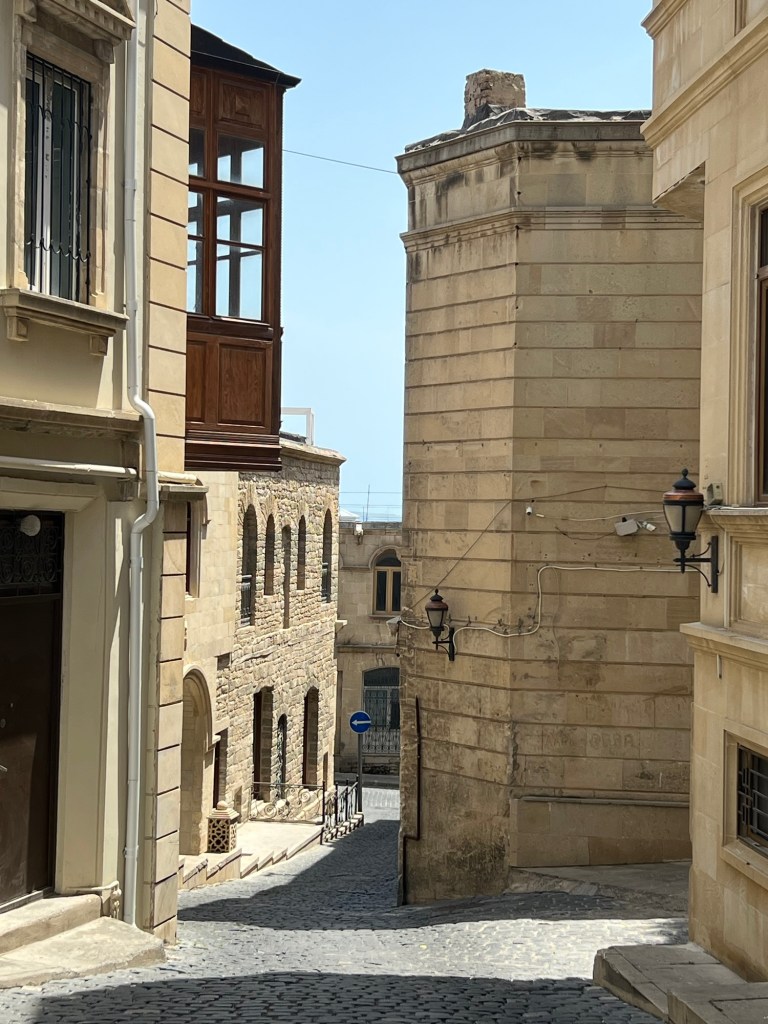
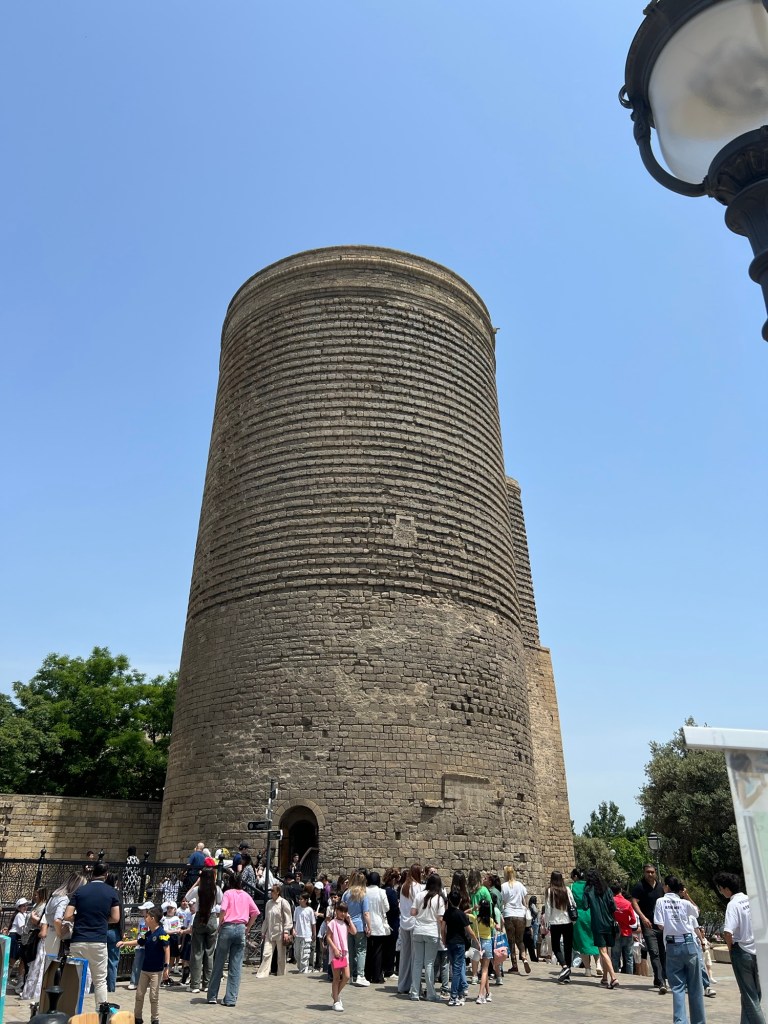
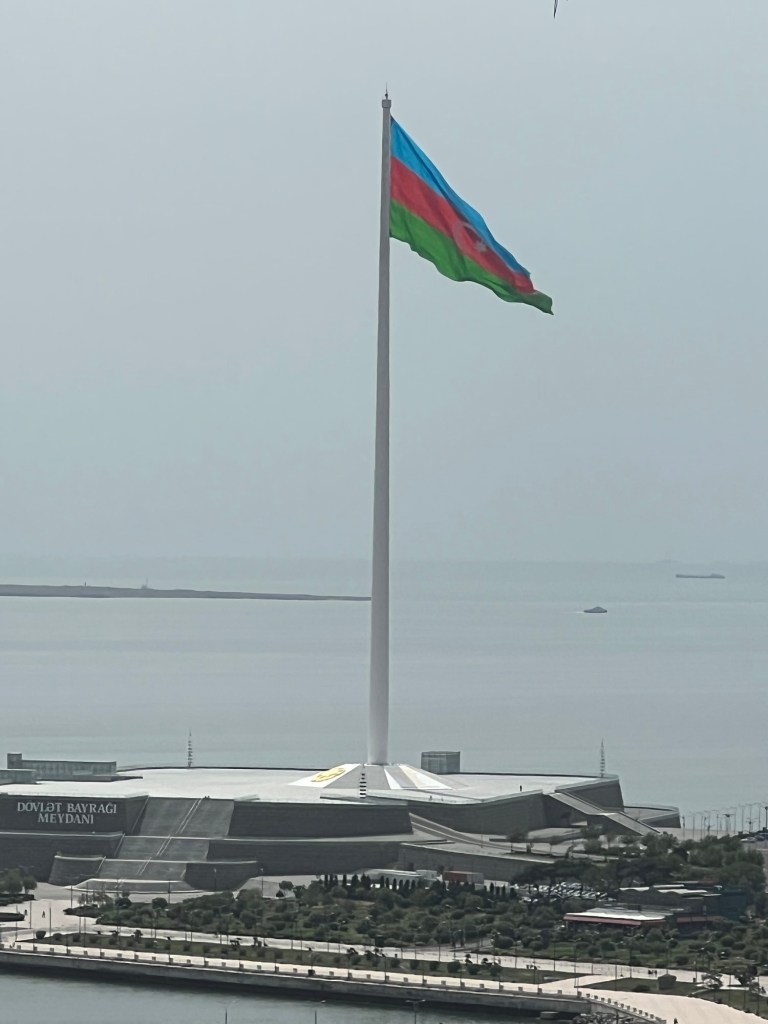
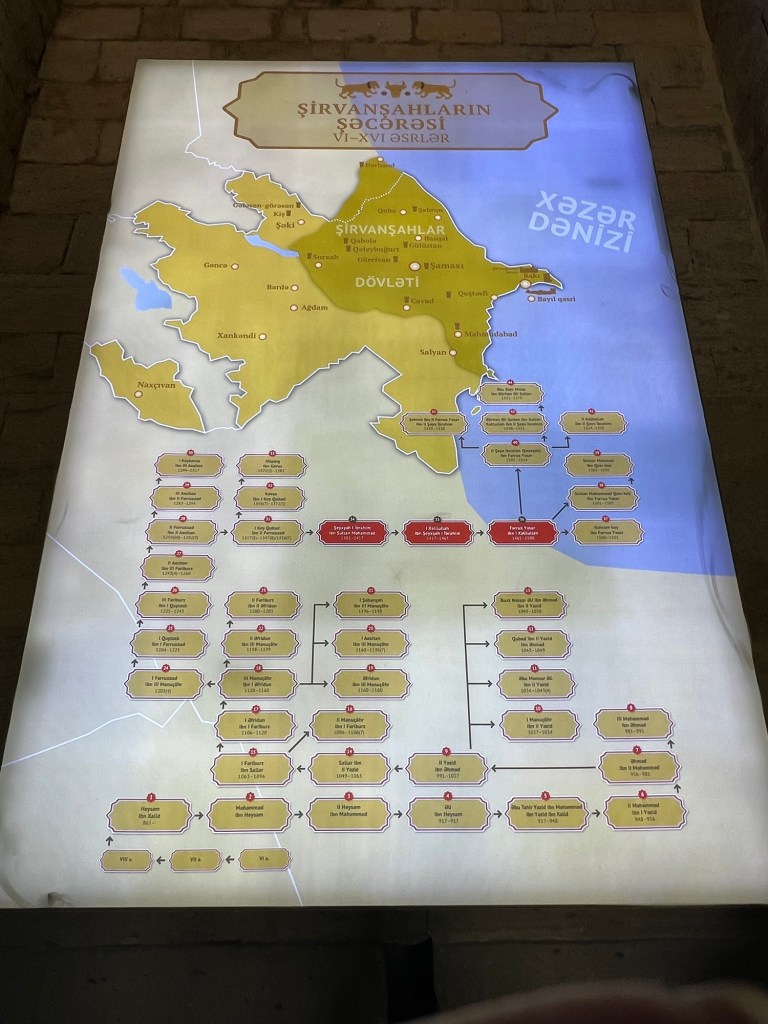
Azerbaijan, the nation and former Soviet republic, is bounded by the Caspian Sea and Caucasus Mountains, which span Asia and Europe. Its capital, Baku, is famed for its medieval walled Inner City. Within the Inner City lies the Palace of the Shirvanshahs, a royal retreat dating to the 15th century, and the centuries-old stone Maiden Tower, which dominates the city skyline. Azerbaijan means city of fire – related to the centuries old natural burning gas.
The esplanade around the bay is about 16 kilometres long and filled with parks and gardens and playgrounds with WIDE walking and scooter/ bike paths.

Azerbaijan is a Turkic nation and has close ties with Turkeiya

Azerbaijan is a secular, democratic country since the fall of the Soviet regime in 1991. It was the first country in the Eastern world that gave women the vote in 1919 during a brief period of independence before the Bolsheviks conquered them in 1921.

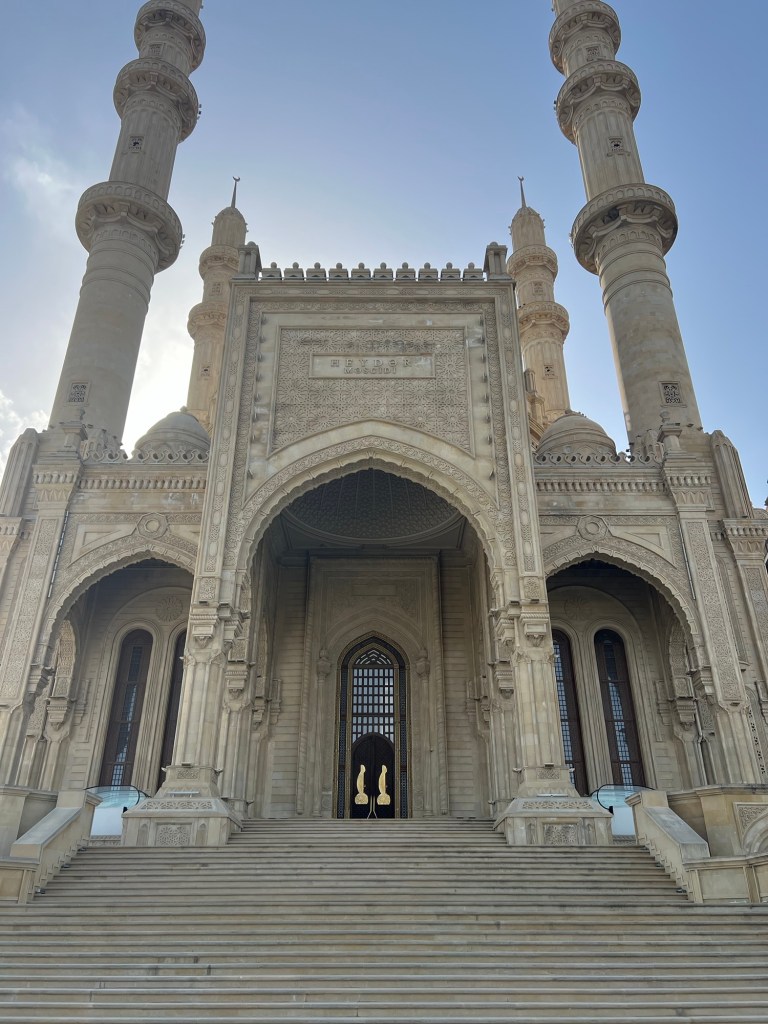
It promotes tolerance to all religions and the Russian Orthodox Church was renovated after the Soviet era by a Muslim philanthropist. In fact the government actually appoints the heads of each religious group. So not entirely democratic but perhaps it ensures no radicalism?

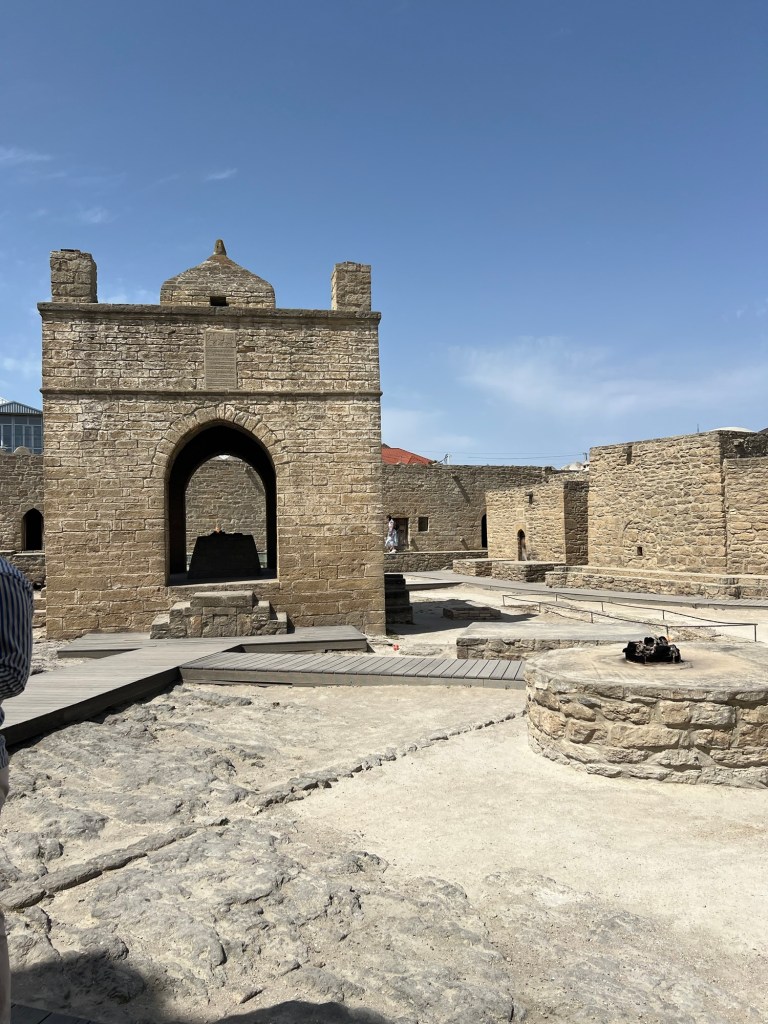
Originally the Zoroastrian a monotheistic religion dominated the country based around the purity of fire. However successive invasions of Islamic cultures resulted in conversions or the Zoroastrian’s going to India. The Silk Road passed through Azerbaijan and led to a mingling of cultures and trade. The fire was a pilgrimage point.

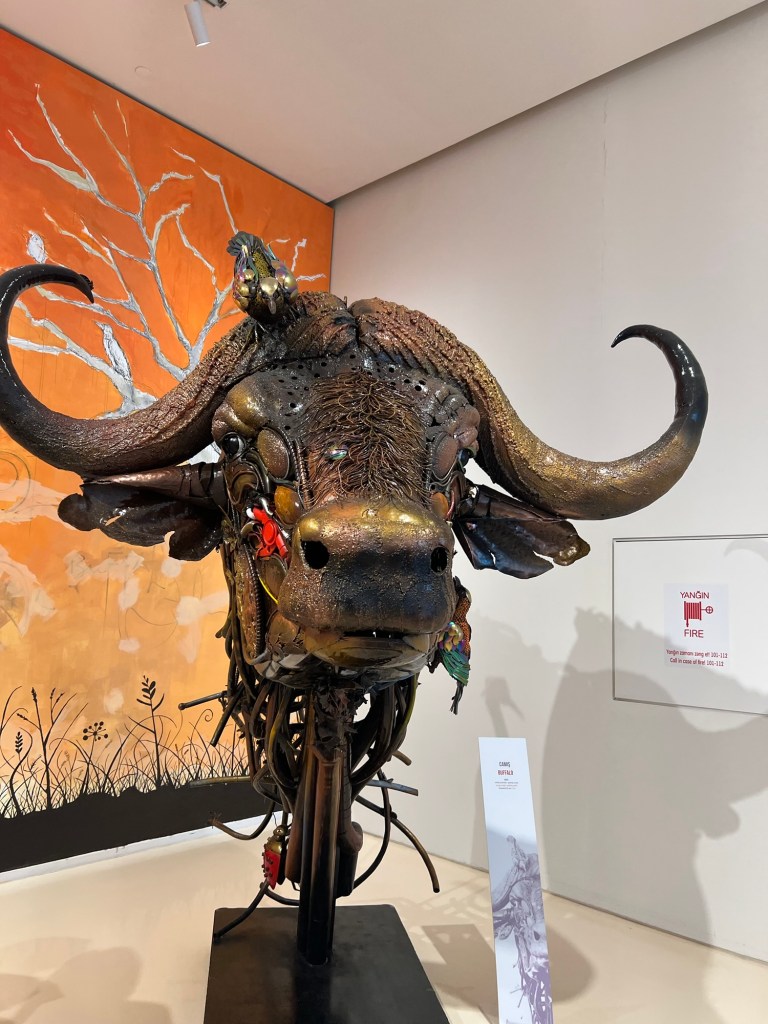
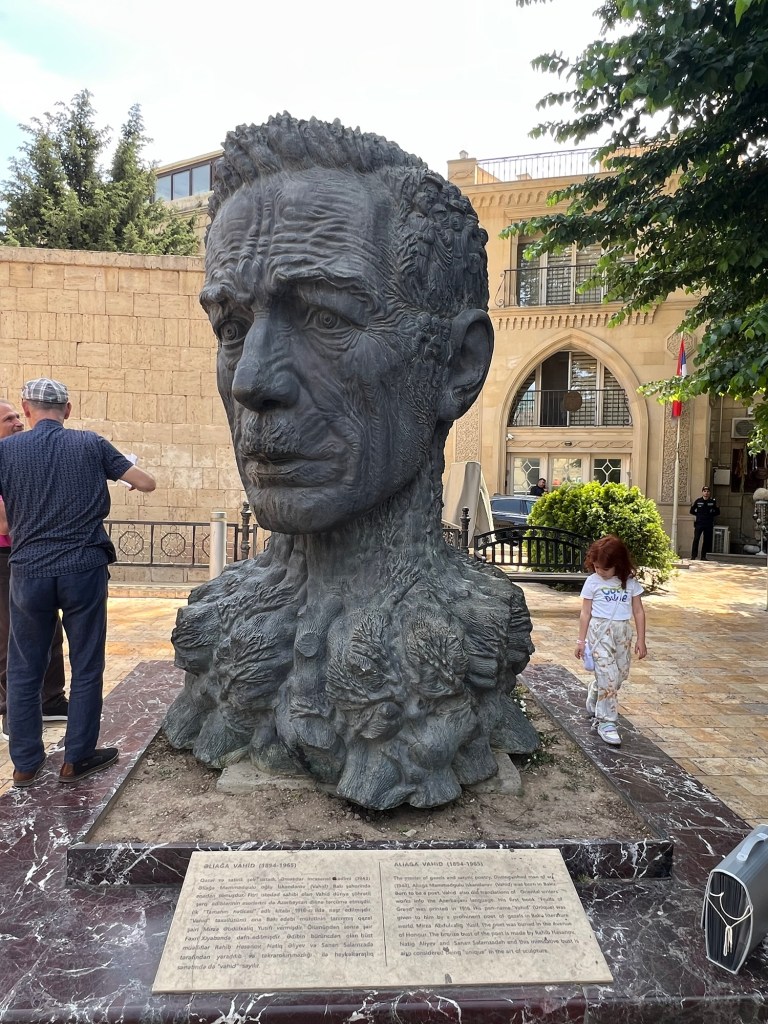
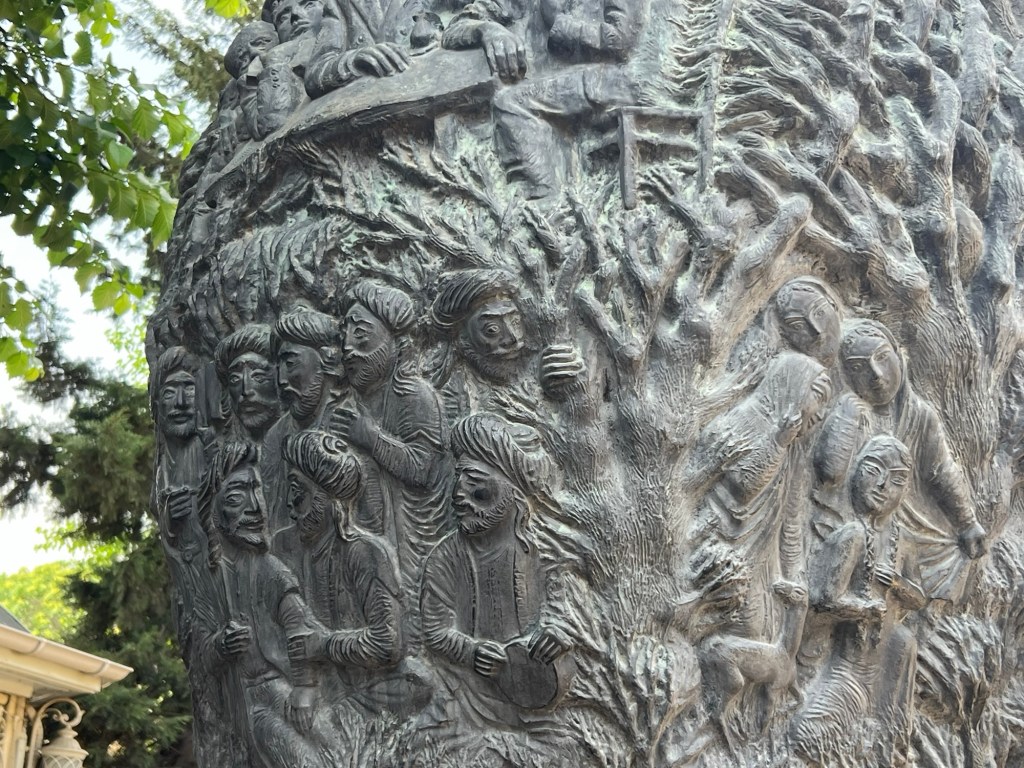
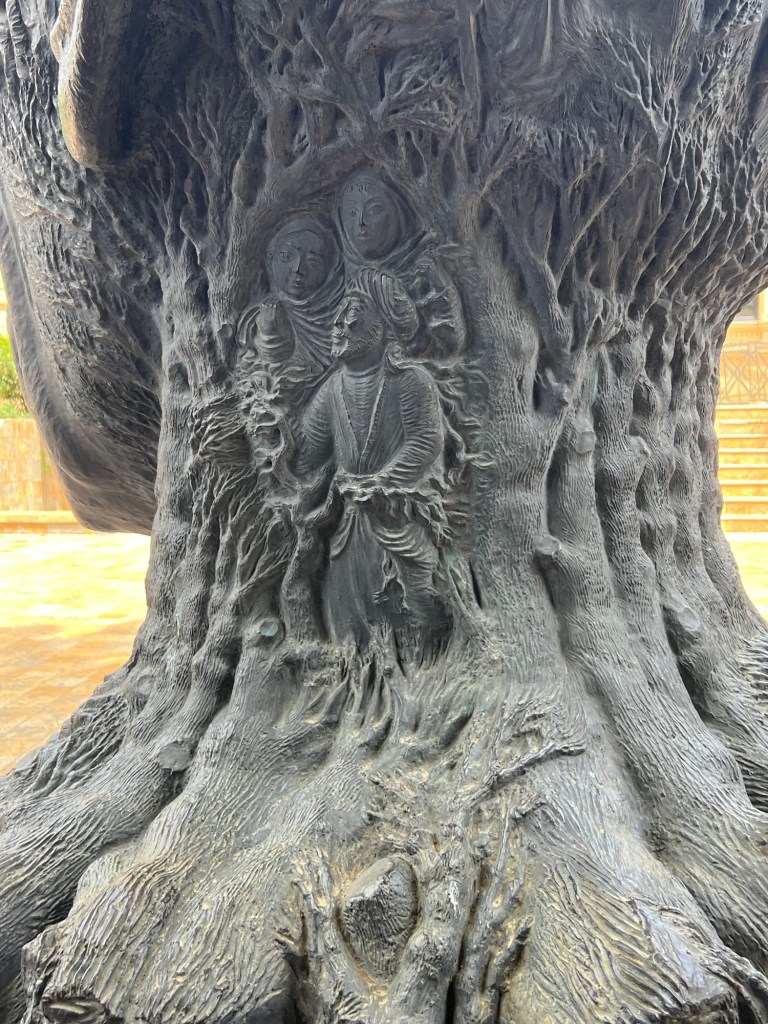
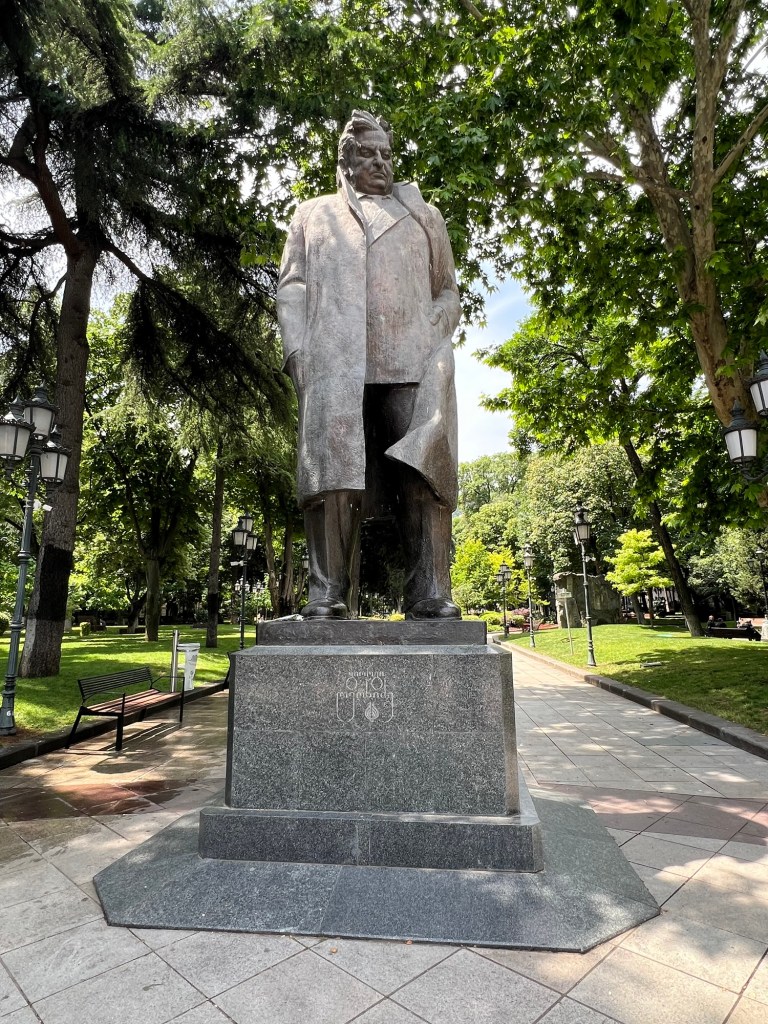
An intricate sculpture of a head was so absorbing as we walked around. It was of Aliagha Vahid, poet and Ghazai singer (1895-1965) who said he was the continuation of the great Fuzili( one of the greatest poets of Turkic literature). The tree was seen as a symbol of that continuation.

It was a bit of shock for us but we adapted.

Dinner tonight was a colourful array of delicious salads and dips followed by braised meat dishes. No desserts but tea and sweet jams or small petit fours.

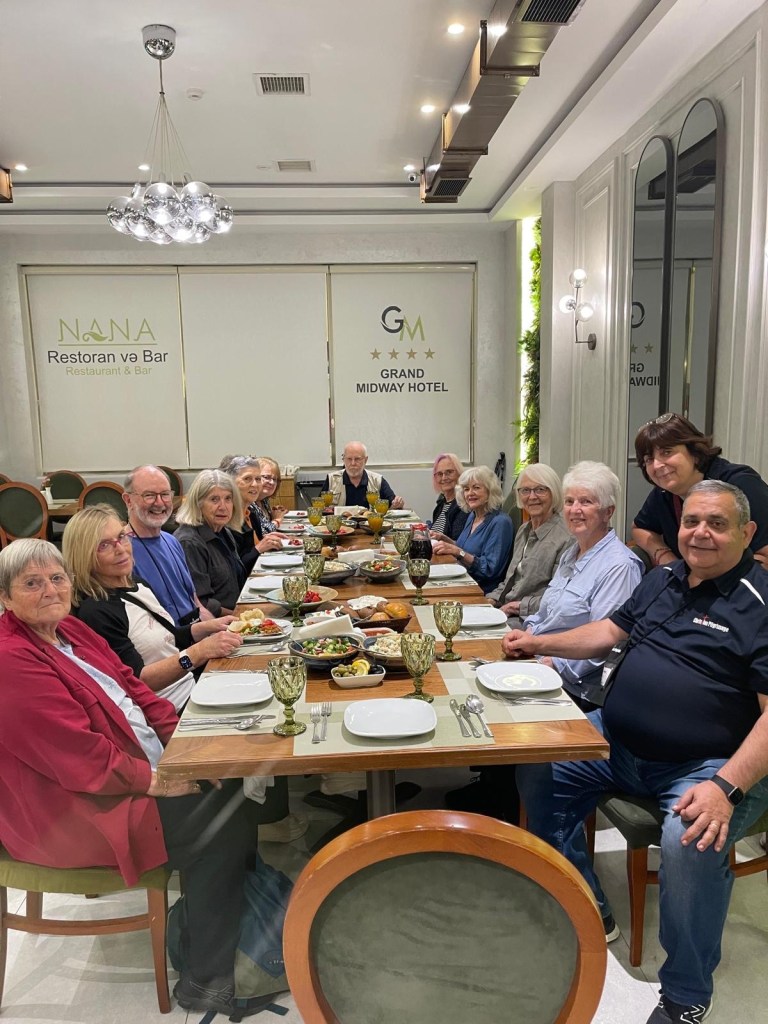
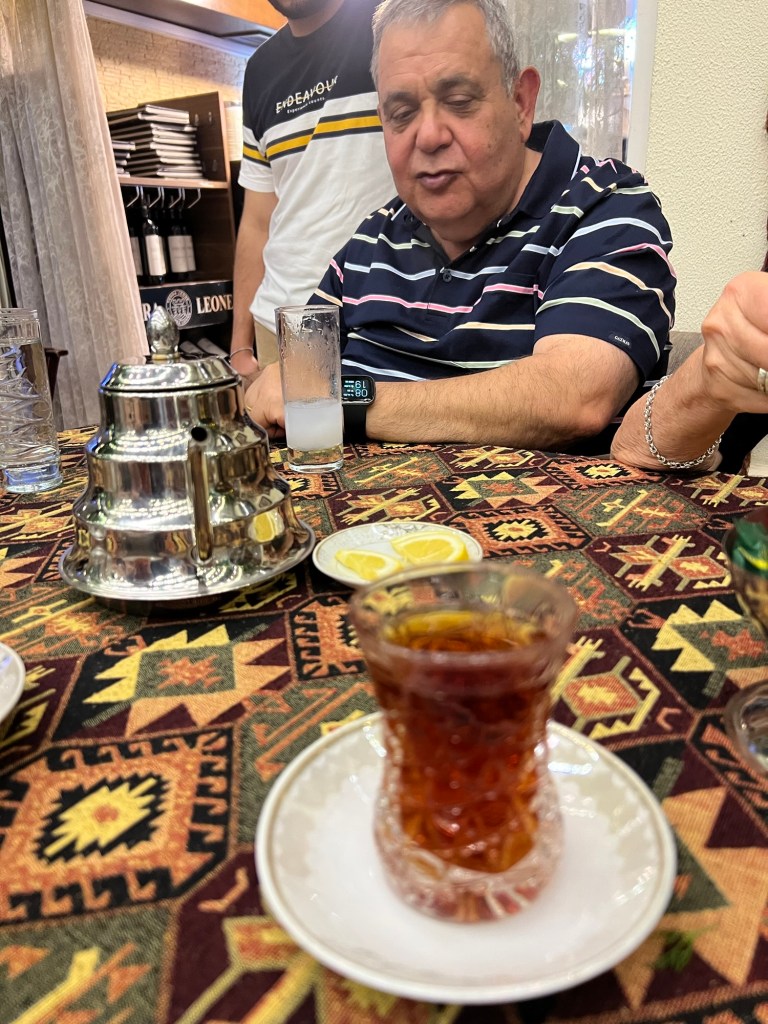
John discovered that wine with dinner is not usual and though alcohol is available freely the custom is to have lemon drink or water then tea, particularly after dinner.

Tea not Arak or wine!
Fire city, BBQ meat

Tuesday Last day in Georgia

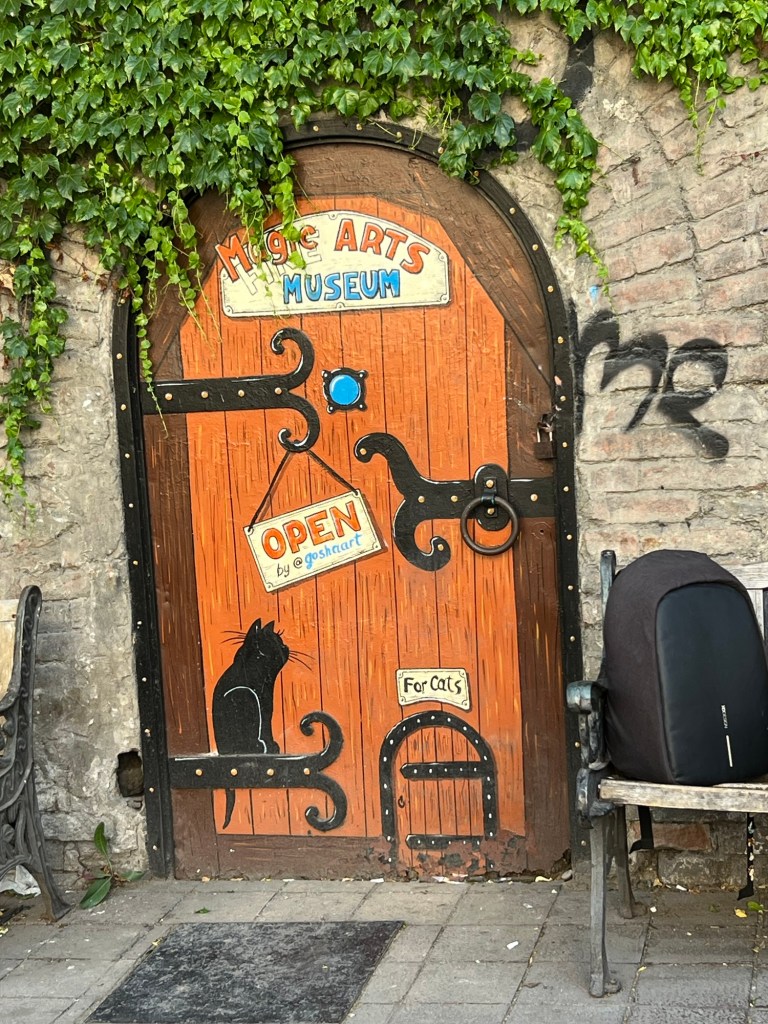
Last night we enjoyed a very modern take on Georgian eating. Anne and I had wandered down a side lane that seemed enticing. We first stumbled upstairs past the restaurant of a small hotel before returning to find a French style Salon. We just didn’t feel the vibe though so we left. Loved the door

Door/wall in the hotel.

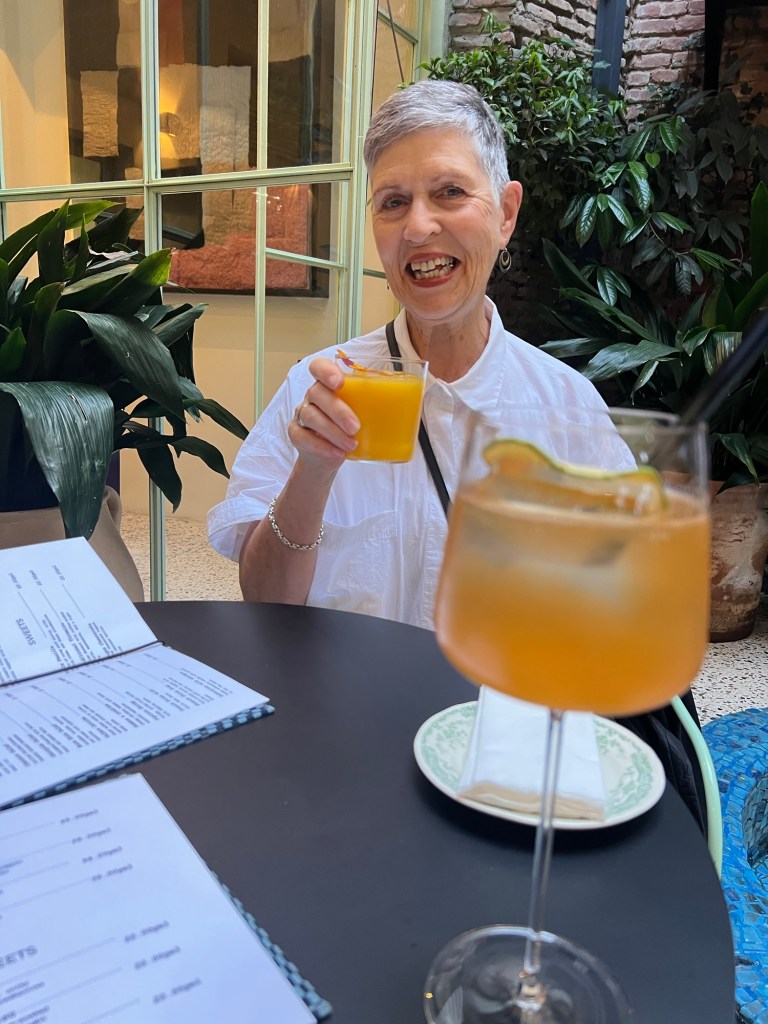
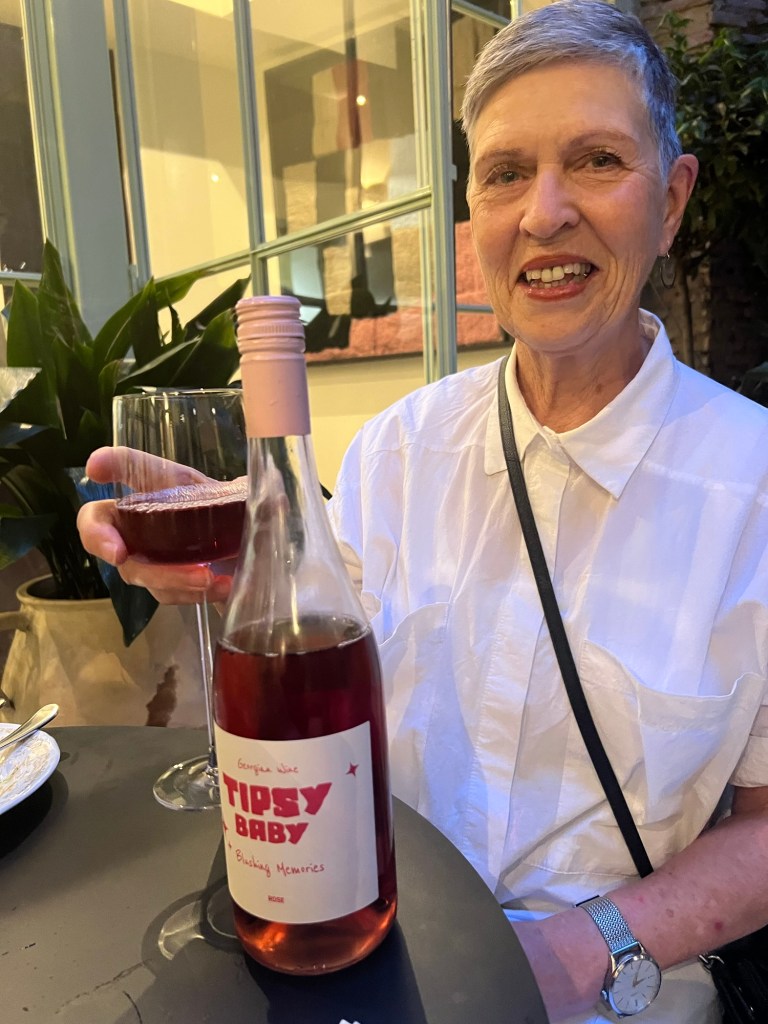
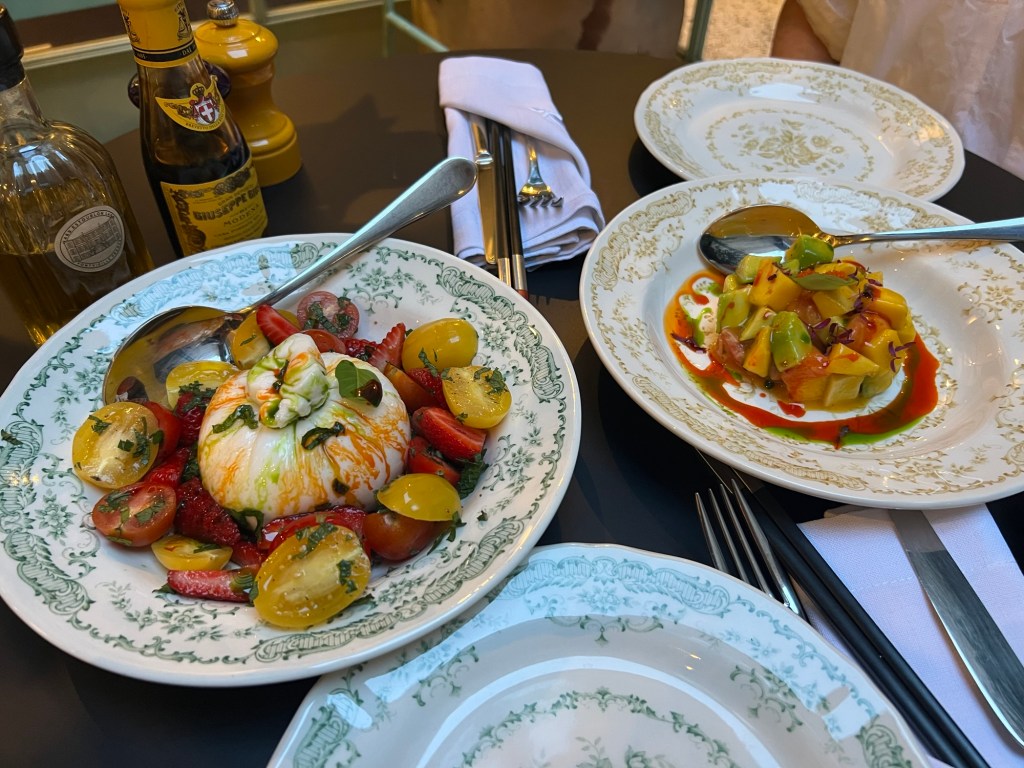
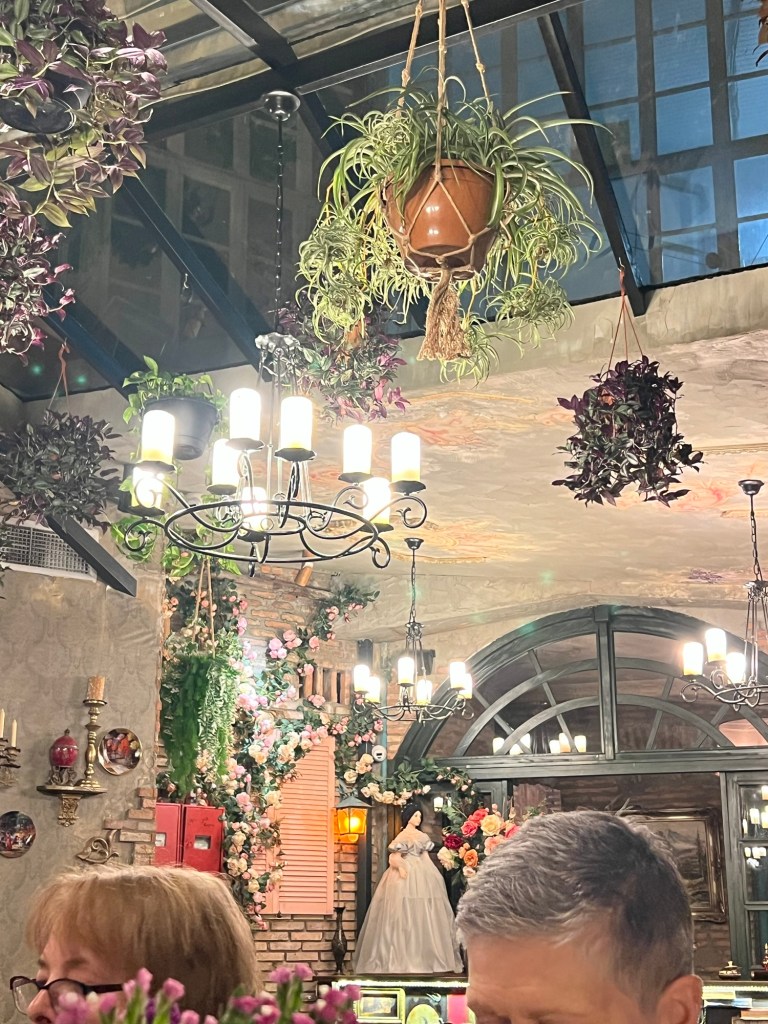
We turned a corner and found what felt right. A very contemporary, cool bar restaurant a la Fitzroy Melbourne! Cocktails were delicious and food equally so!

While we felt a bit guilty not eating traditional we felt justified ( and desperate!) in wanting a change.

After Breakfast, we had a reflective meeting to feed back our experiences in Georgia to Randa and John, then Anne and I set off to explore contemporary Tbilisi.

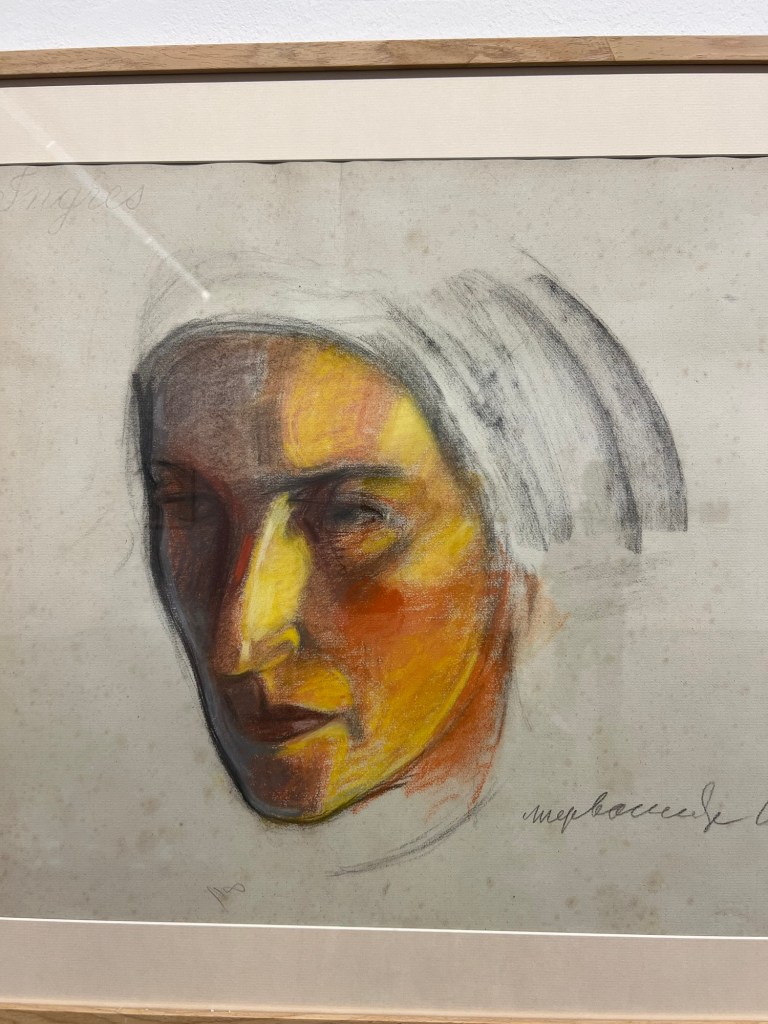
Our first stop was to the MoMa (Museum of Modern Art) which was very doable and well presented. The old edifice faces the main street but the entrance is through a modern extension at the back.

Very interesting art, lots of inspiring drawings of faces in particular.

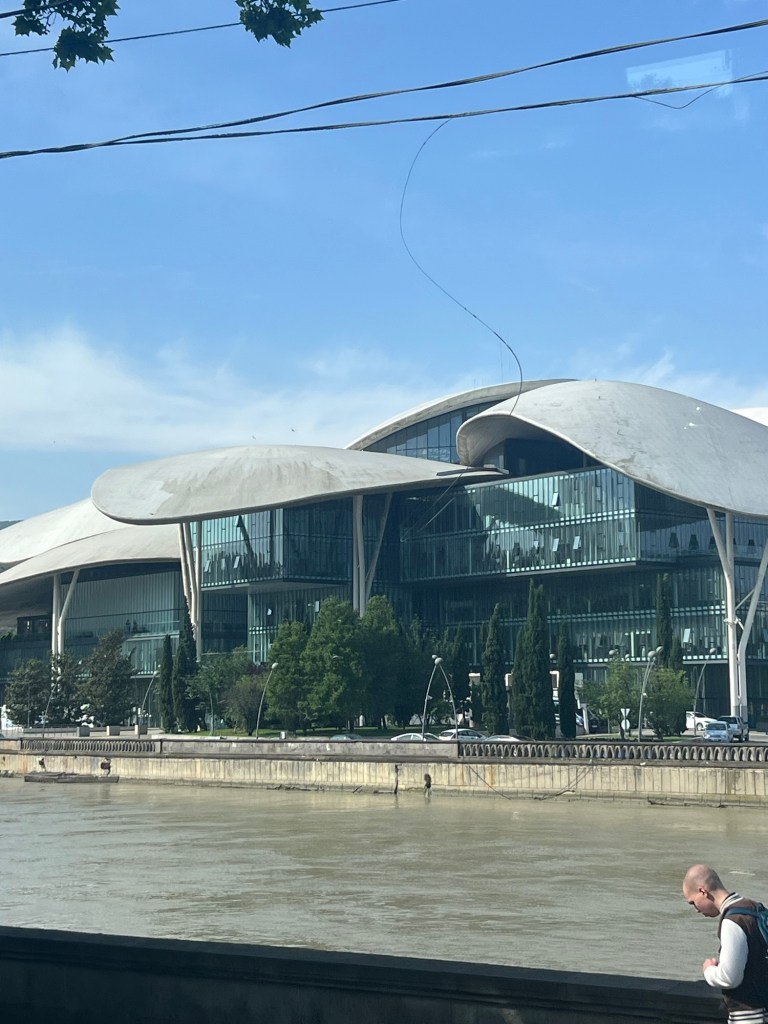
Wandered out the back a down the park, the lungs of the city. It is densely wooded and tiered all the way to the river. Passed market stalls and crossed the river.

Headed back to the hotel and needed to stop for a drink. We had seen this bookstore cafe earlier so we were keen to try it. Big mistake. The poor guy was solo. No help and he was run off his feet. By the time he was able to take our order he said he had sold out of smoothies!

Headed off to airport, with poor Nancy freaking out because her suitcase wasn’t with the groups. When we were all together checking suitcases the young porter had gone to take her bag and she said no so he had thought she wasn’t in the group. Miscommunication equals stress.

All was resolved quickly and we were off.

We have found Georgia visually beautiful, the city is a bit rough around the edges but modern and forward thinking and has a good lively vibe. Worth a longer visit to get to know its secret places.

Monday 28 Three historic and significant Churches

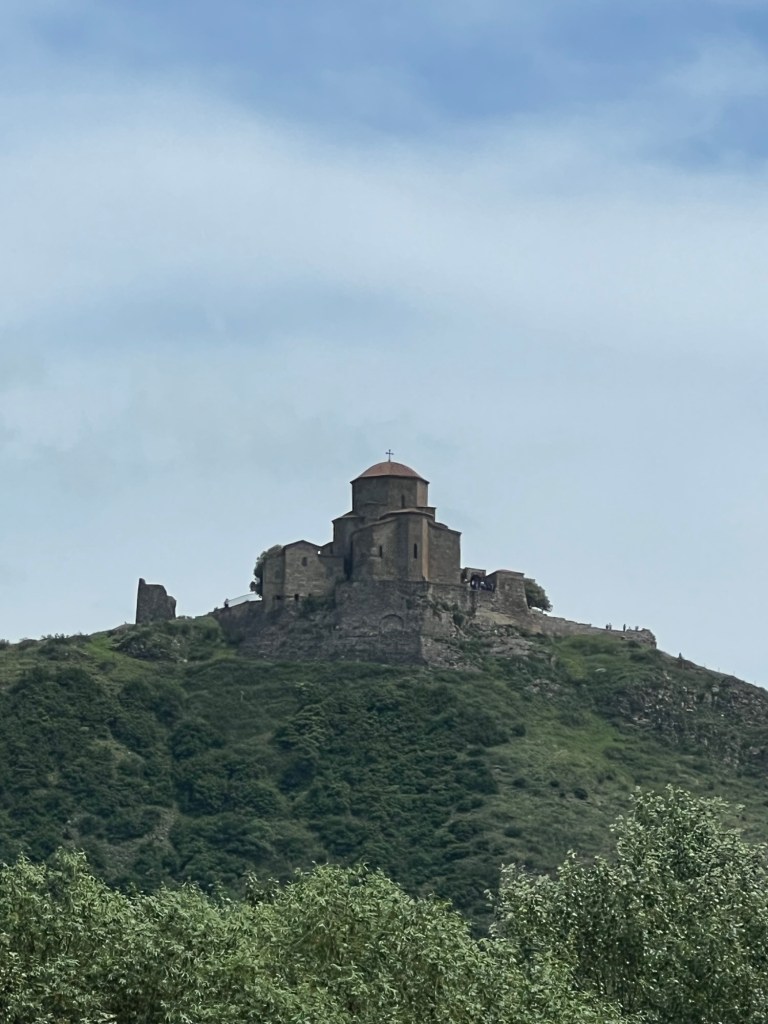
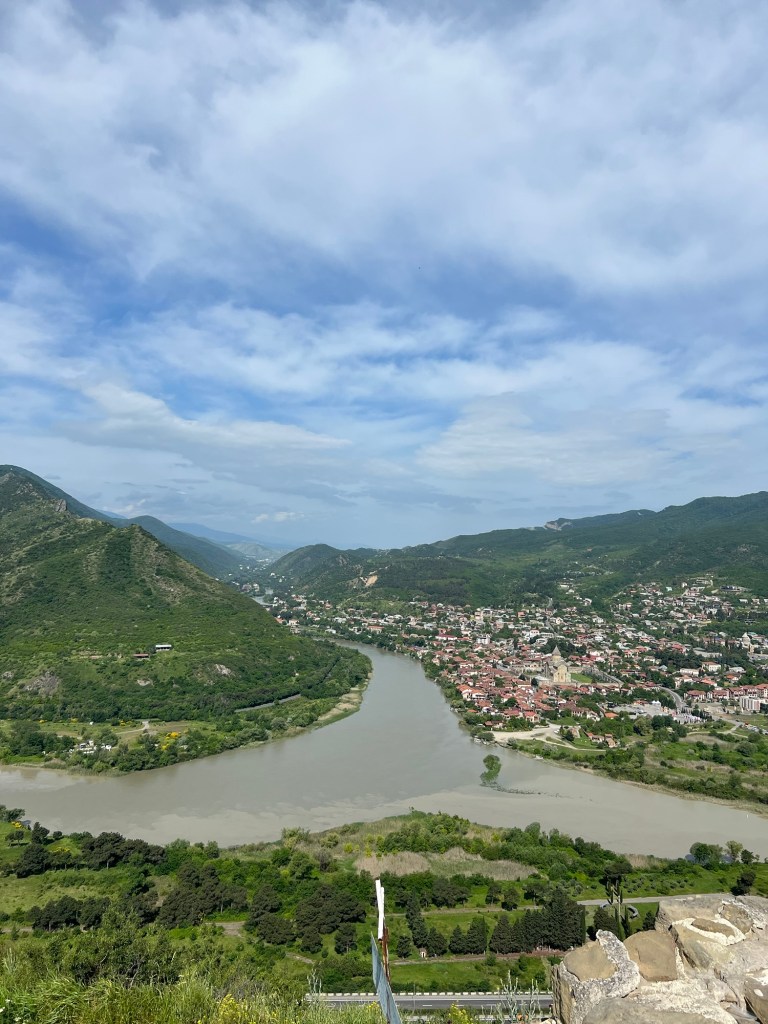
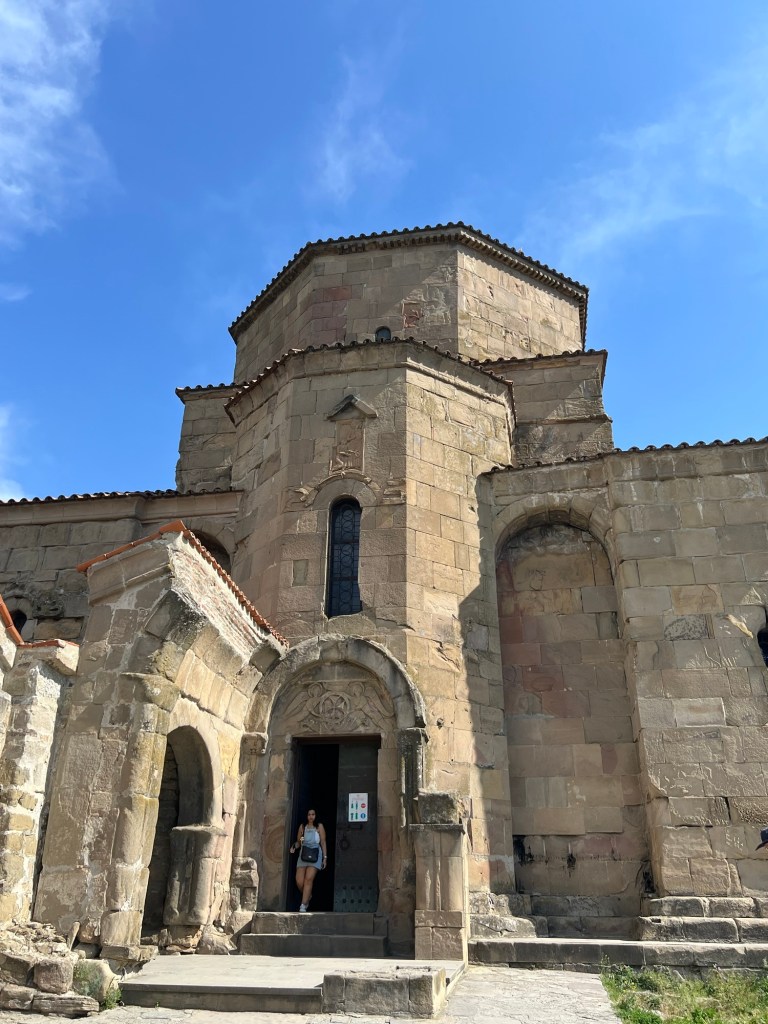
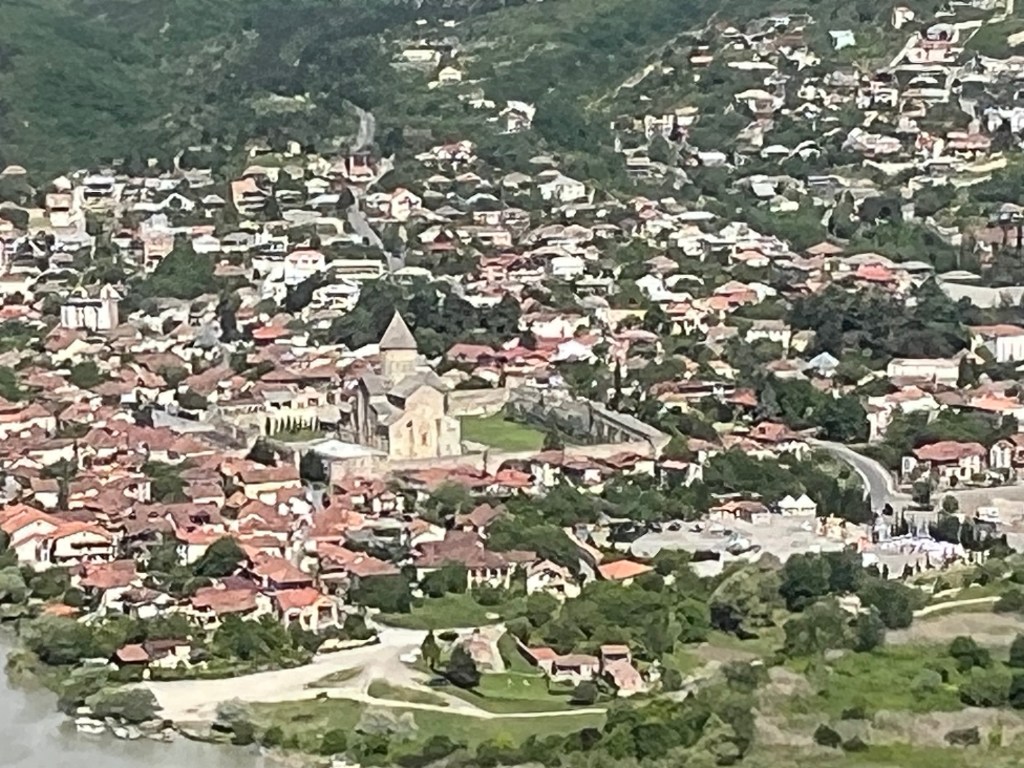
Mtskheta is situated at the confluence of the Kura (Mtkvari) and Aragvi rivers. This was our destination today.

This confluence of the rivers is a key feature of the city’s geography and a significant visual and cultural element. The different colors of the two rivers are particularly striking. This can be seen from the Jvari Monastery which is perched high on the hill overlooking the town. Today it was two different brown flows merging, but apparently other times one is blue water the other brown.

Jvari Monastery didn’t open till 11.00am so we had a sleep in and leisurely start. The Georgian countryside is lush and green with the end of spring and heavily wooded in contrast to Armenia.

Arriving at Jvari it was windy and pretty crowded. This weekend is a celebration of Independence Day in Georgia so lots of locals are out and about also amongst the tourists.

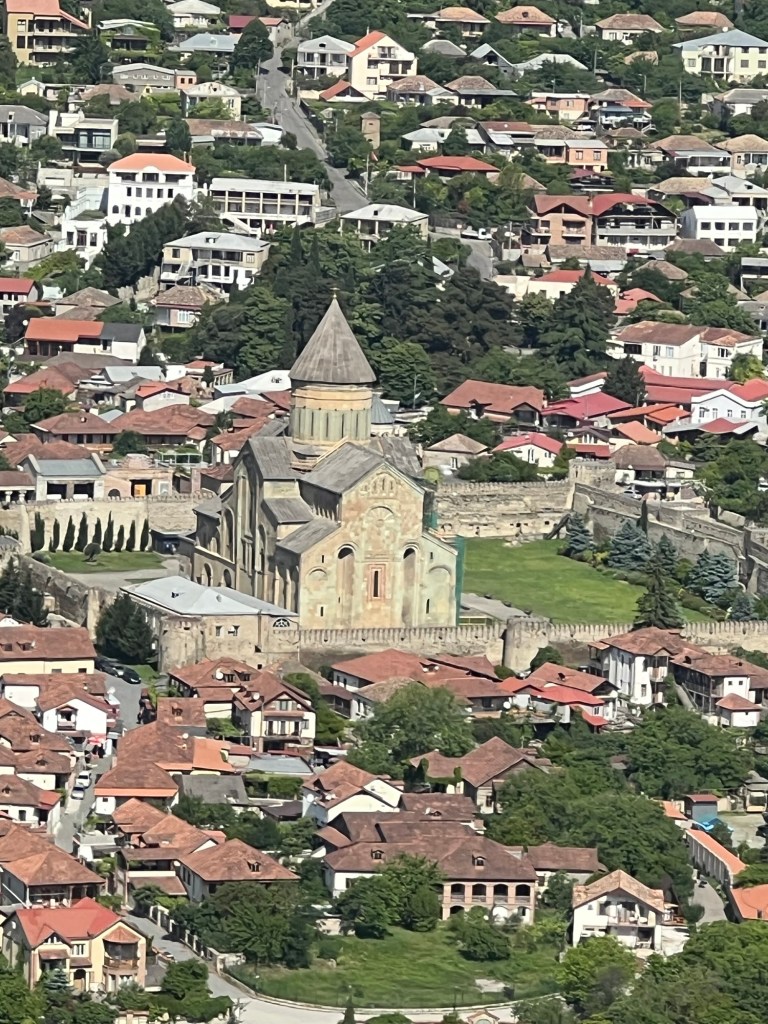
The view was spectacular and we could make out the other two churches we were to visit down below in the town.

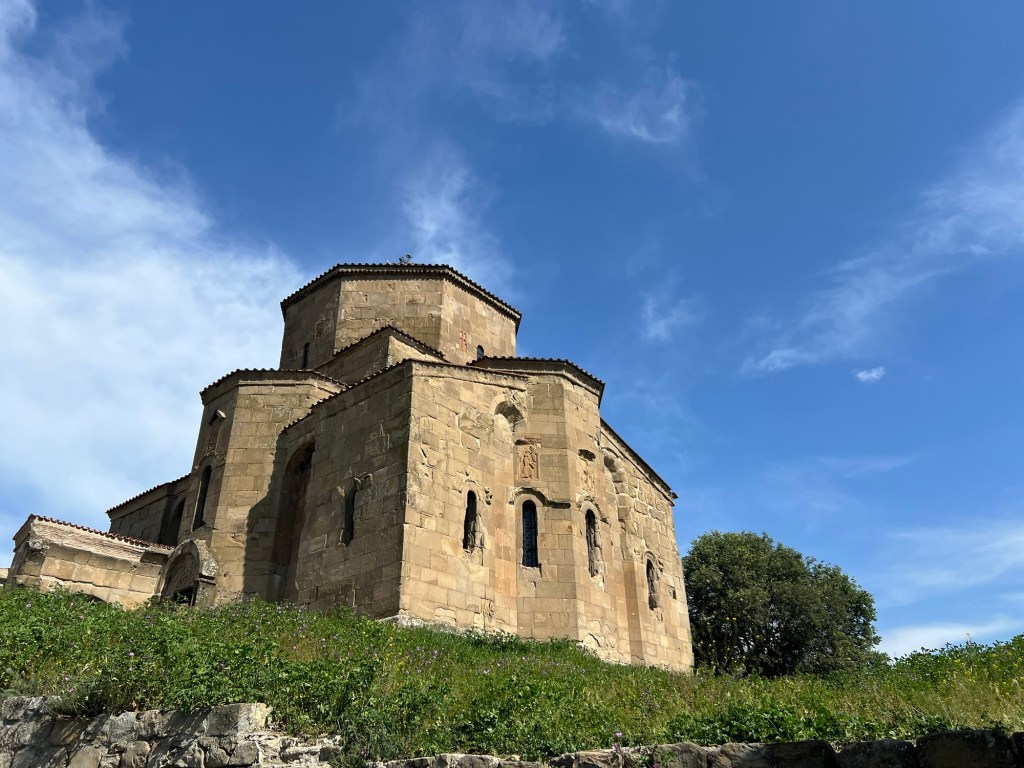
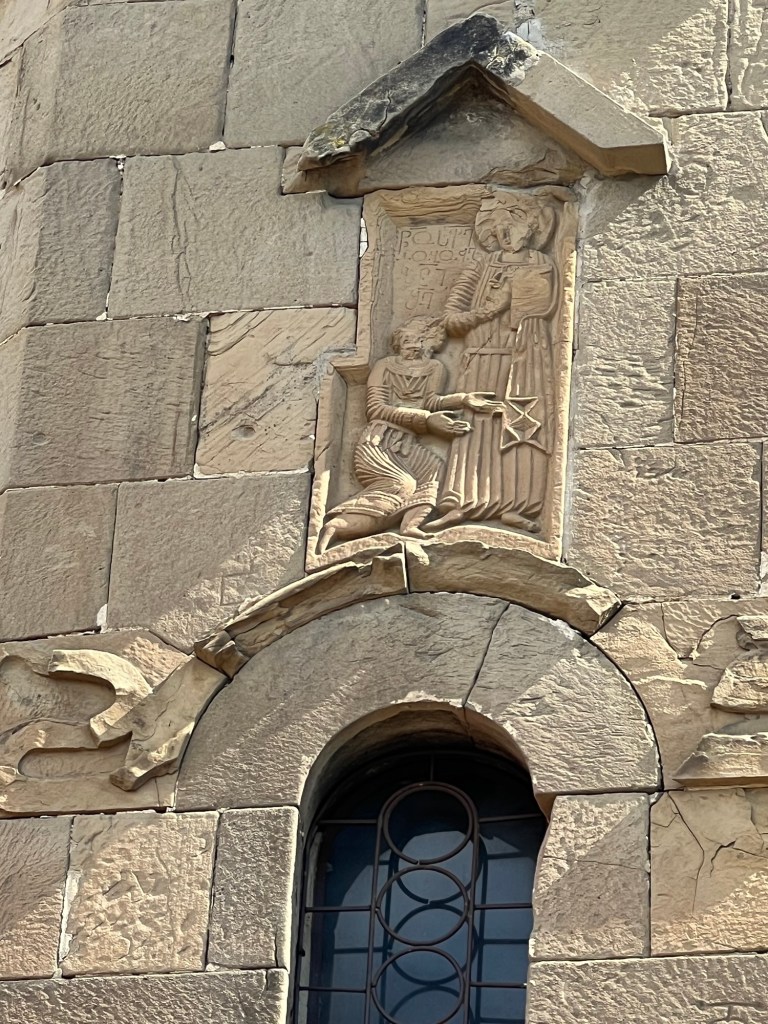
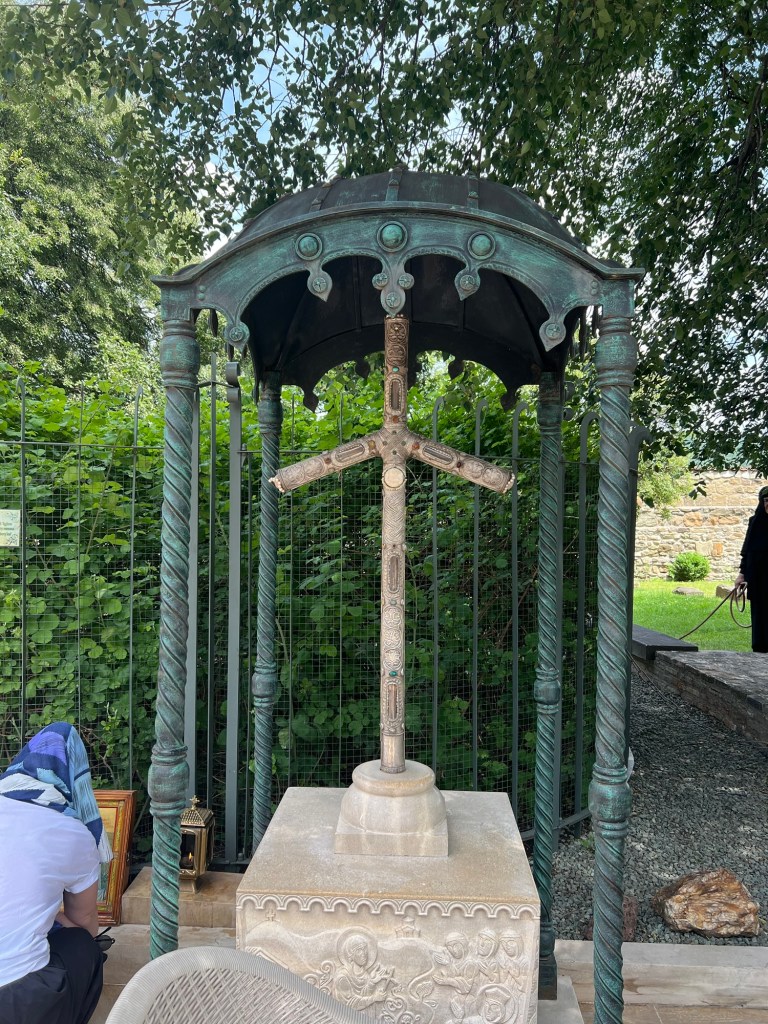
Jvari is a rare example of a 6 th Century monastery that has survived almost unchanged and built in harmony with its natural environment. Legend says St Nino erected a wooden cross on the site of a pagan temple in this location in the early 4 th Century. The cross was reported to perform miracles and therefore drew pilgrims from all over the Caucasus.

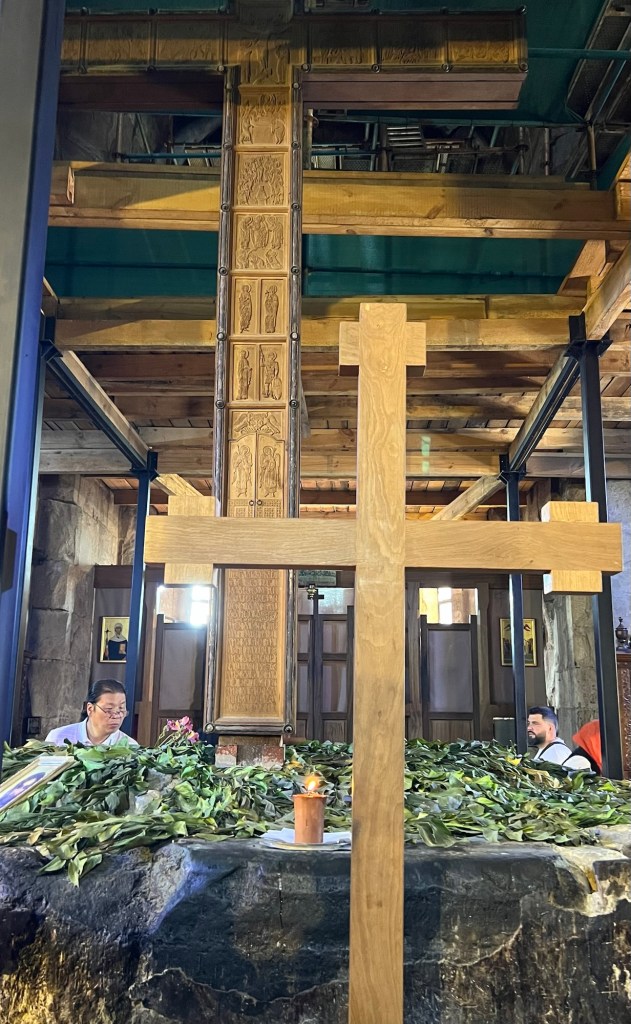
It was hard to get good photos of the interior of this unusual church. Especially as a woman kept shooing us away from the cross. Understandably as there were many people, but it was so different. The base was a circle about 1 metre high with the wooden cross planted in the middle. It was very dim so you needed your phone to capture the details and there were renovation works overhead.

This church was one of very few untouched by the Bolshevik’s and the later Soviet era. Most churches were converted to wharehouses, gymnasiums, storage for farm goods or animals, even prisons or just destroyed.

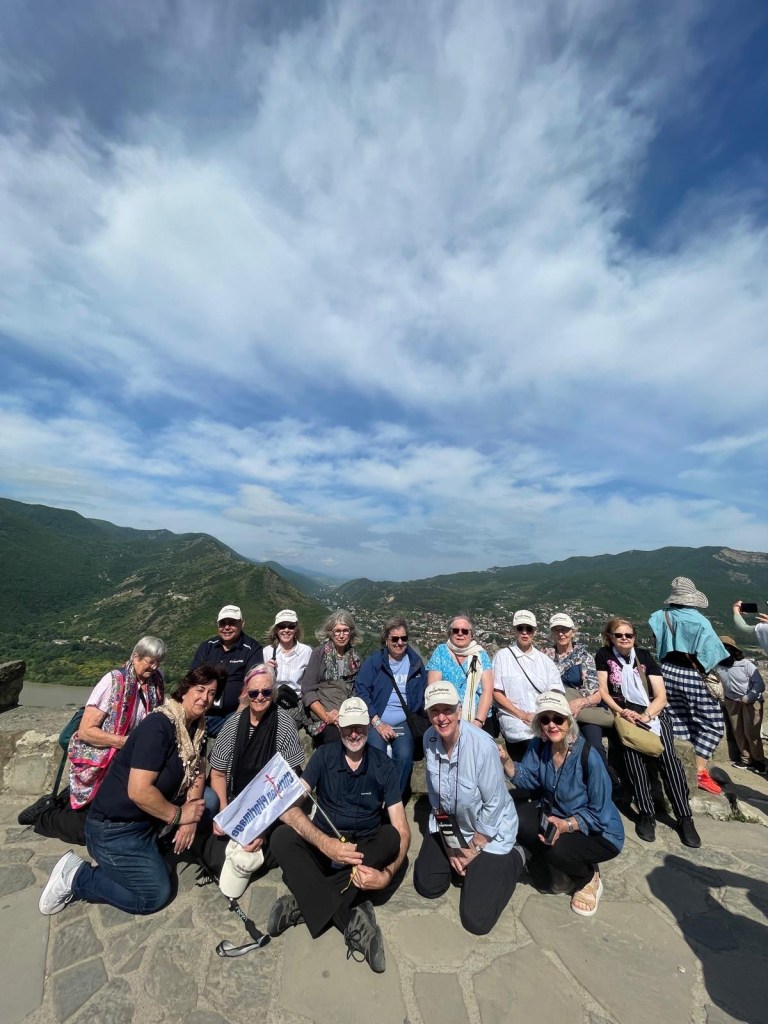
We reassembled outside for a group photo and were very amused that a Japanese fellow with a big camera was taking photos of us! He offered to take the group shot for us so that made it easy. I wondered what he would say to people who saw his pictures of us. Curious Old weirdos?

The Weirdos?

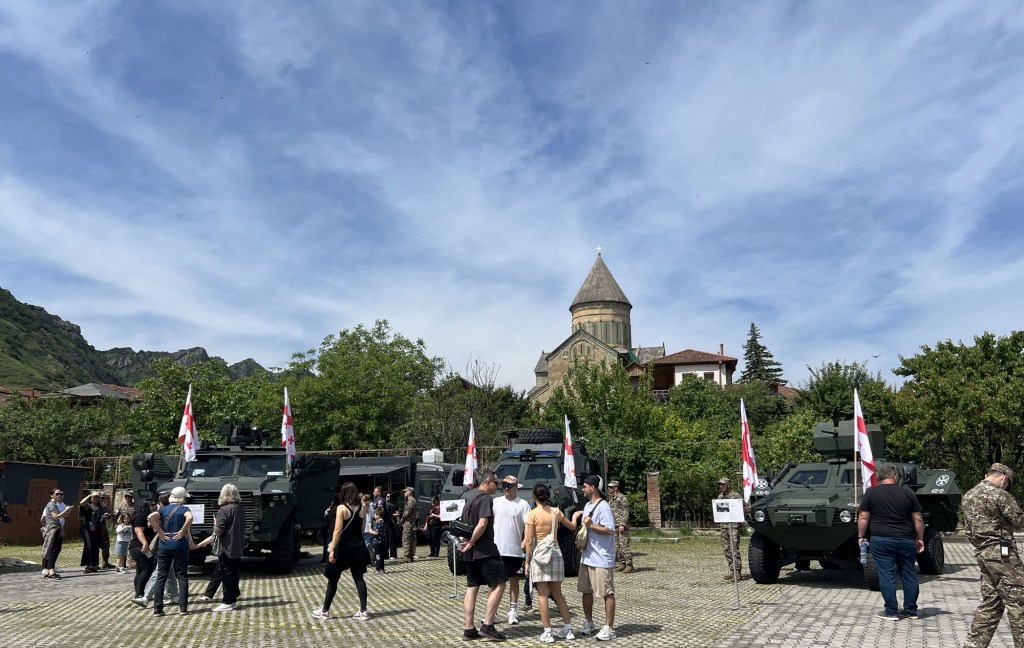
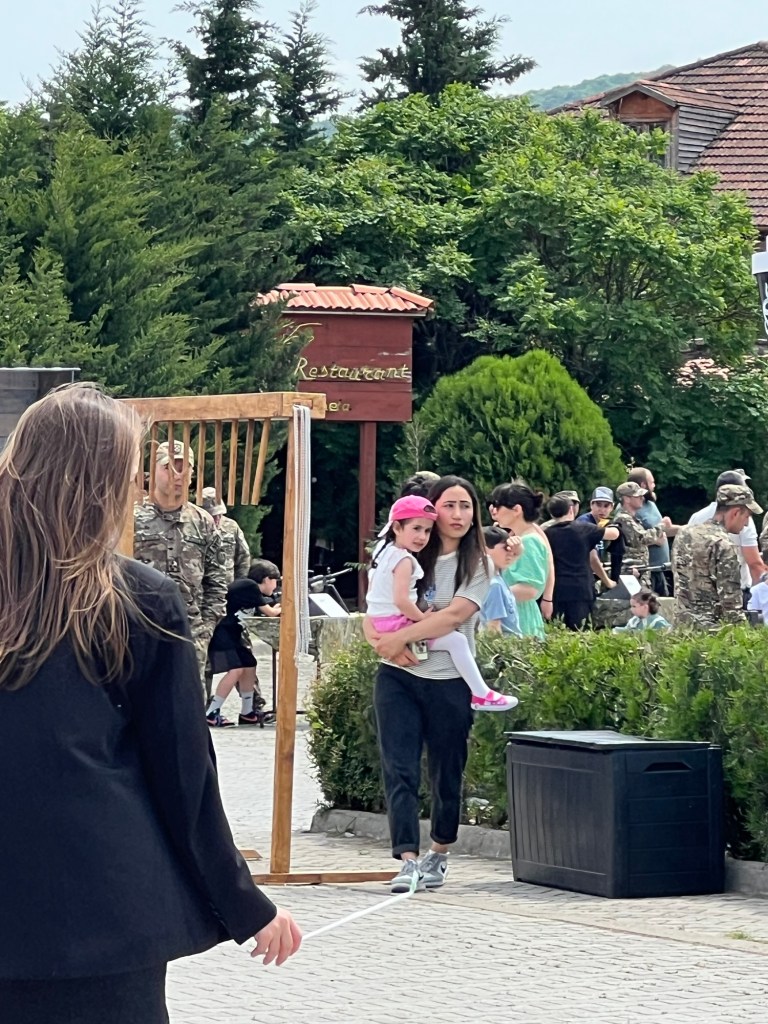
From here we went into the town below. The atmosphere was festive, patriotic and local. There was a stage for music and folk dancers and a military display of armoured cars, missile launchers etc. As well as country style games of skill for kids. The Georgians proclaim their peaceful natures but they will defend their independence if they must.

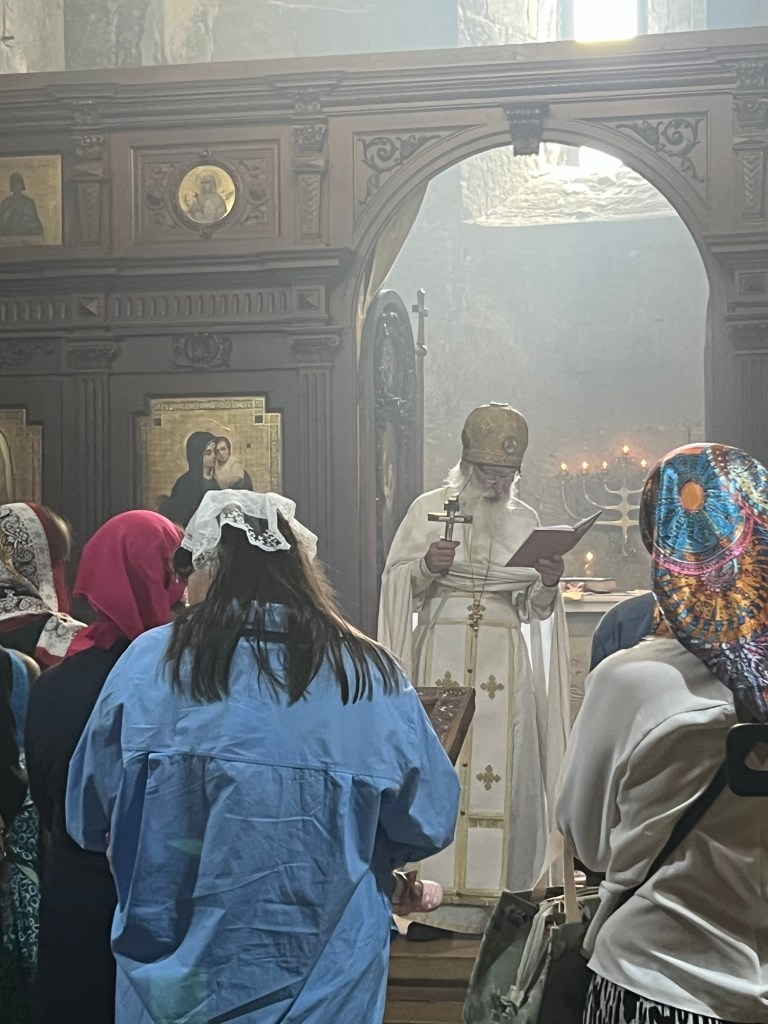
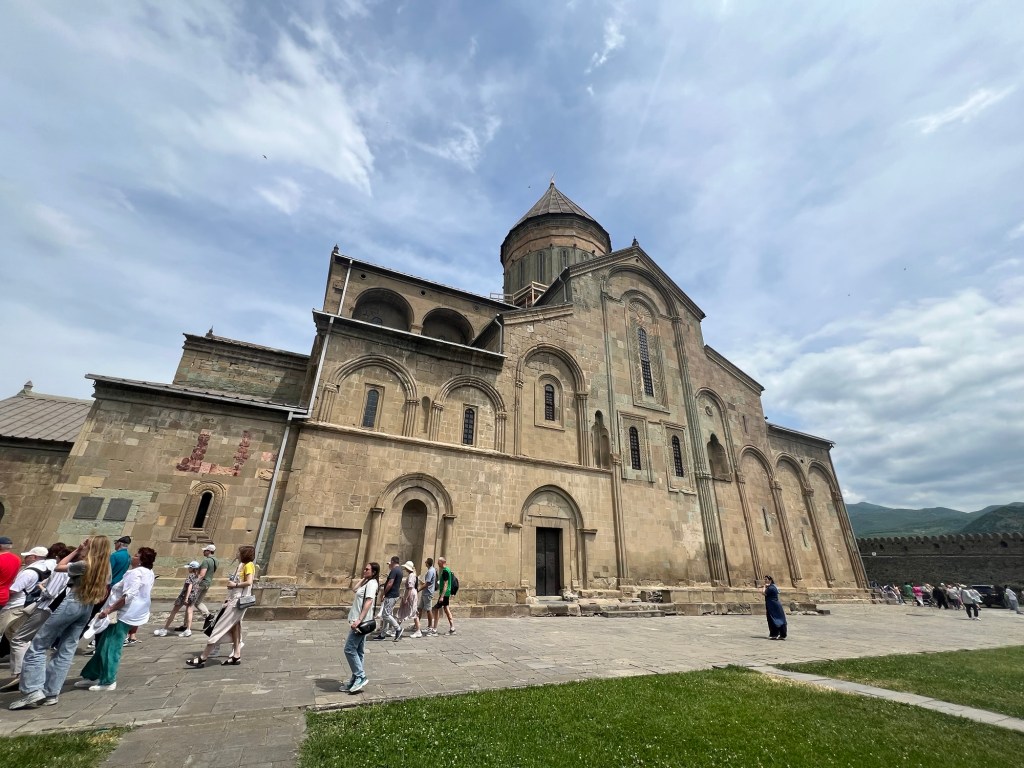
Next stop Svetitskhoveli Cathedral at the centre of the town is a masterpiece of early and high Middle Ages second in size only to The Holy Trinity( Sanabre) in Tbilisi.

It is renowned for the burial site of the claimed Christ’s Mantle worn at his death. Legend has it that Sidonia pleaded with her brother Elias a Georgian Jew. who was in Jerusalem, not to participate in the punishment of Jesus. Following the death of Christ he bought the robe from a Roman soldier and brought it to Sidonia. When she touched the sacred Robe she died instantly from the emotions she experienced. The Robe could not be removed from her hands so she was buried with it. The place where she was buried is preserved in the Cathedral. Later( before the cathedral was built!) an enormous Cedar tree grew from her grave.

Later in the 4th C St Nino ordered the tree to be cut down to build the church. The tree provided 7 columns but the seventh column had supernatural properties and rise into the sky. It returned to earth after St Nino prayed all night and the church could be built. The name of the cathedral comes from thus miracle. Sveti means pillar and tskhoveli means living or life-giving. There are many icons depicting this scene throughout Georgia. St Nino converted the King and Queen to Christianity and it became a state religion in 337AD.

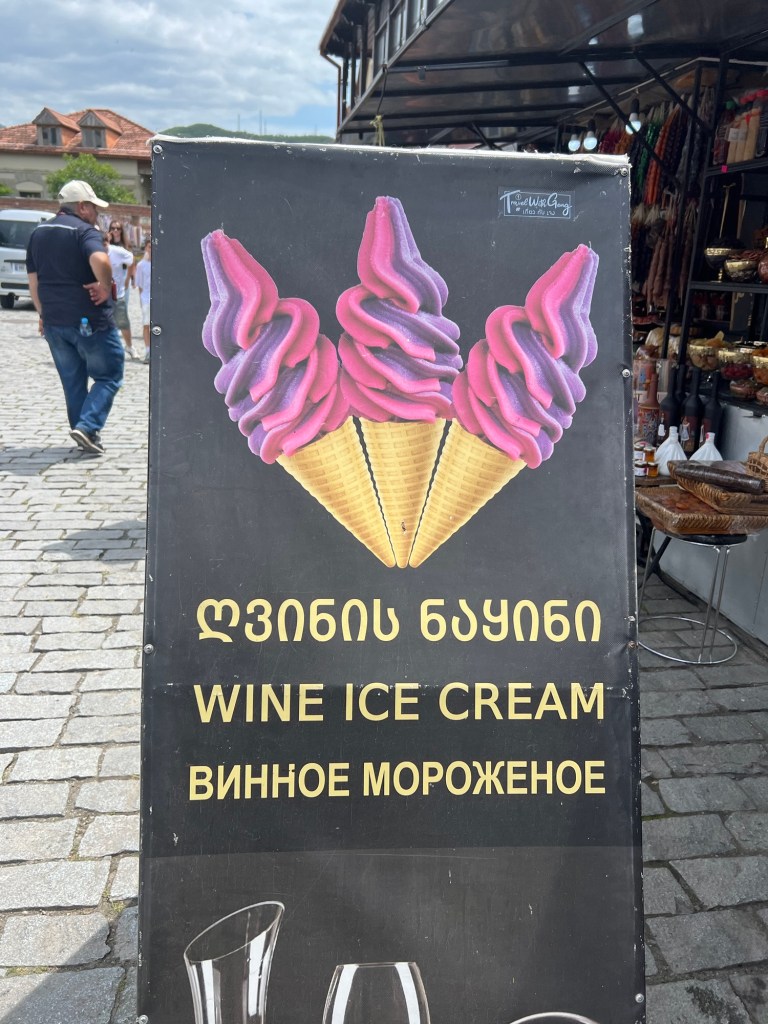
By now we were hungry and found a humble place ( looked like the back garden of a home) for lunch. At my feet was a lovely black dog so it was difficult to move my chair. As I got up to make room for others I knocked a pot plant off a shelf causing the plastic pot to split and break a branch off the succulent. I was embarrassed and the old lady was not pleased. The the food was good and I made a hasty retreat. I found wine icecream to taste and headed back to the bus.

Tasted wine like and was pleasant.

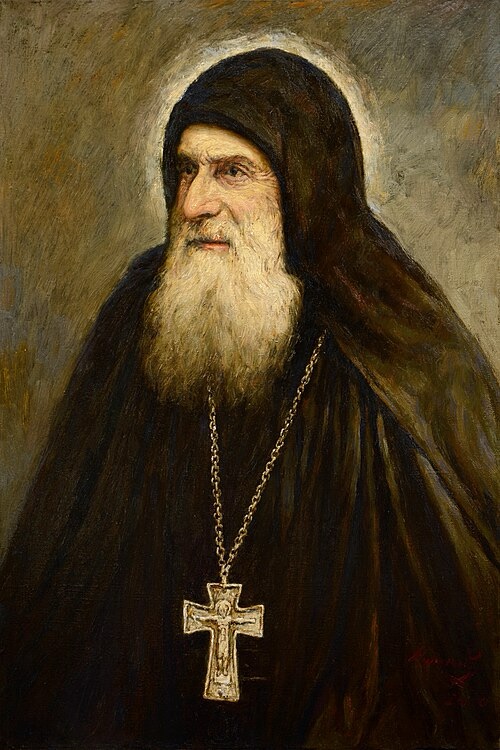
Our last stop was the Samtavro Monastery that combines the Samtavro Transfiguration Church and Nunnery of St Nino. The church is a cross in square temple of the 4th Centuryand reconstructed in the 11th Century. It houses the graves of King Mirian the lll of Iberia and the famous Georgian Monk Papa Gabriel- the last Saint, Fool for Christ and Confessor was his description. He was born in 1931 and was an activist against Lenin, arrested and tortured for his faith by the communists. Eventually released he spent the rest of his life at the nunnery of St Nino. He was believed to have powers of healing and clairvoyance. When he died there was a huge focus on him and he is venerated as the last Saint.

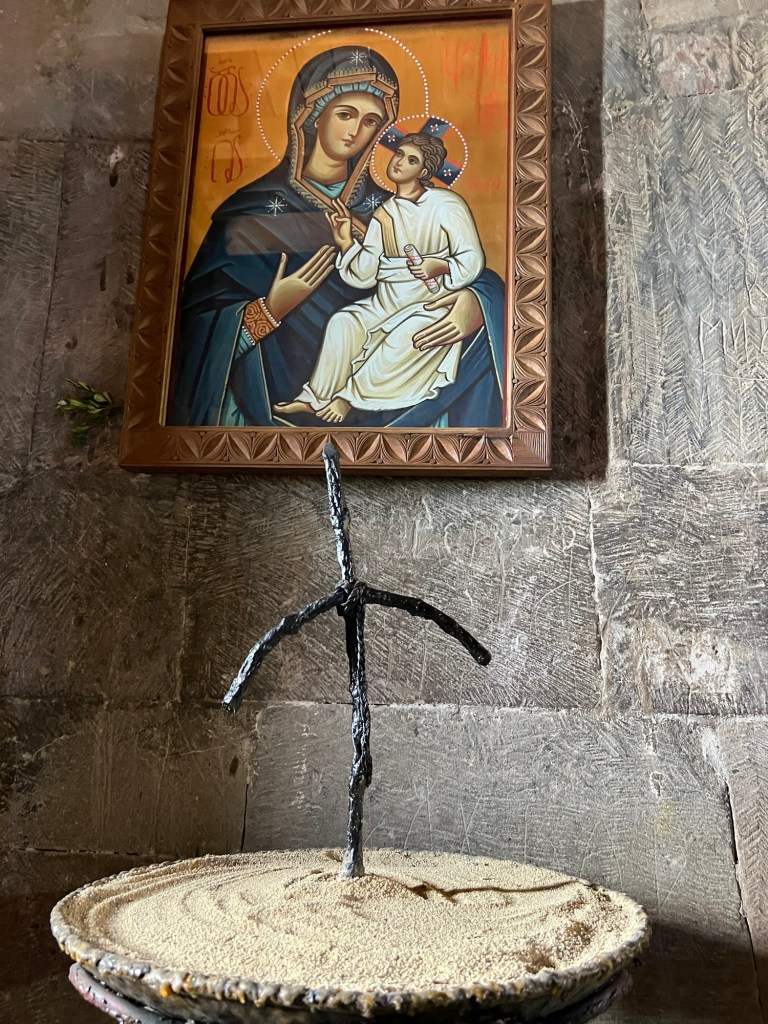
Saint Papa Gabriel

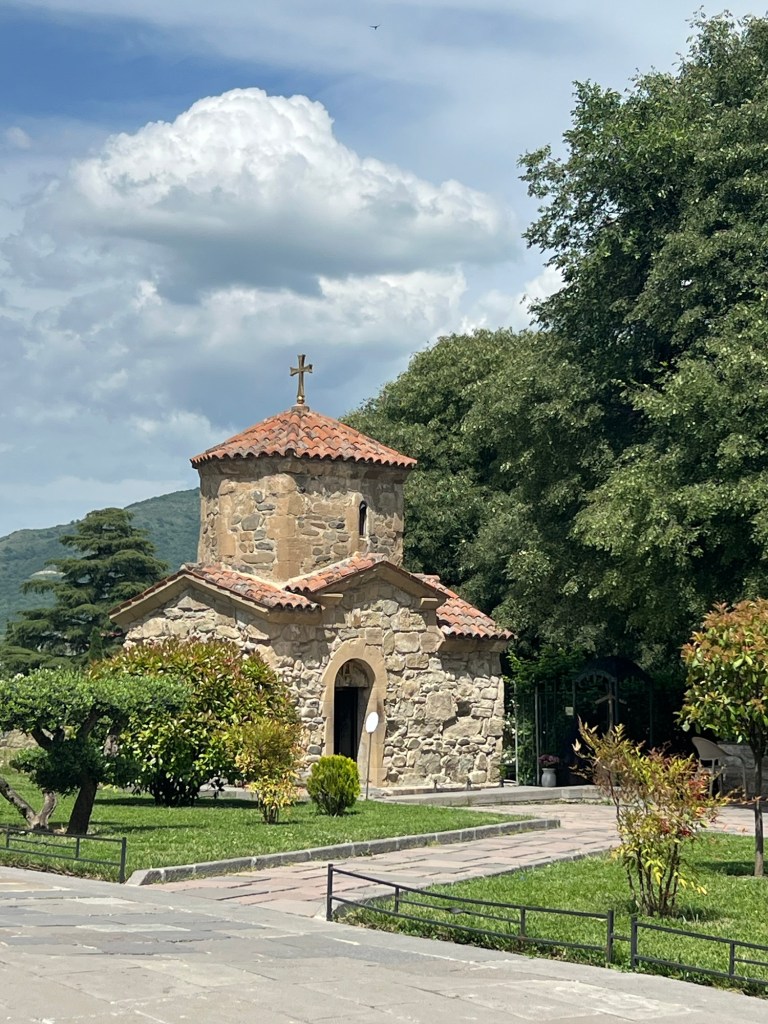
Saint Nino used a small church outside the large one as her resting place when she visited.

Now we are returning to Tbilisi for our last dinner here. Another huge day.

Saturday 24 th

Today we were in for a long drive out to the Kakheti region, often called the “cradle of wine”. We had great anticipation for tasting a few Georgian wines. The Georgians use a method of huge clay vats called Kvevri, which avoids additives and requires the whole grape to be squashed and skins to be left to ferment naturally. No sugar and about 6 months of cellaring then filtering out the wine. Those we have tasted have been very fruity and refreshing, especially as they serve them quite chilled.

Because this is the first trip in the Caucases area by our Tour organisers they decided (with our consultation) to combine three areas so we avoid a one night stop over in Telavi. This would bring us back late to Tbilisi but allow us a free day in Tbilisi. This meant we visited three significant churches, and in all honesty, I have found it hard to keep them all separate in my memory!

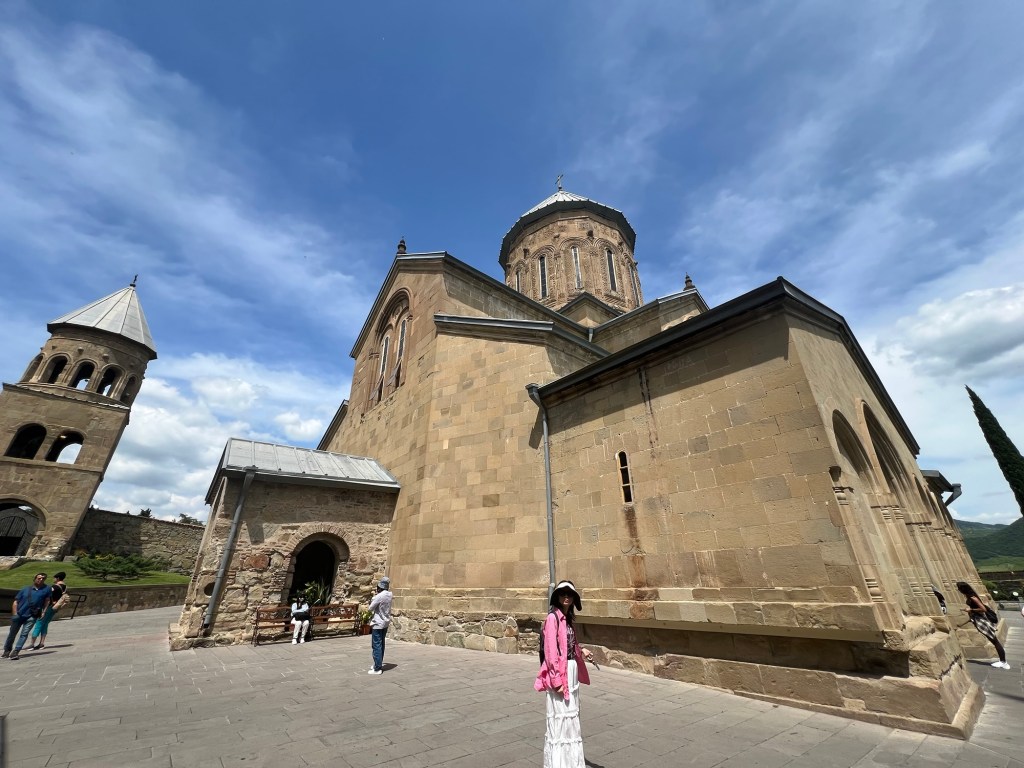
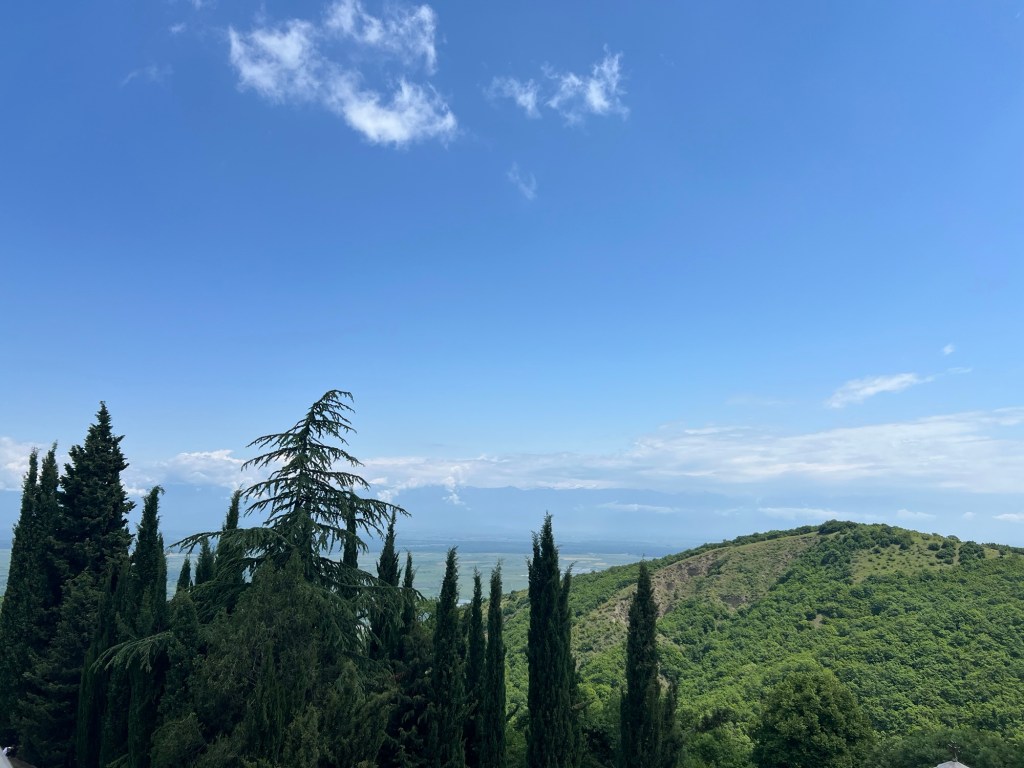
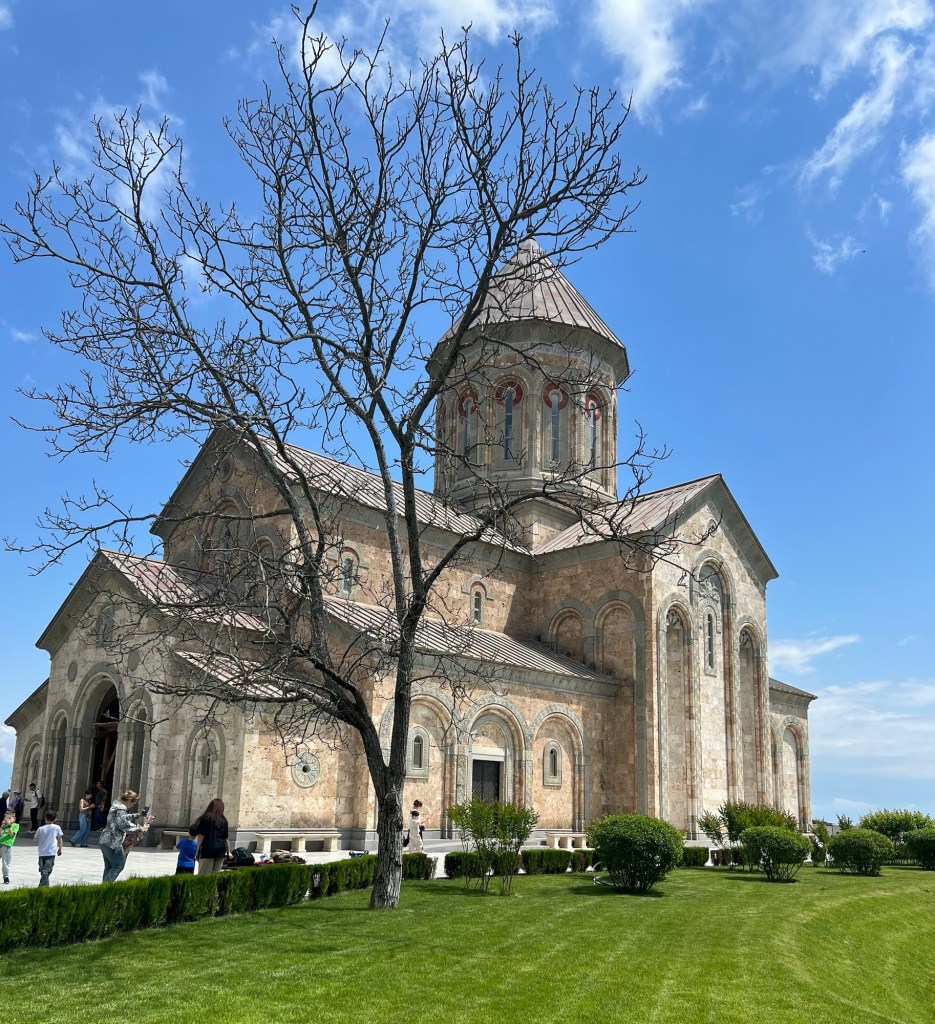
The first was to Bodbe (St George’s ) Monastery and the new St Nino’s Church. The Monastery has now become a nunnery. The churches are situated on a ridge overlooking the Alazani valley below, where cultivation of vineyards was prolific. In a country where everyone has their own grape vines and makes their own wines it would be hoped they export a lot! The country is so fertile that I am sure other crops would flourish.

Vineyards as far as the eye can see.
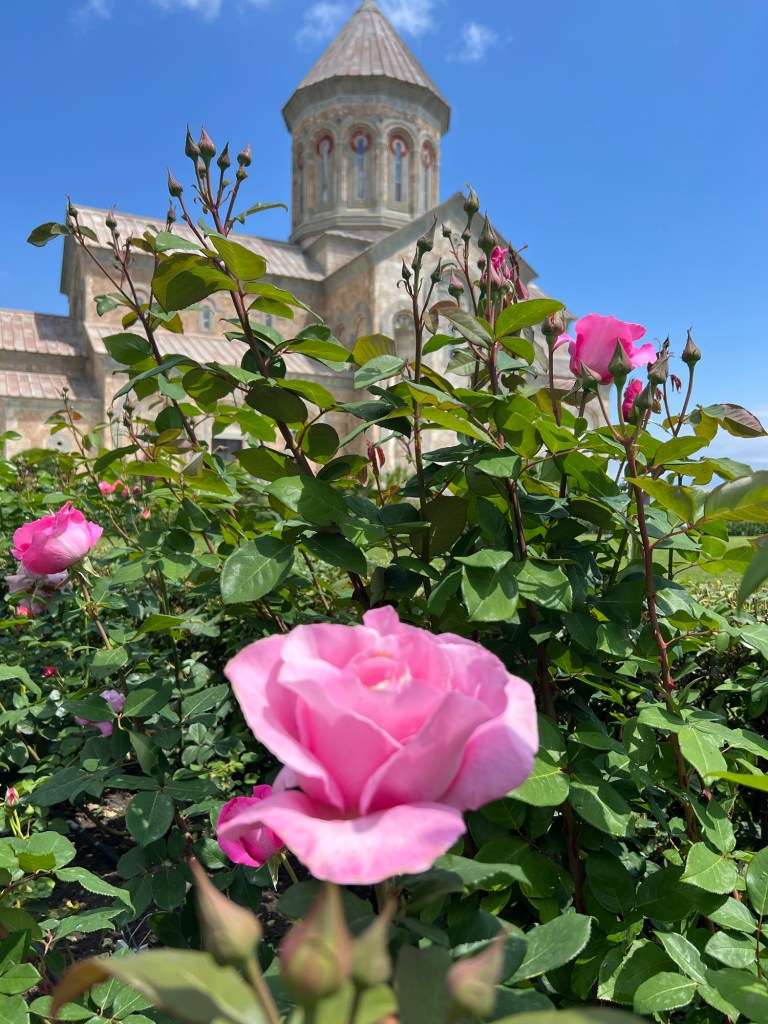
The churches are surrounded by beautiful rose gardens. St George’s Cathedral and monastery founded in the 9th Century had its lands confiscated by the Russian Empire in 1837, then it was converted to a hospital by the Soviets in 1924, only returning to a monastery after independence in 1991. St Nino was buried inside. We were told it was good blessings for those who placed a cherished object on the grave. Of course Anne and I never pass up a chance to get a blessing. Our guide Nino placed her bracelet on top of the crypt. Anne put her sunglasses on it and I placed the wooden cross I brought from Australia.
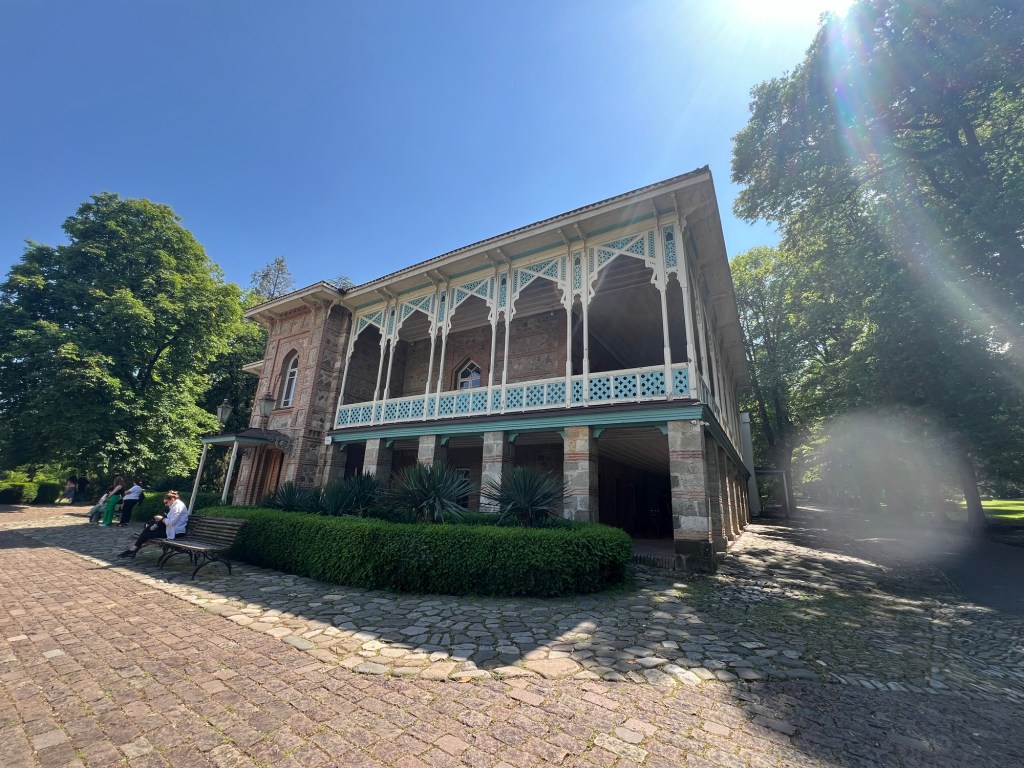
After this delightful stop we moved to the House Museum of Prince Alexander Chavchavadze at Tsinandali. A gracious home dedicated to a prominent 19th Century Georgian aristocrat, poet, and military figure. Unfortunately his wife and several of his children were kidnapped and held for ransom. He borrowed money to rescue them and was then unable to repay the loans and lost his house. Despite this misfortune he is credited with promoting the 8000 year old heritage of Georgian wine making and also introducing new technology to the industry.

Here Young John, Monica a real wine buff, Nancy and I did a four wine tasting experience. Monica is very systematic, taking notes etc. I was chuffed to be able to sound intelligent when I recognised an aroma with which she and John concurred!

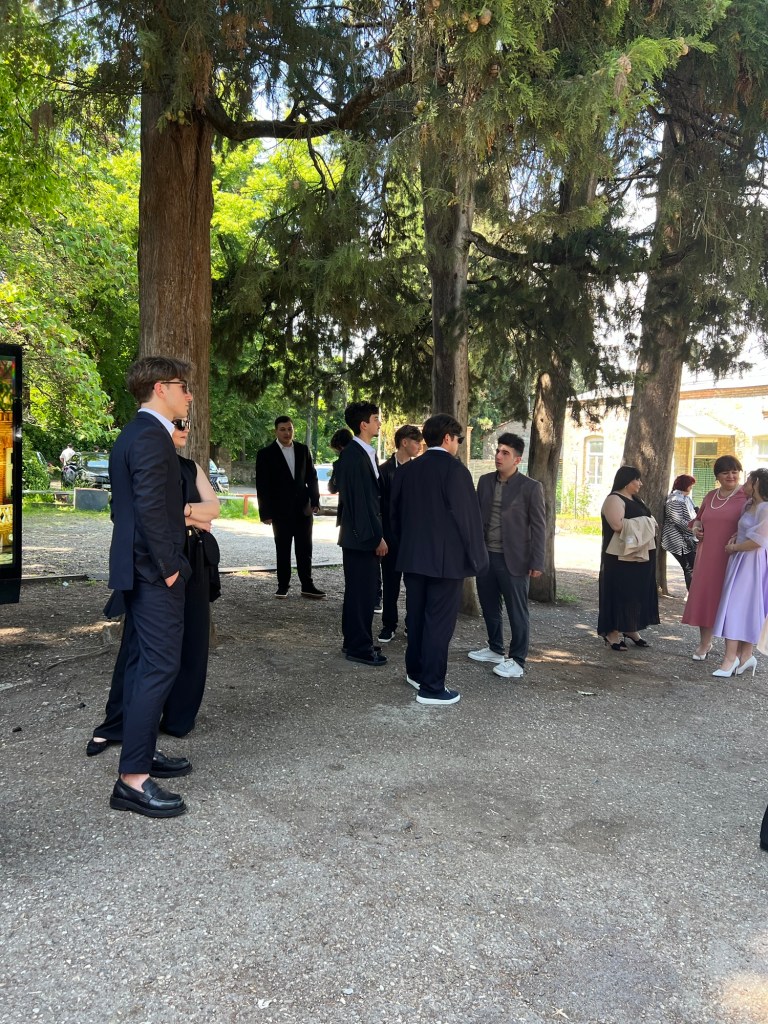
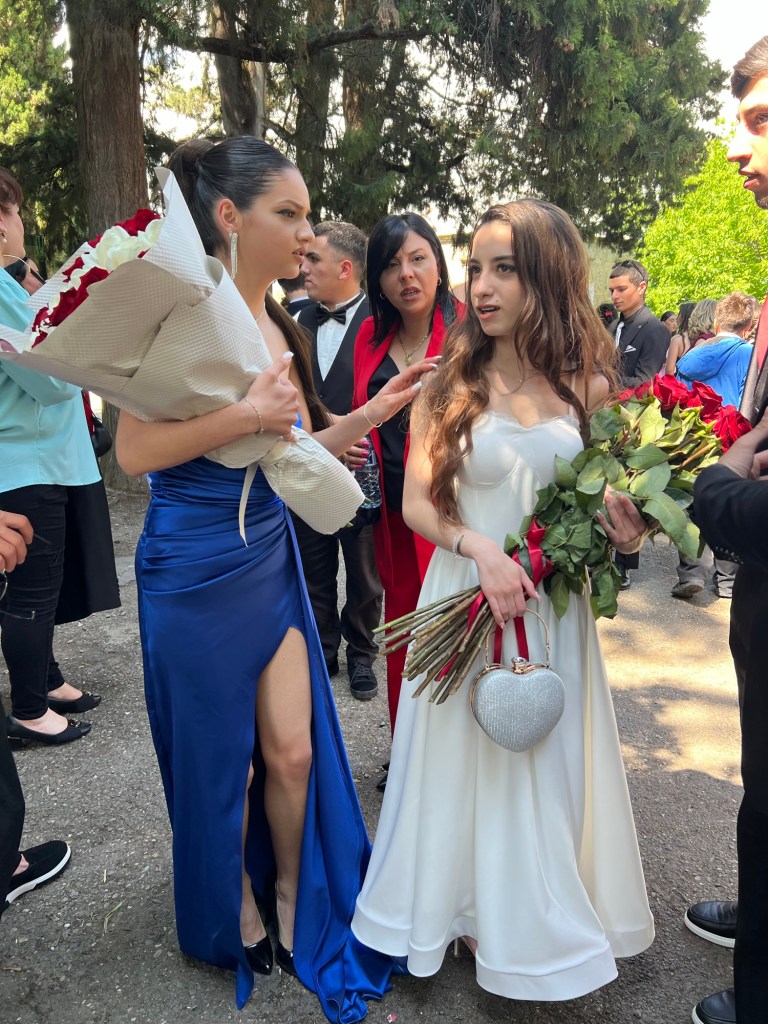
We were surprised while waiting to enter the house to see a huge party of youngsters all dressed like they were going to a wedding or a ball. The girls were in very high heels, the boys in suits. It turns out that graduation parties and fancy photos are a real ‘thing’ here. They all looked so pretty and handsome, but when the girl in red moved her straps on her shoes and I made a comment she said they were already hurting. We have all been there! Suffering for beauty.

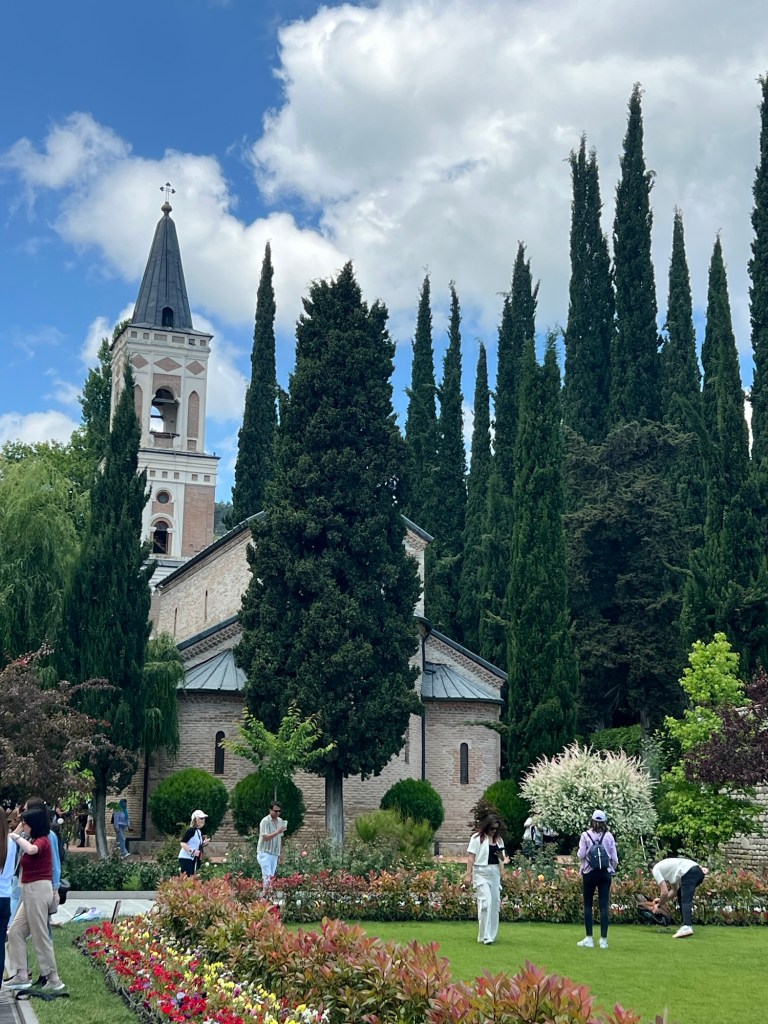
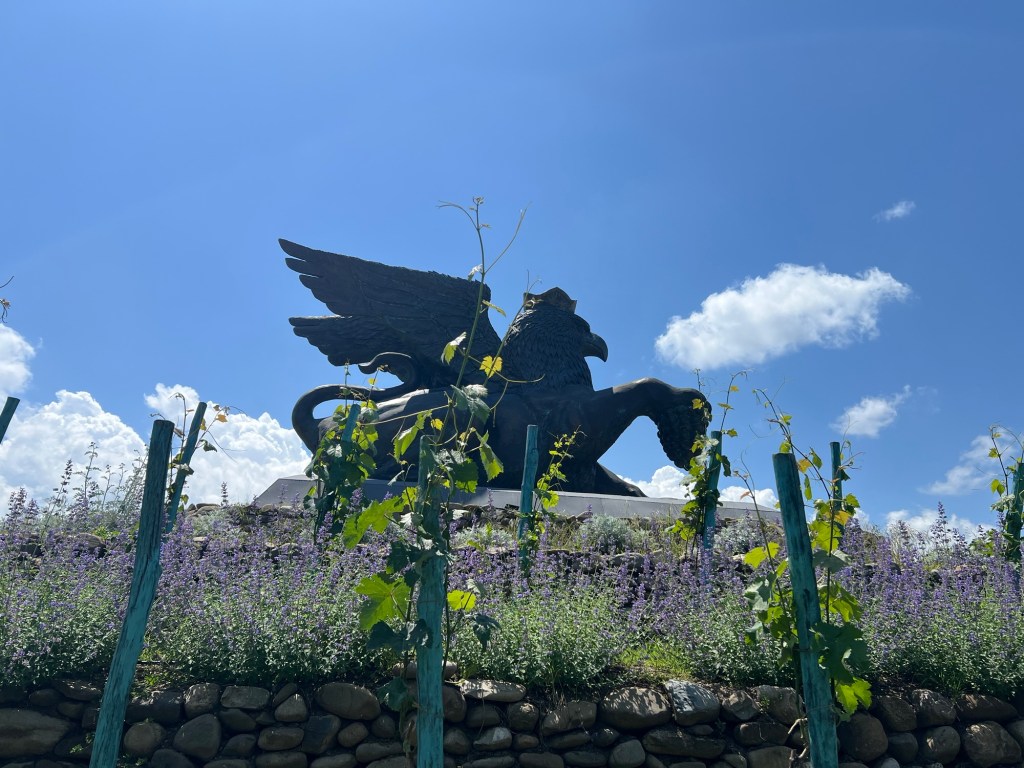
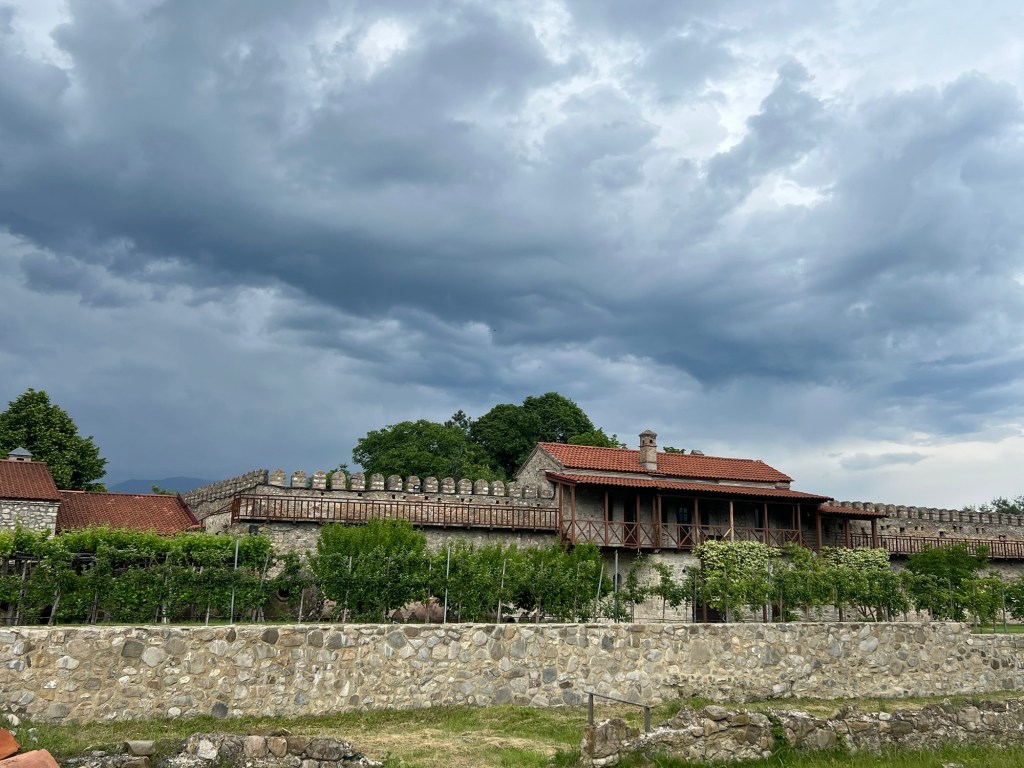
We drove next door to our Winery lunch. Shumi Winery, a young place only 10 years old but gorgeous. Beautiful gardens. Rather whimsical with ponds and waterwheels but so pretty and quaint. We had a table under the tree and would have been happy to spend all afternoon here, but alas more stops to come.

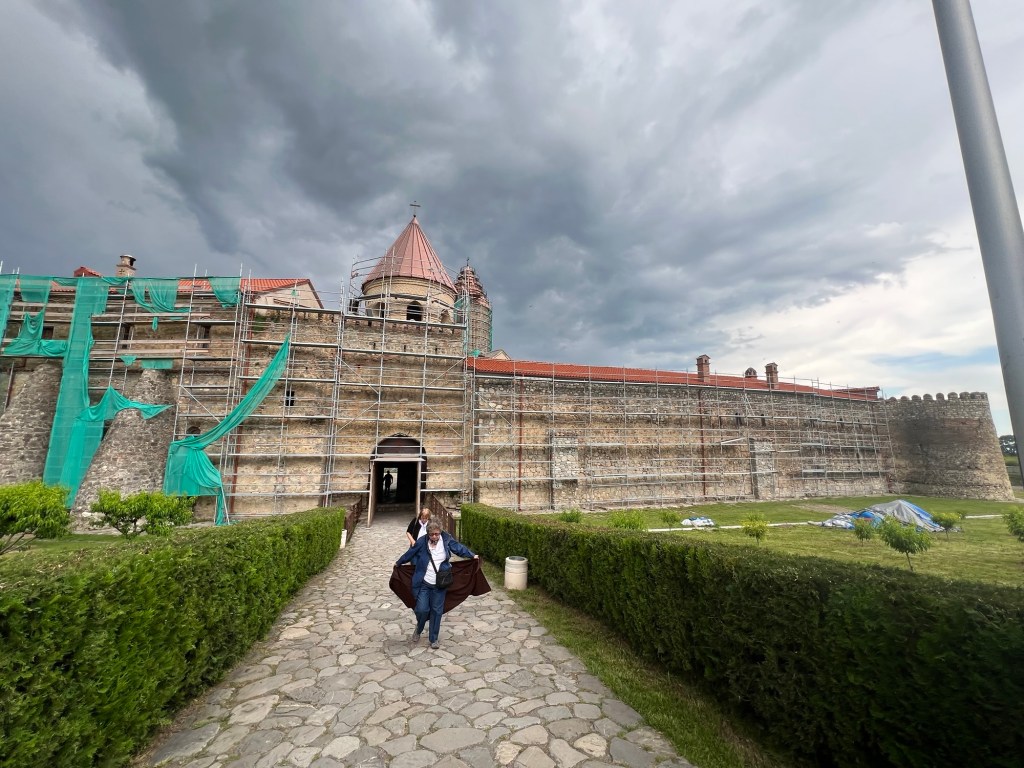
Alaverdi Monastery is in the Alazani Valley. Badagoni’s “Alaverdi Tradition” line of wines is made in the historic 11th-century Alaverdi Monastery wine cellar, which was restored with Badagoni’s support in 2006. Badagoni also produces Qvevri wines in the same cellar, following the ancient Georgian winemaking tradition. Unfortunately it was under scaffolding and we were unable to see the cellars or even the church.

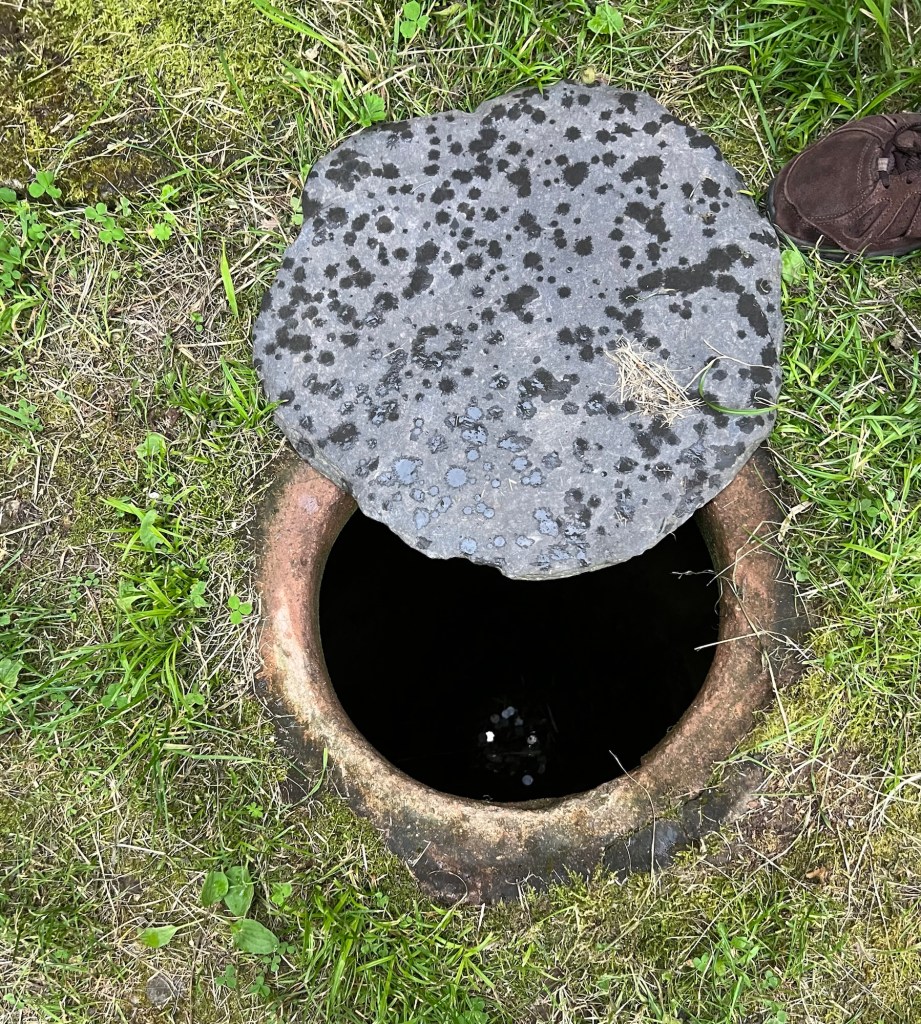
Our last stop was the Ikastola monastery and academy where the poet Rustavelli studied. It is under reconstruction also and not large. It was a whistle stop but we were amused to see the Qvevre cask in the ground of the room that was used for teaching. Apparently they used to dip into it through their classes! The clay casks add a unique flavour to the wines.

This was a huge day but it wasn’t over yet. We had a birthday dinner to celebrate. Beryl had made a fancy hat from birthday cards as a surprise for Bronwen whose birthday was today. It was a surprise and we had all signed a card and kept it a secret but we were worried Bronwen might decide to just go to bed when we returned. We arrived back to Tbilisi at about 9 pm and went to dinner at a place just up the road from our hotel. It was very quaint. I made a grand entrance by missing a step, twisting my ankle and falling almost flat on my face. Somehow I twisted and landed on my side. The shock on the face of the wait staff was worse than mine. I was helped up and was fine if a little shaken. No damage done. Bronwen was delighted and the singers sang happy birthday in Georgian.
A BIG day and we all fell into bed exhausted. No early starts tomorrow!

Thursday 22nd and Friday 23rd May

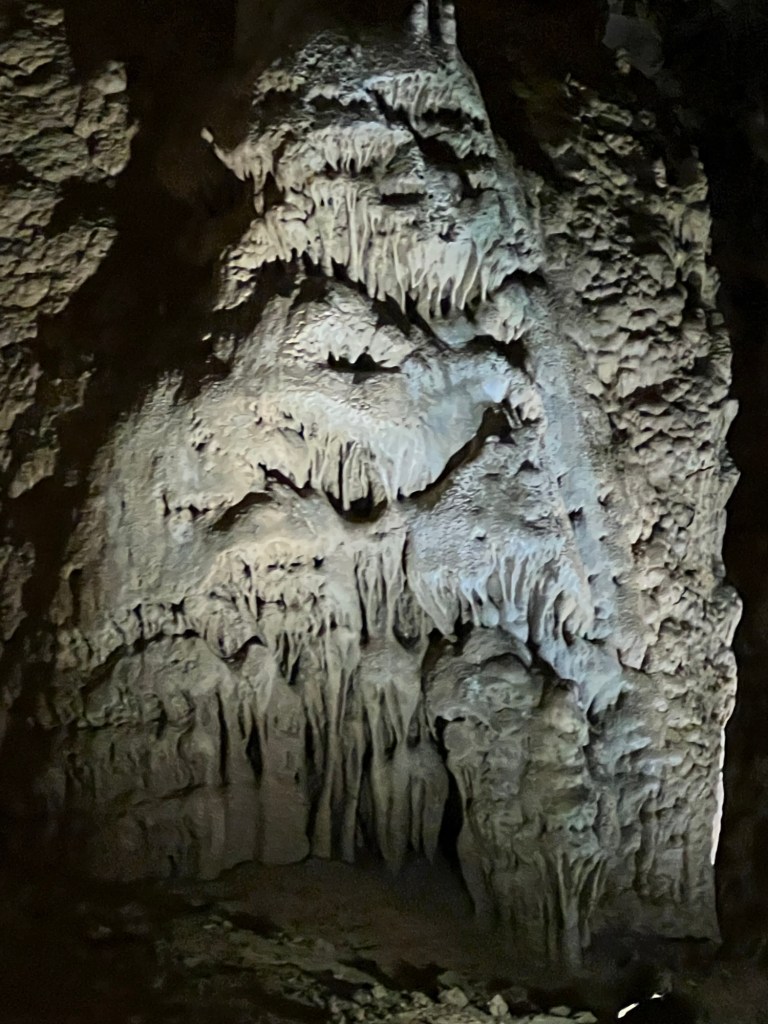
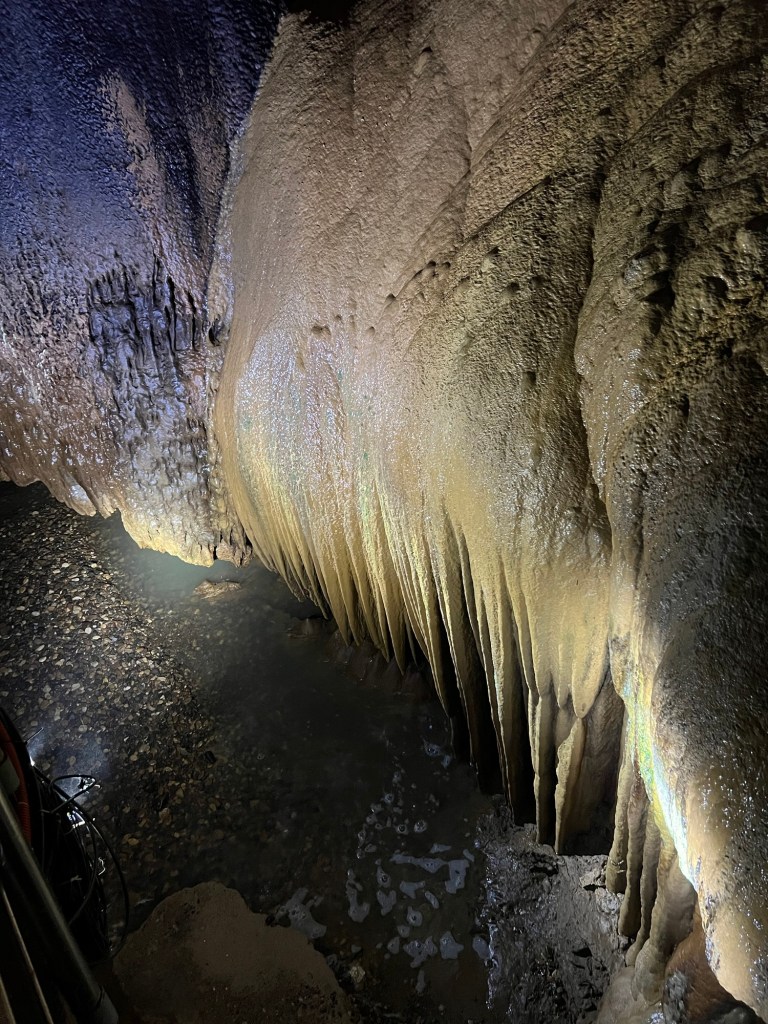
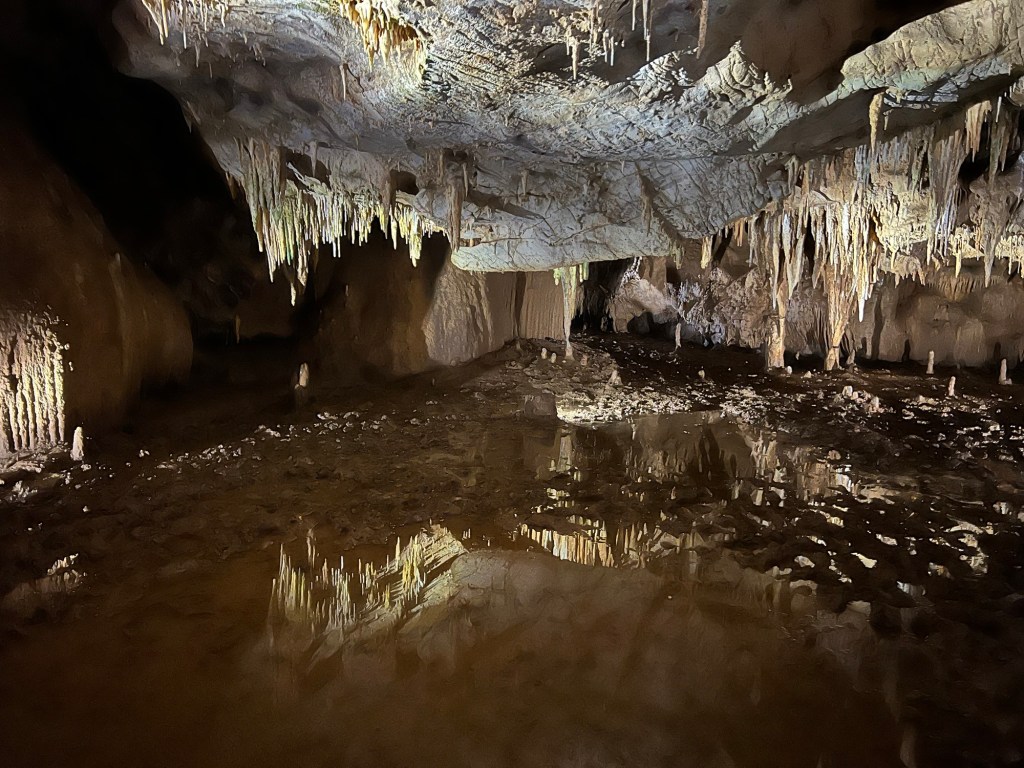
Today we visited Prometheus Cave just out of Kutaisi. These caves were only discovered in 1984 and their full extent was not discovered until the 1980s.

The deepest cavern is 80 metres below the surface. There were so many fantastic stalactites and stalagmites and weird and wonderful shapes. There was a chamber where they hold weddings and as we passed through it romantic music played. Personally I think you would want a short wedding dress otherwise it would be wet and muddy by the time you left!

We exited in a flat bottomed boat, necessarily helmeted as the roof was low and emerged into a lovely pond adjacent to a resort!

Mind your head! The exit from the caves.

We departed for Tbilisi, capital of Georgia. Along the way we stopped at a roadhouse. Very clean, very modern with a supermarket, good toilets and food court. Anne had braised chicken livers which she rated as delicious and restaurant worthy. My Mexican chicken was tough. We have felt the chicken is often overcooked and the meat(beef, pork, veal) was also on the tough side, though good flavour.

The groovy road house

We passed through about 13 or so tunnels which were built by the Chinese as part of their Belt and Road initiative ( New Silk Road). I can only say Thank you, because the road would have been very winding.

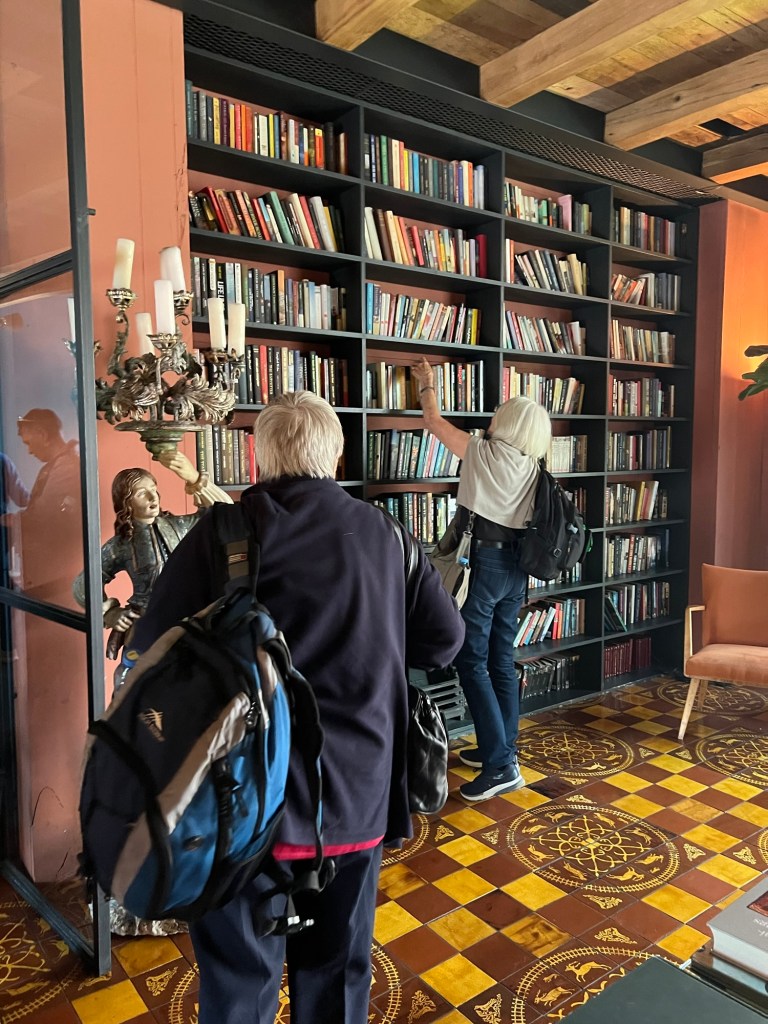
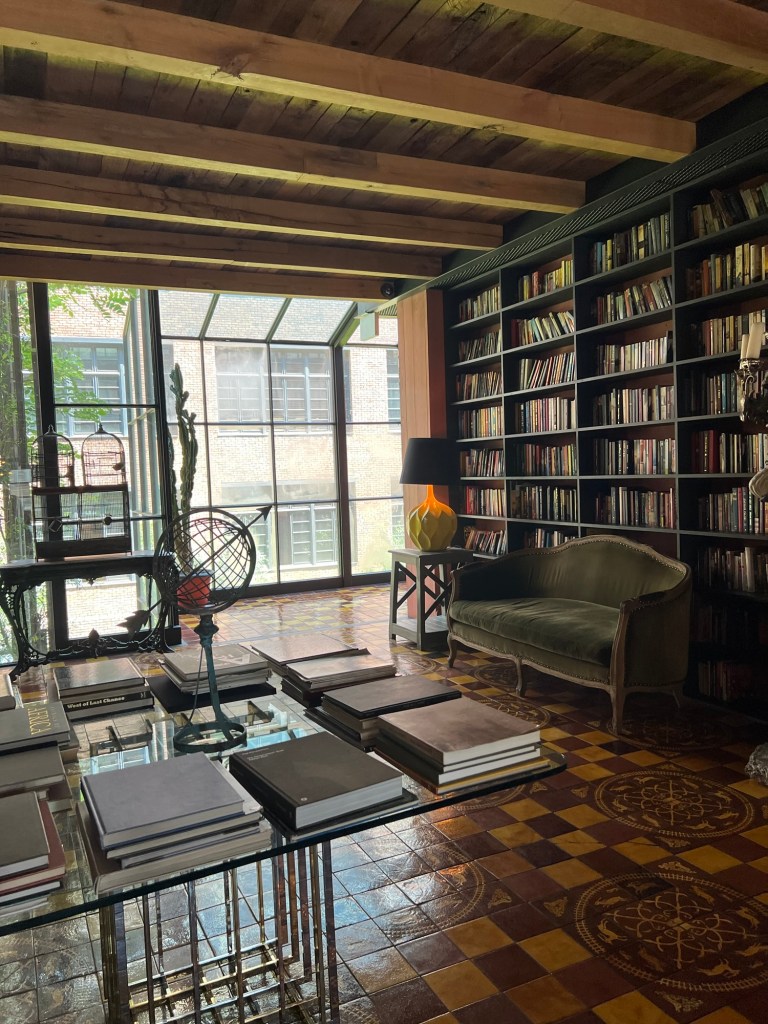
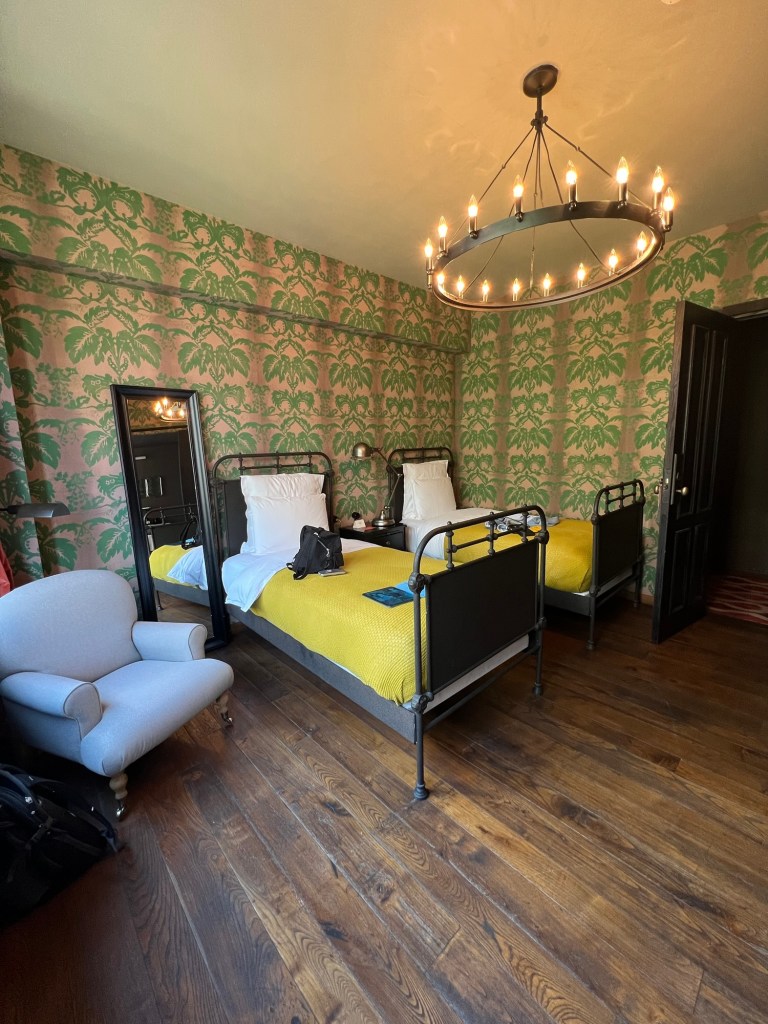
We arrived at our hotel- The Rooms Hotel and were instantly charmed. The lobby has wooden floors, almost a library of books and everything is really eclectic. Dark colours or wall paper, wooden ceilings in public places, very cosy yet sophisticated. We love it. Apparently designed by two sisters.

We had dinner downstairs, the food was good and the cocktails even better! Breakfast was equally impressive.

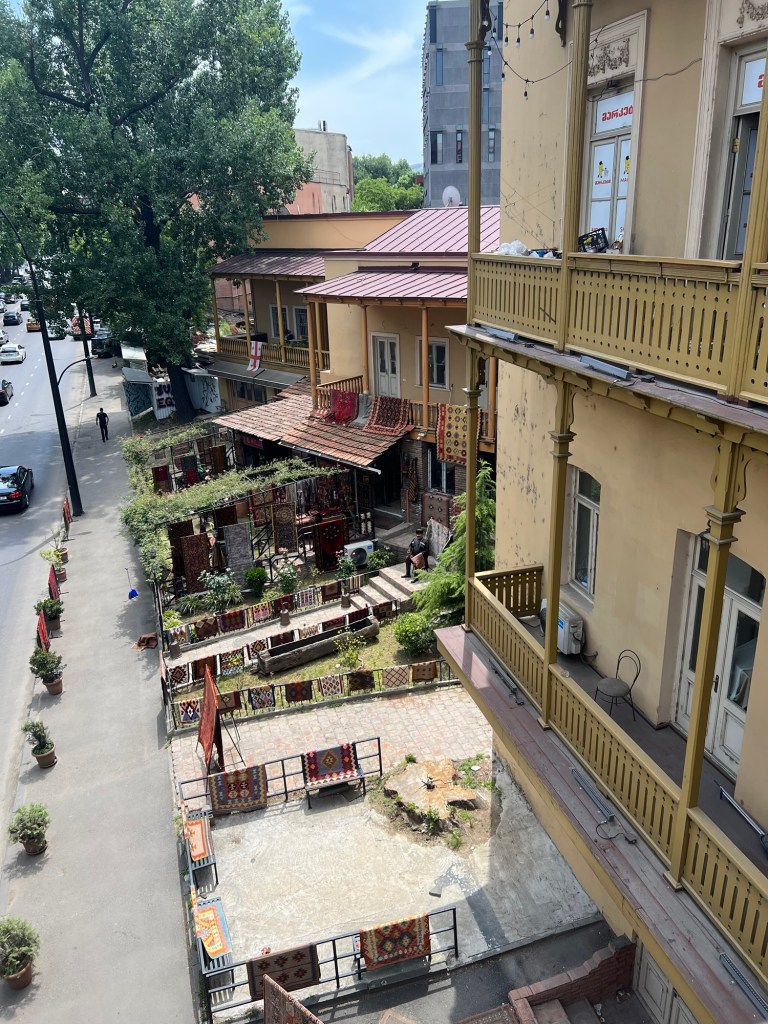
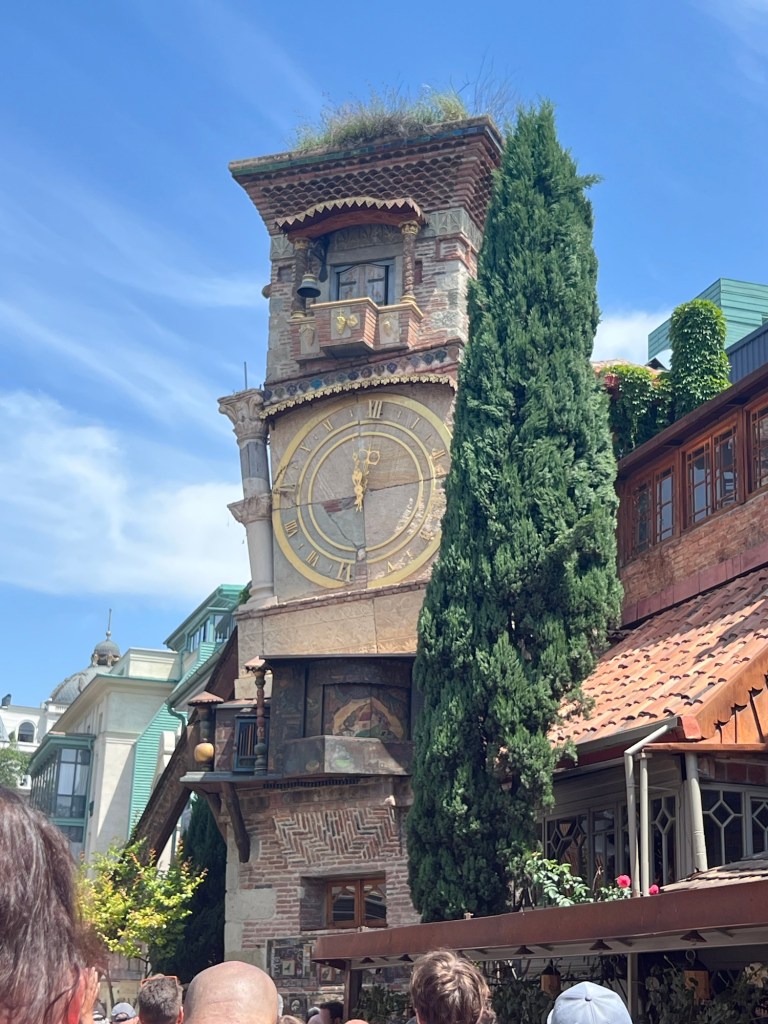
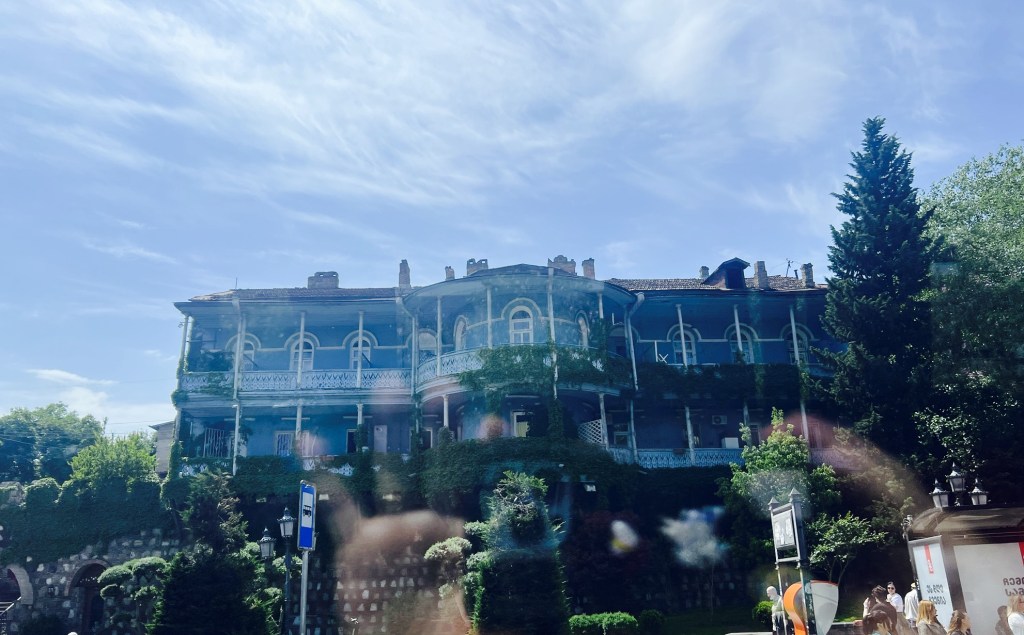
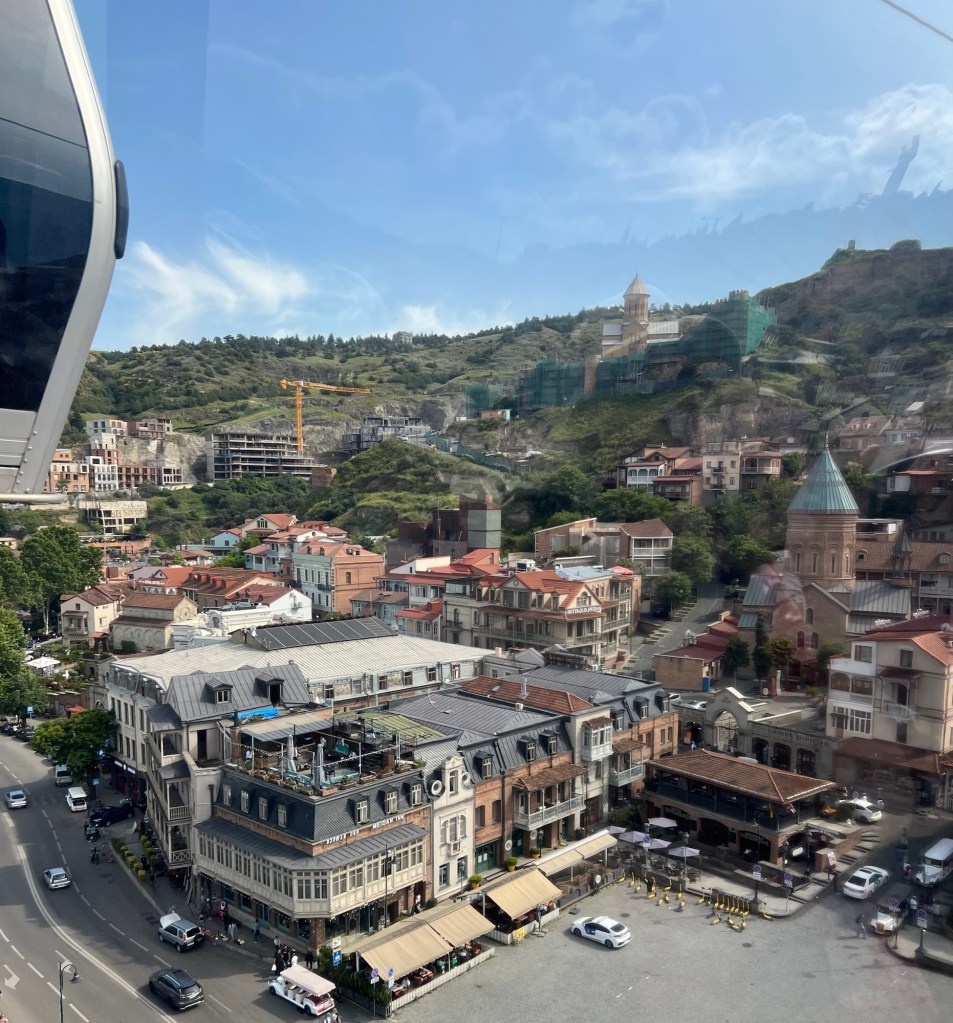
Next we hit the streets for a tour of the old city. It has a lot of charm. I am a sucker for a verandah or balcony and there were many. Tbilisi is a sophisticated city of art galleries, museums, churches and markets as well as Jazz clubs.

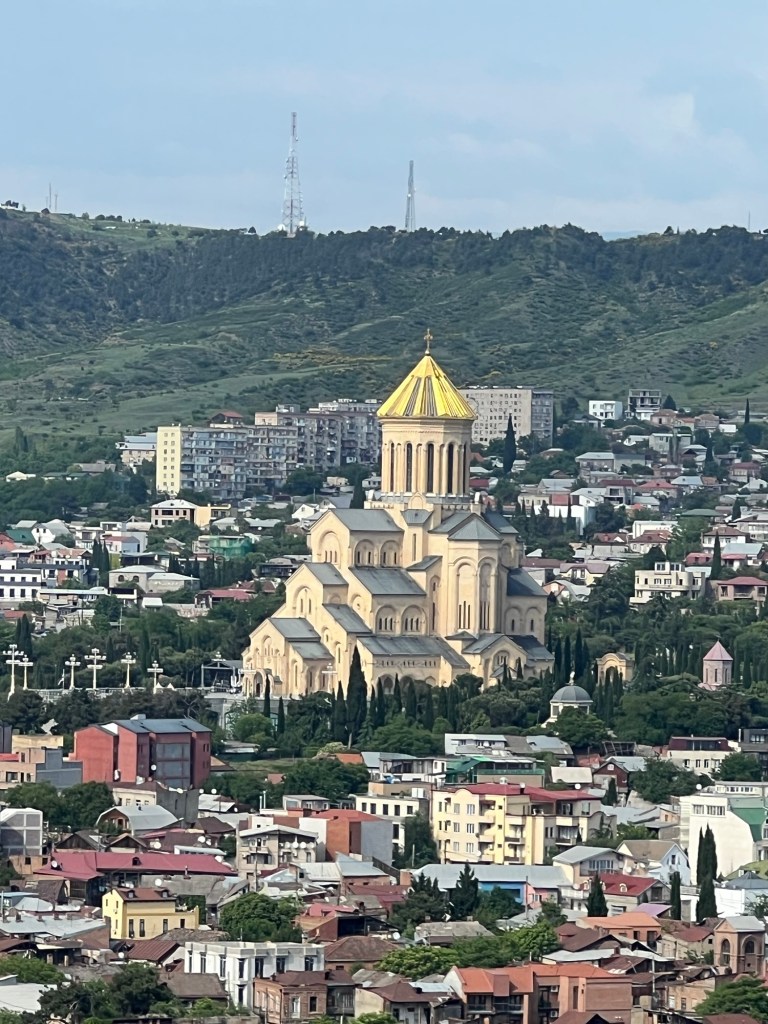
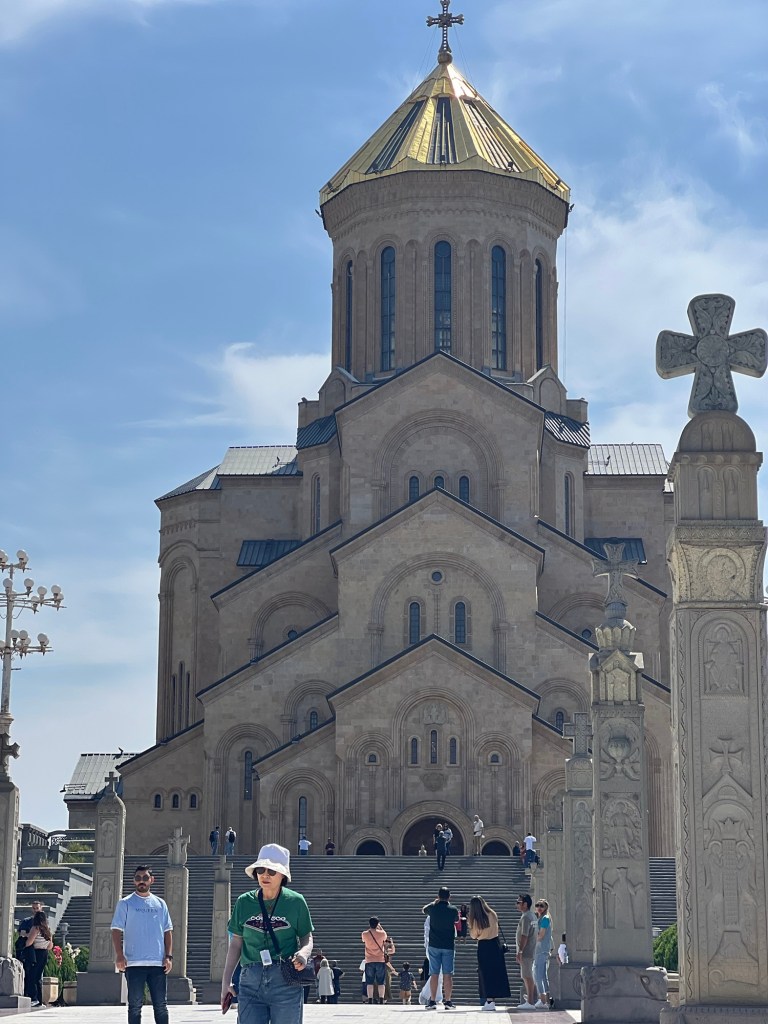
The churches we explored were very impressive, with the largest Cathedral in the Caucases and newest, being the Sameba.

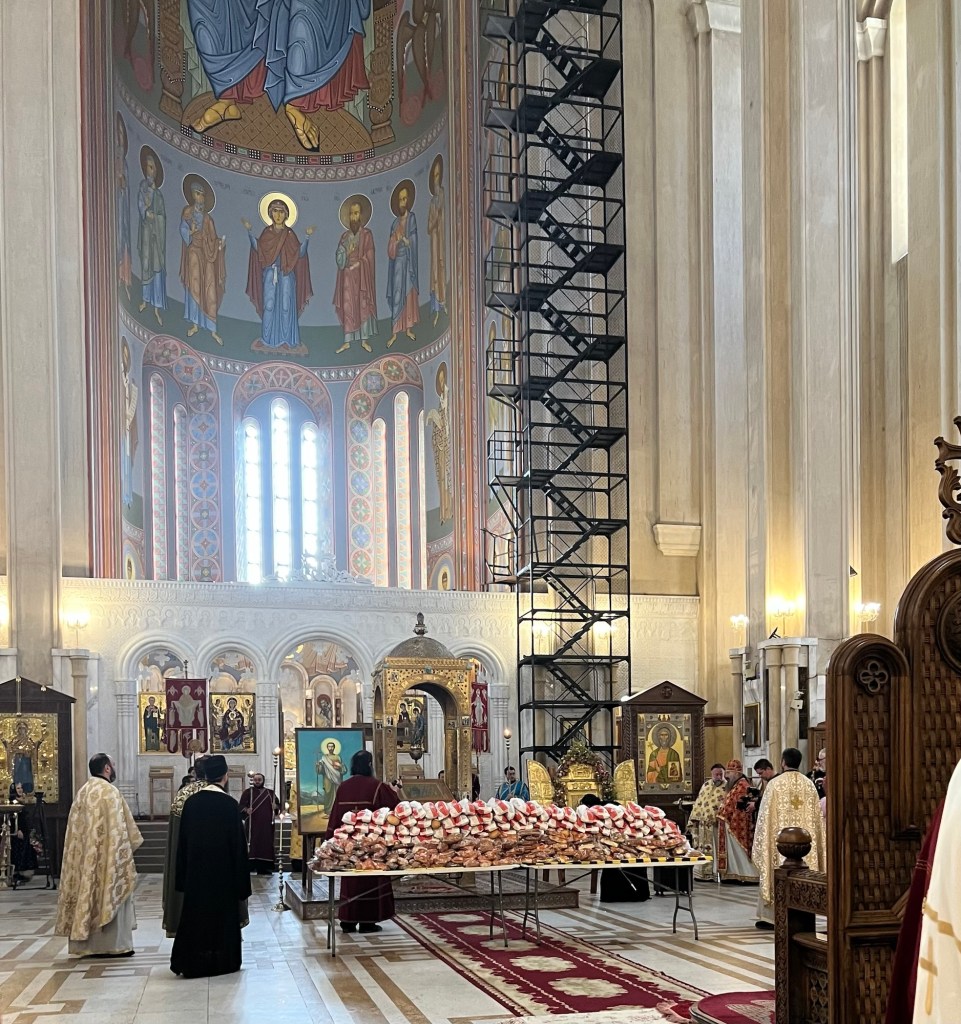
At the Cathedral it turned out to be the celebration of the feast of Saint Simon and the Bishop of Abkhazia ( independent republic, formerly part of Georgia) was visiting. They had rolled out the red carpet and dignitaries were resplendent in their colourful robes. There was a huge Bunnings fold out table covered in bread for communion. When the bishop arrived he was greeted warmly and then they all went behind the altar doors. While they were there the choir (electronic?) was singing. The church had people all over the place. It seemed as busy as Flinders street Station! We saw so many people crossing themselves, kneeling and kissing the icons repeatedly. There is a fervour we find a bit unsettling.

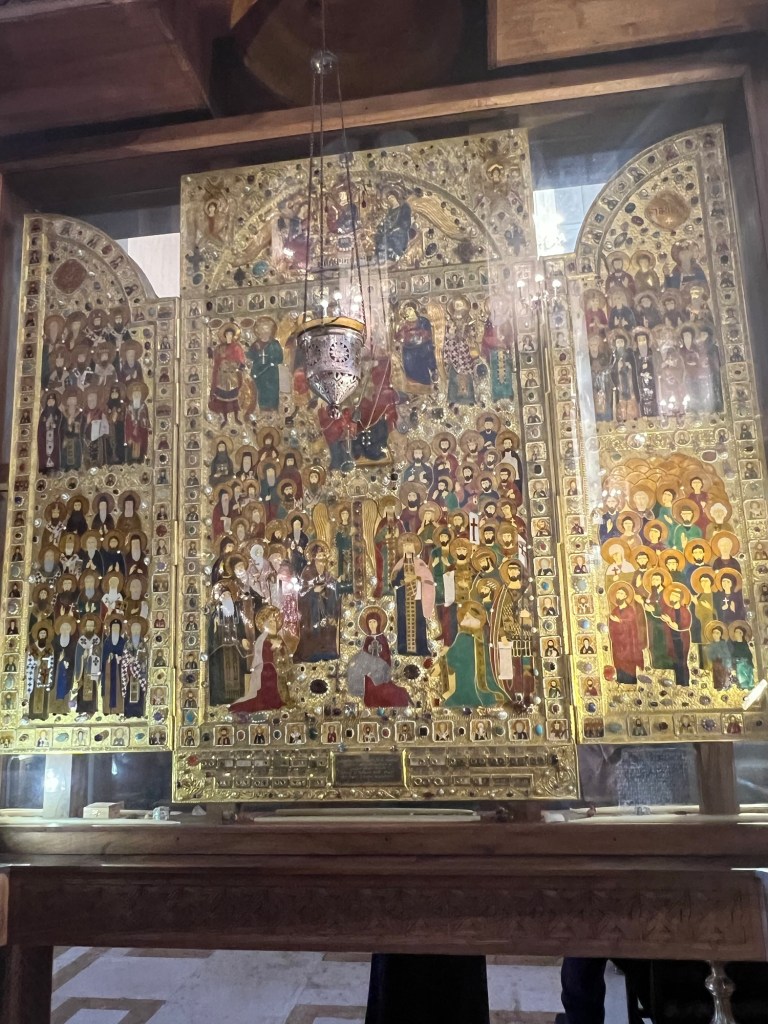
The Glory of Georgia icon is beautiful and covered in donated rings and crosses as well as the gilt and jewels of the original work. It has two sides and sums up the story and the saints significant in Georgia.

We visited the church of Anchiskhati Basilica, the oldest church in Tbilisi, built in the 6th Century by the King Daichi of Iberia who granted it the status of Capital city. Even during the Arab rule the (736-1122) it was allowed to toll its bells which caused it to be called the Cathedral of the bells. It received its name in the 17th Century when the Icon of the Saviour Not Made By Hands was moved here from Anchi Monastery. The Icon is now kept in the Shalva Amiranashvili Art Museum in Tbilisi.

Today many people want the icon returned to the church but it is considered by curators to be too fragile. Anne and I saw it in the Museum later in the week and it is very powerful. People come and pray before it, touching the floor. It is very moving to see. The belief is that it was created miraculously rather than by human hands so is seen as a connection to the divine.

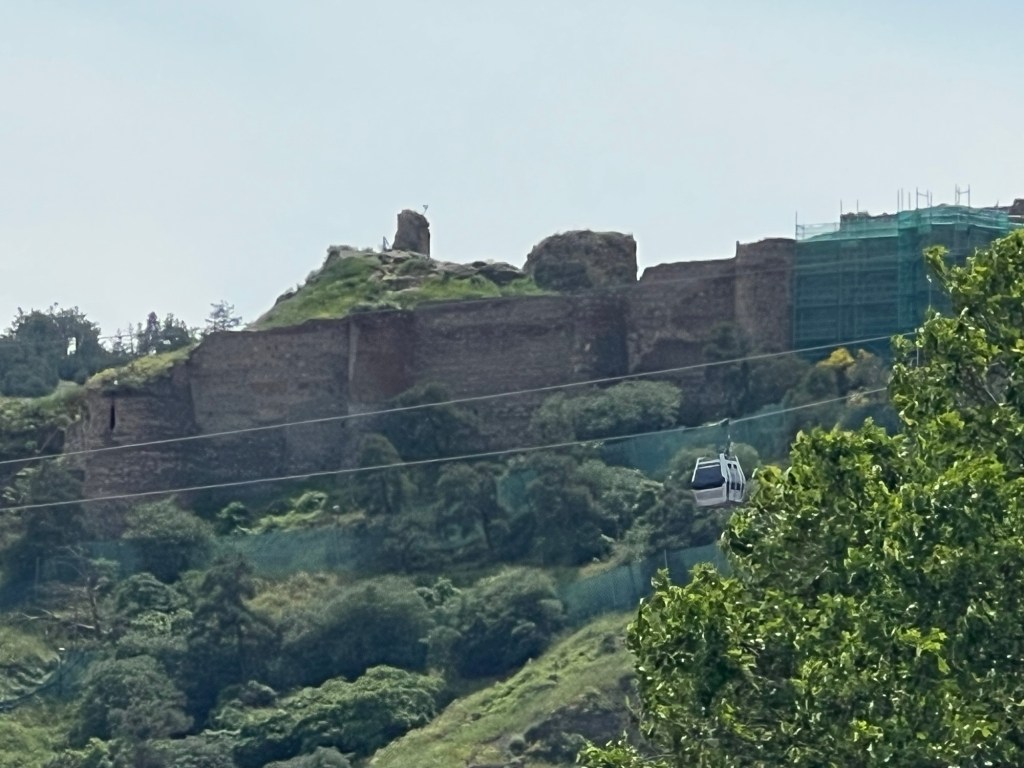
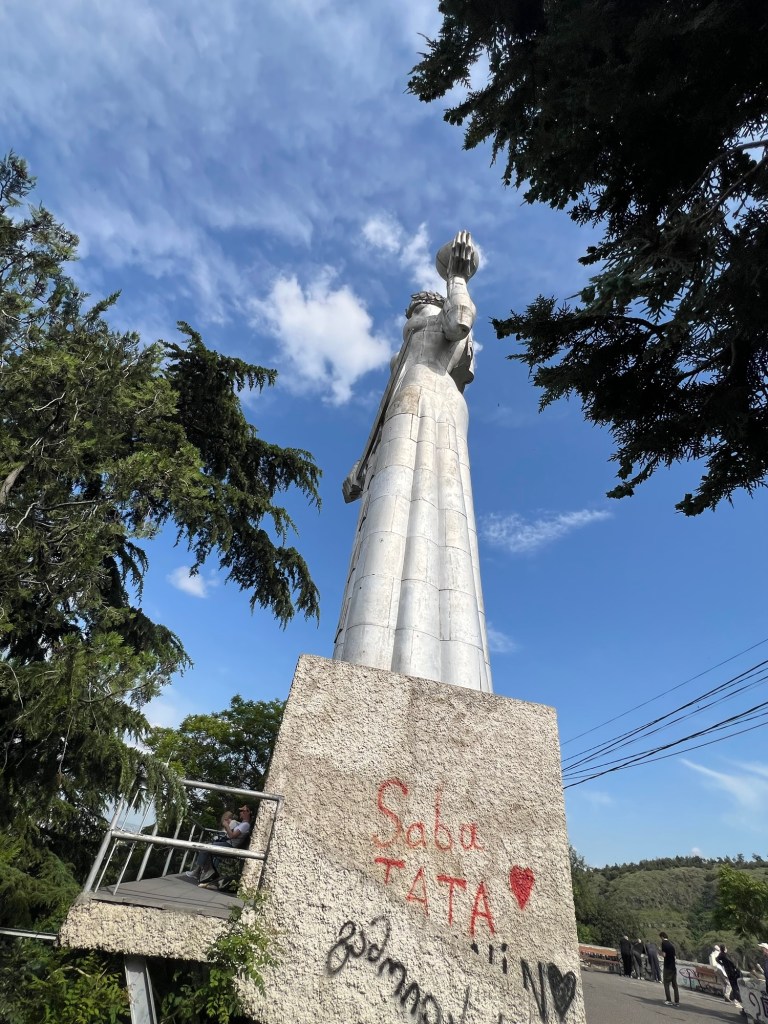
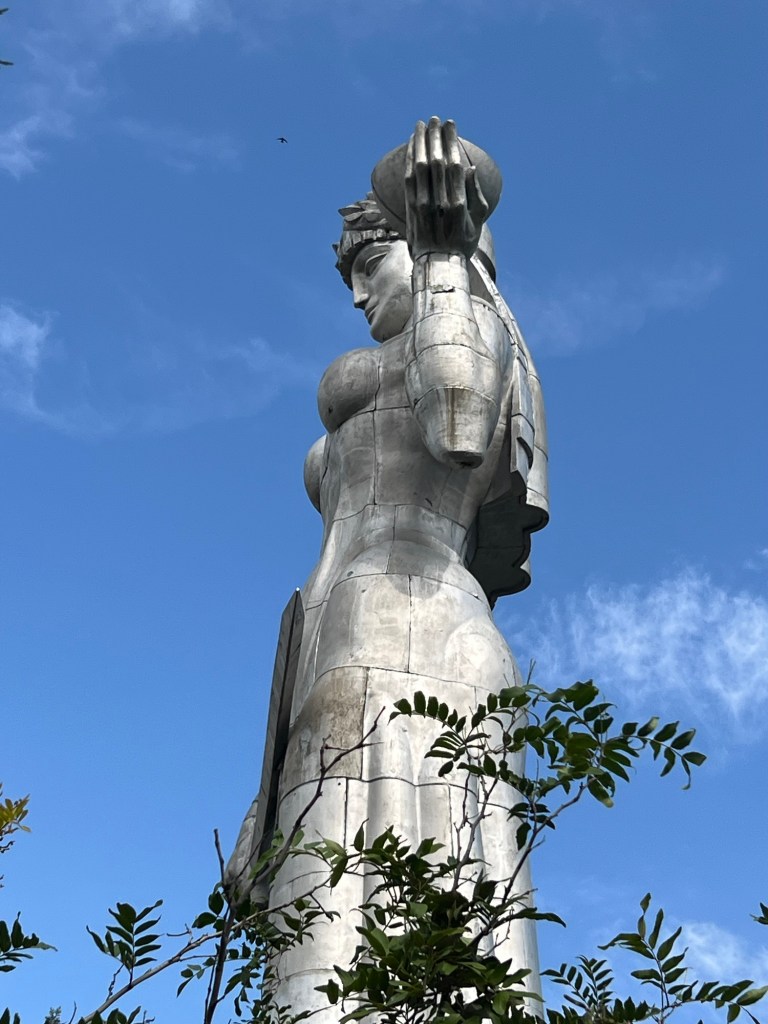
Our last stop was the ride up the hill to the Statue Mother of Georgia. I love that women are seen as being so significant and strong in the history of Georgia. Mother of Georgia is a huge monument which symbolises the Georgian Nation: in her right hand she has a sword to defend her country and her left holds a bowl of wine to welcome those who come as friends.

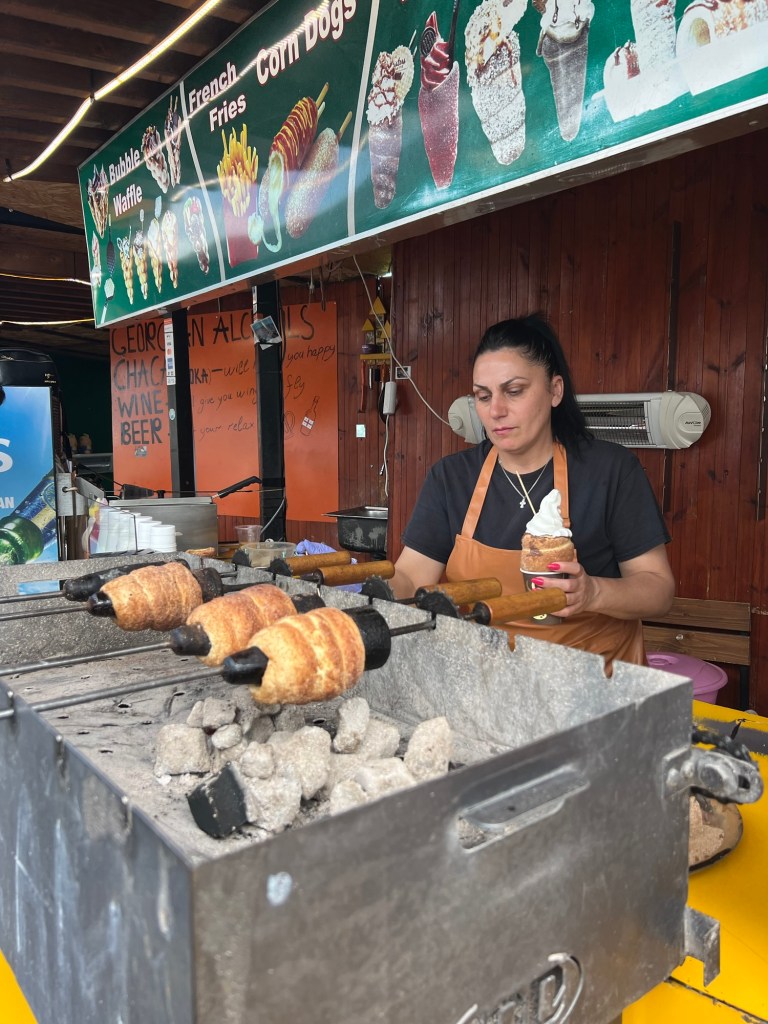
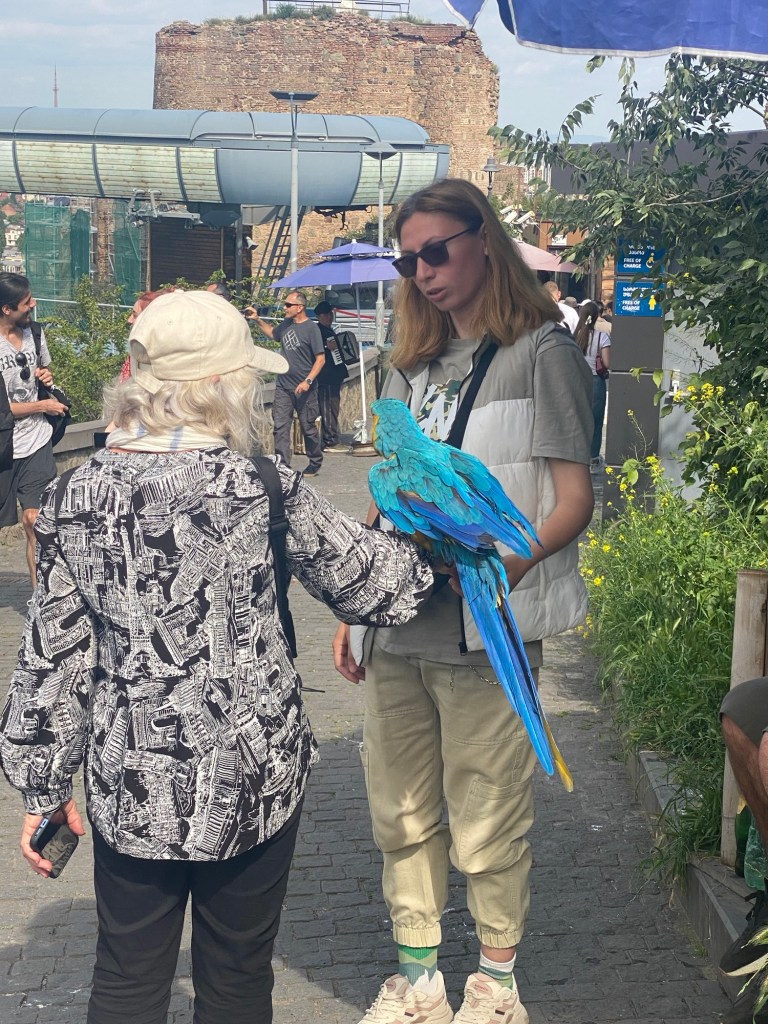
At the top were lots of souvenirs shops and food. I liked the idea of a Chimney Cake, shame it isn’t gluten free!

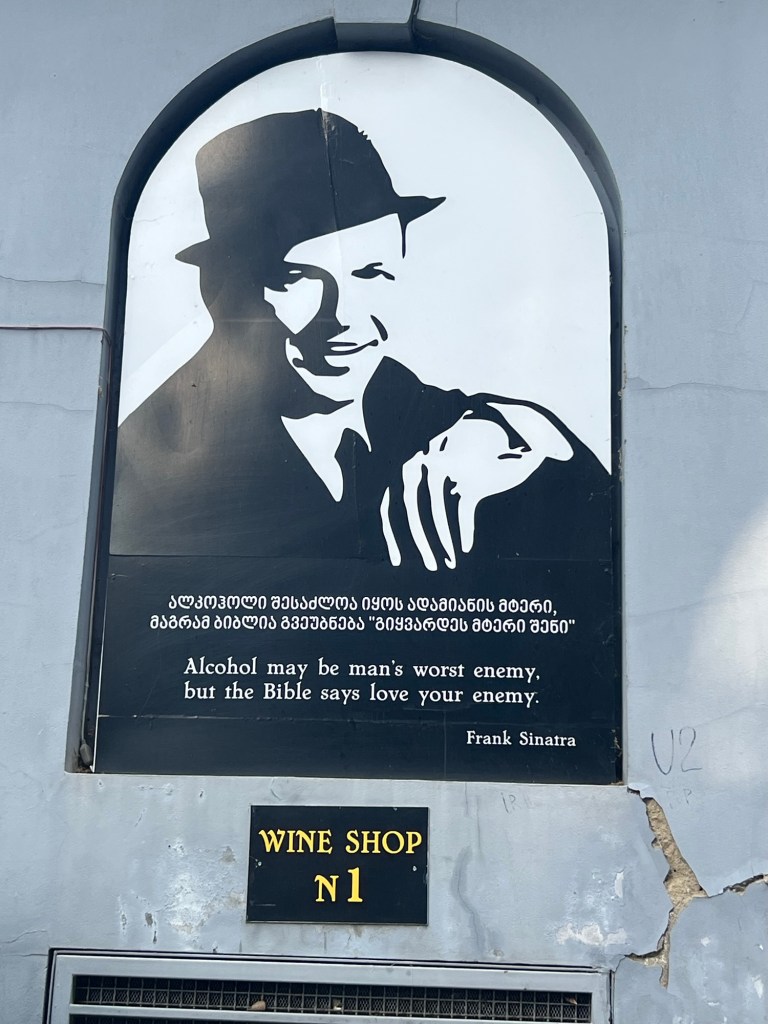
We came across a sign with Frank Sinatra that amused us and summed up the Georgian attitude to wine.

Wed 21st Kataisi

Our intention was to visit the Gelati ( hard G not ice-cream!) Cathedral but we were unable to enter due to renovations. Founded in 1108 the Golden Age of Medieval Georgia. It was a cultural centre for the period. Georgian churches have separate belfry’s and exterior baptismal fonts as well. We wondered how they coped in winter doing baptisms in the snow!

https://whc.unesco.org/en/list/710/

While here, we felt it was a good time to try our driver’s home made wine. He proudly produced his bottles and poured generously!

In Georgia everyone makes wine, and the quality is associated with the character of the person. We toasted our trip, our driver and our guiding angels. There is a lot of mystical underpinning of the faith. (Anne says it is superstition) I think a mix of both. Every house we pass has a vine so it goes that grapes and wine are big images here in everything.

The wine is made from just grape skins and seeds and grape juice-no additives. They press grapes and leave the skins until they think it has fermented into wine, then filter it. We have had some great tasting homemade wine. Bread and wine are the stuff if life in Georgia!

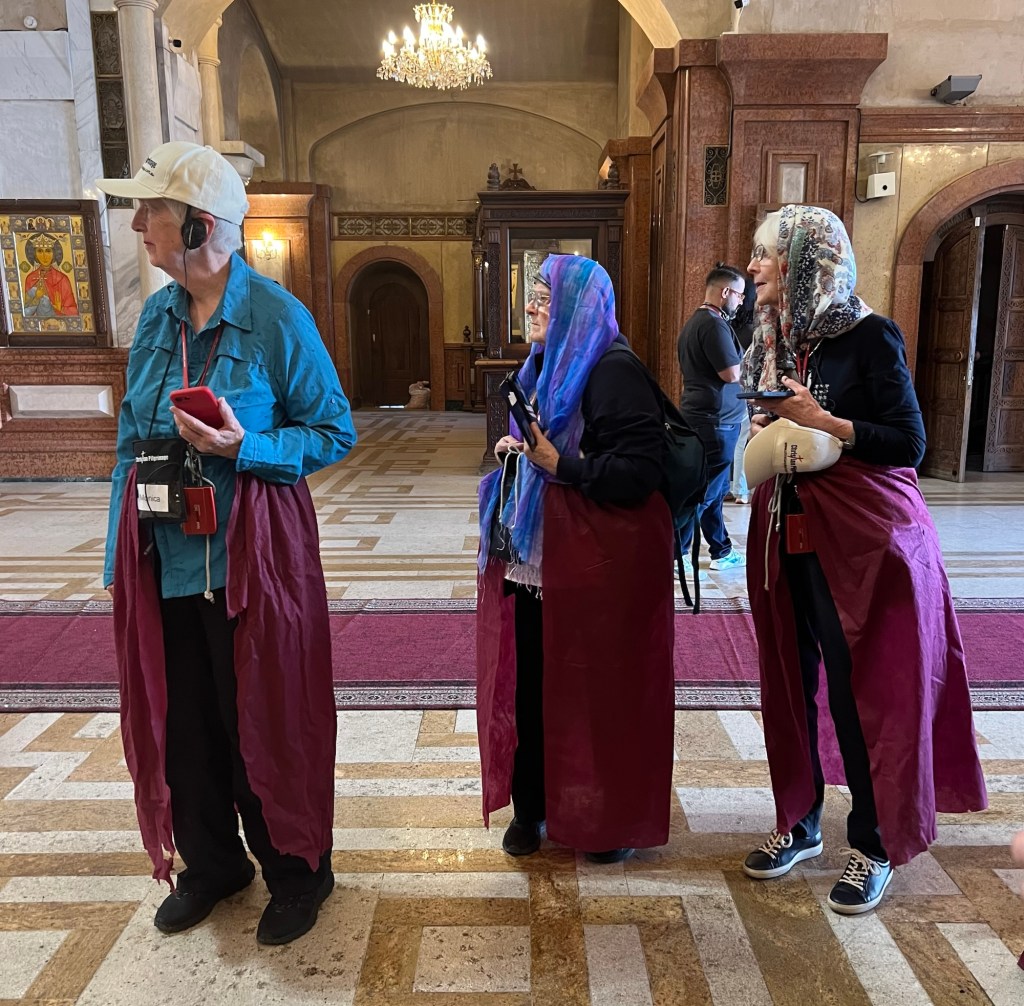
As we had not seen the interior of the Galeti Monastery we made a decision to include the Motsameta Monastery instead. This is a functioning monastery with about 8 monks so we had to don long skirts to enter the church. This church was dedicated to the two soldier heroes who bamboozled the Turkish invasion into thinking they were a whole army. They are revered as martyrs and their icons adorn the altar. There is a tradition that if you crawl through under the altar and make a prayer/wish it will come true. Unfortunately I didn’t know that until after I crawled through so I went back again! You never know so give it a go is my philosophy. Anne also figured you can’t waste a chance.

The monastery is situated on a ridge overlooking a deep gorge with gardens growing down the slope. We thought it would be a great place for a retreat as it is surrounded by trees and birds singing. Actually I would have to say one of the delightful things about Georgia is the vibrancy of bird life. It is far more treed than Armenia and so habitat is not threatened.

The gorgeous below the monastery.

When we headed back to the bus three old buskers wanted to put in a show for us.They had been singing together since young men. We acquiesced and enjoyed a traditional performance. Their harmony was good but the music was rather sad I thought. The unusual guitar was a chonguri which had a mellow sound.

The three “tenors”

As always I needed a pit stop and the singers directed us up the hill. When we found the loo with a marvellous view it was actually ghastly!

Loo with a view but definitely peuw!

Back at the bus we were amused by the bucolic ding of cow bells as a few wandered up the road-no shepherd in sight.

Last stop in Kutaisi was the Bagreti Cathedral. Thus was the kings fortress and had been destroyed several times and was listed as a unesco site but since the Cathedral was restored but with modern changes it has been delisted. However we were impressed with the changes as it told the true story of the life of this Cathedral. At its core it was built in the 11 th century but as so many invaders did it was destroyed and rebuilt several times. It is situated on the hill over the city and looks out to the snow capped mountains.

The view from Cathedral

Tuesday 20 th Borjomi to Kutaisi

Bags packed and off we go for a fairly long drive today. I had to engineer an emergency pitstop. All the delicious dried fruit must have had an effect! Still I think many others were just as relieved. Four hours on the bus is a long time. Eventually we arrived at the Spa town of Borjomi. A real tourist stop where the waters are supposed to be healing! The story goes that some soldiers came here and drank the water. It cured their malaria so the commander brought the troops here as well as his daughter. When the Romanovs heard about it they built a palace and the town became a centre for spa tourism that lasts till today. There were quite a few quaint Russian empire style buildings.

We all filled our plastic bottles and I have subsequently finished mine without any discernible healing of allergies or arthritis, but maybe you have to take the waters more than once?

Taking the waters. Maybe I should have bought one of the big bottles!

We took a little jeep up to the rock in the forest on which Saint Father Seraphin of Sarov is believed to have prayed on his knees for 1000 successive nights and lived on grass and water. He is supposed to have had 20 visions of the Virgin Mary. While I don’t wish to be blasphemous, it occurs to me that eating only grass and water may have induced delirium. However the respect and belief of the people is strong.

We set off for the 8 th Century chapel of St George which was in a picturesque spot overlooking the gorge and surrounded by greenery. On the way we saw three horses freely galloping along the road without halters or anything for catching them. I guess they are going home like cows do! Georgia’s mountainous country lends itself to horse riding for stock work. We saw a person checking his cattle by horseback in Vardzia.

The chapel of St George was a very plain building with rather small doors but inside it was quite beautiful.

On the way down to the bus we came across a group of youngsters celebrating graduation. They were being led by a police car and hooting their horns, waving their signed shirts, yelling and hanging out of the car windows! If we did that back home we would get fined for dangerous driving! Nino said they do this for weddings too. Having the police lead the procession keeps a lid on the hijinks I suppose. We had seen young guys doing donuts in their cars which seemed a bit out of control in the parking lot of the castle at Akhaltsikhe.

Before getting back on the bus we ate at a restaurant in town that was good and the waitress was very efficient and patient with us. We tried the local wine- no sugar, no additives, no water, just grapes, we liked it!

The leadership table.

Fully satisfied by our tasty lunches again we hit the road. The food has been good. I have been surprised by the amount of vegetables though it is obvious, cucumbers, tomatoes, capsicums, lettuce and potatoes are the standard fare. Walnuts are used in salad dressing which is delicious and there is always cheese and beetroot. Despite my love of those vegetables I am hankering for a change.

We were all happy to arrive in Kutaisi late afternoon which gave us a time to do some washing and blogging. That evening we wandered off in search of money and dinner. The ATMs here come in a few varieties. Some give out money but others are used for locals to pay bills, transport, fees of all sorts actually. There seemed to be a lot of services you could pay through these machines.

After trying to go to the Palaty restaurant but finding it booked out we wandered around till we found another busy, cool place, Papavero. We wanted to sit outside but the smoking was too much so we went inside. Smoking is huge here and we just aren’t used to smokers anymore. The food was good and we had fun. As we left the restaurant we saw the mother and pups we had seen earlier. One of the little black pups seemed lost and not sure how to get back into its kennel. I picked it up and put it inside. There was still meat from earlier that one of the restaurants had left. I had grabbed a piece of chicken that Trish wasn’t eating and fed the mother. She was so gentle when she took the meat. This is how the street dogs survive. I had seen kennels in a few places and people feed the dogs as a communal responsibility. I have seen some really appealing dogs.

John Jr. decided to check out the nightlife and met a fellow from Mumbai so they palled up for a club crawl. They also met an Aussie and he ended up having a grand time and getting back to the hotel around 5am. A young man needs a bit of letting his hair down! Needless to say he slept most of the following day! Still he was very impressed by the lively night scene and had some interesting conversations about politics with young people.

Monday the 19th Vardizia, Georgia

We arrived here last night and were immediately charmed by the beauty of the place. The hotel has walls draped in lovely carpets with chickens and roosters as their motif. There are two pianos, one in the entrance vestibule and one in the bar. The situation of the hotel/resort is on the side of the valley looking across to the Cave city. Between us a river flows fast with rapids and a delightful but relentless power sound. Cows wander freely. Behind us further up the hill sits a tiny chapel and Karaoke bar!

Beautiful blue Iris all around the garden surrounding natural ponds looking up to the chapel in the hillside.

The next morning we are off to see the ancient cave city and monastery of Vardzia excavated from the Erusheti mountain above the Kura river in the 12th century. They stretch for half a kilometre and have about 19 tiers. There are still five monks living here. The church of the Assumption was built in the golden age of Queen Tamar and Rustaveli, the Georgian poet, and dates from the 1180s.

The site was mostly abandoned after the Ottoman takeover in the 16th Century and used by shepherds. Their fires actually preserved many of the frescos in the church.

Coming down from the caves before entering the tunnel.

It would have been great to spend more time here but several of the party couldn’t manage the steps so we were mindful of not keeping them waiting. Our next stop was a reconstructed castle in the nearby town.

Animals roam free in Georgia-cows, horses and dogs.

Because the road is a narrow, winding major thorough fare for trucks from Türkiye it was a slow trip to the castle. Also not helped by the livestock wandering across the roads.

The castle was representative of all the invaders! Turks, Iranians, Russians etc. getting our head around the geopolitical history of these countries is really hard. They are proudly, almost defiantly Christian despite the invaders which is admirable but so far we feel the Russians have had a more lasting presence or influence over Georgia. It doesn’t seem as settled or happy as Armenia.

We were desperate for lunch by the time we arrived but our restaurant didn’t seem to understand the urgency( we were supposed to have a guided tour) it took nearly an hour to get our soup. What we thought would be quickest. All the soups turned out to be the same base too. They were so disorganised and we felt cross with our guide who didn’t seem to make an effort to facilitate the situation. Poor Beryl was the last to get her soup after we had all mostly finished.

From now on a running joke when ordering any meal came with “ it’s coming!”

We got back late and we were all happy to eat and go to bed, except John jr., Anne, Nancy and I. We went to the bar and had cognac and cocktails while John and Anne played Chopsticks on the piano!