
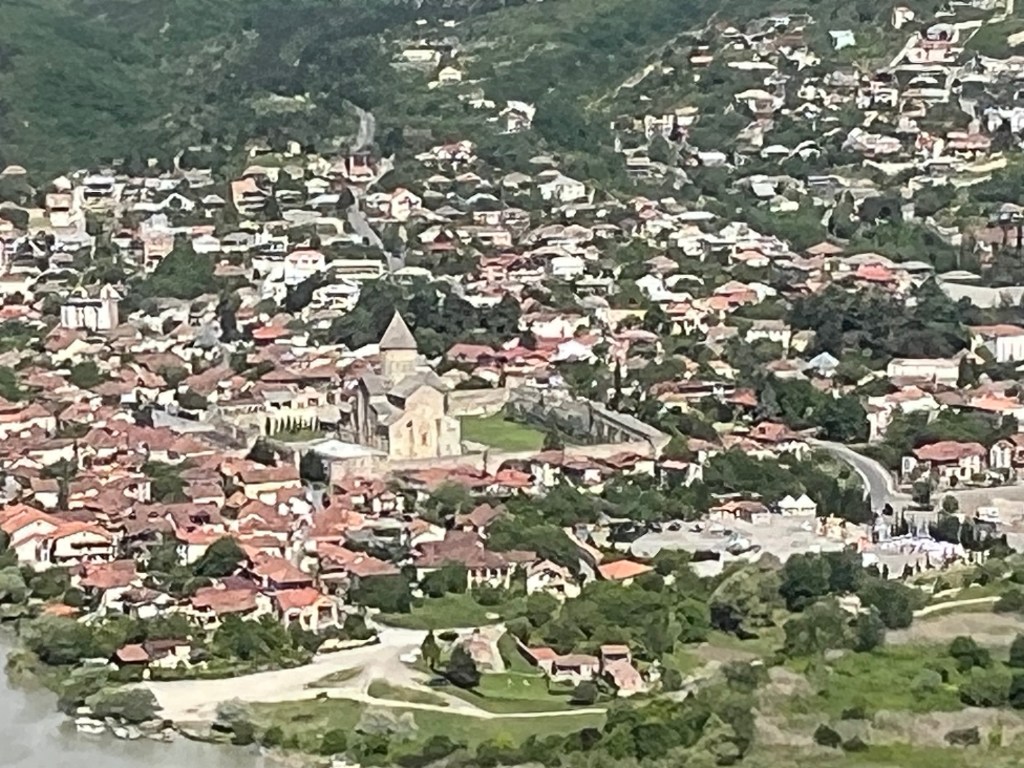
Mtskheta is situated at the confluence of the Kura (Mtkvari) and Aragvi rivers. This was our destination today.
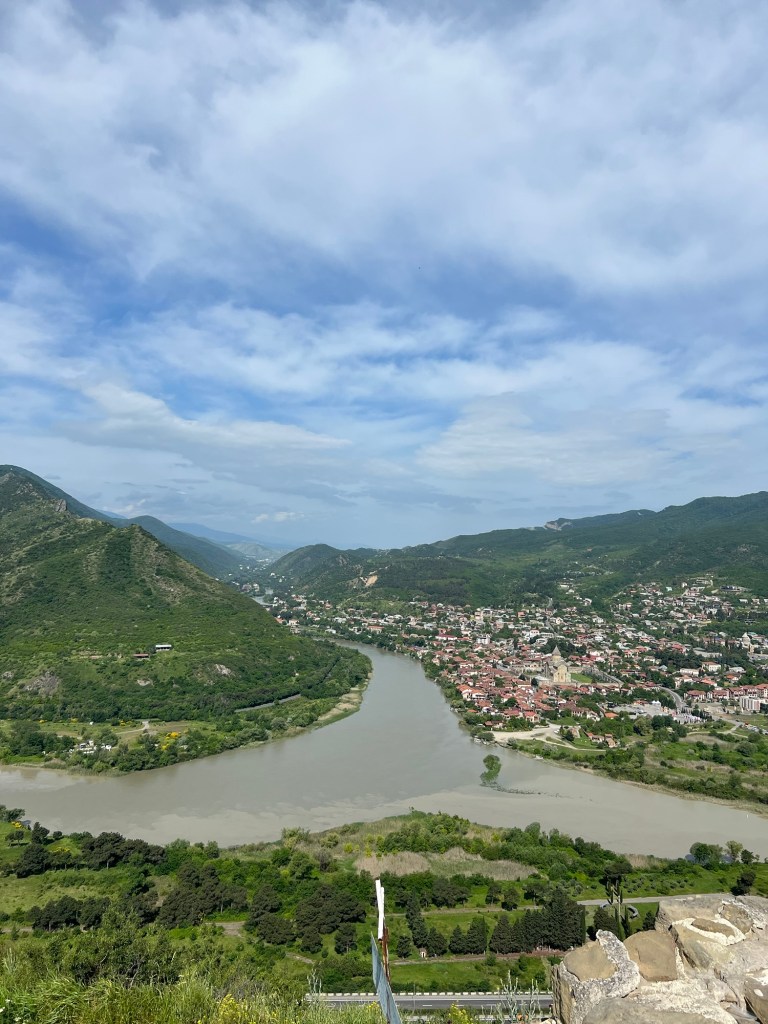
This confluence of the rivers is a key feature of the city’s geography and a significant visual and cultural element. The different colors of the two rivers are particularly striking. This can be seen from the Jvari Monastery which is perched high on the hill overlooking the town. Today it was two different brown flows merging, but apparently other times one is blue water the other brown.
Jvari Monastery didn’t open till 11.00am so we had a sleep in and leisurely start. The Georgian countryside is lush and green with the end of spring and heavily wooded in contrast to Armenia.

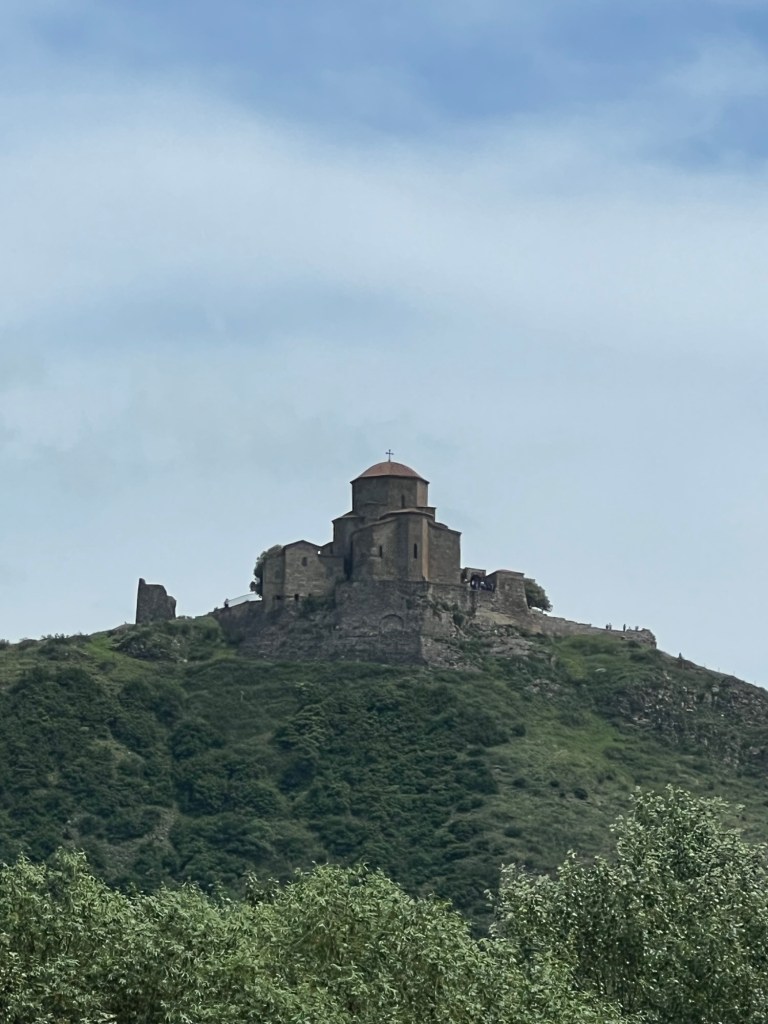
Arriving at Jvari it was windy and pretty crowded. This weekend is a celebration of Independence Day in Georgia so lots of locals are out and about also amongst the tourists.
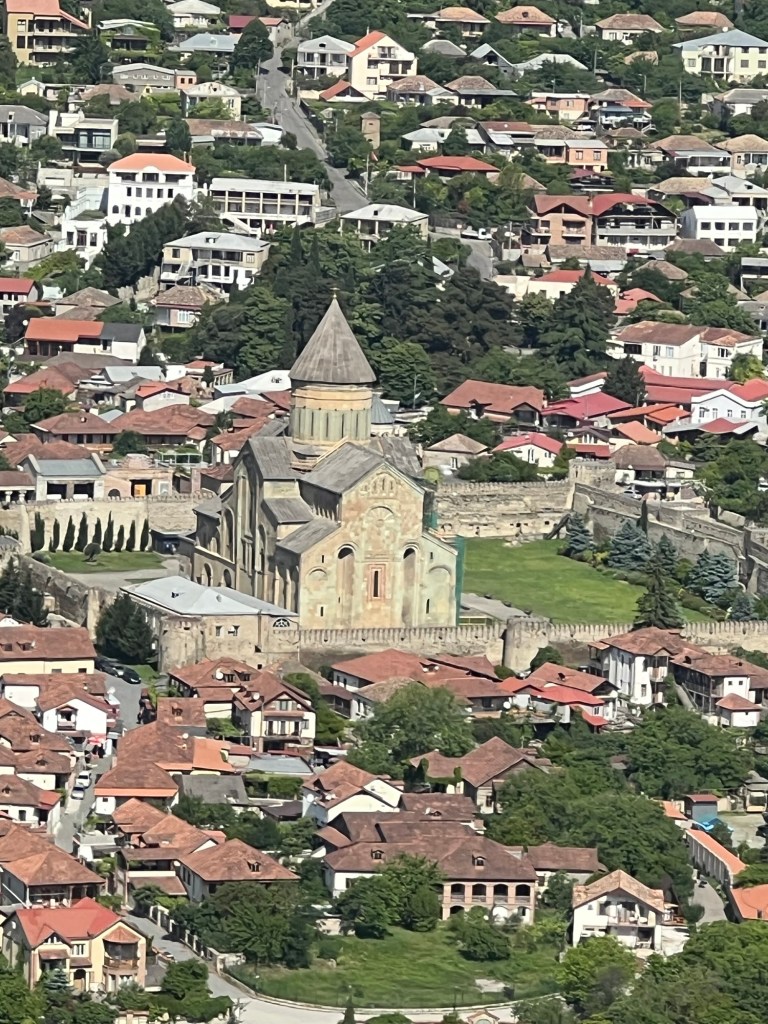
The view was spectacular and we could make out the other two churches we were to visit down below in the town.
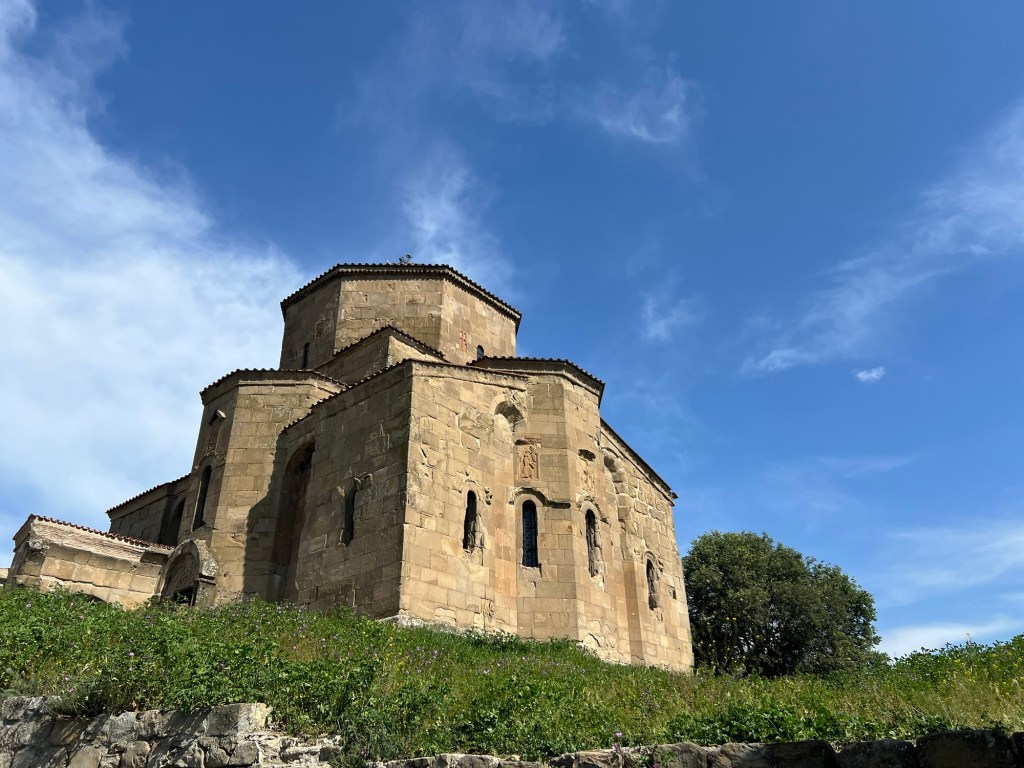

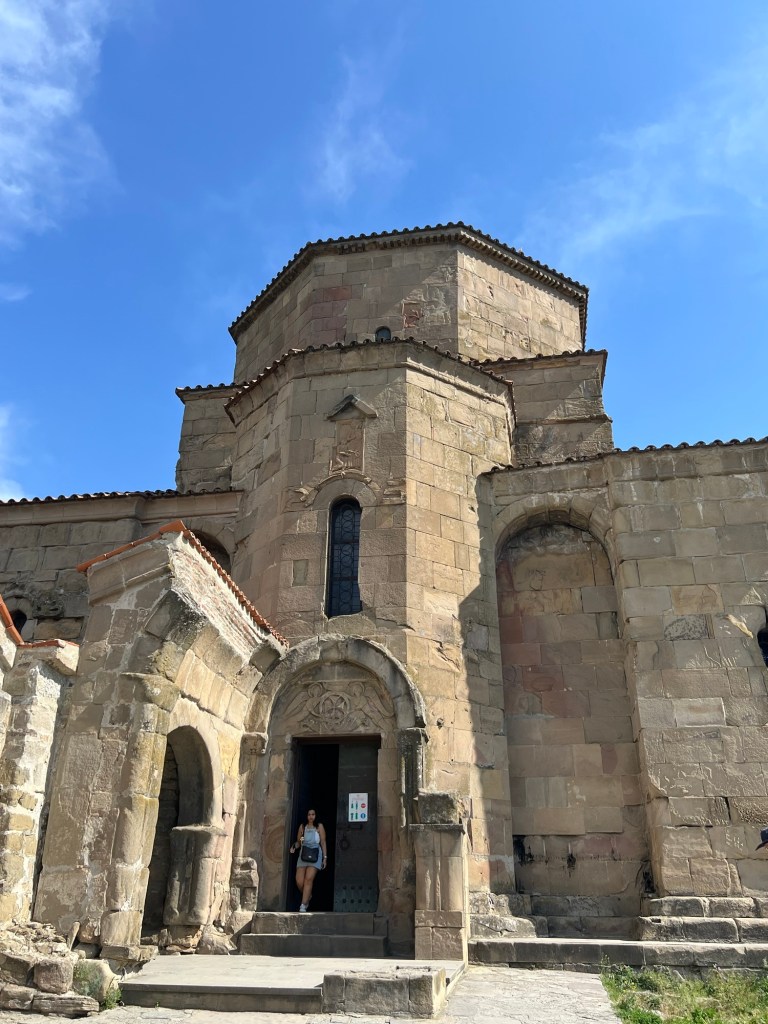
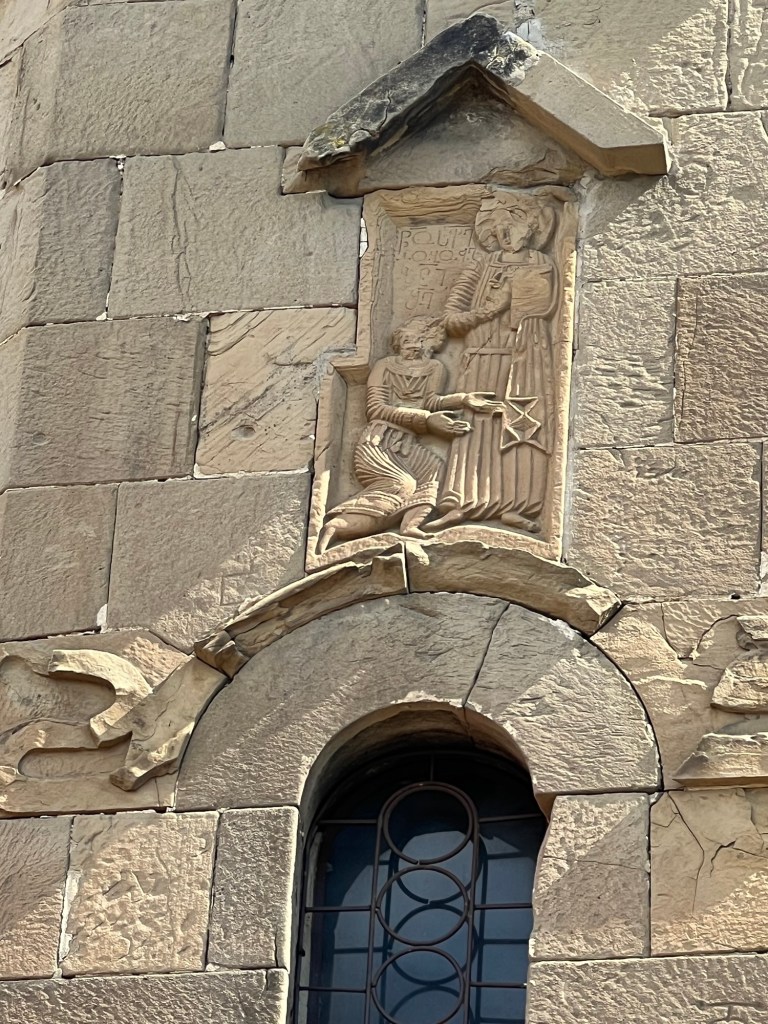
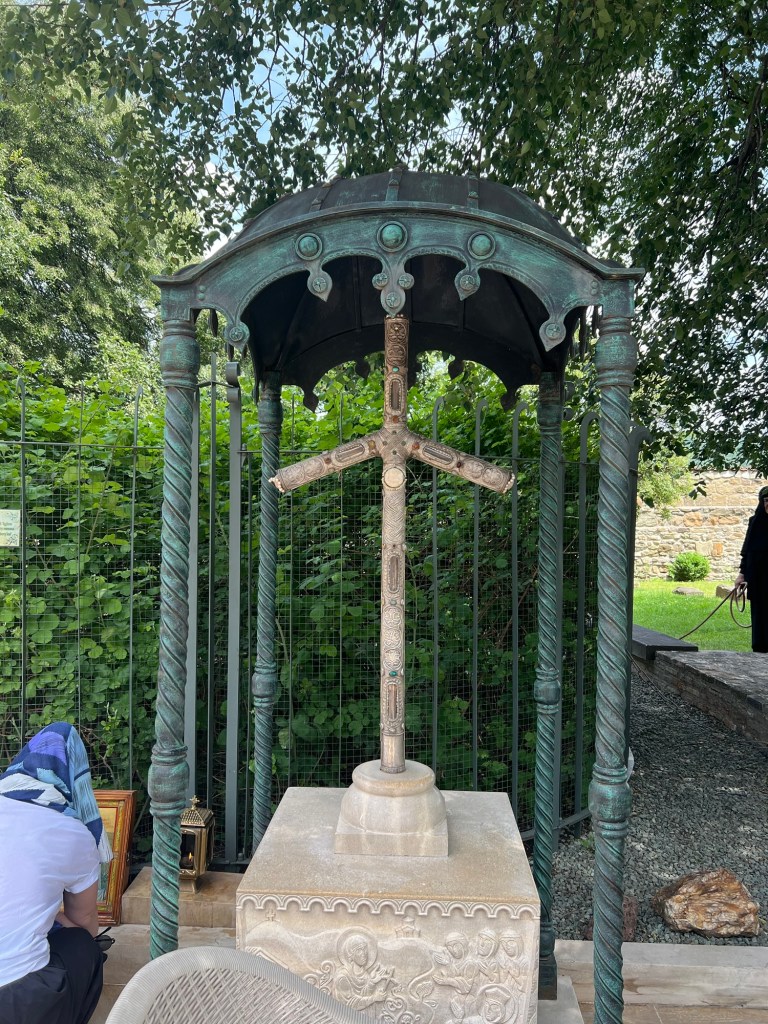
Jvari is a rare example of a 6 th Century monastery that has survived almost unchanged and built in harmony with its natural environment. Legend says St Nino erected a wooden cross on the site of a pagan temple in this location in the early 4 th Century. The cross was reported to perform miracles and therefore drew pilgrims from all over the Caucasus.
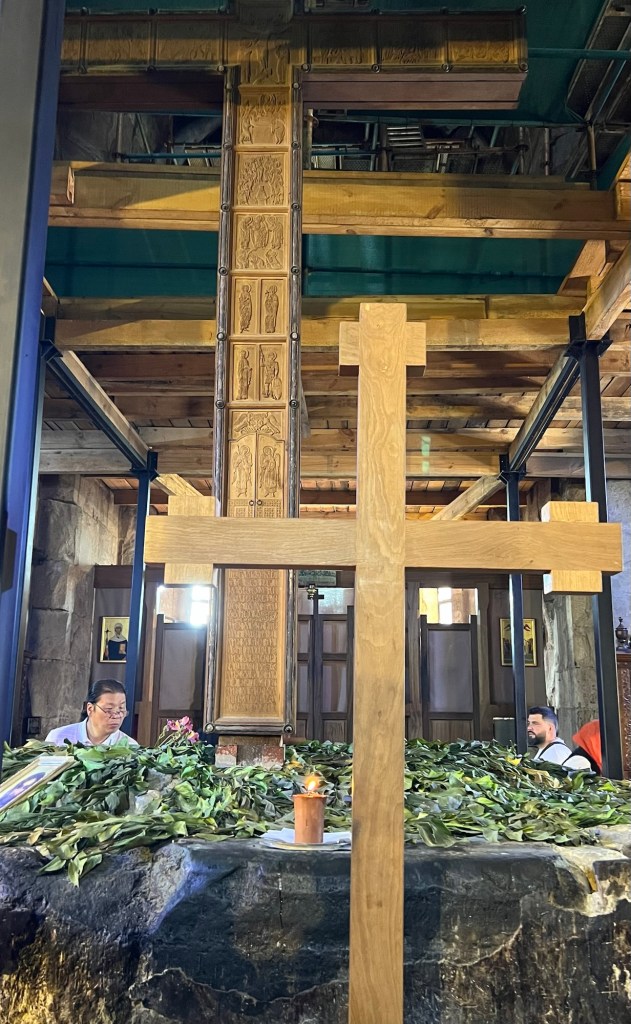
It was hard to get good photos of the interior of this unusual church. Especially as a woman kept shooing us away from the cross. Understandably as there were many people, but it was so different. The base was a circle about 1 metre high with the wooden cross planted in the middle. It was very dim so you needed your phone to capture the details and there were renovation works overhead.
This church was one of very few untouched by the Bolshevik’s and the later Soviet era. Most churches were converted to wharehouses, gymnasiums, storage for farm goods or animals, even prisons or just destroyed.
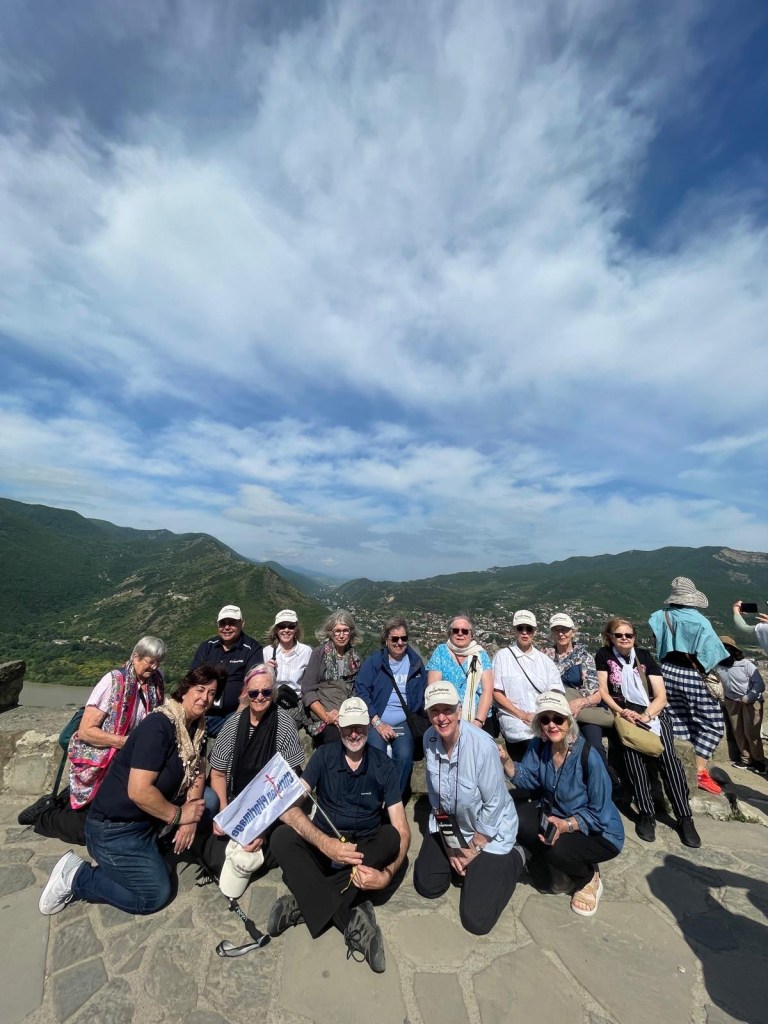
We reassembled outside for a group photo and were very amused that a Japanese fellow with a big camera was taking photos of us! He offered to take the group shot for us so that made it easy. I wondered what he would say to people who saw his pictures of us. Curious Old weirdos?
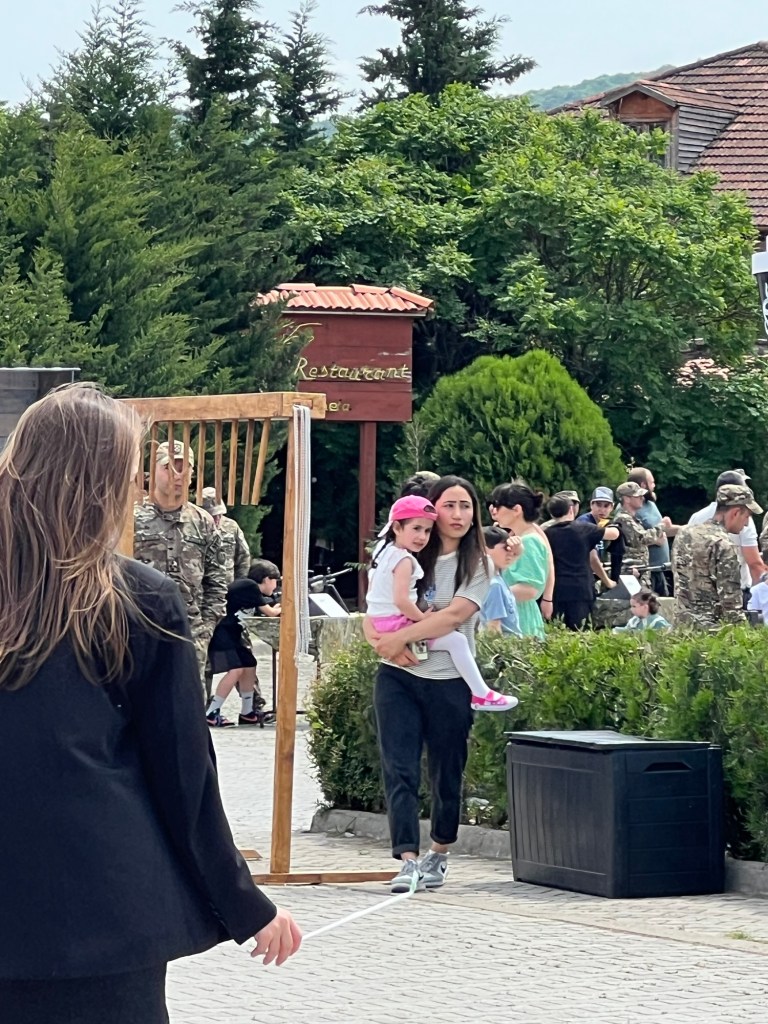
From here we went into the town below. The atmosphere was festive, patriotic and local. There was a stage for music and folk dancers and a military display of armoured cars, missile launchers etc. As well as country style games of skill for kids. The Georgians proclaim their peaceful natures but they will defend their independence if they must.
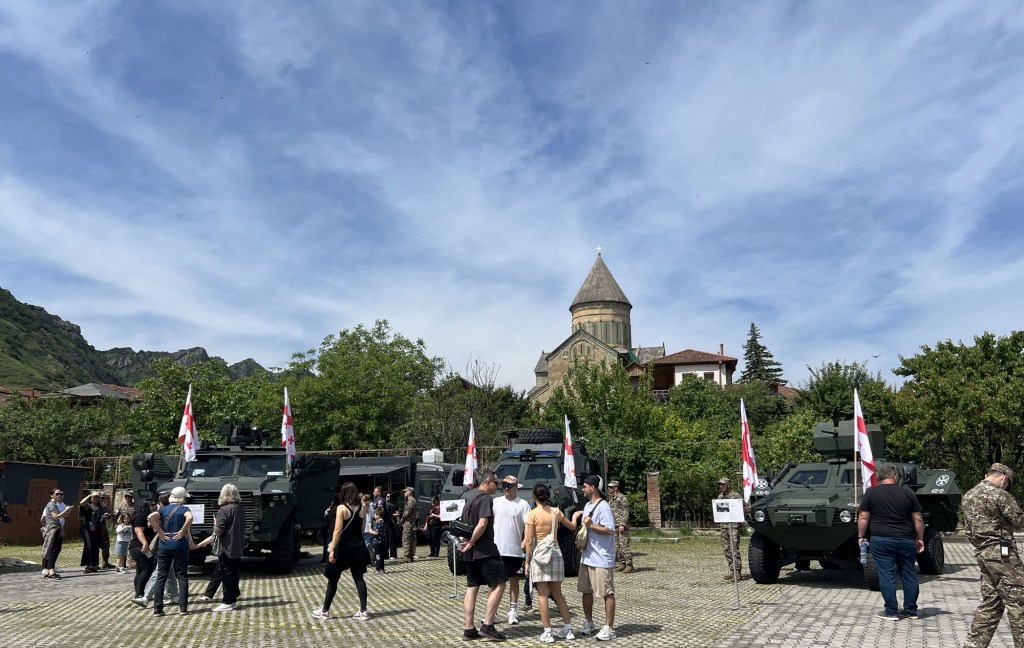

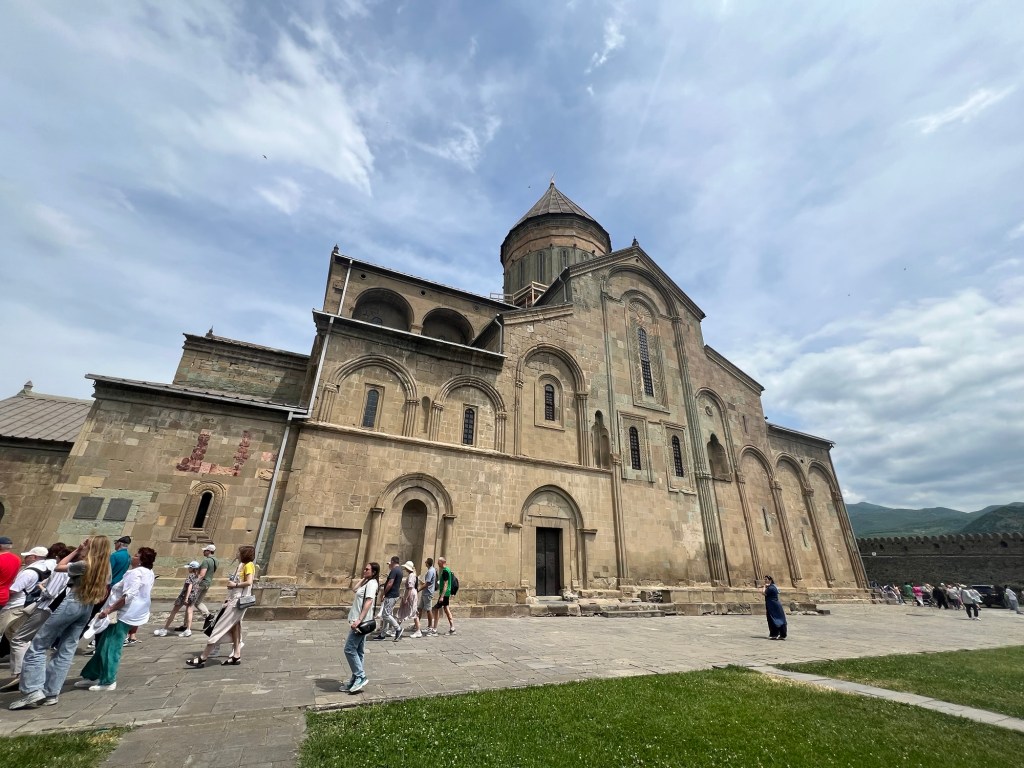
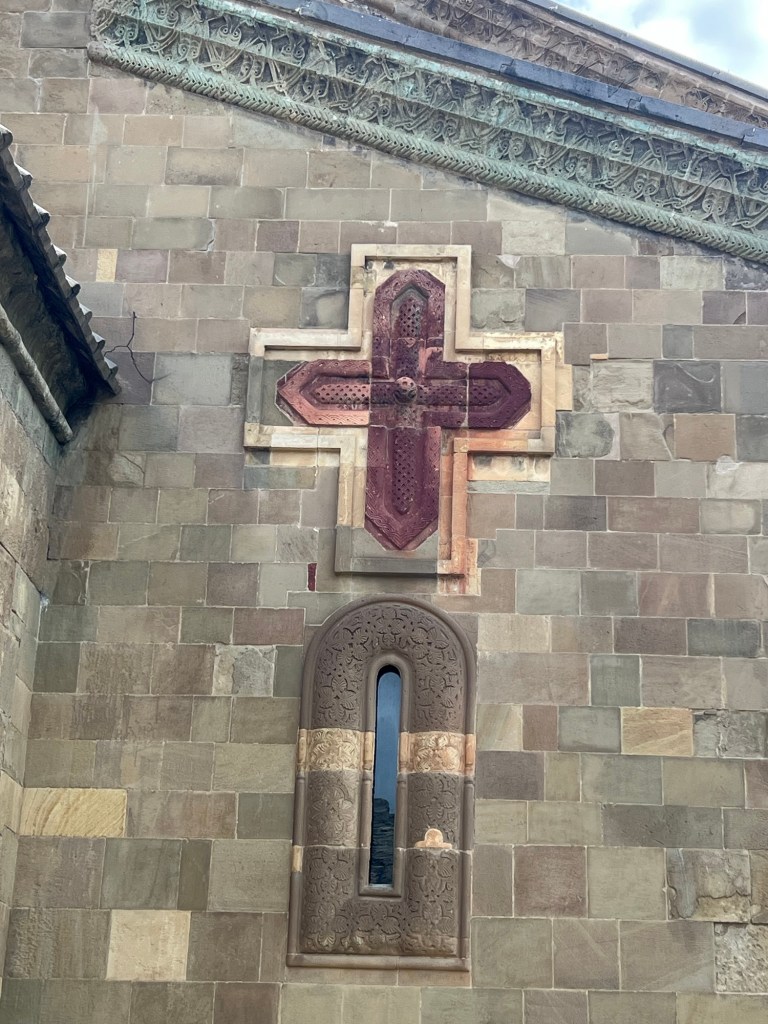
Next stop Svetitskhoveli Cathedral at the centre of the town is a masterpiece of early and high Middle Ages second in size only to The Holy Trinity( Sanabre) in Tbilisi.
It is renowned for the burial site of the claimed Christ’s Mantle worn at his death. Legend has it that Sidonia pleaded with her brother Elias a Georgian Jew. who was in Jerusalem, not to participate in the punishment of Jesus. Following the death of Christ he bought the robe from a Roman soldier and brought it to Sidonia. When she touched the sacred Robe she died instantly from the emotions she experienced. The Robe could not be removed from her hands so she was buried with it. The place where she was buried is preserved in the Cathedral. Later( before the cathedral was built!) an enormous Cedar tree grew from her grave.
Later in the 4th C St Nino ordered the tree to be cut down to build the church. The tree provided 7 columns but the seventh column had supernatural properties and rise into the sky. It returned to earth after St Nino prayed all night and the church could be built. The name of the cathedral comes from thus miracle. Sveti means pillar and tskhoveli means living or life-giving. There are many icons depicting this scene throughout Georgia. St Nino converted the King and Queen to Christianity and it became a state religion in 337AD.


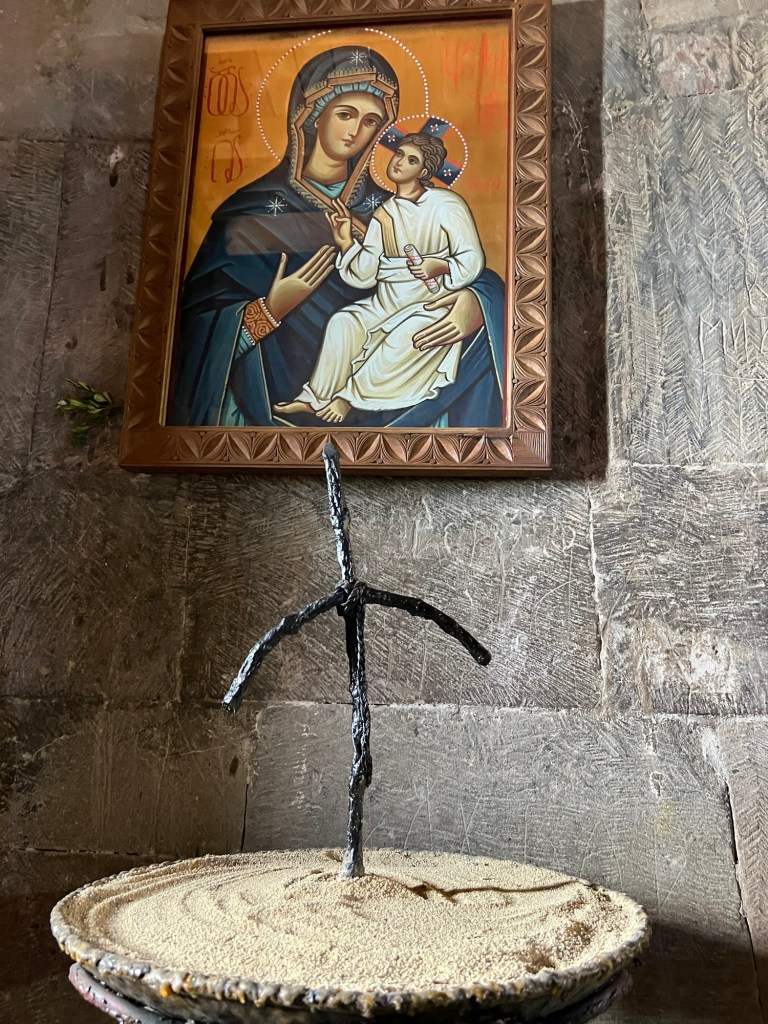


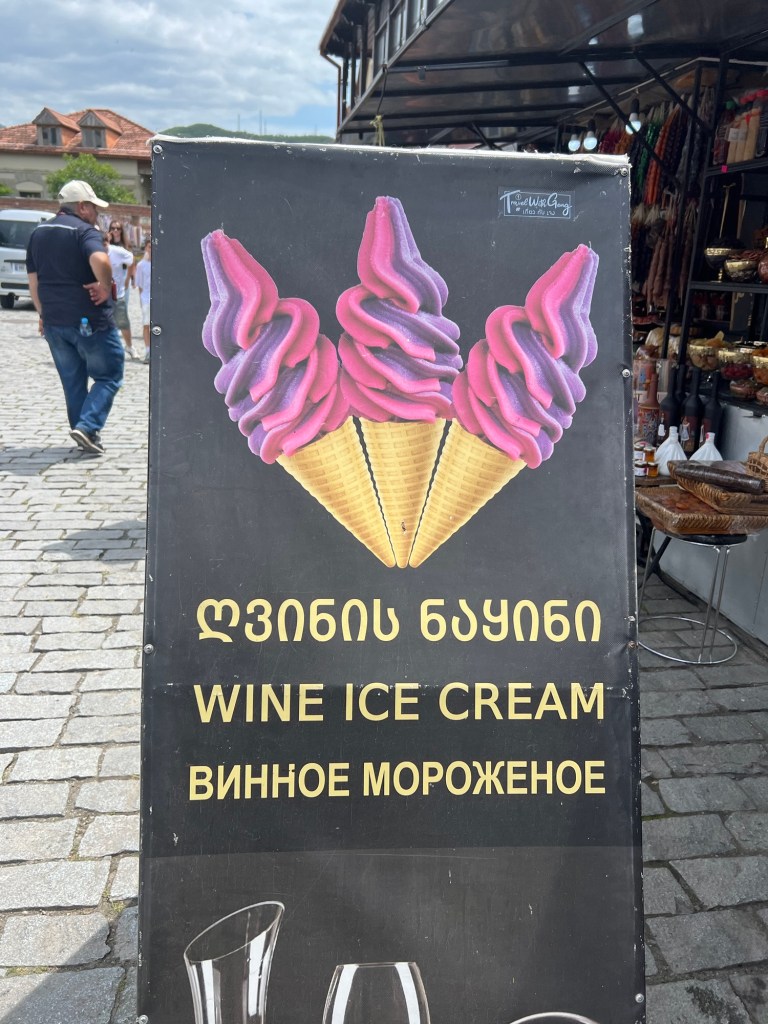
By now we were hungry and found a humble place ( looked like the back garden of a home) for lunch. At my feet was a lovely black dog so it was difficult to move my chair. As I got up to make room for others I knocked a pot plant off a shelf causing the plastic pot to split and break a branch off the succulent. I was embarrassed and the old lady was not pleased. The the food was good and I made a hasty retreat. I found wine icecream to taste and headed back to the bus.
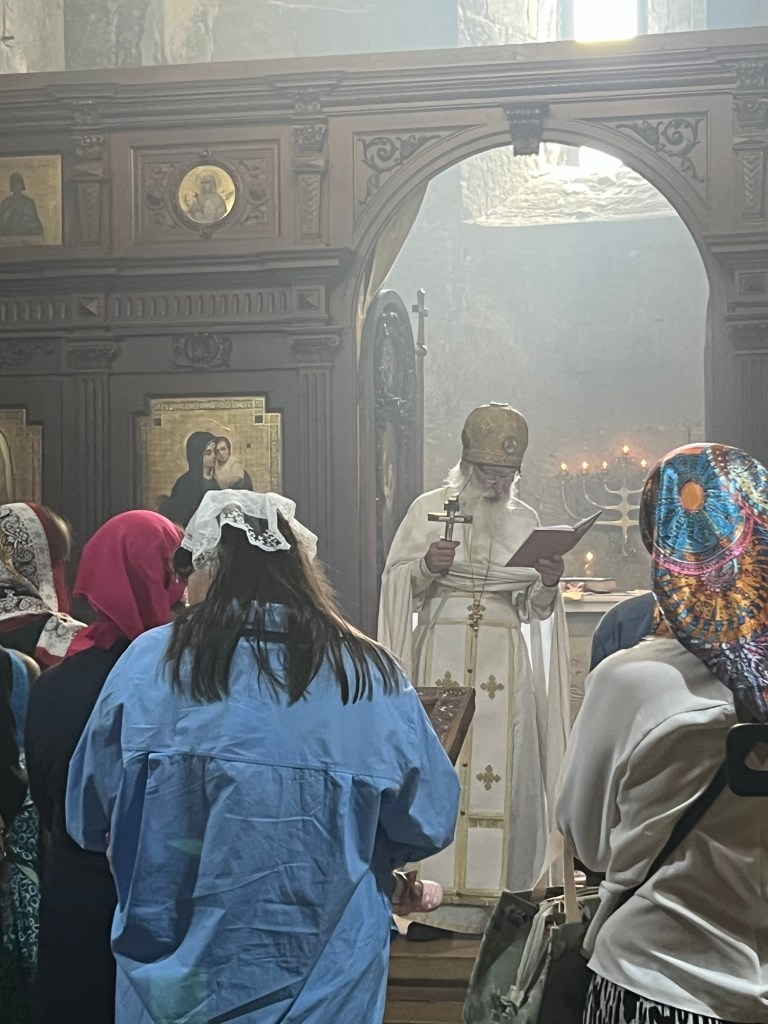
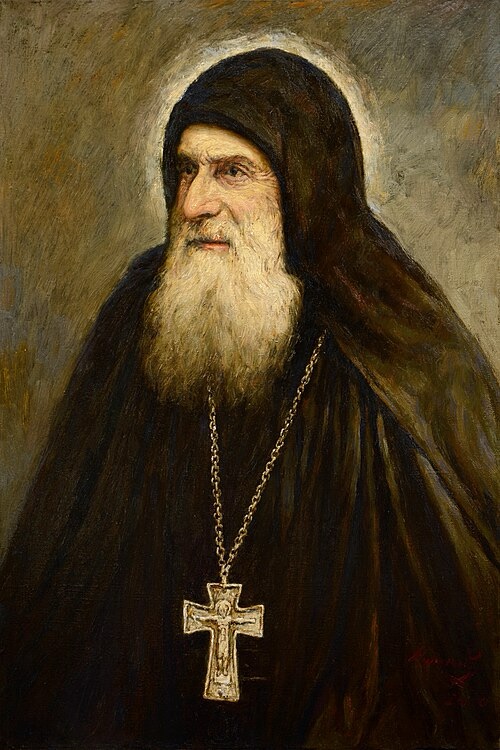
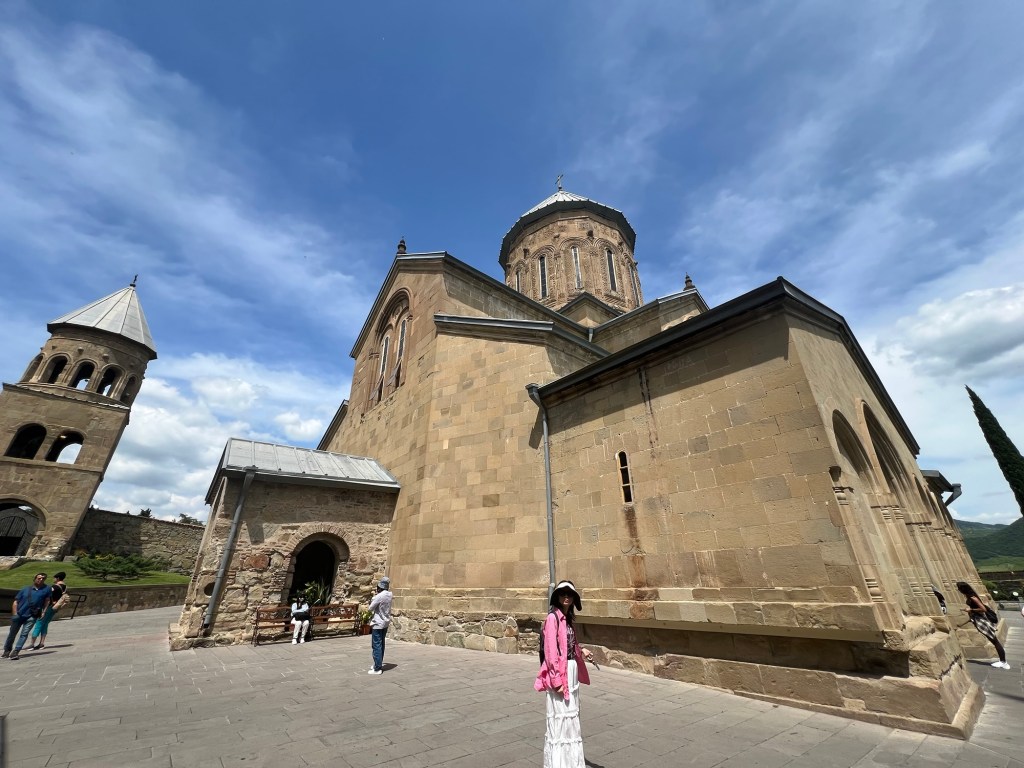
Our last stop was the Samtavro Monastery that combines the Samtavro Transfiguration Church and Nunnery of St Nino. The church is a cross in square temple of the 4th Centuryand reconstructed in the 11th Century. It houses the graves of King Mirian the lll of Iberia and the famous Georgian Monk Papa Gabriel- the last Saint, Fool for Christ and Confessor was his description. He was born in 1931 and was an activist against Lenin, arrested and tortured for his faith by the communists. Eventually released he spent the rest of his life at the nunnery of St Nino. He was believed to have powers of healing and clairvoyance. When he died there was a huge focus on him and he is venerated as the last Saint.
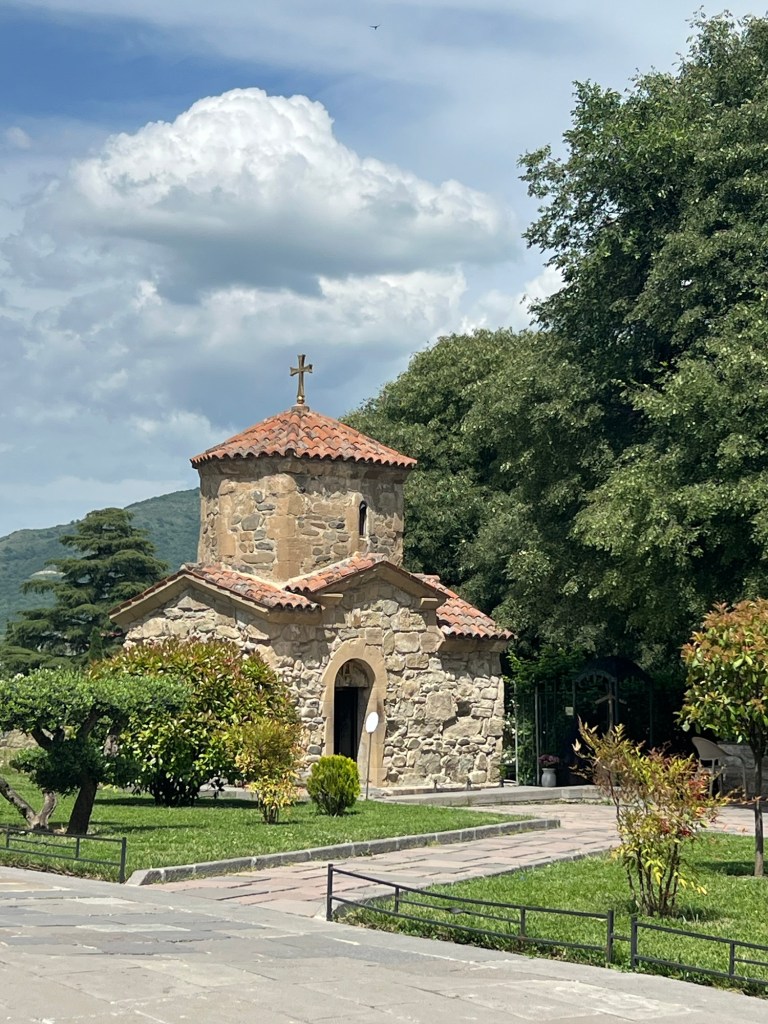
Saint Nino used a small church outside the large one as her resting place when she visited.

Now we are returning to Tbilisi for our last dinner here. Another huge day.

 fleetfootkath